How Do You Choose the Right Master and Workshop for Classic Car Restoration?
Share This Page
Choosing the right shop is the most critical decision of a restoration: a craftsman with classic vehicle experience who openly shows references and keeps the contract written and transparent will save your project, while the wrong choice puts your budget, your time, and your car at risk. In this article, you will find concrete criteria for evaluating the shop you will entrust with the job, from expertise matching to the payment plan.
Highlights
- A quality full restoration can cost around 40,000-120,000 $ in total.
- Full frame-off restorations usually take 12-24 months to complete.
- Most shops do not give a fixed price; the work proceeds on a time and materials basis.
- One of the most common beginner mistakes: handing over the job without checking references.
- In Türkiye, there are few craftsmen who do this job properly; word-of-mouth recommendation is still the most powerful method.
Now a question for you: Would you give a second chance to a mechanic who left you stranded in the middle of the road? In restoration, things are even more serious, because a car that enters the garage stays there for months. So the craftsman you choose will no longer be just your mechanic, but your car's stepparent. Let's go through the criteria one by one.
Expertise Matching: Does the Shop Know Your Brand and Era?
This is the first and most important question. Classic vehicle restoration is not the same job as modern vehicle repair; a hand that touches the sheet metal of a 1950s car must know the language of that era. This is precisely the second most common mistake made by beginners: entrusting the job to a shop without classic vehicle experience. This point, also emphasized in current restoration guides from the USA, is even more critical for Türkiye, because not every garage here knows the subtleties of the classic world.
Why is matching brand and era so important? Because reinforcing the bumper of a 1956 Ford F100 using 2 mm sheet metal and renewing all the rusted panels is one kind of craftsmanship; shaping no-longer-produced parts by hand-forming sheet metal without distorting the original lines is a completely different mastery. A good shop should be able to do these jobs in-house.
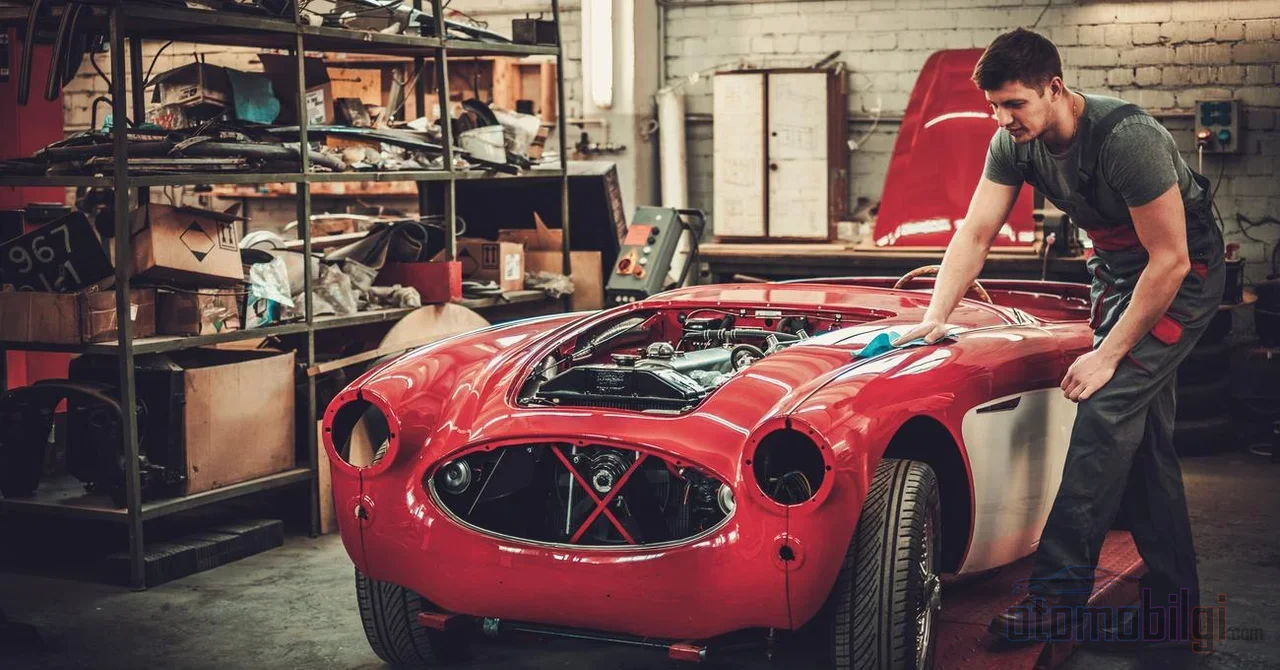
So how do you tell? Ask the shop directly: "Do you have experience with my brand and era? Which classics are on your bench right now?" Even if it is a small operation, walking into a classic enthusiast's garage and looking at what you see around tells you a lot. Some shops even openly limit their capacity; a place that says "we accept only a limited number of classics each year" is presenting its workload as honesty rather than marketing, and that is a good sign.
Reference Check: See Finished Projects with Your Own Eyes
When someone recommends a shop to you, there are two questions that should cross your mind: "Did they finish the job in the agreed time?" and "Did they explain all the work done in detail?" These questions, considered among the most reliable guides in the restoration world, also test whether the person recommending you is actually a customer who has had work done at that shop.
The golden rule of reference checking is simple: see completed restorations in person and, if possible, talk to the owners of those cars. A reputable shop takes pride in showcasing its previous projects; if it hesitates to take you out back, you don't want to know why. What should you look for in the feedback? Quality of workmanship, communication, project management, and whether the car ultimately met expectations. In the internet age, online reviews are also a good way to trace past work; but the most reliable evidence is still the finished car standing right before your eyes.
"On average, cars between 40-60 years old come to us and we completely disassemble them, so we can see what procedures the vehicle has gone through over the years..."
This disassemble-and-inspect approach actually sums up the typical way of working in Türkiye. When the car is fully disassembled, hidden corrosion is revealed and the vehicle's history becomes clear. That's why taking hidden rust lightly is considered the number one mistake of beginners. If the shop introduces you to this reality early on, don't be afraid - that's a good sign.
Contract and Pricing: Why "I Can't Give You a Fixed Price" Is Normal?
Here's the part that shocks beginners the most: due to the comprehensive nature of restoration, many shops don't give an estimate or "quote" for the total cost. Costs depend on time and materials; fixed pricing isn't practical. The same picture emerges in classic car forums: most shops won't sign a fixed-price agreement for a full restoration - what you get is a time and materials agreement.
Don't read this as "the shop is trying to deceive me." Nobody knows what's inside the car until it's taken apart; it's like a bone surgery - you can't fully see the situation without making the incision. The real issue is transparency: a restorer's obligations include providing a detailed work plan, sourcing authentic components, and keeping transparent records. If these are in writing, there's nothing to fear.
How should you structure the payment?
The accumulated wisdom from forums gives a pretty clear formula: Make an agreement that ties money to value, ask for a timeline, don't pay too much upfront, and pay in installments tied to progress. In other words, every payment should be linked to tangible work you've seen. Also, a mini three-question checklist works in every situation: How much will it cost? What is the project's timeline? Can I see photos and references? If you can't get clear answers to these three questions, don't open your wallet.
Be realistic about the timeline too: Full chassis restorations often take 12-24 months and vary depending on the vehicle's condition and your goals. The timeline is set at the start but can change once the restoration begins - hidden corrosion discovered during disassembly and parts whose order of availability changes are included. Don't let a slipping timeline anger you; a transparent explanation of the delayed process is far better than it being covered up.
Sourcing Spare Parts: Who Will Find Them, and How Is Authenticity Verified?
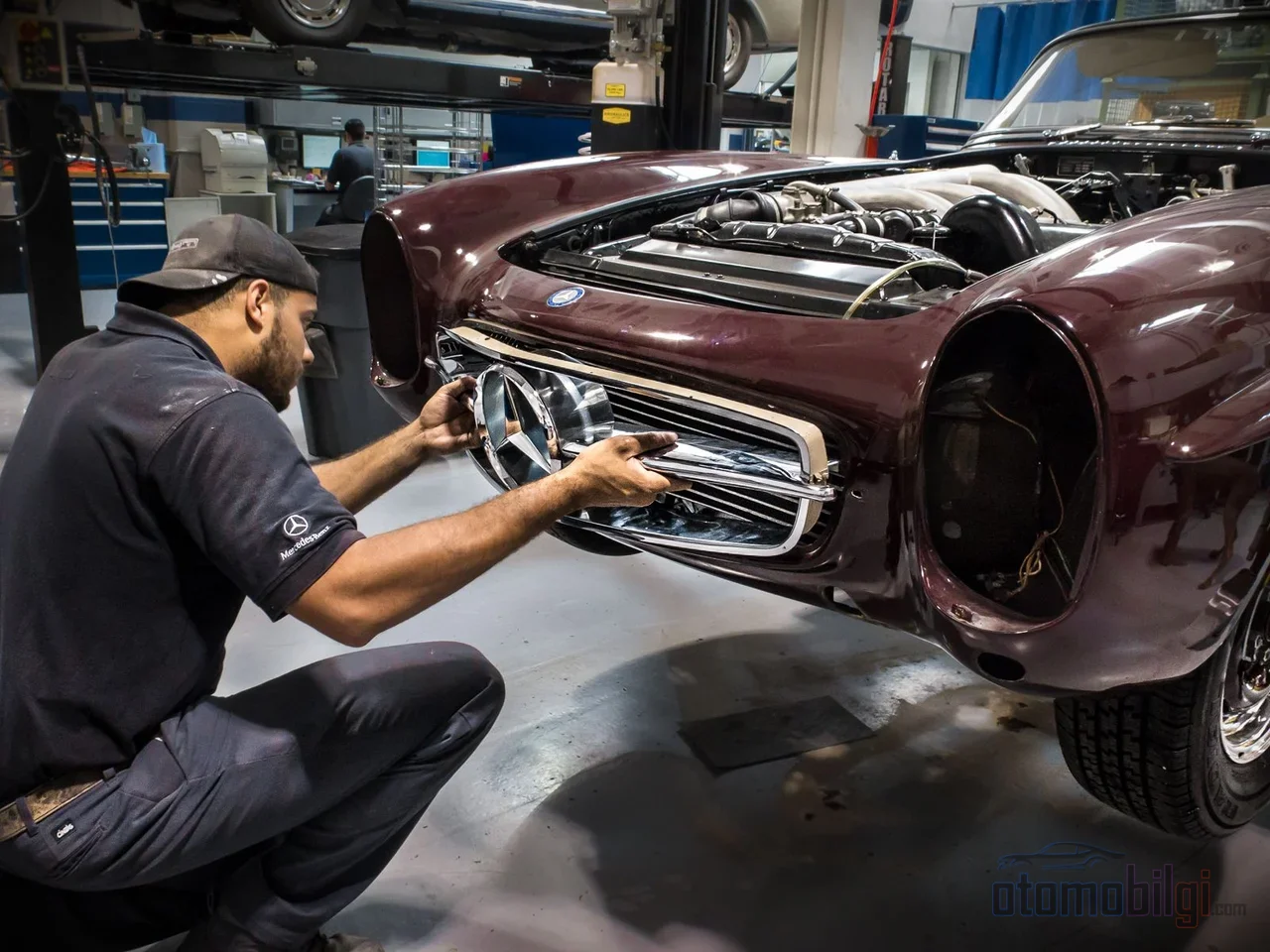
The parts phase is perhaps the most patience-demanding leg of a restoration. Finding the right parts requires answering three questions: what is available, whether to buy a reproduction or an original, and how authenticity will be verified. Clarify the parts strategy with your workshop on the job; first decide what kind of restoration will be done, then go on the parts hunt.
Finding original parts in Türkiye can pose difficulties in basic restoration and bodywork jobs, although it is not a problem for every brand. The good side is this: The craftsmanship of the masters here is world-famous. For parts no longer produced, hand sheet metal bending and shaping techniques are used; maximum care is taken to preserve the vehicle's original lines. It is no coincidence that a workshop in Maslak notes that its sheet metal shaping times vary depending on the car's corrosion condition and part loss - the deeper the rust, the longer the handwork takes.
There is also the matter of quality consistency: When sourcing parts, you should not mix different brands or quality levels; inconsistent parts affect both performance and authenticity. And of course, the use of unsuitable materials tops the list of common mistakes. Do not hesitate to ask your workshop "where did this part come from, what quality is it?"
Communication Order: Weekly Photo Rights Are Yours
You and the master are two partners who have carried the same project for more than a year. In this relationship, communication is as decisive as the workmanship. A good workshop documents the process with photos, calls you at decision points, and when an unexpected finding emerges, talks first and cuts later. On the contract side, transparent record-keeping is already counted among the fundamental obligations.
Also take seriously the idea of testing the workshop with a small job: Take your car in for a low-risk service, then check these - was the quote written and definitive, was the work presented with a photo-documented inspection report, were the replaced old parts shown to you, did the final invoice match the quote? These four answers give you textbook-quality information about the workshop's working culture before you sign a major restoration agreement. If we adapt the certification logic of the modern repair world to the classic world: questions about technicians' qualifications, written warranty and transparent pricing can be asked of any workshop; but for classic vehicles, the real measure is brand and era experience along with concrete references - general certifications alone are not enough.
Finding a Master in Türkiye: Recommendation Networks and Realistic Expectations
In Türkiye, the number of masters who do this job properly is not very large, and the culture of word-of-mouth recommendation is still the strongest way to find one. The opening of threads like "garage recommendation for restoration in Ankara" on forums, or even a single name being shared for upholstery, shows this tradition. The logic recommended on international forums works here too: Connect with a local marque club; everyone in the know will whisper a name to you.
Moreover, this work sometimes becomes the life story of a master craftsman that spans generations: the story of a master who has been recreating classic cars in his garage in Güngören for 46 years is also featured in our press. 46 years! It is not hard to guess that behind a business that has survived that long stands an army of happy customers.
Let us also clarify the expectations side. A full restoration does not mean repairing only the visible and easy parts - bodywork, trim, chrome, wheels, interior components, upholstery - the work begins with the chassis already stripped bare. And a high-quality restoration can cost around $40,000-120,000, including body, paint, and mechanical renewals. If you sit at the table knowing this range, you will not fall into the "everything perfect but cheap" trap. Focusing only on cost is explicitly listed as a mistake in guides; the allure of a low bid can easily be erased by the bill for repeated repairs. The same four-step logic applies when choosing a vehicle: set a budget, match the car's condition with your skills and budget, think about spare parts, and be realistic about the timeline.
The Most Common Mistakes Beginners Make
Before getting into the topic of workshop selection, let us remember once again: the list of common restoration mistakes points to the same core in almost every source. At least half of these disappear automatically if you meet the right workshop from the start.
- Disassembling the entire car at once - the classic recipe for chaos, lost parts, and burnout; proceed "system by system."
- Underestimating hidden corrosion - rust is always deeper than it appears.
- Choosing a workshop without classic car experience - this is the main subject of this article, do not forget it.
- Not checking references - handing over the job without seeing a finished project.
- Cutting corners on metalwork and paint - this is where the most expensive comeback happens.
- Starting in a messy, disorganized way and not getting expert advice.
- Rebuilding the engine too early - the health of the chassis comes first.
Let us briefly add the restomod debate as well: not every classic car is suitable for a restomod, and vehicle selection is as important as the modifications to be made. Ask your workshop the question "original or restomod?" at the very beginning of the project; if the answer changes, both the parts strategy and the budget change.
A Closing Question: Are You Ready Before You Sit at the Table?
In short, here's the gist: expertise match, verified references, written scope and milestone-based payment, a clear parts strategy, and regular communication. If these five pillars are solid, you've chosen your shop correctly. There is a leap of faith somewhere in every restoration project; but the person who has done their homework makes that leap far more safely. Now it's your turn: run the first three candidates you find through these five filters - let's see which one holds up.
Sources
- How To Choose A Restoration Shop For Your Project
- How Much Does It Cost to Restore a Classic Car?
- How Long Does a Classic Car Restoration Take?
- How to Avoid Classic Car Restoration Mistakes
- Sample Restoration Agreement for Antique Auto Restorations
- Classic Car Restoration Costs, Estimates & Pricing
- Restoration Agreement - AACA Forums
- Restoration Shop Questions - Vintage Mustang Forums
- The Thomas Davis Contract in Classic Car Restorations
- 3 Questions to Ask Before Hiring an Automotive Restoration Company
- How to Choose the Right Classic Car Restoration Specialist
- Classic Car Restoration Guide - Westminster Motors
- What to Look for in a Professional Classic Car Restoration Service Provider
- 9 Common Restoration Mistakes and How to Avoid Them
- Beginner's Guide to Classic Car Restoration
- Common Mistakes to Avoid When Restoring a Classic Car
- Classic Car Parts Sourcing Specialists
- How to Source Parts for Classic Cars
- Classic Car Restoration
- The Restoration Story of a Bodywork Master from Eskişehir
- The Differences Between Restomod and Original Restoration in Classic Cars
- He Has Been Reimagining Classic Cars for 46 Years
- Istanbul Maslak Auto Bodywork & Classic Car Restoration
- Auto Resto II
- How to Restore a Classic Car
- Things to Consider in Vehicle Restoration
- Classic car restoration: how to choose your car
- Certified Automotive Repair Shop: How to Choose the Best
- Garage Recommendation for Restoration in Ankara
- If you wanted to restore a car... - Reddit r/cars