Which Classic Cars Are Gaining Value and Why?
Share This Page
What separates classic cars that gain value from the rest is not a single magical feature; limited production, originality, racing heritage, a place in pop culture, and most importantly, a generation that fell in love with that car in its youth finally reaching the purchasing power to buy it. When these four factors come together, an old car turns from ordinary scrap into an asset that appreciates over time. But a word of caution: not every classic gains value, and in the rest of this article we will talk about exactly why.
Highlights
- Only 2 units of the Mercedes-Benz 300 SLR Uhlenhaut Coupé were ever produced; the 1955 model sold for 135 million euros in 2022.
- The supply of classic cars shrinks every year; every accident and botched restoration permanently reduces the stock.
- Auction participation by buyers under 40 has increased by more than 30% since 2020.
- A comprehensive restoration costs an average of USD 40,000-120,000, and this cost does not guarantee market value.
- In Türkiye, a fully original Anadol A1 can be listed for over a million lira.
Which classic cars gain value, and why do some not?
I'll admit, I approach this question with the same excitement every time, because the answer is actually a human story. For a car to gain value, it first needs to be rare: limited production or a special series is the most fundamental fuel feeding demand. Then the brand's reputation comes into play; iconic models from names like Ferrari, Porsche, and Mercedes-Benz race to record prices at auctions. The third factor is condition and history, known in collector jargon as provenance: cars that have kept their original state or have been masterfully restored, with fully documented service records, hold their value steadily. Fourth is pop culture - James Bond's Aston Martin in "Goldfinger" is the most classic example of how even appearing in a film can send a car's value soaring.
But the real engine is generational nostalgia. Collectors overwhelmingly buy the cars they admired in their youth; in other words, every generation that reaches its earnings peak makes the cars of its own youth the stars of the market. Today, Gen X and the early millennial generation have money coming in, which is why 1980s and 1990s classics are warming up. Even the cars the collecting world calls "blue chip" - strong global recognition, motorsport heritage, limited production, and high originality all combined - form the most stable group in long-term value appreciation.
The secret on the supply side: Every day there are a few fewer of them
Now let me give you a simple but striking analogy: Think of real estate; a builder increases supply by erecting new blocks. That is not possible with a classic car. The stock of a model no longer in production can only shrink; every accident, every botched restoration from amateur hands, every car that leaves for abroad permanently narrows the remaining pool. Scarcity puts pressure on prices over time, and this is the soundest math of value appreciation.
But this supply-based value works with one condition: good condition. Here is exactly where the most common misconception begins. The sentence "rare means valuable" is an incomplete one; rarity creates value only if the vehicle is in good condition and carefully maintained. Neglect, corrosion, and poor maintenance can turn even a limited-production car into a "money pit." Moreover, most classics are not rare enough to qualify as an investment class; if the numbers are honest, investment-grade classics are a minority, and the majority of old vehicles are either depreciating or moving sideways.
How is generational nostalgia shifting the market?
The most interesting part is this: even the definition of a classic is aging. It is said that the values of 1910s-1940s vehicles have flattened out, and have even begun to fall; because the generation that could form a personal connection with that era is now in the process of disappearing. In their place, post-1990 vehicles are taking over - experts predict that 7 of the 10 biggest auction sales of 2026 will be post-1990 vehicles. In other words, the meaning of the word "classic" is shifting along with the generations.
The influence of younger generations is also reflected in the numbers: participation of buyers under 40 in classic car auctions has increased by more than 30% since 2020. Among millennials, the average value of collection vehicles is around $21,000 - meaning this market is no longer merely the plaything of silver-haired gentlemen whose sentences begin with "back in my day." In fact, some young collectors are setting aside their own nostalgia and turning to entirely different vehicles; and that is the hardest variable to predict.
Where is the market today? The 2026 picture
No panic, the market is not dead - but it is changing shape. Following the pandemic-era explosion of online auctions, the market has clearly transformed, and the picture looks very different from segment to segment. To summarize briefly:
- Rising: Supercars and late 20th century vehicles; rare Ferrari models have posted exceptionally high results since the beginning of the year.
- Falling: British classics; there are believed to be more than 850,000 pre-1972 vehicles in the UK nearing the bottom of their depreciation cycle.
- Trend: "Usable classics" - that is, cars that live on the road rather than in a museum, with sympathetic updates - are outshining showcase collections in 2026.
- Horizon: The classic car industry is projected to grow from its roughly $40.8 billion volume in 2025 to exceed $94 billion by 2035; though one should always keep a question mark over long-term forecast reports.
The liquidity side has also changed: digital auctions and cross-border marketplaces have expanded the buyer pool, and international demand is increasing the resilience of prices. The buyer of the car you are looking for may now be not just in your own city, but on the other side of the continent.
A look at the picture from Türkiye: W123, E30, and Anadol
If you think these are abstract theory, just take a look at the listings in Türkiye - the rise here is concrete and tangible. Mercedes W123 hovers in the "good price" range of around 8,000-14,000 euros on Germany's used car market, while in Türkiye original 1982 240D examples are listed at around 235,000 TL, and facelifted 200D and 230E examples at prices approaching 400,000 TL. A model that was once "everyone's car" now being carefully photographed and listed for sale is, to me, a rather sweet irony.
The real story, however, is hidden in the Anadol: Türkiye's first mass-produced automobile, this brand hit the roads in 1966 through the collaboration between Otosan, founded by Vehbi Koç, and Britain's Reliant, and it is now a cultural heritage. In the listings, a "fully original" 1967 Anadol A1 Coupe is listed for over a million lira, a 1969 A1 said to be "the only one in Türkiye" for 750,000 TL, and a restored 1977 A2 SL for 585,000 TL. Don't read these figures on their own; Stories like a classic car enthusiast in Mersin buying the half-century-old Anadol his grandfather drove forty years ago and spending 100 thousand lira to get it back on the road are the finest proof of the emotional bond behind these prices.
Why is originality taken so seriously?
In the collecting world, the question "original or fake?" is a subject that can make or break careers. Nowadays, authenticity verification is no longer just about documentation and historical research: Forensic techniques are in play, such as magneto-optical methods for catching chassis number manipulation, paint thickness measurement that betrays the adventure under the hood, ultrasound, and optical emission spectrometry. The most interesting one is material analysis: old steels are less pure; high carbon, phosphorus, and sulfur content indicates the part is genuinely old, and with this method, the age of the material can be determined with a precision of, at best, a decade. So the claim of "steel cast in 1982" has become something that can be tested in the laboratory. When originality is in doubt, special valuation and certification channels are offered for insurance companies, buyers, and owners. To me, this is the healthiest development for clarifying the difference between vehicles that "tell a nice story on paper" and the facts.
Does the restoration cost pay for itself in value?
This is a painful truth, but let me say it from the start: a high-quality, comprehensive restoration costs on average between 40,000-120,000 USD, and you usually can't recoup that money. Restoration cost doesn't guarantee market value; a 50,000-dollar restoration may not bring you 50,000 dollars. If you want to take a restoration from project condition to show quality, your wallet will stretch even further. That's why restored cars generally sell for more than project cars - because the labor invested is visible and in demand. Think of a restoration as a passion project, not a guaranteed investment.
| Factor | Impact on value |
|---|---|
| Limited production | Rarity fuels demand; but it only creates value when combined with good condition |
| Originality and documented history | Verified service records provide stable, consistent value |
| Brand reputation | Names like Mercedes-Benz, Porsche, and Ferrari attract global demand |
| Pop culture and racing heritage | Movies and motorsport history push prices upward |
| Generational nostalgia | The generation with purchasing power turns the cars of its own youth into stars |
| Condition and maintenance | Poor maintenance can turn even a limited-production car into a money pit |
Realistic expectations for the buyer: Investment or passion?
This market has two poles. One side presents classic cars as an elite asset class rivaling real estate. The other side is far more humble: "With few exceptions, classics are a bad investment; some hold their value well." In my opinion, the truth lies somewhere between the two: a classic car is not a passive investment. It demands secure storage, insurance, and regular mechanical maintenance. And there is a surprise - unlike modern cars, it does not lose value quickly; it may appreciate over time, but it fluctuates. In other words, it behaves not like a stock, but like a living asset.
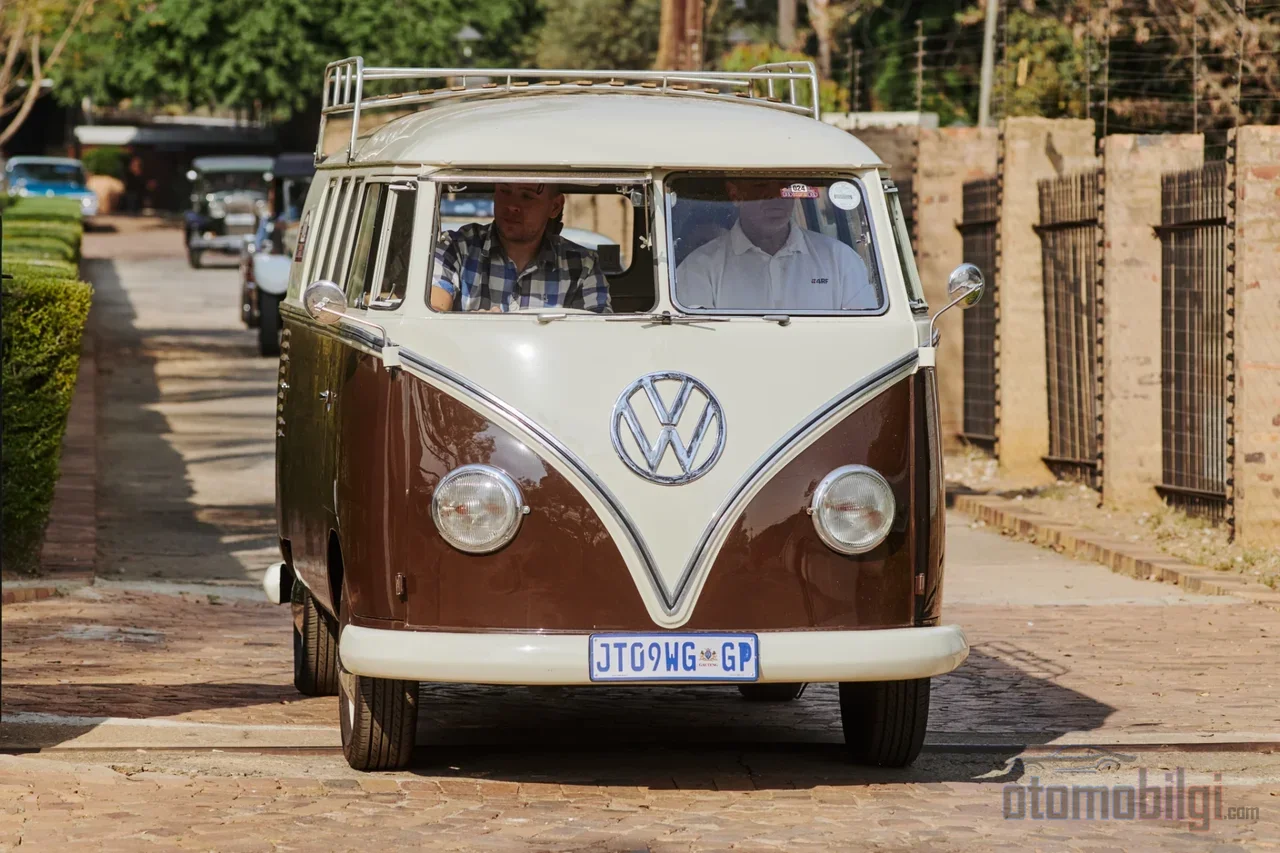
If you are a beginner, keep three things in mind: First, study the market thoroughly and consult an expert - it is hard to catch hidden flaws and fakes on your own. Second, research what we call "rising classics" - models that can still be found cheap but will appreciate in the future; today's E30s were the ordinary cars of yesterday's era. Third, and most importantly, in cars condition is everything: originality, regular maintenance, and care. As safe-harbor brands, we can name Mercedes-Benz, Porsche, and Ferrari; also mainstream models like the VW T1 Bus and the early Beetle appreciate steadily when well maintained. As for the high-performance models of Aston Martin, Ferrari, Porsche, and Lamborghini, they appear at the top of the "guaranteed future classic" list.
One last note from under the hood: The winners in this market turned out to be those who followed the emotion behind the wheel, not the price chart at the tip of the scissors. There are those who want to make money, and those who wake up on a Saturday morning for the smell of gasoline in their garage. The two can go together - but first you need to look at which generation carries the car dreams of its youth. If it were you, which car would you vouch for? That has long been clear, hasn't it?
Sources
- Classic Cars as an Investment - These Models Are Gaining Value
- Classic cars: old and valuable, but really original?
- Classic Cars Are Giving Higher Returns Than Property
- What Makes a Car a "Classic" or "Collector" Vehicle?
- Are Classic Car Prices Dropping in 2026? A Historical Overview
- Collector car market: performance, trends, and opportunities
- Here's What Our Experts Predict for the 2026 Collector Car Market
- Why Usable Classic Cars Are Leading the Market in 2026
- Classic Car Market Trends in 2026
- Classic Car Market Size, Growth, Trends, Report 2035
- 7 Factors That Affect the Value of Your Classic Car
- How younger generations are changing the collector car market
- Millennials and Gen Xers Collecting Cars
- The Classic Car Comeback: Millennials
- Do Classic Cars Hold Their Value?
- Why a classic car can be a good investment
- Are Classic Cars a Good Investment?
- Is Investing in Classic Cars a Smart Financial Move?
- How Much Does It Cost to Restore a Classic Car?
- What Separates Good Restorations from Great Ones
- Restored vs Project Car
- Mercedes-Benz W123 second-hand prices
- Mercedes-Benz 123 classic car listings
- Anadol classic car listings
- Anadol – Wikipedia
- He bought the Anadol his grandfather drove 40 years ago and took it to the roads