Classic Car Collection Culture: The World of Ownership and Community
Share This Page
Classic car collecting is not about keeping a car in a garage; it means keeping the car's story alive, meeting people who share a similar passion, and turning that sharing into a regular habit. In Türkiye, this world, sustained by clubs active since 1990, rallies held every spring and autumn, festivals, and a serious discipline of documentation, has today turned into a vibrant community culture. In other words, the center of collecting is not the car, but the people. Let us also look at this world through the eyes of club members.
Highlights
- For a car to be considered a classic, it is generally expected to have reached 30 years of age and to have a story that influenced its era.
- The Classic Car Club was founded in 1990; one third of its more than 750 members are women and owning a classic vehicle is not required for membership.
- Rallies are not speed races: they are timed courses lasting two days, covering approximately 400 km driven against the clock.
- At rally events, the ratio of female drivers and co-drivers reaches up to 80 percent.
- In the last five years, 1950s Porsche 356 prices have climbed from around 50 thousand euros to the range of 150-200 thousand euros.
How Does a Car Count as "Classic" and How Does the Collector Identity Take Shape?
Let us first clarify the basic concept. According to the common standard adopted by the clubs, for a car to be considered a classic it must have reached 30 years of age. But age alone is not enough; the car is expected to have "a lived story," to have influenced its era, or to be a limited production model. Being well maintained and in working condition, being preserved outside everyday use, and being restored in line with its original features are also part of the definition.
So who is the collector in this world? We often think it is someone who owns a garage worth millions, but true collecting is more a matter of perspective. For some, you invest in a car; for others, in a passion. In fact, both perspectives are legitimate: classic cars are now seen as an alternative to artworks and financial investment funds; major auction houses such as Sotheby's, RM Auctions, and Bonhams even have dedicated departments for classic vehicles. But there is also a nuanced truth: experts emphasize that classic cars bring joy and prestige, but that the return on investment "rarely" materializes. They also admit that most collectors already take the passion-based perspective. So prepare your heart, not your wallet; that is the golden rule.
There is also a border zone: models from the late 1980s, that is, the Young Classics or, by their international name, youngtimer debate. Vehicles from that era are still open to discussion; it is thought that, as long as they retain their originality, they can in time reach full classic status. So eyes looking at an E30 today become tomorrow's classic owner; here we go.
Club Culture in Türkiye: How Do We Join the Classic Car Community?
The backbone of this culture in Türkiye is associations and clubs. The most established example is the association founded in 1990 by Ahmet Öngün, Hasan İnsel, and Hasan Yurdakul; its inspiration came from the clubs in England and France. Today With more than 750 members this organization is affiliated with TOSFED and FIVA, and is described as the only club in Türkiye that organizes rallies to international standards. Members also receive regular technical support and roadside assistance. The best part is this: the members' vehicles range from domestic classics like the Anadol to the Ferrari 250 GTO, and owning a classic car is not a membership requirement. In other words, even if you don't yet have a classic in your garage, the door to this world is open to you.
The club profile is also changing: the average age of members is getting younger, and women make up a third of the community. At rally events, the ratio of female drivers and co-drivers can climb to 80 percent; in 2024, a special stage was held exclusively for female drivers and co-drivers, named after Türkiye's first female driver, Samiye Cahid Morkaya. Morkaya's story is also striking: she won the first official automobile race on June 17, 1932, but because there was no such definition as a female racer that day, her result was annulled. Club culture also brings this past injustice into view.
The picture is lively outside Istanbul as well. The association in Izmir, in addition to creating a meeting point and organizing events that keep the culture alive, also carries out social responsibility projects. The club in Ankara, meanwhile, takes the festival stage in cooperation with the municipality. In short, wherever you are, there is a meeting point near you; all you have to do is take the first step.
2026 Event Calendar: Rallies, Festivals and Gatherings
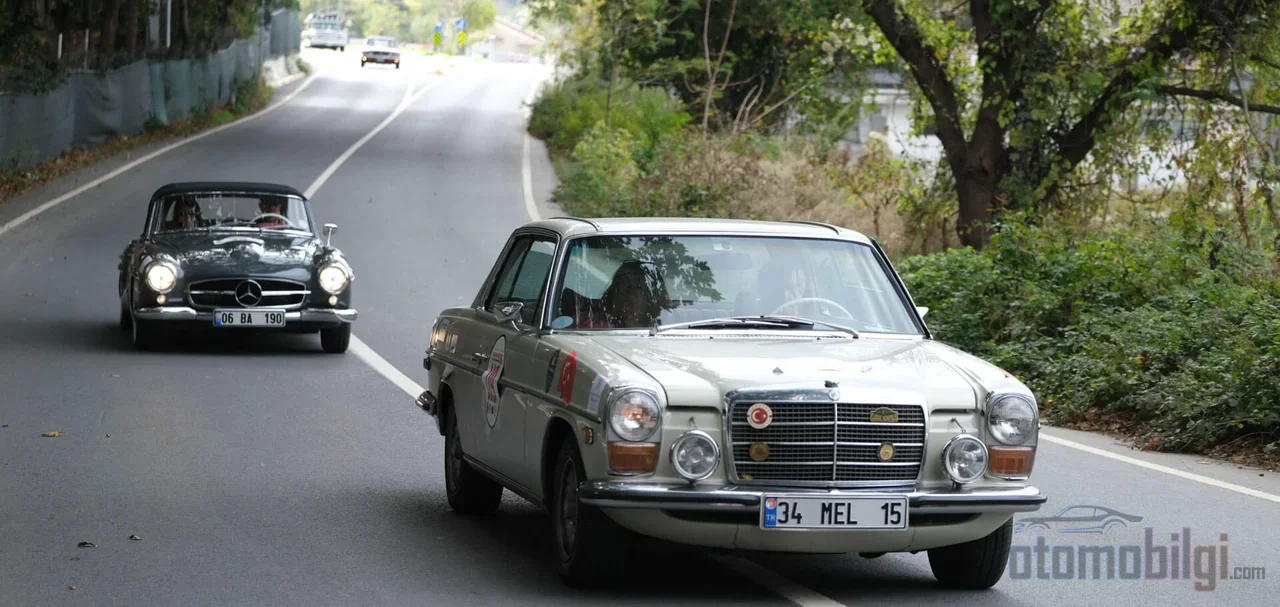
The pulse of this culture beats in the event calendar. Rallies are organized with an average of 80-100 vehicles, and the federation's championship standings are published every season. Here are the standout gatherings of the upcoming period:
| Event | Date | Location |
|---|---|---|
| Canakkale Spring Rally | Spring 2026 | Canakkale |
| 28th Western Anatolia Rally | May 30, 2026 | Cesme |
| 8th Nationwide Classic Car Festival | July 4-5, 2026 | Kayseri |
| Passage of the Stars | September 12-13, 2026 | Beykoz Kundura, Istanbul |
| KOFEST, 3rd Classic Car Festival | September 19-20, 2026 | Sincan Park, Ankara |
There is history behind this list too: the Spring Rally was run in Cappadocia in 2025, the 27th Western Anatolia Rally took place on the Ayvalik-Mytilene route, and the Cumhuriyet Rally entered the FIVA World Rally calendar. Large-scale exhibitions bringing together super sports and classic cars form a separate line of their own. When heading to an event, don't wonder whether to walk in and just look at the cars or talk to people; do both. No one will chase you away, promise.
How a Classic Rally Is Run: Roadbook, Route and Preparation
If "rally" makes you think of speeds of 200 km/h, wait: classic rallies are deliberately not speed-focused. The format consists of events that are "against the clock, non-speed, and complying with traffic rules and signs." Rallies usually last two days and cover a route of approximately 400 km. So don't think of it as a race; think of it as a test of patience and navigation.
The keyword here is roadbook: a route guide containing the route, directions, distances and signs. Something like a written recipe book; if you follow it to the letter, you end up at the right spot. There is discipline on the preparation side too: before entering a rally, it is recommended to be familiar with local traffic regulations and to carry all required documents and equipment, such as a traffic cone and reflector. In this world, safety and order are worth more than speed.
Documentation Habits: The Unsung Hero of Collecting
A common habit of serious collectors is documenting their cars obsessively well. This is not empty fussiness; documentation is what proves the car's value and story. International events even hand out special awards like "Best Documented Car." A practical guide to restoration documentation can be summarized in four steps: take initial photos, follow the disassembly with systematic notes, make audio and video recordings, and archive everything in chronological order. Your phone can be your best workshop buddy, and it's free.
On the Türkiye side, the paperwork order is becoming clearer: for classic vehicles, the purchase requirements of the classic vehicle document known as the "green certificate" is a topic experts frequently explain. The vehicle's registration certificate, that is, the ruhsat, is the fundamental document for buying and selling, inspection, and insurance processes; it contains the engine-chassis number, model year, and color information. A simple rule: write the car's story into a folder, and then don't let the garage stay locked and forgotten.
Real Collectors: Inspiring Stories from Türkiye
What best tells this culture is not numbers, but people. In Erzurum, Burak Arpacık turned the curiosity he inherited from his father into an 11-car collection; among Mustang, Chevrolet, Mercedes, and Buick models from 1959 to 1978 are rare pieces like a 1968 Ford Mustang and a 1962 Chevrolet Impala. The collection's value is stated as 55-60 million TL, and it is said that of some rare models only two exist in Türkiye, one of them in Erzurum. The nicest detail of the story: Arpacık drives only 2,000 km a year, and the cars remain "as they came from the factory."
But the story is not limited to luxury brands. A 40-year-old businessman from Gaziantep built a collection of 17 cars over 12 years. For a collector from Ordu, it was a minibus bought 20 years ago that started everything. On social media, videos of 16-piece collections amassed over 30 years get wide viewership. See? It all started with a small spark. Which car will be your spark?
Investment or Passion? The Controversial Side of Collecting
In this world, there is no single thing everyone agrees on. On one side, there is the picture in which classic cars are presented as a strong alternative asset class: collector cars have turned from a niche market into an engine of growth and innovation. Concrete examples are striking; the Porsche 356 went from 50,000 euros to the 150,000-200,000 euro range in the last five years, and the Mercedes 190 SL of the 1950s and the 280 SL Pagoda of the 1960s tripled in value over the last five years.
On the other side there's a more cautious voice: classic cars bring joy and prestige, but investment returns are rare; what determines the gainers is history, technology, and rarity. Moreover, the economic impact of this culture is not limited to the garage; the classic rally tourism market is projected to grow from a value of 4.62 billion USD in 2024 to 8.56 billion USD in 2033, with a compound annual growth of 7.1 percent. My painful summary is this: if a car is bought with investment expectations, it has to sit quietly in the garage; if bought with passion, it roams the roads. Which one is your style?
First Step for Beginners: Where Do You Start a Collection?
The starting point is actually a single narrowing decision: will you choose a brand, an era, or a body type? Picking one of these three makes everything else easier. The next step is to socialize; because in this community, the fastest way to learn is to attend events, ask questions in clubs, and chat with owners. Remember, in most clubs you can become a member even without owning a vehicle. So there is no reason to wait outside the door.
Let me leave the final word to someone from within this world:
The biggest part of collecting is not the car, but the people.
On this page we did not delve into the subtleties of restoration and the inspection desk, because the goal was something else: for you to become part of this world. When clubs, rallies, festivals, and the habit of documentation all come together, classic car collecting ceases to be a garage job and turns into a genuine culture. So, which event is next? I suggest taking a look at the calendar; maybe next year you too will be following a roadbook.
Sources
- A meeting point for classic car enthusiasts
- Classic Car Club: Homepage
- Rallies
- A 60 million lira collection. There are only two in Türkiye, one of them in Erzurum
- With a passion for classic vehicles, he built a collection of 17 cars over 12 years
- Parade of Stars 2026 Tickets
- ANOK Fest'26
- Türkiye Classic Car Championship - TOSFED
- Izmir Classic Car Enthusiasts Association - About Us
- Classic cars: when collecting becomes a passionate pursuit - LGT
- Collectible cars: From niche market to growth - McKinsey
- 5 Classic Cars Worth Your Investment - Otoplus
- Best Documented Car Award - The Motor Chain
- Concours Journal - Restoration Documentation Guide
- FAQ - clubrallye.de
- How to get your classic car ready for a rally - Chubb
- Classic Car Rally Tourism Market - Growth Market Reports
- What Is a Vehicle Registration Certificate? - Otopratik
- How to Start a Model Car Collection - Sudoragift