Being a Buyer at Classic Car Auctions
Share This Page
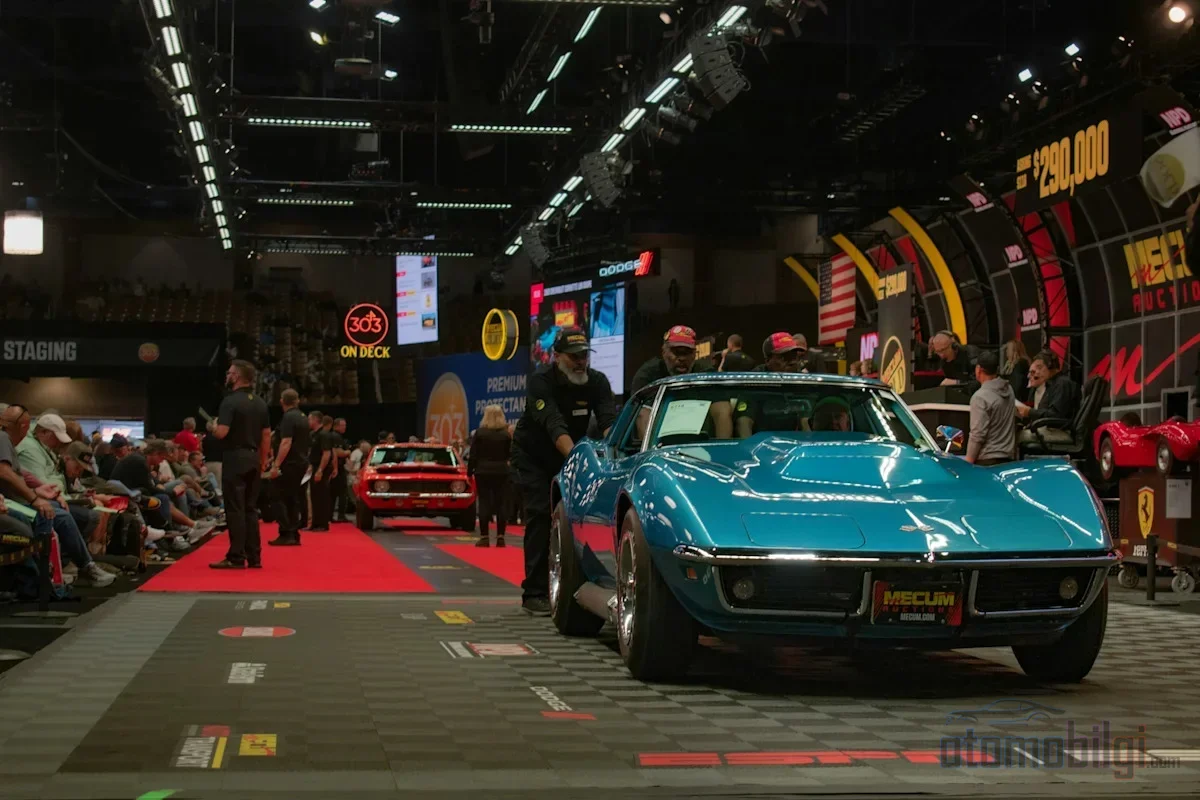
Being a buyer at classic car auctions is not a process that ends when the hammer falls, but one that begins at that very moment: you need to add the buyer's premium to your winning bid, plus documentation fees and plenty of small but painful line items. On this page, I explain everything practical about buying a car at auction, from premium rates to hidden costs, and from reading the catalog to the risks of buying sight unseen.
Highlights
- The buyer's premium typically ranges from 5-15% of the hammer price .
- A £10,000 bid with a 10% premium means an extra £1,000 out of your pocket.
- For storage delays, daily charges of £10-50 can apply.
- On a $5,000 purchase, all additional items can add up to as much as $5,875 - that is, a 17.5% difference.
- In Türkiye in 2023, a Porsche 911 Carrera was the most expensive lot at an auction, selling for 10 million TL.
What is a buyer's premium and why isn't the hammer price everything?
The term you hear most at an auction is "hammer price": the moment bidding ends and the lot is sold. But this is exactly where the trap begins - the hammer price doesn't tell you what the car will ultimately cost you in total. On top of the hammer price, a buyer's premium is added: an additional fee that goes to the auction house, usually calculated as a percentage. Historically, rates reaching up to 12.5% are mentioned; today, in most places it ranges from 5-15% . Think of it this way: when you ask for the bill at a restaurant, service charge and VAT are added to the menu price, right? It's the same at an auction, just with a fancier name.
Rates vary considerably depending on the auction house and can also differ based on how you bid. At some major American events, a premium of around 10% is known to apply for in-person participation; at some British classic car auctions, the buyer's fee is 10% of the sale price but with a minimum amount - meaning even if you buy a cheap car, you pay a floor amount. Before bidding, always confirm the premium rate and minimum fee for whichever auction you plan to attend; this information is clearly stated in each event's terms.
Hidden costs: the bill that comes after the bid

The premium is only the first chapter of the story. Beyond your winning bid, the list of items you'll pay for is long, and while each may seem small, together they add up to serious money. The most common ones are:
- Administrative and documentation fees: A fixed amount per vehicle; examples highlight figures like £50-300 or $200.
- VAT / sales tax: The price may appear inclusive in listings, but it may actually be exclusive. In some countries, even the premium is taxed - a £10,000 premium calculated on a £100,000 hammer price can be taxed separately.
- Online bidding fee: If you're bidding remotely, you may face a charge of £30-60 per vehicle, or digital service fees along with a premium that can climb to 9-12% depending on the platform.
- Payment processing: A 2-3% extra fee is common for credit card payments; bank transfers are sometimes free but delayed.
- Storage: There is usually a free delivery window of 24-72 hours; if you delay, you may pay 10-50 pounds per day.
- Shipping and transfer: Transport, plate and registration document costs vary depending on distance.
- Cancellation penalties: Auction sales are final; if you back out of your bid, you may lose your deposit and face a penalty of a percentage of your final bid. On some platforms, even delaying payment by 24 hours can trigger a fixed penalty.
A concrete example speaks volumes: if a winning bid of $5,000 is topped with a $500 premium, $200 documentation, $75 payment processing and $100 storage for a two-day delay, the total $5,875 comes to. The car you looked at and thought "wow, that was cheap" actually ends up 17.5% more expensive. That is why professionals do this: calculate the maximum bid backward from the start. If you say "I will pay at most this much for this car," set your hammer price ceiling by deducting the premium and all extra items from that amount.
Live or online: the differences between two worlds
Live auctions are a full feast - the atmosphere of the hall, the sound of the hammer, the bidding competition. These events combine theater with commerce and give sellers visibility to showcase their vehicles. Online auctions, on the other hand, let you bid from your computer, even in your pajamas; for mid-range classics or lesser-known niche vehicles, sometimes better prices can come out. But beware: convenience has a price. Online platforms may charge a digital access fee, an additional premium for internet bidding, or a transaction fee; conversely, some charge the buyer nothing at all and allow you to see the car at the seller's address and take it for a test drive. In other words, there is no shortcut like "online is cheap" or "online is expensive" - you must read each platform's terms one by one.
If you are going to buy online, a classic roadmap works like this: first determine the car's market value, find the example you like, research the car in depth, monitor the sale and, most importantly, read the room - that is, calmly filter out the enthusiasm of rival bidders. For a live auction, registration is a must: to bid in person, online or by phone, you need to register in advance; you cannot walk into the hall at the last minute and raise your hand.
Reading catalog descriptions correctly
Auction catalogs flow like poems, but every sentence can carry a double meaning. Descriptions like "original," "correct parts" or "low mileage" may be true - but they can also be the brightest possible interpretation of the condition. Reading the catalog text is the starting point of purchase knowledge; the real work is deciphering an actual condition report.
A good condition report covers four things: paint and non-paint status, panel gaps, rust and mechanical function, and interior wear. If the report stays silent on one of these headings, meaning nothing is said at all, that silence itself is a warning sign. Japanese auction sheets are instructive in this regard: vehicles are graded according to mileage and interior and exterior condition; the seller's selling points and the inspector's report are written out plainly. There are also price databases containing past auction results, catalog texts, and photos; by seeing what a similar vehicle actually sold for, you can set your budget accordingly.
Bidding without seeing the vehicle: could it be an expensive lesson?
Buying-without-seeing stories fall into two categories: either you come back with a great deal, or you experience the most expensive regret of your life. A striking example: one buyer paid $1,152,000 plus fees for a vehicle they had never seen in person and whose seller they did not know. In collector communities, the picture is even harsher - it is repeated almost like a rule that restored classics should not be bought unseen, due to the risks of hidden damage and fraud. Most of the "no, never again" answers from those who bought unseen come from a major disappointment.
Still, the door is not completely closed. With a careful process - an independent inspection, complete documentation, a reputable auction house - the risk can be managed. This is what you must remember: many auction vehicles are sold "as is." If no inspection is done, transmission problems, electrical faults, or a body that appears well kept but has an entirely different story will come to light only after you have placed your bid. A GBP 100-300 independent inspection is practically a penny's worth of insurance compared to the repair bill you will face later.
Realistic strategies for beginners
If you are going to your first auction, the smartest move may be not to bid at all - at least in the first round. First observe the auction landscape: how lots open, how bids progress, and take note of which vehicles unexpectedly went cheap or expensive. Do not get immediately hooked on the first car you like and start bidding; that excitement is the most expensive emotion of all.
- Set a strict budget and write the buyer's premium into that budget from the start; whoever says "I will think about the premium later" pays out of their own pocket.
- Research the vehicle's market price in advance; making a snap decision at the auction means making a snap expensive decision.
- If possible, inspect the vehicle in person and read the condition report line by line.
- Stay calm: The buyer who gets anxious, loses control, and drives up the price themselves is the person who pays the most at every auction. The cool-headed, controlled bid wins.
- Give a clear signal: In a live saleroom, stand somewhere the auctioneer can see you and make a clear hand gesture with your bid. Ambiguous gestures like winking leave both you and the auctioneer in a difficult position - the auctioneer is the official officer who accepts bids and declares lots "sold" or "unsold," so keep your eyes on them.
How do classic car auctions work in Türkiye?
The Turkish leg of this world is also heating up fast. At a classic car auction in Istanbul, a 1996 Porsche 911 Carrera became the most expensive lot at 10 million TL, while a 1968 Aston Martin DBS Vantage found a buyer for 6,475,000 TL; in the same series, a 1956 Chevrolet Corvette and a 1964 Mercedes-Benz 230 SL sold for 2.5 million TL. At the next event, total sales reached 15,350,000 TL. Auctions are held both in a physical hall and with simultaneous telephone participation - meaning the remote bidding model is familiar in Türkiye too. Online platforms are also gradually taking the place of car auctions.
For those considering a classic car from abroad, there is a critical rule: the vehicle to be imported must be at least 40 years old by model year in order to carry classic or collectible value. On the Türkiye side, museums and events are also thriving: an Istanbul museum held a classic car and motorcycle exhibition; the Türkiye Classic Car Championship opened with the Spring Rally. So there is a community here too where you can share the car you bought at auction. On the market side, 2026 expectations are interesting: most of the year's biggest sales are expected to come from post-1990 vehicles, and value growth now relies not just on scarcity but on usability and cultural significance - the growing youth of the collector generation also keeps demand alive. Which vehicle do you think will be tomorrow's auction star? My money is on young classics.
Final word: whoever knows the math wins
Auction is the most exciting way to buy a classic car - but excitement, when unchecked by calculation, sends you the bill. Add the buyer's premium to the hammer price, plus taxes, documentation and storage fees, and shipping, and know the real total from the start; trust the condition report, not the catalog poetry; watch the first time, then bid. Your budget stays tight, and your head stays high.
Sources
- Hidden Fees to Watch Out for in Car Auctions
- The True Cost of Buying at a Car Auction: Fees Explained
- Car Auction Buyer's Premium: What You Need to Know
- The Complete Guide to Auction Fees and Buyer's Premiums
- Costs for Sellers and Buyers
- The buyers guide to classic car auctions
- Buyer's premium
- Online vs. Live Auctions: Where the Classic Car Market is Heading
- Online auctions vs. live auctions: the classic car buyer's dilemma
- How Car Auctions Work: A Beginner's Guide
- How to buy a classic car in an online auction
- How to Read a Car Auction Condition Report Like a Pro
- Classic Car Auction Descriptions Translated
- Collector cars: Buying sight unseen
- Tips for buying a car sight unseen
- Avoid These Costly Risks When Buying a Vehicle at Auction
- First-time buyer's guide to collector car auctions
- 12 essential tips for buying and selling a car at auction
- How to Buy Your next Classic Car at an Auction
- 10 million TL sale at a classic car auction
- 2plan Terminal Classic Car Auction
- 15 million 350 thousand lira sale at a classic car auction
- 2026 Guide to Classic Car Imports
- 2026 Collector Car Market Predictions
- Best Classic Car Market Buys 2026
- Classic Car Auction Results