Where to Find Original Spare Parts for a Classic Car?
Share This Page
The original spare part for a classic car is found through the manufacturer's classic parts programs, brand-specialized dealers, dismantling (shed) yards, club-internal swap networks, and nowadays custom manufacturing. In other words, the answer is not a single place but a sequential roadmap: first the factory source is checked, then specialist dealers and dismantlers, and only at the very end come custom solutions such as replica production or 3D printing. The most time-consuming job of classic vehicle ownership is often not the repair itself but precisely this search - and this article maps out that search for you.
Highlights
- A manufacturer's online classic parts store close to 35,000 parts covering 1960-1990 model years.
- The classic vehicle restoration parts market is estimated to be $8.4 billion in size in 2025.
- A professional engine reconditioning typically costs between $2,500-10,500.
- Restorations done in the factory's correct color and materials generally hold their value better than vehicles with non-original touches.
- For parts that cannot be found, one-to-one custom manufacturing with 3D printing and CNC is now a real option.
Why Is Finding Parts Harder Than the Repair Itself?
Think of it this way: removing a car's engine is one job, but finding the broken part of that engine is a completely different sport. In a modern car, everything is on the shelf; but if your vehicle is 40-50 years old, that part's production most likely stopped decades ago. That is why the schedule of restoration projects is shaped not by the work but by how quickly parts can be found. The faster the part arrives, the faster the work progresses; if the part does not arrive, even with a great craftsman at hand, the car waits on the lift.
This is exactly why experienced owners see parts hunting as a skill. Parts suppliers even describe this process as a stepped ladder: at the bottom there is internet searching and asking by phone, and as you climb up you move to more organized sources. Let's climb the rungs of the ladder one by one.
The Manufacturer's Classic Parts Programs: The Factory Is Still Selling
Most people do not know this: brands like BMW, Mercedes, Porsche and Ferrari still support their classic models within their own organizations. These are called "factory classic programs," and this is always the first address you should check on your parts-finding journey.
What does BMW Group Classic offer?
BMW's classic division provides restoration, spare parts catalogs and service; the scope covers the BMW, BMW Motorrad, MINI and Rolls-Royce brands. The workshop in Munich does everything from full restoration to daily maintenance, and the emphasis is always on the same two words: originality and fitting precision In other words, the part that leaves the factory fits as if it had been there all along. When the online parts store opened in early 2012, around 35,000 parts for automobiles and motorcycles from 1960–1990 were offered for sale; the brand's online product catalog also covers 424 classic models. One small note: heavy parts, hazardous materials, electronic components, and fabric-type products may fall outside this store's scope, so you can't just click everything into your cart.
How does the Mercedes-Benz side work?
Mercedes-Benz Classic's parts search platform offers a system where original parts, selected remanufactured components, and discontinued parts are accessible for classic and "young classic" models. The nice thing is the transparency: you can directly see whether something is in stock, the price, and parts on promotion (for the German market only for now). The company also clearly states that it works with qualified partners and selected suppliers for quality and fitment.
Even crazier: continuation series
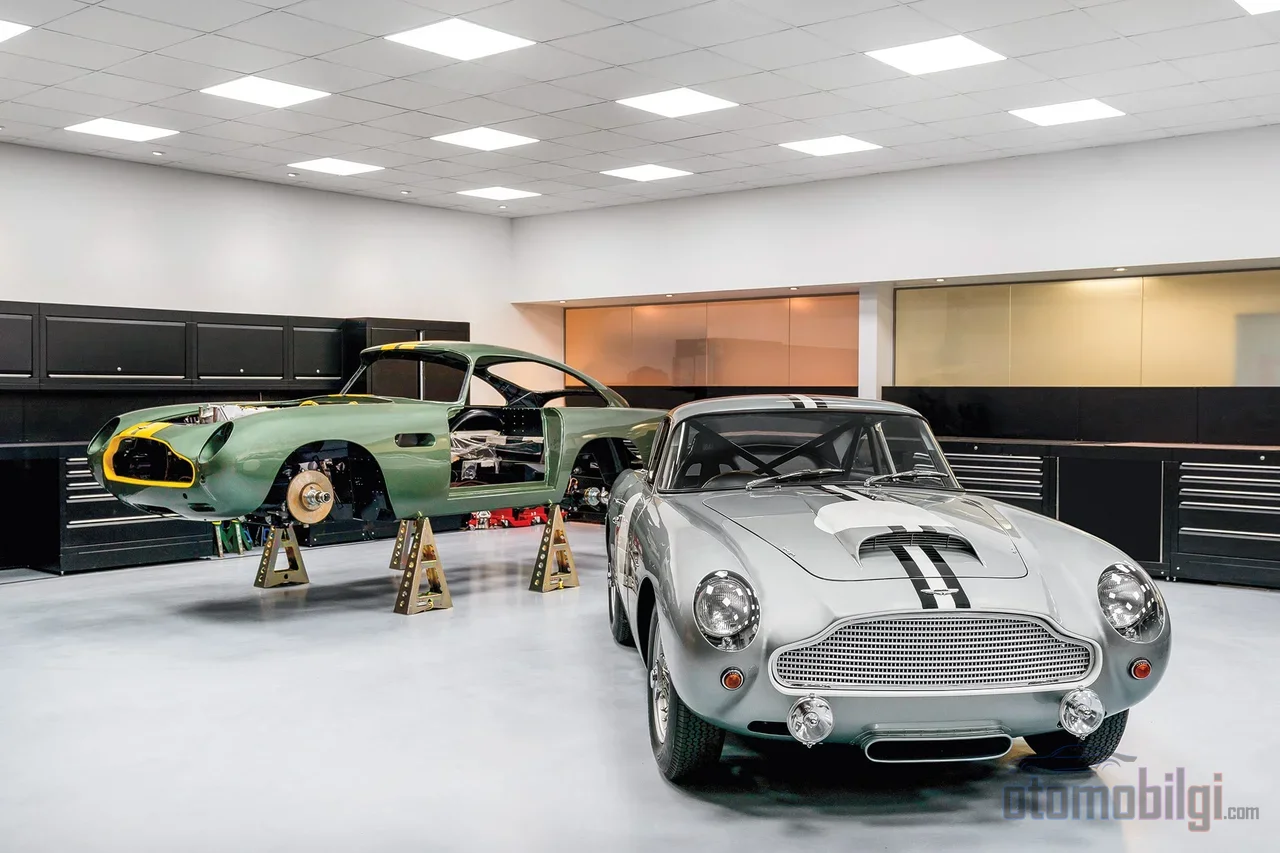
Some brands take things beyond just selling parts. Aston Martin still hand-hammers body panels from aluminum sheet at its Newport Pagnell facility using tools in use since the 1960s; there is also a fixed-price servicing program for each model. Additionally, it produces "continuation" vehicles, starting with the DB4 GT and continuing with a run of 25 James Bond-specification DB5 replicas - the DB5's price is 3.5 million dollars. There are also voices that view these programs positively for reducing vehicles going to scrap; keeping heritage models preserved within the brand's own organization is actually the model that solves the parts-finding problem most fundamentally.
If the Factory Is Closed: Dismantling Yards, NOS Stocks, and Specialist Sellers
If the manufacturer's program doesn't cover your model, you move on to the second tier. Here are the classic addresses of the classic parts world:
- Dealer networks: Especially for youngtimers, original parts can still come out of the dealer's old storeroom.
- NOS (New Old Stock) specialists: Brand-new parts in their boxes that were never sold in their production period and waited in a warehouse. Worth their weight in gold for collectors.
- Dismantling (shed) yards: Some are completely specialized in a particular brand or class of classics - cars are disassembled section by section and cataloged.
- Marque owner clubs and swap meets: At swap meets, parts change hands; the network within a club is often the fastest solution.
- Online auctions and specialist sellers: There are large stockists focused on specific brands/models.
The scale of specialist sellers is impressive: sellers focused on Mercedes models from 1946–1975, and for classic VW, Porsche, and Land Rover, more than 40,000 companies that stock parts, and catalog giants dedicated to American classics like GM and Mustang are full-time players in this business. In fact, in the UK market, classic part finder platforms and restorer-remake communities are growing rapidly. The whole market is this vibrant because the demand is real: there are estimates that the classic vehicle restoration parts market was $8.4 billion in 2025 and is expected to reach $14.6 billion in 2034 - since it is a figure based on a single third-party report, it is worth taking it with a grain of salt, but the direction is clear.
Finding Parts in Türkiye: Practical Ways and Realities
Now let's get to the part that interests us most. Classic part supply in Türkiye works like a localized version of the ladder above, and it is actually far more organized than you might expect.
Domestic sources
A classic car parts dealer operating at Şaşmaz in Ankara offers original, OEM, aftermarket and used parts across 28 brand groups; alongside domestic stock for rare parts, they scan used-part networks and foreign suppliers. Some classic part companies selling from stock even offer import support from the United States for parts that cannot be found. There are also domestic sellers specialized in detail parts such as headlights, tail lights, mirrors and emblems. On the internet side, parts buying and selling and information sharing run intensively in the Facebook groups of classic car communities; it is also possible to find seller accounts dedicated to classic car parts on sahibinden.com.
Foreign supply and customs
The part you cannot find is most likely available in Europe or the US - it is a well-known fact that the spare parts availability in the US and Europe is very extensive. There are guides on import requirements, costs and customs for sourcing parts or entire classic vehicles from abroad into Türkiye; there are also expert firms that handle import, permit, inspection and customs clearance procedures. When planning your budget, remember this: for rare or imported classics, shipping and customs items affect the cost as seriously as the part itself. The fact that even major Mercedes parts sellers have Turkish-language pages is a good indicator of how easy access from Türkiye has become.
The logic of restoration itself
In restoration circles, the main philosophy of parts sourcing is summarized as follows: clean and use the existing parts on the car, and renew or remanufacture those that cannot be cleaned. In other words, you don't have to buy everything from scratch; sometimes the most valuable "source" is the parts already on the car itself.
What to Do When a Part Cannot Be Found? Does Custom Manufacturing Really Work?

This is the top rung of the ladder: the part is nowhere to be found. The good news is that this is no longer the end of the road. Exact production can be done with a 3D printer from a digital scan of the old part; meaning you no longer have to find the part's original model, you can scan the existing example and print it anew. Replica production with CNC machines is also a valid option.
One of the best examples of this: A Mercedes W123 Coupé owner, unable to find rubber seals during restoration, instead of giving up set up his own production. Today he produces seals and parts for the W123, W124, W108, and W111 series; the seals are positioned as "faithful copies" true to original specifications, offering a cost-wise sensible alternative to expensive or unobtainable originals. The same manufacturer also emphasizes that a poor-quality seal means not just annoyance but loss of oil/coolant and a drop in the vehicle's value - so when it comes to copy parts, quality is a matter of engineering rather than aesthetics. The existence of companies in Taiwan with over 40 years of experience producing/supplying classic parts for brands like VW and GM also proves this is a global industry.
Does Aftermarket or Copy Parts Lower the Car's Value?
Now let's get to the hottest point of the debate. The short answer: it depends on the situation, and the equation "copy parts = loss of value" is not always true.
Here's how the value side works: Restorations done with the correct color, material, and components generally hold their value more strongly than vehicles with non-original features added. In fact, the use of wrong parts, sloppy bodywork, and anachronistic paint colors can sometimes drop a vehicle's value to below even that of its faulty state On the restomod side, workmanship quality and whether the modification is reversible are decisive; the money you spend - say a $4,000 package of wheels, suspension, and inspection - doesn't automatically reflect in the vehicle's value; the real determinant is buyer demand.
But the opposing view is also strong and practical: most aftermarket parts don't lower sales value. Especially in parts that aren't visible but relate to operation, a high-quality, specification-faithful replica actually serves protective restoration - if the original is expensive or unavailable, keeping the car running and sound may be a higher priority than originality. The practical rule as I read it is this: prioritize originality in visible and judged parts; accept high-quality, specification-faithful production in working but invisible parts.
| Source Type | When to Use It? | Point to Watch |
|---|---|---|
| The manufacturer's classic program | Always check here first if the brand program covers your model | Heavy, hazardous, electronic and textile items are excluded at some stores |
| NOS specialists | If you need a brand-new, original part in its box | The price can be high, stock is single-unit |
| Salvage yard | When hunting for used, budget-friendly parts | Some specialize in a single brand, check case by case |
| Clubs and swap networks | Often the fastest trail for a rare part is here | Business relies on trust and connections |
| Custom fabrication (3D/CNC) | If the part is unavailable anywhere | Fidelity to specification is essential; poor-quality production hurts value |
A Useful Order of Operations Before Starting the Parts Hunt
To put all of this into a single practical sequence: first check the manufacturer's classic program and parts search systems; then scan the major sellers specializing in your brand/model; in parallel, sign up to club groups and swap networks; if that doesn't turn anything up, reach out to salvage yards and NOS sellers; and as a final step, consider custom fabrication. At every step, keep the part's number, specification and photo ready - especially when corresponding with overseas sellers, this saves weeks. And add shipping and customs to your budget from the start, because with imported parts the real surprise usually comes not from the part's price but from the shipping cost. So which part of your project gives you the most trouble? If your answer is "all of them," don't worry - half of this hobby is precisely this chase.
Sources
- BMW Group Classic
- Click to classics. BMW Classic launches its online Parts Shop - BMW Group PressClub
- Mercedes-Benz Classic Parts Search
- In Detail: The Factory Classic-Car Programs of Ferrari, BMW, Mercedes, Porsche - MotorTrend
- MBZCLASSICPARTS GmbH
- Spare parts for Mercedes-Benz classic cars - Niemöller
- 5 Levels of Parts Finding for Vintage Cars - Hagerty
- 10 Places to Look for Classic Car Parts - HowStuffWorks
- How to Source Rare OEM Parts for Discontinued Car Models - Automan Spare Parts
- How to source hard-to-find classic car parts - Footman James
- Classic Car Restoration Parts Market Research Report 2034 - Dataintelo
- Heritage Parts Centre UK
- OPGI - Classic GM Restoration Parts
- National Parts Depot
- Vintage Parts Inc.
- Pan Taiwan Classic Car Spare Parts
- Aslan Spare Parts - Classic Car Spare Parts, Ankara
- GarajArt - Parts Supply for Classic Cars
- OTOKLASİK Facebook Group
- Eskişehirli Oto - Sahibinden
- Tuna Classic Car Accessories and Spare Parts
- Custom Part Production for Classic Cars - Parts No Longer Made
- Classic Car Restoration - CEED Türkiye
- The Cost of Restoring a Classic Car Today - Hillbank Motor Sports
- Classic & Scrap Car Imports to Türkiye - WC Shipping
- Classic Car Import 2026 - Albayrac
- Classic Car Import - Antik Garaj
- Classic Car - Sohhox
- How Restoration Affects the Value of a Classic Car - Ideal Classic Cars
- 7 Factors That Affect the Value of Your Classic Car - Driven Racing Oil
- Restomod vs Original - Velocity Restorations
- Restomod Rising - ProForm
- Do Car Mods Increase or Decrease Value? - Nexus Auto Transport
- Do Aftermarket Parts Help Resale Value? - Anybodys Autos