How Does Wet Asphalt Affect Range?
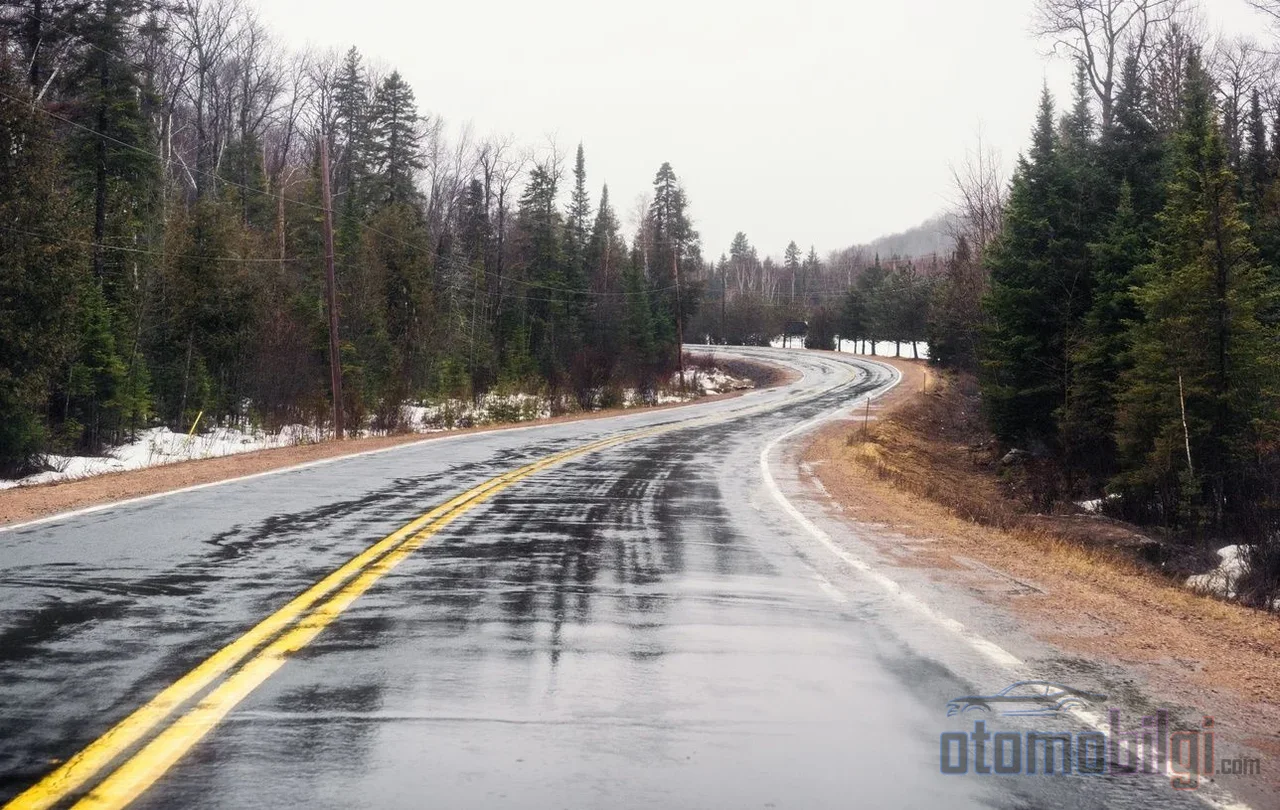
You set off with an 80% charge, and the range indicator was making you feel at ease. After two hours of rain-soaked highway, the indicator starts telling the truth and says you need to reach the next charging station sooner. So what changed? Not the rain itself, but the physical answer to the question of how wet asphalt affects the range beneath your tires.
How Wet Asphalt Affects Range: What Is Happening Under the Tire?
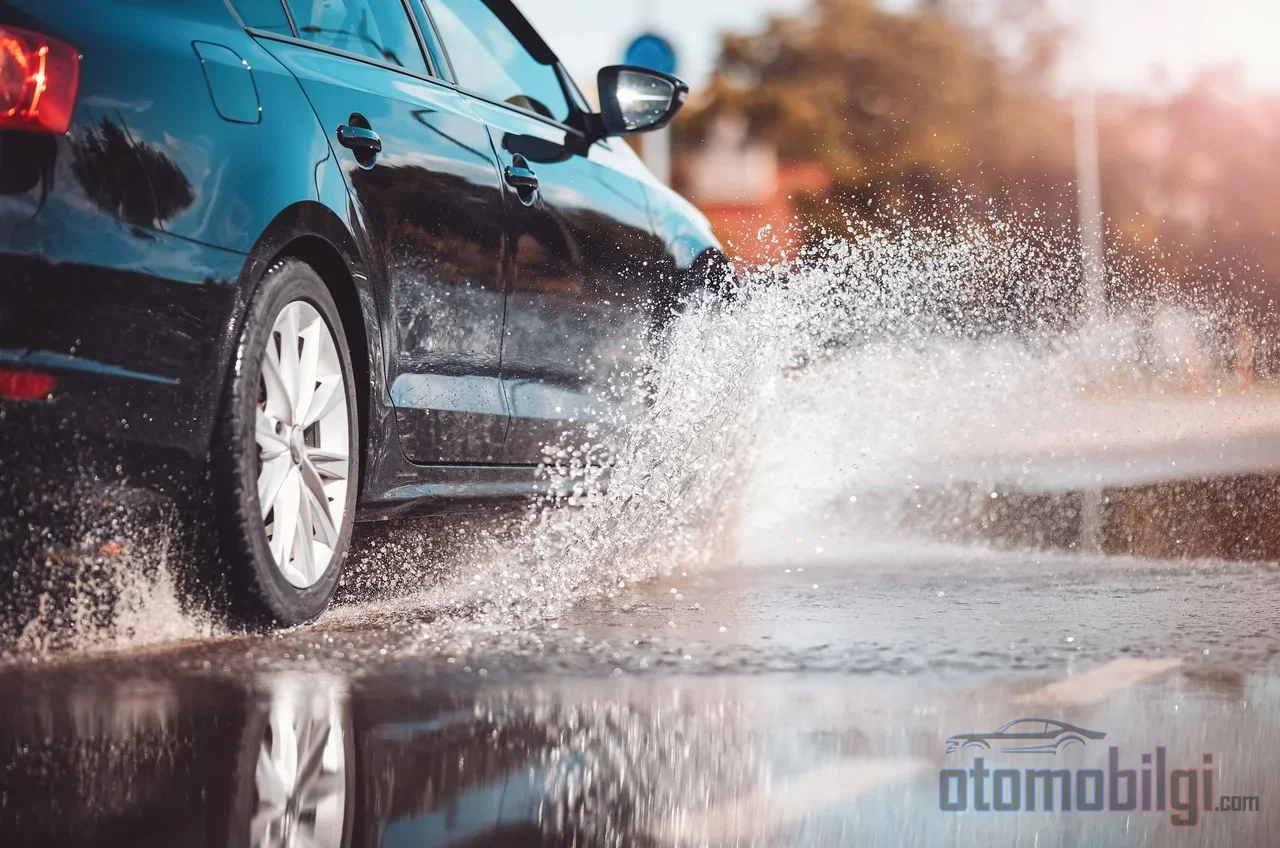
As the tire rolls, the tread and sidewalls deform continuously as they enter and leave the contact patch. During this deformation, part of the energy turns into heat and is lost; in tire literature, this is called hysteresis. Normally, the energy lost this way is relatively small; the rolling resistance coefficient of tires sold today varies between 0.007 and 0.014. The problem is that a wet surface disrupts these balances.
Rain creates a thin layer of water between the tire and the asphalt. The tire works both to drain the water, and its deformation profile changes. Snow and mud get trapped under the tire and deform it extra; all of these push rolling resistance upward. Moreover, what affects range is not the intensity of the rain, but the amount of accumulated water on the road: water that fills cracks and forms tread deposits produces far more resistance than rain in the form of spray. Rough asphalt also consumes constantly more energy compared to a smooth surface.
Why is this effect more pronounced exactly in an electric vehicle? Because an EV has no major losses such as engine friction or combustion heat. In an internal combustion vehicle, the relatively small energy going to rolling resistance appears minor within the overall energy balance. In an electric vehicle, however, the same energy is drawn directly from the battery and takes a much larger share of total efficiency. In other words, an EV is a vehicle that reads what is happening beneath it with far greater sensitivity.
Highlights
- When rolling resistance is reduced by 1 kg/t, EV range increases by about 3-4%; a wet surface raises this resistance in the opposite direction.
- In an urban cycle simulation, the energy drawn from the battery was 4308 kJ with a low-resistance tire and 4804 kJ with a high-resistance tire.
- In cold conditions, EV range can drop by up to 30%; the main source of loss is not the battery but cabin heating.
- In rainy weather, headlights, wipers, and defogging impose an additional electrical load on the range.
How Much Does Tire Choice Touch the Range?
To see what the difference between a rolling resistance coefficient of 0.008 and 0.012 means, it is enough to look at a concrete simulation. In an EV simulation study at Kütahya Dumlupinar University, with a low-resistance tire (0.008) over the UDDS urban cycle, 87.1% SOC remained in the battery at the end of the route; with a high-resistance tire (0.012), it was 85.6%. In the same cycle, the average energy drawn from the battery rose from 4308 kJ to 4804 kJ. Review: the roughly 11% extra energy consumption came solely from the difference in the tire coefficient.
The manufacturer-scale equivalent of this difference is also clear: when rolling resistance decreases by 1 kg/t, range increases by roughly 3-4%. On the EU tire label, a tire with an A rating for rolling resistance delivers a noticeable saving in consumption. It has also been measured that a low-resistance tire significantly increases range per charge compared with a similar tire.
Here is the interesting part: a worn tire can deliver about 6% better range than a new tire. It is normal for range to drop right after a new tire is fitted; deep tread grooves increase resistance. In other words, the deep tread required to drain water in the rain is a safety choice that comes at the cost of range.
Does Rain Wear You Down on Its Own, or Only When Combined with Cold?
On a rainy winter day, your vehicle is actually handed three separate penalties at once. The first is the increase in rolling resistance on wet surfaces described above. The second is the drop in battery efficiency caused by low temperatures and the increase in aerodynamic drag as the air becomes denser. The third is the reduction in grip from the cold ground and its limitation of energy recuperation.
Turkish sources generally put winter range loss in the 10-25% range; at 0 °C an average loss of 20-25% is cited, and at -10 °C losses of 30-40%. Most of this loss comes not from the battery itself but from cabin heating. The resistance effect of wet asphalt is added on top of these, and in a full winter rain the total loss grows even larger than in pure cold weather.
Now for the details: On wet ground, the headlights, wipers, and windshield defrost heating come into play. Each of these draws an electrical load from the battery. Defrosting is especially greedy, because heating the glass is a high-power resistance job. On a short urban trip these are tolerable; on a long journey, each load cuts its own share from the range.
How Much Extra Consumption Should You Prepare for in the Rain?
There is no controlled, single percentage figure for the effect of wet surfaces on rolling resistance; the result varies depending on the tire, the vehicle, and the road surface. Driver experiences reflect this picture too: some drivers find the effect of rain negligible, because they already drive slower in the rain and the reduced speed compensates for the energy lost. Others experience a noticeable range drop in heavy rain on the highway and stress the need to plan their test route accordingly. In reality, the middle ground is this: setting aside roughly a single-digit percentage for extra consumption in moderate rain, and doubling that share in heavy rain on waterlogged highways, is a healthy planning instinct.
The dashboard is actually being honest: while a 10% degradation of 35 mpg consumption in an internal combustion vehicle goes unnoticed, an EV's range indicator puts this difference on the screen. So do not fall into the illusion that rain exists only for gasoline cars and not for EVs; the difference is merely more visible.
How Should Long-Distance Charging Planning Be Revised in Wet Weather?
On a rainy winter route, the planning math changes. The basic rule is to arrive at each charging station with at least 15% charge remaining under normal conditions; if stations are sparse and the weather is bad, this safety margin should be increased. On a wet highway, calculate the distance to the next DC fast charging point based on your realistic winter range, not the WLTP range.
- Raise your planned arrival SOC above 20% in winter; it is gentler both for the safety margin and for battery health.
- Instead of charging to 100% every night, keep daily use around 80%; only charge to 100% on the morning of a long trip if needed that day.
- If possible, balance the start of charging with one station before your target station; unexpected extra consumption due to rain affects the second stop, not the first.
The same logic applies on the temperature side: Plan to arrive at a reliable station with at least 15% charge remaining in normal winter conditions, and increase this margin when conditions are bad. This margin is an insurance policy that covers the increased resistance on wet ground and the load from headlights, wipers, and heating.
Driving Techniques on Wet Roads: Regenerative Braking and Speed Balance
The first tool for preserving range in the wet is not under your seat, but under your right foot. Moving at the steadiest possible speed in cold weather reduces consumption; instead of speeding up and slowing down, a slow but consistent pace pays off in both safety and efficiency. On a highway where the wipers are running, choosing one step below the speed limit is the single action that delivers the most tangible improvement to your range indicator.
Regenerative braking returns some of the deceleration energy to the battery; one-pedal driving (OPD) turns this mechanism into daily practice and also reduces brake pad wear. However, there is a critical physics detail: while more energy can be safely recovered on a high-grip surface, recovery intensity must be limited on wet or icy ground for stability. In other words, regenerative braking can be used in the wet, but not at its most aggressive level. In some EVs, winter or icy weather modes automatically soften the regeneration intensity; it is wise to keep these wheel-control-assisting modes active on a rainy day. Remember, regenerative braking does not replace conventional brakes; friction brakes are the backup safety system.
Reducing cabin heating also directly benefits range: Preheating the car while plugged in ensures both the cabin and the battery are warm at departure and eliminates the first 20 minutes of high consumption. On the road, opting for seat and steering wheel heating instead of cabin heating provides warming comfort with far less energy.
Tire Pressure and Charging Safety in the Rain
Pressure checks are the cheapest way to manage resistance in the wet. Even a few PSI of under-inflation increases rolling resistance and drains the battery quickly. Pressure decreases over time and as the outside temperature drops; checking once a month in winter and once more at the start of the rainy season is a reasonable routine. On wet surfaces, a tire with deep treads in the low rolling resistance class strikes the best balance between safety and range.
There are also reservations about charging in the rain: As long as the charging port cover is closed, the vehicle is designed to withstand pressurized water and automatic car wash tunnels. At outdoor charging stations, IP protection ratings are the key to safe charging; charging in the rain is safe at a station that complies with the standards.
Conclusion: The Formula for Preserving Your Range on Wet Asphalt
What reduces your range on wet asphalt is not the rain itself, but the sum of three physical effects: the increased rolling resistance caused by the water layer and deep treads, additional electrical loads such as headlights, wipers, and defogging, and the loss from battery and cabin heating combined with the cold. The short answer to the question of how wet asphalt affects range is this: a wet surface increases consumption by raising rolling resistance, and when combined with cold weather, this effect can shorten range by 10-30%; to counter this, it is enough to increase the safety margin in your charging plan, reduce your speed, check tire pressure once a month, and soften regenerative braking according to road grip. Resistance is something measurable; and with proper planning, it is manageable.
Sources
- How Road Surface Conditions Impact EV Range - NIRA Dynamics
- Advisor Based Modelling of the Effect of Rolling Resistance on Regenerative Braking - El-Cezerî Journal of Science and Engineering
- How tires impact your electric vehicle's range - Michelin
- Electric Cars: Why Manufacturers Rely on Continental Tires - Continental
- How much do tires affect EV range? - Giti Tire
- Will the rain affect my range? - Roadchef
- EV Winter Range: A Practical Planning Guide - DriveChina
- Why Does Electric Vehicle Range Drop in Winter? - ChargeMate
- Is Charging an Electric Vehicle in the Rain Safe? - arabamsarj.com.tr
- How To Maximize Electric Car Range - Coltura