Why Does the Same Model Consume Differently?
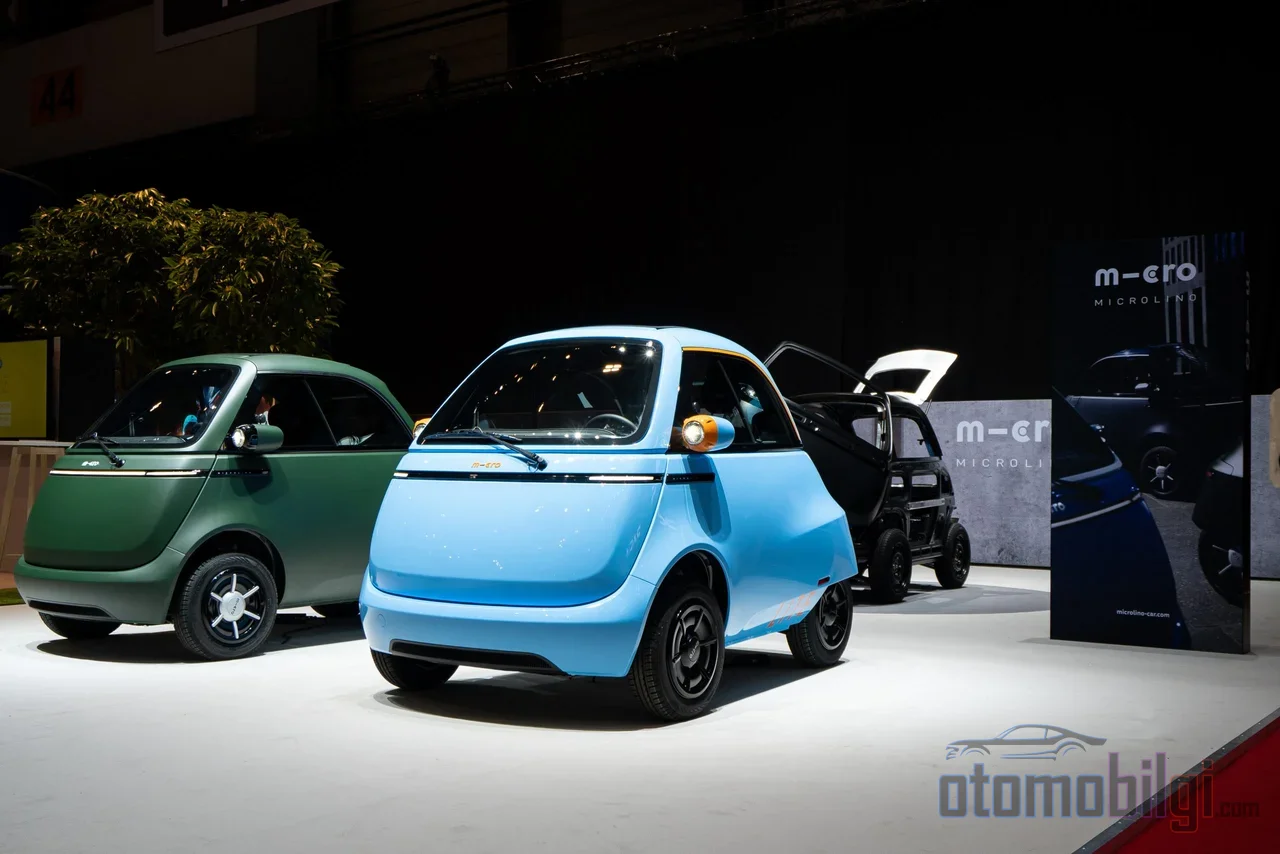
Two drivers meet at a charging station; both are driving the same model, in the version with the same battery capacity. One shows that he used 14 kWh per 100 kilometers that day, while the other's display reads 21 kWh/100 km. The difference between them opens up one of the most debated questions of electric vehicle use: why does the same car consume differently?
Users are inclined to blame the catalog, because WLTP values are fixed figures determined in the laboratory. In reality, in the equation that determines consumption, the car's share almost races against the driver's and the route's share. In this article, we examine the three variables that change consumption - driver profile, route character, and vehicle preparation - with measurable data.
Driver Profile: Every Behavior on the Accelerator Pedal Turns into Numbers
In an electric vehicle, unlike an internal combustion engine, energy consumption increases even more sensitively during sudden acceleration. The relationship between acceleration, average speed, and battery power has been confirmed by recent field studies: aggressive acceleration and hard braking measurably raise consumption. Eco-driving techniques, on the other hand, are calculated to provide an average gain of around 14% in energy savings - the effect is at this level even compared to gasoline vehicles.
The choice of driving mode is not an empty setting either. In a real route test, urban consumption was 9.90 kWh/100 km in normal mode, dropping to 9.08 in ECO mode and 8.83 kWh/100 km in ECO+ mode. A single setting change means a saving of about one kWh; in the long run, this difference turns into a significant range reserve.
Speed fluctuation is more expensive than constant speed
The large-scale field study conducted by the Karlsruhe Institute of Technology with 7 electric vehicles over a journey of 450,000 kilometers reveals an interesting detail for the curious: as the standard deviation of speed - that is, how much the speed fluctuates - increases, the energy recovered through regenerative braking also increases. But this compensation is not complete. Regeneration itself is subject to efficiency losses, and aerodynamic drag, which increases quadratically with speed, consumes more than every recovered kWh. The net result: fluctuating speed always costs more energy than a constant cruising speed.
That is why anticipatory driving - reading traffic ahead and easing off the accelerator early, breaking the unnecessary acceleration-braking cycle - remains the most practical efficiency tool in an electric vehicle.
Cruising Speed and Aerodynamics: Why is 110 km/h a Critical Threshold?
Aerodynamic drag increases with the square of speed. A vehicle traveling at 130 km/h instead of 100 km/h expends significantly more energy per kilometer to fight the air; in an electric vehicle, this loss is not partially hidden as it is at the gasoline pump - it directly reduces range. The share of auxiliary loads also comes into play: when loads such as heating reach 4 kW, the vehicle's most efficient speed can shift from the 22-28 km/h band to 38-42 km/h. In other words, the most efficient speed is not a fixed number, but a point that changes according to the conditions of the day.
In practice, the 90-110 km/h range is considered the most balanced middle ground between efficiency and travel time for many electric models. Data from Türkiye clearly shows this pattern: While the Togg T10X consumes 14-16 kWh/100 km in city driving, it measures 22-25 kWh/100 km on long roads at a constant speed of 110-120 km/h - an increase of over 50 percent.
Highlights
- The consumption difference among drivers can reach up to 30%; in winter, consumption increase reaches levels of 30%.
- At 4°C, range loss is approximately 25% compared to 18°C.
- Cabin heating can reach up to 4 kW at full power - meaning an extra 57 Wh/km at 70 km/h.
- Every 1 PSI drop in tire pressure reduces efficiency by approximately 0.3%.
- A difference of 50+% is measured between city and highway consumption depending on the model.
Winter Consumption Increase: The Price of the Heating Battle
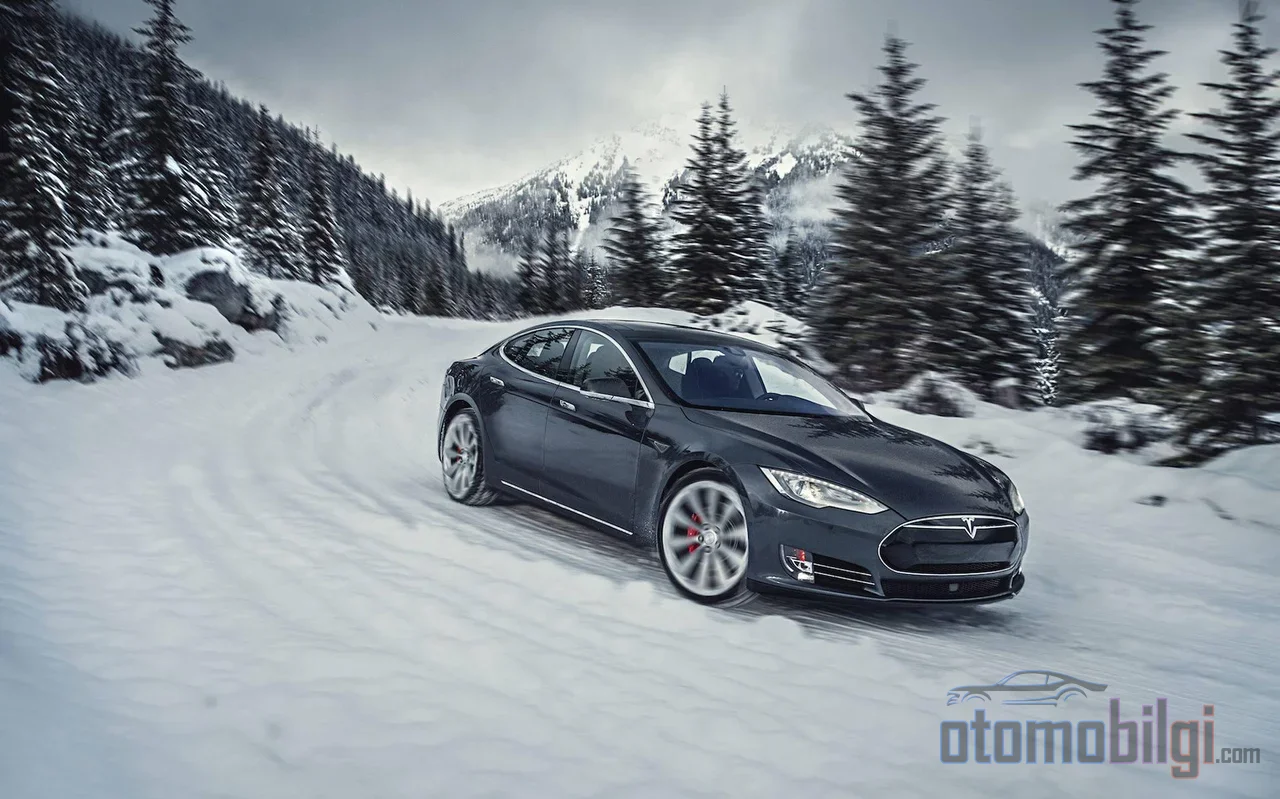
Winter conditions enlarge the consumption difference through three separate channels at once. The first is the battery itself: cold weather increases the battery's internal resistance and lowers its efficiency. The second is restricted regeneration: battery management throttles back recovery power depending on temperature to protect the cell chemistry - and this time the energy is lost as heat through mechanical braking. The third, and most visible one, is cabin heating. Resistive heating in an electric vehicle can reach up to 4 kW of power; in a vehicle traveling at an average speed of 70 km/h, this means an extra consumption of 57 Wh per kilometer and, according to the catalog figures, a 33 percent increase. Values measured up to 280 Wh/km on short urban trips show just how significant this effect is.
The result is consistent with international field data: at around 4°C, vehicles lose approximately 25% of their range; when heating use is included, winter consumption increase can reach up to 30%.
Heat pump and pre-heating: the two decisions that make the biggest difference
A heat pump significantly reduces the energy drawn for heating compared to resistive heating in typical freezing conditions; while the effect varies by model and conditions, it is one of the most meaningful hardware differences for users in cold regions. The second practical solution is pre-heating: heating both the cabin and the battery 10-15 minutes before driving while the vehicle is still plugged into the charger separates the heating energy from the battery energy along the way. Even this single habit significantly reduces winter range loss.
Vehicle Preparation: The Silent Effect of Tire Pressure and Load
Part of the consumption difference starts before driving. As tire pressure falls below the recommended value, rolling resistance increases and the energy drawn from the battery grows: every 1 PSI drop reduces efficiency by approximately 0.3%; a 25% loss in pressure raises consumption by approximately 3%. Since electric vehicles are heavier than gasoline cars, the stress on the tires is higher and small pressure drops leave a more visible mark on range. Load works by the same logic: every unnecessary kilo carried in the trunk is an addition to rolling resistance.
City or Long Distance: Which Profile Wins Where?
A sentence familiar to gasoline vehicle users - it burns less in the city - often reverses in an electric vehicle. The electric motor's consumption minimum is at low speeds, and regeneration provides its biggest advantage over internal combustion in city traffic with frequent stop-and-go. In one example comparison, a city car consumes 13.2 kWh/100 km in the city while rising to 26.8 kWh/100 km on the highway; the savings rates compared to internal combustion in inner-city driving also reflect this difference. But the direction of the advantage can change depending on the model and conditions - the following examples are typical measurements:
| Profile | Typical consumption | Decisive factor |
|---|---|---|
| City, mid-range model | 10-16 kWh/100 km | Low speed, regeneration gains |
| Long distance, steady 110-120 km/h | 22-25 kWh/100 km | Quadratic increase in air resistance |
| Urban short trip, cold weather | Up to 280 Wh/km | Heating load of up to 4 kW |
| City route in ECO+ mode | 8.83 kWh/100 km | Restricted power, calm response map |
The mechanism that establishes balance on long trips is charging planning: With DC fast charging, the battery reaches 80% capacity in about 20 minutes. Apps like ABRP, PlugShare and Chargemap are widely used to lay this out correctly along the route; it is this system that makes a well-planned stop more economical than inefficient speed.
Test Yourself: A List That Calculates the Bill of Your Consumption Difference
A 30% difference in the same vehicle is usually the product of several factors combined, not a single bad habit. To compare your own consumption, go through the list below; each item corresponds to the measurable effect in the sections above:
- Evaluate your acceleration habits: hard throttle and sudden braking cycles directly increase consumption.
- Check your speed fluctuation: a steady cruising speed prevents losses that regeneration cannot compensate for.
- Measure your driving mode: switching to ECO mode alone can gain you about one kWh/100 km.
- Use preheating while charging in winter; prefer a heat pump setup if possible.
- Check tire pressure regularly: every PSI lost means roughly a 0.3% drop in efficiency.
- Remove unnecessary load from the vehicle; weight is added to rolling resistance.
- Compare your city consumption with your long-distance consumption: knowing this reversed ratio makes charging planning easier.
Conclusion: The Short Answer to the Difference
If the same model shows a difference of up to 30% between two drivers, the explanation lies not in the vehicle but in its use. Throttle pedal behavior, speed fluctuation and regeneration use account for the driver's share; route character and season, along with the heating method, allow consumption to change by up to a factor of two; tire pressure and load add a quiet but permanent baseline effect. The WLTP value is a reference line; what actually exceeds this line is mostly the person behind the wheel and the conditions of that day. The good news is that all of these variables are in the driver's hands: gentle acceleration, a steady cruising speed, pre-heating while charging, and the correct tire pressure make the same car measurably more efficient on the next charge.
Sources
- Influencing factors on specific energy consumption of EV in extensive operations (KIT, EVS29)
- Effects of Manufacturer-Defined Driving Modes on Electric Vehicle Energy Consumption (MDPI, Mickevicius 2026)
- Vehicle Acceleration and Speed as Factors Determining Energy Consumption (MDPI, Kozłowski 2024)
- Eco-driving Benefits versus Automation Loads (Univ. of Michigan / SAE, He 2023)
- Does Cold Weather Affect the Performance of your EV? (Ekoenergetyka)
- A Comparison of Heat Pump and Resistive Heating Impacts on BEV Energy Consumption (EVS38, Humphries)
- Best practices for EV tire pressure and maintenance (Michelin)
- How Much Does an Electric Vehicle Consume on Long Journeys? (Araclo, 2026)
- Driving electric vehicles at highway speeds (ScienceDirect, Wager 2016)
- Electric Vehicle Winter Use: Range and Maintenance Guide (Volti)