Does One-Pedal Driving and Drive Modes Really Increase Range?
Share This Page
Short answer: Partially. Eco mode provides a real but limited contribution to range; single-pedal driving recovers energy wherever regenerative braking touches, but this gain is mostly felt in stop-and-go city traffic. On the highway, the effect of both modes is minimal, because the main determinants of range are speed, air temperature, and cabin heating. So mode selection is an optimization tool, not a miracle.
Highlights
- Regenerative braking can add up to 20% to range, depending on conditions.
- Real-world range usually stays 10-30% below the WLTP value.
- EVs are most efficient in the 80-96 km/h band; wind resistance increases exponentially with speed.
- At around 4°C, range starts to decrease by ~25% compared to mild weather.
- At -7°C, cabin heating energy can consume 4-10 times more than cooling.
Let's Establish the Baseline First: How Realistic Is the WLTP Value?
Before discussing driving modes, we need to clarify the baseline figure that the modes act upon. The WLTP cycle is noticeably more realistic than the NEDC it replaced: it includes longer distance, higher speeds, and more speed variation. Still, the test is conducted under ideal laboratory conditions; climate control off, flat road, gentle driving. In real life, hilly terrain, aggressive acceleration, and climate control disrupt this picture.
The practical result is this: Real-world range in most vehicles stays 10-30% below the WLTP value. A vehicle the manufacturer claims does 500 km can navigate between 350-450 km in daily use. Range tests by independent organizations therefore offer a more reliable reference than manufacturer data. Mode comparisons should be made with this margin of drift in mind; otherwise, the gains on paper get lost within the real losses.
What Does Eco Mode Do, and How Much Does It Save?
The function of Eco mode can be summarized under three headings: limiting traction power, softening the throttle pedal map, and pulling climate control toward the efficiency side. Power limitation physically makes aggressive acceleration harder; climate optimization ensures the compressor and fan operate at lower consumption. These are real mechanisms that extend range - but their magnitude is limited.
The biggest variable in the range equation is actually not the mode, but the right foot and speed. On a hot day, the climate control's effect on range can be smaller than the effect of driving speed and style; that is, Eco mode's gain on the climate control side remains secondary compared to the speed factor. Eco mode makes no additional difference in a profile where the driver is already gentle, while it makes a difference to an aggressive driver through traction limitation. The most honest summary: Eco mode is a preference restriction, not a range guarantee.
Does Single-Pedal Driving Really Increase Range?
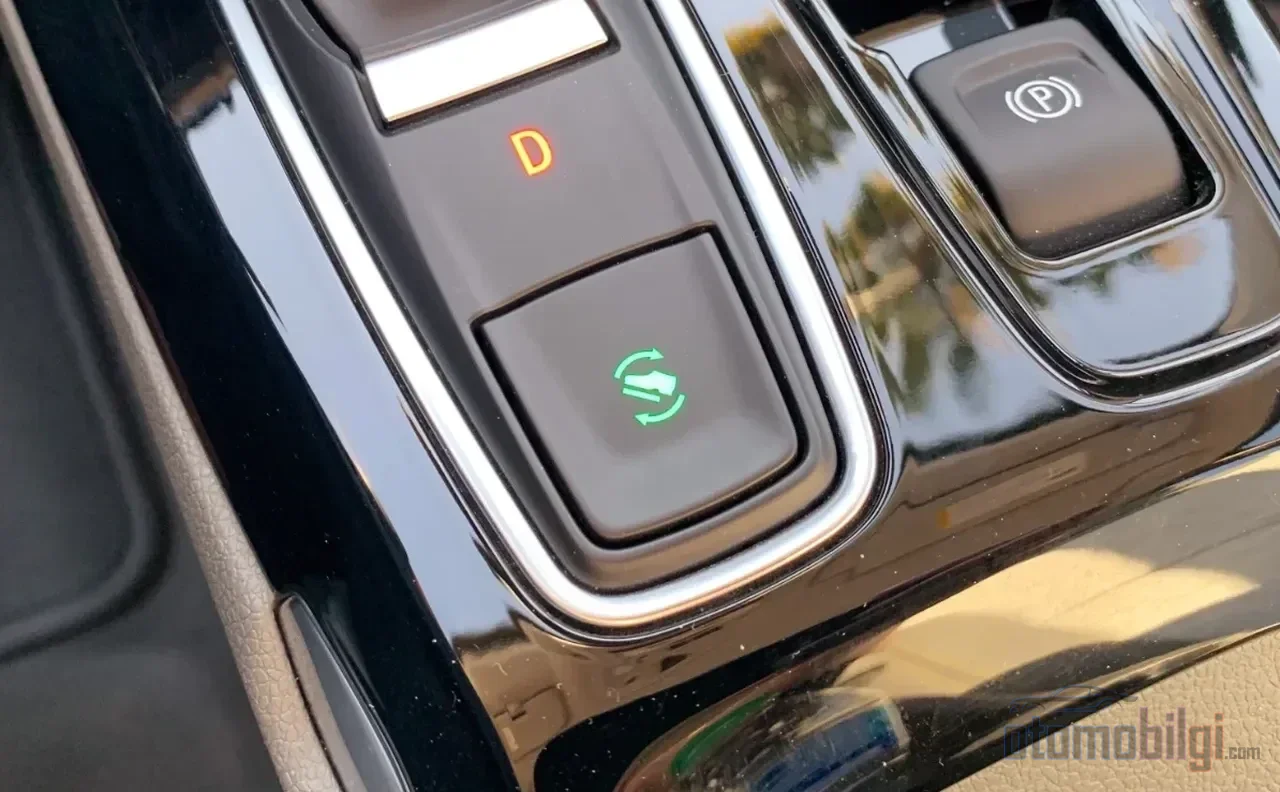
The physics behind one-pedal driving (known by names like B mode or e-Pedal) is simple: when you release the accelerator pedal, the electric motor turns into a generator, converting the vehicle's kinetic energy into electrical energy and charging the battery. Instead of the brake pads, the motor slows the vehicle, and rather than being lost as heat, part of the energy is recovered. As an additional side benefit, brake wear is also significantly reduced.
The contribution of this mechanism to range is estimated at up to 20% in engineering estimates. On a 100 km journey, this means a recovery of about 20 km under ideal conditions. But the critical nuance is this: this gain occurs almost entirely in stop-and-go traffic. In frequent urban braking scenarios, regeneration collects energy at every stop; on the highway, since you rarely brake, regeneration almost never engages.
The Coast Debate: Does Every Slowdown Have to Be Regeneration?
There is a healthy debate among driver communities about the efficiency of one-pedal driving: if you need to slow down on a flat road, letting the vehicle coast freely instead of pumping energy back into the battery converts momentum directly into distance and eliminates every conversion loss. In other words, one-pedal driving is not the most efficient method in every condition; regeneration produces value in situations where energy would truly be wasted - stops, intersections, traffic. A good EV driver knows both: approaching a traffic light, release early and recover with regen, while on a flat road, avoid unnecessary slowing.
City and Highway: Which Mode Makes a Difference Where?
The consumption profile of electric vehicles is the exact opposite of internal combustion vehicles: EVs consume the least energy in the city and the most on the highway. The reason is two-layered - low urban speeds keep the aerodynamic load minimal and every stop is partially offset by regeneration; on the highway, since wind resistance increases exponentially with speed, sustained high speed continuously drains the battery. EVs are most efficient in the 80-96 km/h band; cruising above 113 km/h pushes consumption noticeably higher.
| Scenario | Effect of Eco Mode | Effect of One-Pedal / Regen |
|---|---|---|
| Urban stop-and-go | Medium: soft throttle and air conditioning restriction contribute | High: energy is recovered at every stop, up to ~20% contribution |
| Intercountry rural road | Low-medium: softens the acceleration profile | Medium: gains on descents and at intersections |
| Highway at constant high speed | Minimal: power restriction is not active anyway | Almost zero: since there is no braking, regen does not engage |
This table yields a single practical conclusion: switching to Eco mode on the highway out of range anxiety, contrary to expectations, gains almost nothing. On the highway, the gain comes from a single variable: reducing speed. It is a fact confirmed by long-term observations that highway speeds significantly reduce range; in independent road tests, many models have fallen short of their range estimates at highway speeds.
Temperature and Air Conditioning: The Shadow Rival of the Modes
Another variable that overshadows mode comparisons is climate control. Range loss begins before freezing point, at around 4°C, and shows a ~25% reduction compared to mild weather. In cold weather with short stop-and-go trips, repeatedly heating the cabin can shorten range by up to 50% . In comprehensive winter tests, 20 electric vehicles experienced an average of ~20% range loss; the best-performing model stayed only 9% below its WLTP figure, while the worst performance was limited to a 30% loss.
The asymmetry between heating and cooling is also significant: at -7°C, cabin heating energy can consume 4-10 times more than cooling in hot weather. HVAC consumption - especially cabin heating - is cited as the most dominant variable affecting EV range. The effect on the cooling side is comparatively small. A practical conclusion follows: on a hot Turkish summer day, it makes sense to rely on Eco mode's air conditioning restriction rather than switching the AC off; the real saving is pre-heating the cabin while plugged into the charger in winter, moving the heating load away from the battery.
So Which Mode Is the Most Efficient? The Practical Answer
The reality of Türkiye's traffic - the dense stop-and-go flow in Istanbul and Ankara, the variable speed profile on intercity roads - requires splitting the answer to this question by scenario. Driving recommendations from Turkish sources point the same way: steady driving at moderate speed saves energy, unnecessary load reduces range; keeping a safe distance behind heavy vehicles on the motorway reduces wind resistance, and descents regenerate energy.
- In the city: Keep one-pedal / strong regen mode on. Stop-and-go traffic is where regeneration creates the most value.
- On the motorway: It's not the mode but the speed that is decisive. Cruising in the 80-96 km/h band yields far more range than Eco mode could ever provide.
- In winter: Pre-heating the vehicle while charging moves the cabin heating load from the battery to the plug.
- In every condition: Smooth throttle, reading traffic ahead, and a car free of unnecessary load are more decisive than mode selection.
Summary formula: up to 20% regen contribution is real in the city, a fantasy on the motorway; Eco mode is a discipline tool, not a range device. The most efficient mode is the one the road demands - and often the biggest gain is hidden in your right foot and the speedometer.
Sources
- Why Your EV Will Never Hit Its WLTP Range (And Why That's OK)
- How to maximise range on your electric car by the way you drive
- Real-World Electric Car Range Comparison
- What Is One-Pedal Driving?
- What is one-pedal driving and how EVs use regenerative braking
- One-pedal or two-pedal: Does the regenerative braking matter?
- EV consumption: city, country road or motorway?
- Does Cold Weather Affect the Performance of your Electric Vehicle?
- Does Climate Control Affect EV Range?
- Effects of ambient temperature on EV range
- Regenerative braking - VW Passenger Vehicles Türkiye
- Regenerative Braking - Borusan Oto
- Speed Strategies That Increase EV Range in Motorway Driving
- 10 Tips to Save Money and Increase Range in Electric Vehicles