How Much Does Regenerative Braking Contribute to Range?
Share This Page
Regenerative braking can provide roughly 10-20% of extra range contribution in stop-and-go city traffic; on highway driving, this contribution drops to around 3%. The difference comes from braking frequency: the more you slow down, the more energy you recover, while a vehicle traveling at a constant high speed recovers almost none. Below, I explain with concrete figures how this contribution is calculated, in which scenarios it becomes meaningful, and how to get the most out of your vehicle in this regard.
Highlights
- In city driving, energy recovery efficiency reaches 20% while on the highway it drops to 3% levels
- City traffic provides roughly three times more energy recovery compared to the highway
- One-pedal driving can save about 22% in the city and 13% in rural areas
- Downhill descents are the most efficient recovery scenario, since potential energy comes into play
- Brake pad wear is significantly reduced thanks to regenerative braking
How Does Regenerative Braking Work?

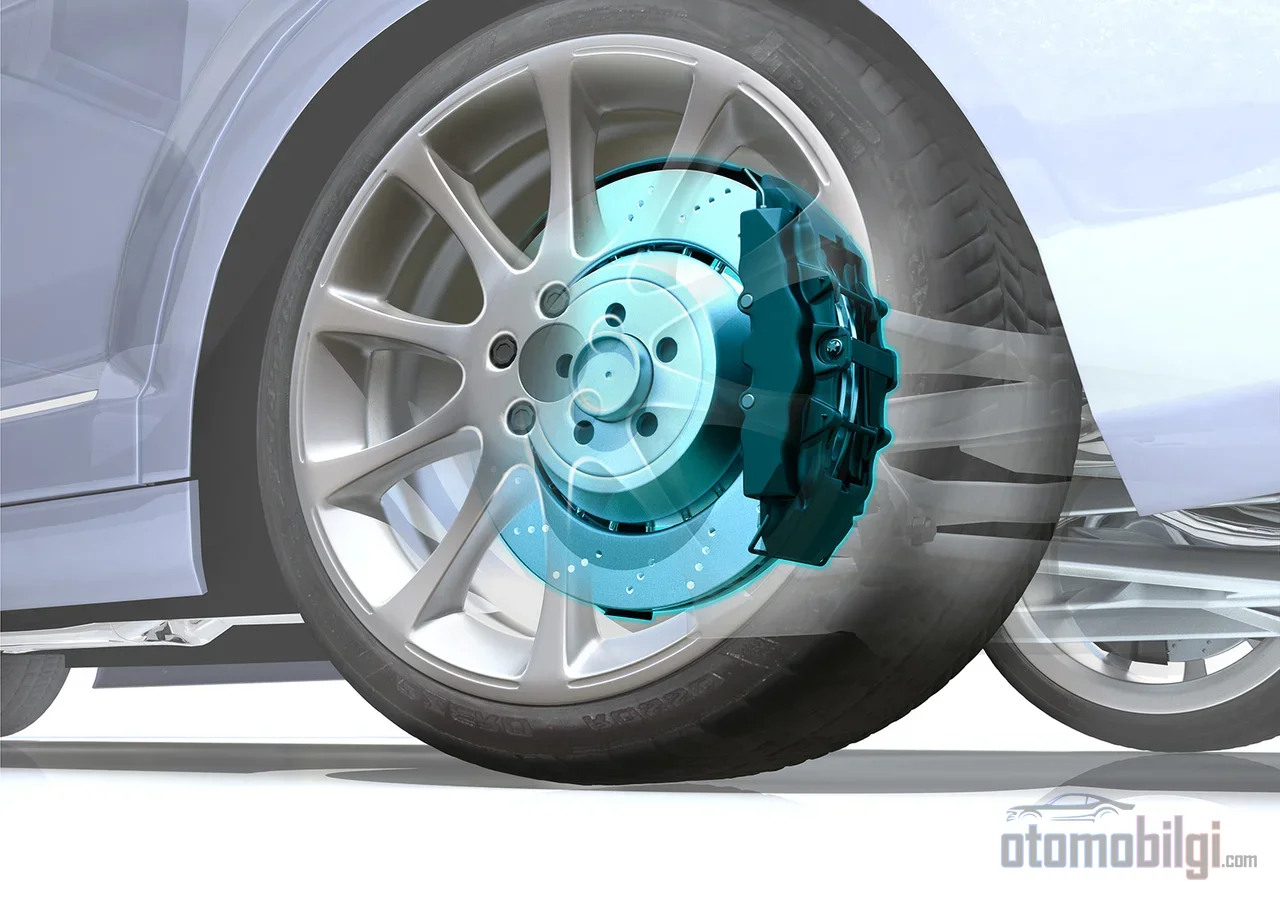
The basic mechanism is simple: as an electric vehicle slows down, the drive motor temporarily acts like a generator. The kinetic energy from the wheels is converted into electrical energy in the motor windings and stored in the battery. In a conventional internal combustion vehicle, all of this energy is lost as heat in the brake discs during braking; in an electric vehicle, part of the energy returns to the system and is reused in the next acceleration.
Several variables determine the size of the returned share: vehicle speed, mass, road gradient, the battery's state of charge, and the driver's acceleration-deceleration habits. There are also two separate efficiency losses in the chain. The efficiency of the drivetrain is typically around 0.90 ; adding the conversion efficiency during braking, the shares of energy lost before reaching the battery multiply each other. This is why a natural gap appears between single-measurement figures like "up to 78% of energy can be recovered during braking" and real-world lap numbers. The total (round-trip) efficiency of the energy going into the battery, coming back out, and reaching the wheels in a modern electric vehicle is in the 60-70% range.
How Much Does Regenerative Braking Really Contribute to Range?
The answer is not a single figure but a range - because the contribution is a function of the driving profile. The cleanest comparison comes from a recent academic analysis that examined four different electric vehicle segments and four driving scenarios with one-hour profiles on MATLAB. The result is clear: energy recovery efficiency in city driving reaches about 20%(the highest value in the sedan segment is 20.36%), while in the highway scenario it drops to 3% levels. City traffic allows roughly three times more energy to return to the system compared to the highway.
The same picture holds true in terms of prevalence. In an analysis of urban brake pads, the driving cluster with the most braking events (84-158 brakes) and moderate-intensity stop-and-go driving achieved the highest recuperation efficiency among all clusters (23.16%). On average, around 22% of the energy is returned to the battery through braking; a range extension of 15-20% in city use with dense stop-and-go traffic is a reasonable expectation.
On the highway, however, the math reverses. At a constant speed of 100-120 km/h, there are almost no braking events; there is nothing left to recuperate. Moreover, since aerodynamic drag increases with the square of speed, the vehicle's total consumption also rises, and regeneration's contribution becomes invisible next to this increase. That is why the solution to highway range lies not in the braking system, but in speed management and aerodynamics.
City and Highway in Numbers
The same academic analysis also presents consumption measured by segment comparatively. I combined the two extreme segments in the table:
| Indicator | Small EV - Urban | Small EV - Highway | Large SUV - Urban | Large SUV - Highway |
|---|---|---|---|---|
| Net energy consumption (1 hour) | 2.34 kWh | 14.88 kWh | 3.75 kWh | 22.13 kWh |
| Specific consumption | 9.35 kWh/100 km | 17.74 kWh/100 km | 15.01 kWh/100 km | 26.38 kWh/100 km |
| Recuperation efficiency | close to 20% | around 3% | close to 20% | around 3% |
| Highest absolute recuperation | ~0.97 kWh (hilly road) | ~1.69 kWh (hilly road) | ||
There are two engineering lessons to draw from the table. First: a large and heavy SUV recuperates more absolute energy thanks to its mass - on a hilly road 1.69 kWh, compared to a small EV's 0.97 kWh figure. But second: this absolute gain does not compensate for the heavy vehicle's total consumption. The Large SUV's highway consumption rises to roughly six times its urban consumption. Weight magnifies both the gain and the bill.
What Do One-Pedal Driving and Recuperation Levels Change?
One-pedal driving is a system that applies regeneration strong enough to bring the vehicle to a nearly complete stop when you release the accelerator pedal. Eindhoven University of Technology's algorithm analysis shows that this approach can achieve energy savings of 22% in urban driving and 13% in rural driving compared to driving without regeneration. The urban difference being this high is no coincidence: in stop-and-go traffic, every deceleration is a recuperation opportunity, and a one-pedal system systematically captures these opportunities without the driver ever touching the brake pedal.
On the other hand, the answer to the question "is one-pedal or classic two-pedal regeneration more efficient?" is not as dramatic as most drivers expect. In the real world, Polestar 2 a measured test conducted with it found no measurable consumption difference between the two driving styles. The mechanism is the same: in both cases, deceleration energy passes through the same efficiency chain. One-pedal driving's real contribution is that it enforces proper pedal habits and encourages early, anticipatory deceleration - meaning the gain comes from the driving pattern, not the button.
This is why manufacturers offer different approaches. The Renault 5 E-Tech owner's manual defines multiple regenerative levels, including a gentle and economical "Free driving" mode; the Nissan Leaf offers normal, eco, B-mode and e-Pedal stages; and many modern EVs have adjustable recuperation levels from 1 to 4. It is also worth knowing that regeneration capacity can be temporarily restricted when the battery is fully charged or very cold: if there is nowhere for the recuperation energy to go, the system transfers braking to the mechanical discs.
Why the Picture Favors It in Türkiye Traffic?
The value of regenerative braking is directly related to the geography of use. The heavy stop-and-go traffic of cities like Istanbul, Ankara and Izmir is practically an ideal energy recuperation laboratory for an electric vehicle. Real-world consumption tests conducted in Istanbul's heavy traffic with a Tesla Model Y
show that range can exceed expectations under these conditions. This is a fundamental difference from internal combustion vehicles: in a gasoline or diesel vehicle, stop-and-go increases consumption; in an electric vehicle, thanks to the combination of low speed and regeneration, urban consumption can remain lower than highway consumption. The math also works in favor of the electric vehicle when stopped and waiting in congested traffic. There is no idle consumption while the vehicle is stopped; only auxiliary loads such as air conditioning draw energy from the battery. In a one-hour urban scenario, a small EV's total 2.34 kWh consumption means six times less energy than what would be required to cover the same profile on the highway ( 14.88 kWh
). This picture also explains the relationship between WLTP and real-world range. Real-world consumption averages 16% higher than laboratory values, and can rise by 20% in extreme cases; on the highway, range loss can reach 30%. But in urban use the situation reverses: thanks to the contribution of regeneration, achieving range slightly above the WLTP value is a common experience in Türkiye's cities.
Practical Tips for Proper Regenerative Use
Getting the most out of regeneration as part of efficient driving requires matching the right mode to the right scenario:
- Use a high recuperation level or one-pedal mode in the city. In stop-and-go traffic, the meaningful contribution comes from here; outside the city the difference is limited.
- Evaluate descents deliberately. Driving downhill returns not only kinetic energy but also the potential energy of the elevation difference to the battery; it is the most effective recuperation scenario.
- Prefer early and long decelerations over short, hard braking. A smooth deceleration from 50 km/h to 15 km/h recovers more energy than a dozen short full-stop brakings; momentum is valuable.
- Reduce your speed before a long journey. On the highway, steady speed and anticipatory throttle management preserve more range than sharp regeneration.
- Think of the brake pedal as a backup. Except for full stops and emergencies, leave deceleration to regeneration as much as possible.
As an additional practical gain, regenerative braking also noticeably reduces wear on the mechanical brake pads. This is the main reason brake maintenance intervals are extended on electric vehicles in urban use.
Conclusion: The Contribution Takes Shape Depending on the Scenario
Regenerative braking is the silent hero of electric vehicle efficiency - but its heroism is conditional. In stop-and-go city traffic, it returns around 20% of the energy back to the battery, making a tangible contribution to range on the order of tenths; on the highway, since there is no braking, its contribution is nearly zero. For a driver living in Türkiye's heavy city traffic, this means a noticeable advantage in daily use. For long journeys, the right strategy remains the same: range is gained from speed and route, not from regeneration.
Sources
- MATLAB-Based Analysis of Energy Recovery Performance of Regenerative Braking Systems Under Different Driving Conditions in Electric Vehicles - International Journal of Energy Studies
- Enhancing Regenerative Braking Efficiency in Electric Vehicles Through Urban Driving Pattern Analysis
- Evaluating the Energy Efficiency of a One Pedal Driving Algorithm - TU Eindhoven
- How to Maximise EV Range with Regenerative Braking - go-e
- What Is Regen Braking and Is It Actually Useful? - Top Gear
- What Is Regenerative Braking in Electric Vehicles and Why Is It Important? - Borusan Oto
- What Is Regenerative Braking? - Kia Türkiye
- Regenerative Energy - Volkswagen Passenger Cars
- Feedback Brake System - Renault 5 E-Tech User Manual
- How Regenerative Braking Systems Impact Real-World City Range - JSW Motors
- Is One-Pedal Driving the Most Efficient for EVs? - The Watt Car
- The Real World EV Range: How to Optimise It - Chargemap
- kWh/100km and Range - Electric Car Consumption 2026 - Fotovol
- Are Electric Cars More Efficient in City or Highway? - KAIYI Global
- Regenerative Braking - Wikipedia