The Secret to Boosting the Charging Curve: The Right Battery Temperature
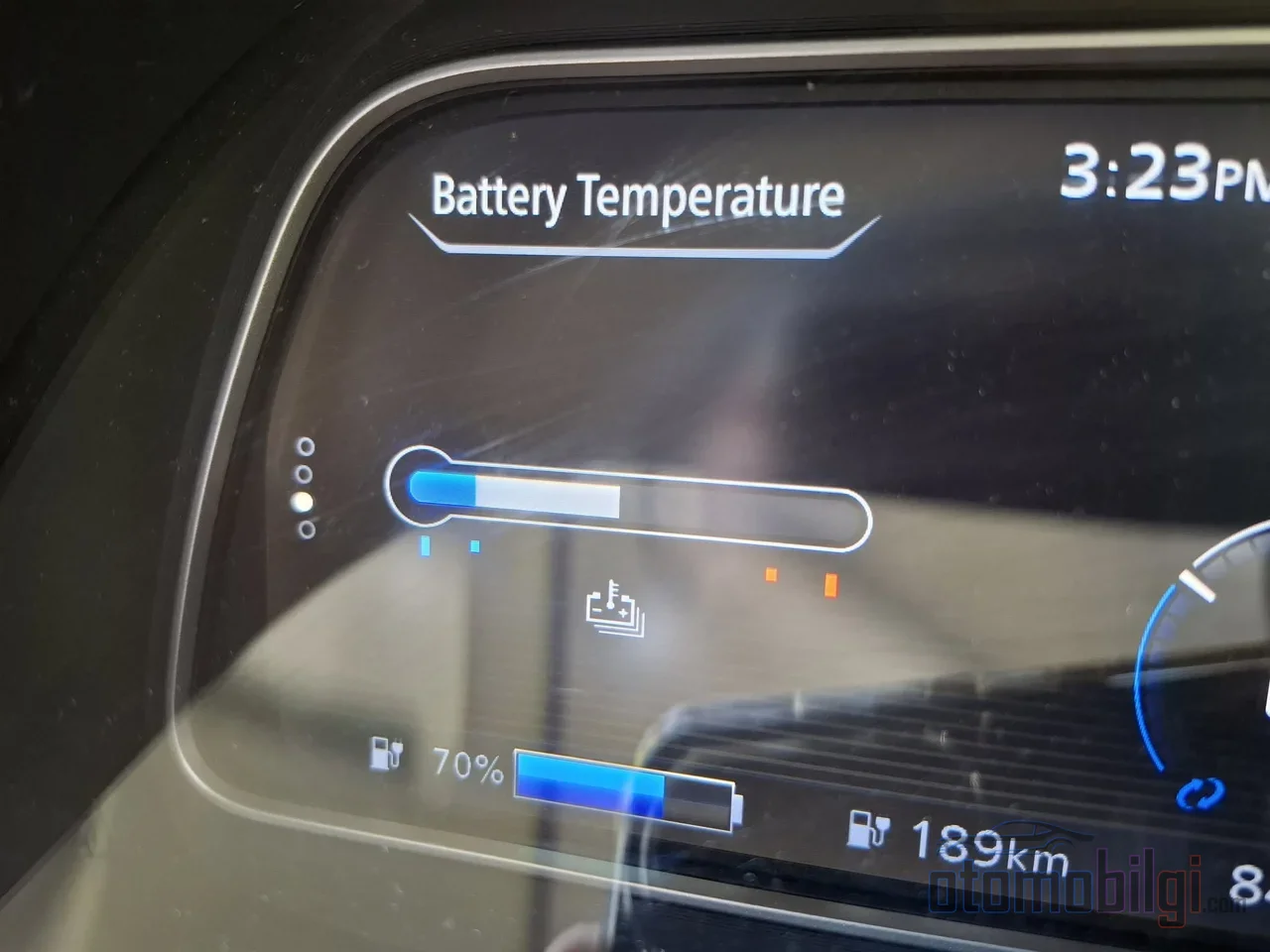
As you approach a fast-charging station in winter, an icon appears on the navigation screen, followed by a notification that the battery has begun to warm up. Most drivers do not even notice this moment; yet at that very instant, a silent process has begun that determines the total duration of the journey. A cold battery can accept only a small fraction of the power of the 300 kW station standing before it. The same battery, when brought to the right temperature, can draw several times more power from the same station. The difference between the two is not the capability of the device or the vehicle, but pure thermodynamics.
Battery preconditioning is the most overlooked part of long-distance charging planning. Some drivers who rely on range estimates, the sequencing of charging stops along the route, and the 20-80 rule never use this preparation step, which is what actually determines charging time. In this article, we take a close look at the physics of preconditioning, its effect on the charging curve, how automatic systems work, and what can be done in vehicles that lack this feature.
What is battery preconditioning and why is it necessary?
Preconditioning is the heating or cooling of an electric vehicle's high-voltage battery by the thermal management system before charging or driving, thereby bringing it to its ideal operating temperature. Lithium-ion batteries generally perform best between 20°C and 30°C; some definitions stretch this range to 20-40°C. In this region, ion movement is fast and internal resistance is low. In the cold, however, the electrolyte thickens, ions slow down, and internal resistance increases.
When internal resistance rises, the battery management system, or BMS, kicks in. Charging a cold battery at full power can cause metallic lithium to accumulate on the anode, known as lithium plating; this accumulation means permanent capacity loss. To prevent this risk, the BMS deliberately throttles the charging power. So slow charging in cold weather is not a malfunction but a protective measure, and it goes away once the battery warms up. The heating method varies from model to model: coolant heated by PTC heating elements can circulate through the battery, a heat pump can be used, or waste heat from the motor and electronics can be transferred into the thermal circuit.
Highlights
- The lithium-ion battery delivers its highest charging performance mostly in the 20-30°C range.
- A cold battery can accept power that drops to as low as 50 kW at a station with a 300 kW capacity.
- Preconditioning should generally be started 20-45 minutes before charging; in very cold weather it can exceed 40 minutes.
- In most vehicles, automatic preconditioning is activated by entering a DC station as a destination in the built-in navigation system.
- Preheating while connected to a wallbox shifts the cost of the heating energy from the battery to the grid.
Why does a cold battery lower the charging curve?
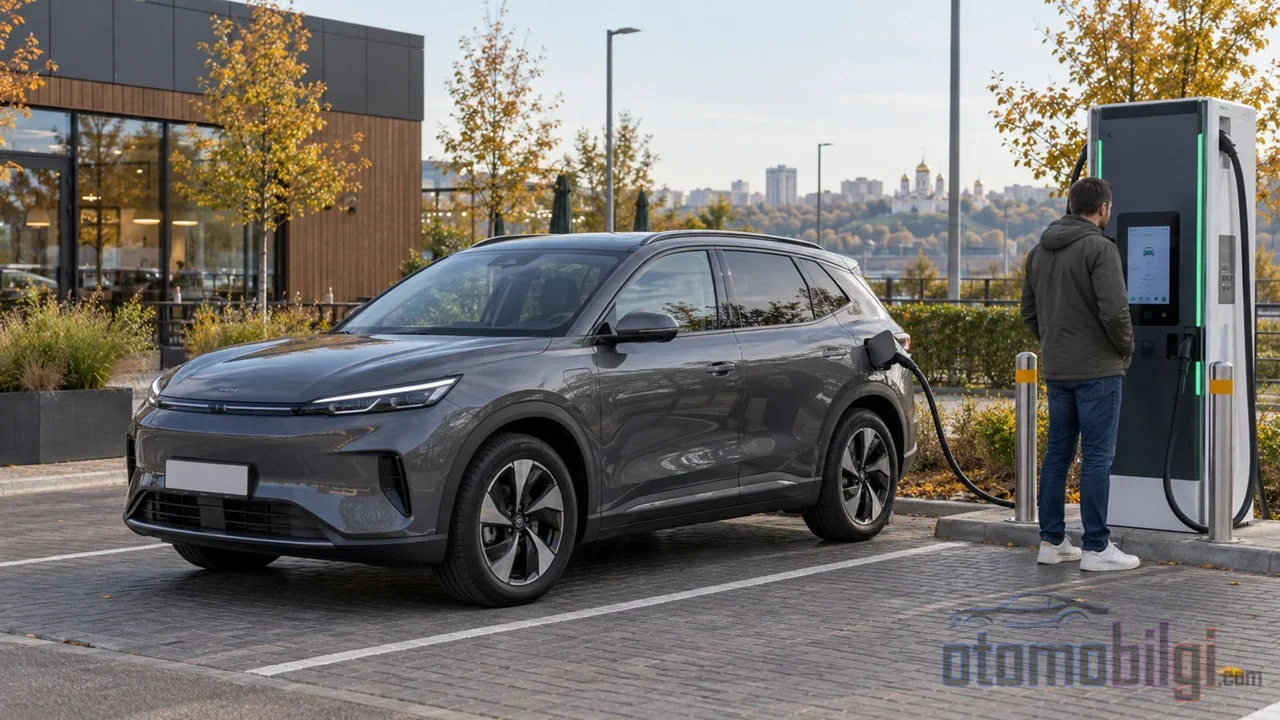
During fast charging, the vehicle and the station are in constant communication. The vehicle tells the station the current and voltage limits it can accept based on its current temperature and charge level; the station delivers power within these limits. When the battery is cold, these limits are narrow: A cold battery can be charged at a 300 kW station with power dropping as low as 50 kW. A preconditioned battery, on the other hand, can instantly approach the peak power allowed by the station and its own limits.
Its effect is not limited to the initial moment alone. A battery close to its ideal temperature accepts higher power, especially at low charge levels, and completes the 10% to 80% portion of charging with a much more consistent curve. The low-power wait at the start of the session also disappears or shortens. One point about the catalog value needs to be clarified here: The maximum DC power in a vehicle's brochure is a peak value achievable under ideal conditions, that is, with a suitable battery temperature, a low starting charge level, and sufficient station capacity. Preconditioning does not remove these limits; it prepares the battery for a state in which these limits can truly be used. The only number that matters to the user is not the instantaneous peak kW, but the entire charging curve and the time to reach the target level.
A point of caution: The factor limiting charging speed may not be the battery temperature. A charging unit left in very cold weather may also fail to deliver full power; at a station where many vehicles are connected at the same time, total power is shared. In cold climates, a charger recently used by other drivers sometimes performs better because the unit is warmed up. Not confusing battery temperature with station conditions is necessary to correctly read the source of the problem.
How much does preconditioning shorten charging time?
There is no single numerical answer to this question, and it should not be presented as if there were. The gain depends on outside temperature, the battery's starting temperature, the vehicle's peak charging power, and station capacity. Manufacturers and charging networks present preconditioning as a significant time gain; user experiences paint a more moderate picture. For example, in weather not far below freezing point, there are user opinions that in vehicles charging below 200 kW the gain may stay under three minutes per charge. This is not an official measurement; but it is also consistent with physics: the lower the vehicle's peak power, the smaller the difference that heating can open up. In contrast, in 350 kW fast-charging vehicles and harsh winter conditions, the gain can rise to tens of minutes.
There is no single number for the start-up time either. The ranges given by sources are close to each other and lengthen as outside temperature drops:
| Start-up time (before charging) | Note |
|---|---|
| 20-30 minutes | It is recommended to enter the station into the vehicle's own navigation early |
| 20-40 minutes | For manual heating in vehicles without an automatic system |
| 30-45 minutes | Manual or automatic, typical preconditioning time |
| Over 40 minutes | Time to reach ideal temperature in very cold conditions |
The practical conclusion is this: preconditioning should be thought of not as an exact duration, but as a preparation window that lengthens depending on temperature. The colder the weather is, the earlier the preconditioning should be started before arriving at the charging station.
How do navigation-integrated systems automate preconditioning?
The most common method is navigation integration. When a public DC fast charging station is entered as a destination in the built-in navigation, the vehicle starts working backward from the estimated arrival time to heat, or cool if necessary, the battery. The driver does not need to do anything else. Some manufacturers have extended this behavior to phone maps as well; in this scheme, known as on-route preconditioning, the fast charging stop along the route triggers the heating.
The fine details of the system vary by manufacturer. Some vehicles start preconditioning only when specific stations are selected in the navigation. In extreme heat or extreme cold, the vehicle may prioritize cabin comfort, and the heating-cooling capacity it can dedicate to preconditioning may be limited; since cabin heating and battery heating draw from the same source, these two demands compete with each other at very low temperatures. The arrival charge level also matters: arriving with a very high charge already limits the power the vehicle will accept, because the battery charges fastest at a low state of charge. Arriving at the level recommended by the manufacturer's route planner is efficient; but needlessly depleting the battery is also not correct. A safety margin should be left.
Besides the automatic system, there are four practical ways to activate it:
- Entering the DC fast charging station as a destination in the vehicle's built-in navigation.
- Manually turning on the on-screen function named battery conditioning or similar.
- Scheduling a departure time from the mobile app and having the vehicle ready by that time.
- Using scheduled preconditioning while the vehicle is on AC charging, thereby drawing part of the heating energy from the grid.
What can the driver do in vehicles without this feature?
Not every vehicle offers all of these options; what is available is determined by the user manual and the vehicle's software version. In vehicles without automatic preconditioning, the first step is to start manual heating about 20-40 minutes before the charging stop. Preheating the vehicle, especially while connected at home or plugged into a wallbox, is the most efficient method: the heating energy comes from the grid, and you set off on your journey with both full range and a battery at the ideal temperature. The same logic is also applied in the form of using pre-drive cabin and battery heating while the vehicle is charging.
In vehicles without a heat pump, preconditioning can be done with a separate electric heater; in this case, the energy cost matters even more, making the heating-while-charging approach valuable. In vehicles with a preheating feature, heating the cabin while charging reduces the load on the battery. General recommendations for winter driving also include keeping driving speed at a moderate level and using regenerative braking at a level appropriate to road surface conditions. In vehicles that have no preconditioning feature at all, there are drivers who try to warm the battery on the way to the charging station by using strong regeneration; this is not an official recommendation, but the logic is simple: every current passing through the battery produces some heat.
Separating the charging speed gain from the range effect
The two effects of preconditioning are often confused with each other: one is charging speed, the other is range and efficiency. The two must be calculated separately.
The charging side
The gain on the charging side, as described above, is measured by a consistent and high charging curve: the low-power phase at the start of the session becomes shorter, and the 10-80% band is passed more quickly. The magnitude of the gain depends on the vehicle's peak power and the outside temperature; it is small in mild weather and in a vehicle that charges slowly, and large in harsh winter and in a vehicle that charges quickly.
The range and efficiency side
Its effect on range is more indirect. A battery in the ideal temperature range delivers a more stable energy output, allows regenerative braking to be used strongly, and makes the range estimate more accurate. Since a cold battery restricts regeneration, less energy can be recovered. In the long term, being able to charge a warm battery gently has a positive effect on cell life. There is also a balance here: preconditioning on the road consumes energy at that moment; in winter you have to accept this cost. The solution is, whenever possible, to do the heating at the moment the vehicle is charging. Also, preconditioning is not only about heating: on hot days, when the battery rises above the recommended range, the same system kicks in for cooling.
In summary: what does preconditioning provide?
The short, quotable answer is this: Battery preconditioning eliminates cold-related power restriction by bringing the battery into the ideal 20-30°C temperature range before arriving at the fast charging station, and shortens the charging session, with the gain ranging from a few minutes to tens of minutes depending on the vehicle's peak power and the air temperature. When used correctly, it does not harm battery life; on the contrary, it minimizes degradation by reducing charging stress. When low power is seen at the start of charging in cold weather, it should not be mistaken for a fault: the vehicle and the station have negotiated their limits by talking to each other, and the vehicle has been protected. The formula for getting the full benefit of preconditioning fits in three sentences: enter the station into the vehicle's own navigation early, if the weather is cold know the 20-45 minute preparation window, and whenever possible have the heating done at the moment the vehicle is charging.
Sources
- Battery preconditioning - Polestar 3 Manual
- How do I precondition my battery for DC Fast Charging? - Ford Support
- What is EV Battery Pre-Conditioning? - Kia UK
- Tips for Electric Vehicle Users in Winter - Volkswagen Türkiye
- What Is Battery Preconditioning in Electric Vehicles? - Powerşarj
- EV Preconditioning: How to Charge Faster - JOLT
- Battery preconditioning: Why it's crucial and how to do that - OBDeleven
- What Is EV Battery Pre-Conditioning? - Skywell UK
- What Is a Heat Pump in Electric Vehicles? - ChargeIQ
- Why Is My EV Charging So Slowly? - Autodoc