How Much Does It Cost to Keep a WRC Rally Team Running?
Share This Page
The cost of keeping a WRC rally on its feet is measured in millions: organizers pay promoter fees to the championship's commercial rights holder that vary by country, stage safety and television infrastructure require a year-round budget, and revenue comes mostly from sponsorships, ticket sales and public support. Behind that exciting race we see on the field, there is a serious commercial structure that often remains invisible. So where exactly does this money go, where does it come from, and is it really worth it for the country? Let's take a look.
Highlights
- The WRC round hosting promoter fee varies by country and the exact figures are kept confidential
- Sponsorship of a single rally can range from $100,000 to $2 million per event
- Rally de Portugal 2025 generated an estimated €193 million economic impact and nearly 1 million spectators
- Rally Sweden fell into financial difficulty because it was financed without public funding; the company was granted conditional capital support of 14.5 million SEK
- In July 2026, WRC Promoter was acquired by Cosmobilis and Park Square Capital
How Much Does It Cost to Host a WRC Round?
From the outside, it looks like nothing but dust, engine noise and a few signs. But preparing a WRC round is actually a year-long project. Closing and preparing the stages, spectator management, monitoring systems throughout the race and the infrastructure to be set up for television broadcast... these are all major budget items. The FIA's safety guidelines show how seriously this business is taken: stage preparation, spectator management and monitoring during the event are at the center of safety.
The biggest mysterious item is the promoter fee. An organizer wishing to host a WRC round pays a fee to the company that manages the championship's commercial rights, varying by country. The exact figures are not disclosed; there are only indirect hints. In a discussion in UK rally circles, it was commented that an investment of £1.5 million is less than even a quarter of today's fee for hosting a WRC round. So we are roughly talking about an entry at the level of millions of pounds - and that's just the fee that opens the door; the money that funds the stages and safety needs to be added on top of that.
The Organizer's Ledger: What Are the Expense Items?
We can roughly break down the expense side of a rally organization into these items:
- Promoter fee: The price of the right to join the championship, varying by country
- Stage preparation and safety: Road closures, barriers, safety teams, spectator management
- Television infrastructure: Filming and transmission of the global broadcast
- Spectator management: Entry points, parking, ticketing and information systems
- Unforeseen expenses: Weather conditions, logistics changes and similar surprises
The last item is nothing to be underestimated. The story of Rally Sweden demonstrates this strikingly: the management of the company running the event explained that in the years when the rally moved between different regions of Sweden, setup costs, investments and unforeseen expenses accumulated. The result? The company fell into financial difficulty and even needed 14.5 million SEK in conditional capital support from the federation, which is its owner. While not in bankruptcy proceedings, it is clear that a long-term and balanced financing model is essential.
Where Does the Money Come From? The Organizer's Revenue Sources
With expenses this large, how does the revenue side work? The Rally Sweden example lays the model out clearly: organizers make money from commercial revenues, ticket sales, support from the host municipality, and sponsorships. In many countries, public funding also comes into play - governments, regional administrations and tourism organizations can finance a significant share of the budget. In some cases, this public support becomes almost mandatory for the event to take place at all.
How much is the sponsorship market growing?
Sponsorship of a single rally event can range from 100,000 to 2 million dollars per event, depending on the event's profile and location. That is a range that could burn through a mid-sized company's entire annual marketing budget on a single rally. In return, sponsors try to recoup value through brand visibility, guest hospitality and global broadcasts. So those colorful patterns on the cars out on the stages are, in fact, the very revenue that keeps the organization alive.
Broadcasting rights: global screens
The championship is watched through its own proprietary platform; local broadcasters also bring the races to screens in their countries. One figure gives a sense of the scale of this picture: From January to mid-June in 2026, the WRC drew 504 million cumulative global TV viewers. This audience fuels both the value of broadcast deals and the interest of sponsors. Meanwhile, the championship's commercial structure has also changed: In July 2026, with FIA approval, WRC Promoter was acquired by the French automotive technology platform Cosmobilis and the credit investor Park Square Capital - it had previously been discussed that a sale of around 550 million dollars was being explored back in 2024. The new management promises investment at a level never before seen in rally history and a growth fund for global rally development.
What Do Host Countries Want to Gain?
So why is this money worth it for a country? The answer is mostly two words: tourism and promotion. The Portugal example is striking: Vodafone Rally de Portugal 2025 generated an estimated 193 million € in total economic impact and attracted an audience approaching 1 million. Hotels, restaurants, transportation… the regional economy truly comes alive throughout the rally weekend.
Türkiye's rally economy experience
Rally Türkiye has its own story within this picture. The event representative had stated in 2019 that the championship had contributed approximately 100 million dollars to the region's economy the previous year, and that 150 million dollars in revenue was expected for that year. Going further back, it was claimed in 2010 that the rally to be held in Istanbul would generate an economy of around 20 million dollars. At the 2018 launch, it was emphasized that the Ministry of Youth and Sports and the Spor Toto organization were providing serious support to the WRC; the federation president also drew attention to the event's contribution to tourism and the country's promotion. At the time, the claim that more than 1 million people had shared posts about Türkiye on social media was also part of the promotional contribution narrative.
It has to be honestly noted: most of these figures are based on statements by the organizers and ministries and have no independent verification. So the numbers are impressive, but it is worth reading them with a pinch of caution. Moreover, detailed data such as training costs specifically for Rally Türkiye have never been disclosed - all we have are dated tourism contribution declarations.
What Happens Without Public Funding? The Lesson of Rally Sweden
This is perhaps the most instructive part of this page: in many countries, a world championship round is seen as an investment in the country, and the public share is considered normal. Rally Sweden, however, receives no national government funding; it is financed through commercial revenue, ticket sales, host city support, and the competitor's own resources. This model produced a company struggling with financial difficulties. The FIA does not provide such financing or debt either; the organization is negotiating with Umeå Municipality and WRC Promoter for the period after 2027.
This picture also explains why some countries have moved away from the rally. For example, it is debated that one of the factors preventing the return of the Britain round was the withdrawal of funding by the Welsh government - while there is no official statement, the Rally Sweden example shows, not informally but officially, how much risk the lack of public support creates. The new technical regulations coming into effect in 2027 are expected to reduce team costs, and the appeal of the US market is encouraging calendar expansion; but no matter how much the calendar grows, the same question applies to every round: who will pay this expense?
| Example | Key financial data | What does it show? |
|---|---|---|
| Rally de Portugal 2025 | Estimated 193 million € economic impact, ~1 million spectators | The potential revenue dimension of the public-tourism model |
| Rally Türkiye 2018-2019 | ~100 million dollars contribution, 150 million dollars expectation (declared) | Host expectations focused on promotion and tourism |
| Rally Sweden | 14.5 million SEK conditional capital support | The risk of financing without public funds |
| WRC Promoter sale | A 550 million dollar valuation was discussed in 2024, sale completed in 2026 | The growing value of the championship's commercial rights |
From the Service Park to the Screens: How Does the Invisible Commercial Machine Turn?
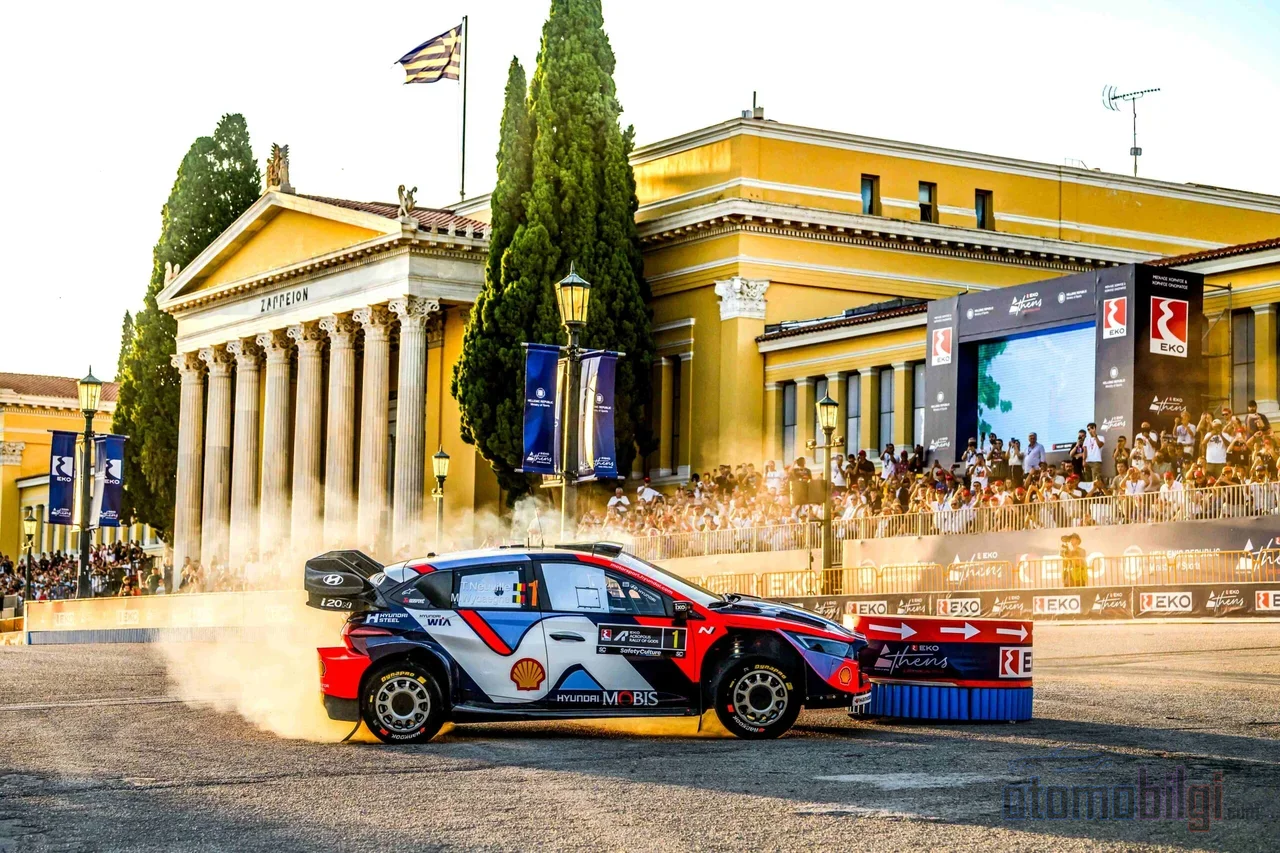
To sum up: every stage we see in the field rests on a structure propped up by entry fees paid to the promoter, sponsor dollars, support from the host municipality, and at times the public purse. The championship belongs to the FIA; the commercial rights are held by WRC Promoter, and from 2026 onward, with its new owners, it carries the promise of even greater investment. While manufacturer teams' investments form the visible face of the championship, the difference between the funded part of stage organization and the racing on the ground is often overlooked.
By way of comparison, a WRC stage resembles a concert stage: the audience only sees the star on stage, but backstage the bills for lighting, sound, safety, and rent keep coming. Rallying is exactly the same - behind the dust cloud, there is a solid commercial machine that reveals who is footing the bill. Next time you're standing at the edge of a stage, give it some thought: could you, too, be indirectly paying the bill behind this dust - as a tourist, a taxpayer, or by buying the products of sponsor brands? The answer is probably yes - and that is exactly where the real economics of rallying lie hidden.
Sources
- FIA completes 'deal of the century' for FIA World and European Rally Championships
- Update from the CEO – Rally Sweden, where we stand and the road ahead
- WRC draws 504M global TV audience in first half of 2026
- Vodafone Rally de Portugal generated €193 million
- About WRC Promoter
- WRC Sponsorship Cost
- WRC secures staggering deal for new event - Rally Journal
- $150 million revenue expected from the World Rally Championship
- WRC Rally Türkiye Press Conference
- $20 million in Türkiye's Tourism Sector
- FIA Rally Safety Guidelines 2025
- The USA's WRC return and 2027 key calendar questions
- World Rally Championship Sale Explored for $550 Million