HVO100: Is It Really a Clean Solution for Diesel Vehicles?
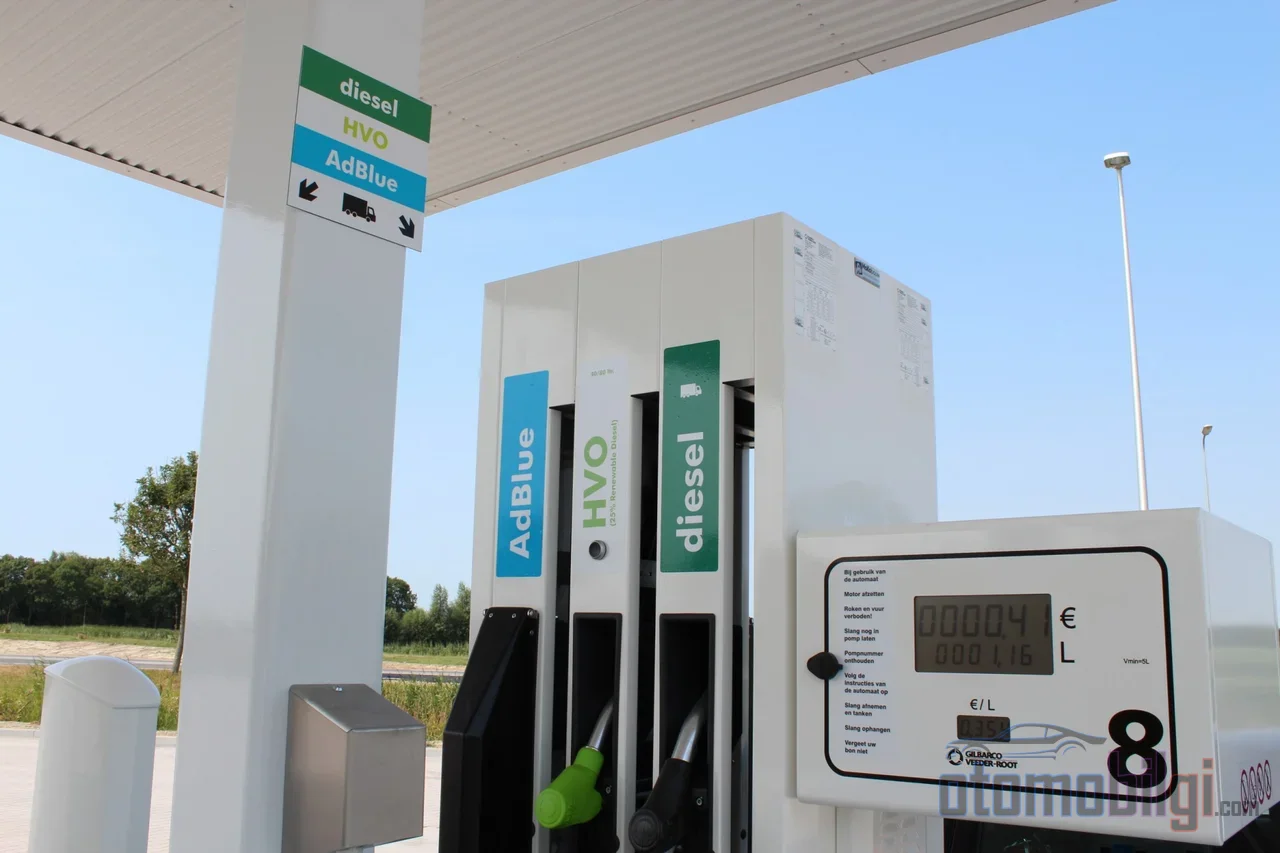
When it comes to filling your diesel tank with frying oil, let me let you in on a secret: the topic is not quite as absurd as it seems. This fuel called HVO100 is a 100% renewable diesel, produced chemically from plant and animal oils. While all the bestselling e-fuel pages are chasing synthetic fuels, the truly interesting question got forgotten in a corner: Is this fuel really as clean as it promises, or is it just the pretty cover page of the fairy tale industry has been telling us? That is exactly what I wondered in this article, and I would like to draw you into the conversation.
What Is HVO100 and How Does It Differ from Classic Diesel?
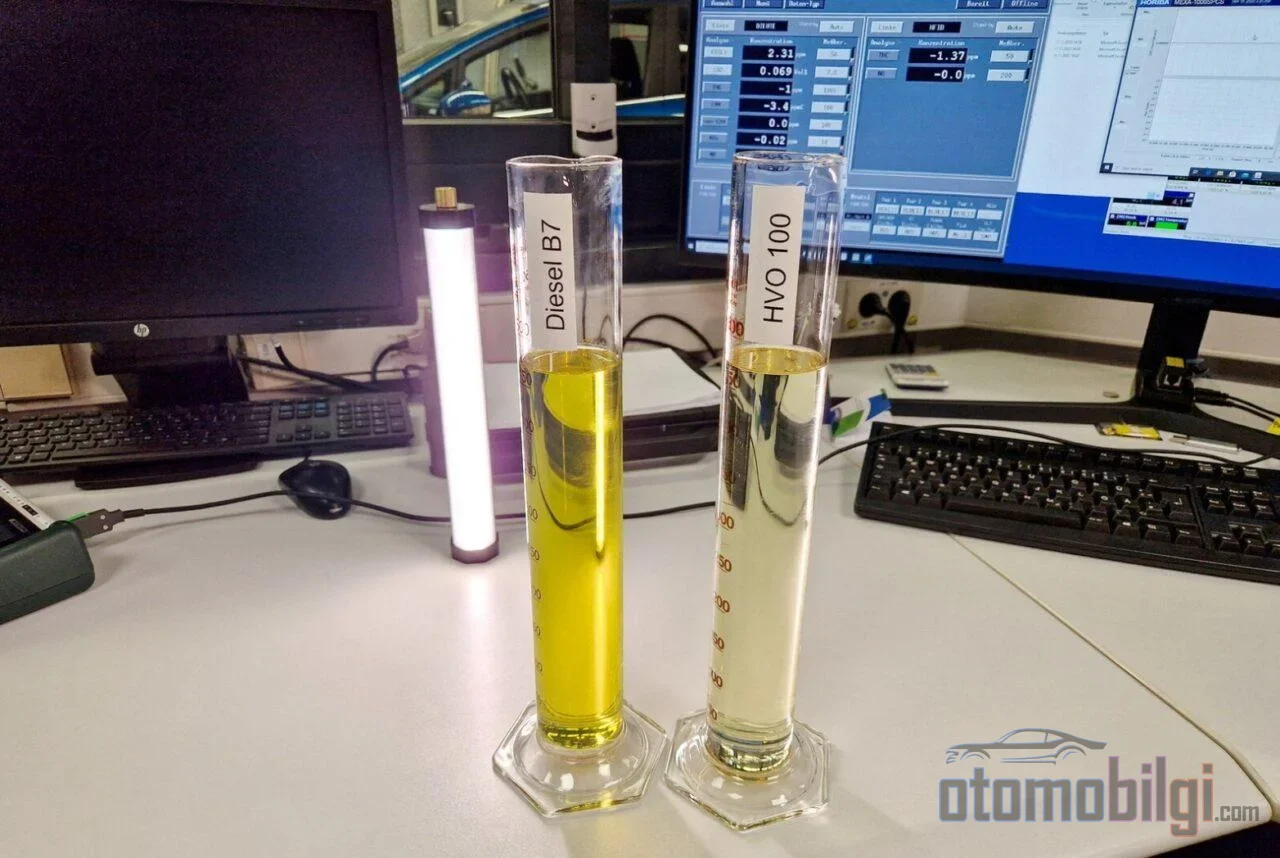
First, let's decode the name: HVO is an abbreviation for hydrogenated vegetable oil. Vegetable oil or animal fat waste is taken into the lab through a process called hydrogenation and processed with hydrogen to turn into a paraffinic fuel. That's why HVO is called renewable diesel; HVO100 is its 100% concentration form.
So what does this do? The most critical detail is this: The product that comes out of HVO is a chemical relative of fossil diesel - almost its twin. So it is not someone else like the FAME biodiesel we know; it is a real hydrocarbon. That's why it is referred to as a drop-in fuel; without touching your engine, without checking any blend ratio, you can fill it in your tank even in pure form. Think of it like plugging in any charging cable compatible with your new phone: no compatibility issues.
Why Are the Numbers Fun?
The technical side is genuinely impressive, in my opinion. The cetane number of HVO100 is at least 70; in classic fossil diesel, this value ranges between 45 and 55. If you ask what the cetane number means, it is the fuel's ability to ignite spontaneously. A diesel engine works by ignition, so if the cetane number is high, the engine ignites more easily and more smoothly. In addition, HVO performs much better than FAME biodiesel in cold weather, does not absorb water, and has a low risk of microbial growth when stored in a tank for a long time. So you are spared the troubles that classic biodiesel faces in winter and with tank stability.
The only point to watch is this: Since HVO's energy density is slightly lower than classic diesel, the engine injects about 5% more fuel to cover the same distance. It's like needing to drink water even though we are not carrying a half-full bottle - a small but undeniable difference.
Highlights
- HVO100's cetane number is at least 70; fossil diesel ranges from 45 to 55
- The industry promises up to 90–95% lifecycle CO₂ reduction; independent assessments show a 60–95% range with an average of ~83%
- The supply of used cooking oil was 3.7 billion gallons globally in 2022; a structurally limited waste source
- EU production reached 3.9 million tonnes, but facilities are increasingly shifting toward bio-kerosene
- BMW projects ~90% CO₂e reduction with HVO100
Which Vehicles Can Use HVO100, and Does It Void the Warranty?
Now we come to the most curious part of the matter, and I know this because it is also the most asked question on the internet: "Can I use it in my car, will it void the warranty?" The honest answer in a nutshell: everything depends on the manufacturer's approval. While HVO is technically compatible with every diesel engine, whether to grant official approval is the brand's decision.
- BMW: All diesel vehicles produced after March 2015 are HVO100 compatible
- Stellantis: Vehicles with Euro 5 and Euro 6 engines bearing the XTL mark on the fuel cap are approved; some Euro 6 vehicles (such as the 1.3 MultiJet) are compatible even without the mark
- Scania: The entire Euro 5 and Euro 6 diesel lineup is compatible
- Toyota: The Western European diesel lineup, including the Land Cruiser and Hilux, is being switched to HVO100
- Manufacturers such as Volvo Penta also support HVO100 but note that the product is not easily available in every region
For vehicles with manufacturer approval, there appears to be no warranty issue; for brands that do not grant approval, the operator fills up at their own risk. Then there is the practical question: do you need to empty the tank? No need; HVO100 can be blended with fossil diesel in any ratio - switching over is essentially just a matter of changing the pump nozzle. Moreover, blends that meet the DIN EN 590 standard, that is, mixtures containing up to 26% HVO, already fall within the scope of standard diesel vehicles.
The Raw Material Truth: Can Frying Oil Save the World?
This is where the story's smiling face ends. The basic raw materials of HVO production are used cooking oil (commonly known as UCO), animal fat waste, and vegetable oils such as soybean, canola, and palm. Does that sound too optimistic? The bitter truth in this part is this: used cooking oil is a waste product, so its supply is structurally limited. It is a resource that depends on how many potatoes people fry around the world; you cannot demand more of it, you can only collect more.
Let's look at the numbers. The global supply of used cooking oil in 2022 was at the level of 3.7 billion gallons; it is projected to rise to 5-10 billion gallons by 2030. Global exports stand at 1.3 billion gallons, two-thirds of which come from Asia, with China as the leading country. While roughly a quarter of the oil used in food is recovered in the West, this rate is only around 15% in China. So to increase supply, the world's frying habits would have to change.
The Vegetable Oil Side: Does the Soybean Math Add Up?
When frying oil falls short, producers turn to vegetable oils, and things get even more complicated here. The renewable diesel boom has shaken up the global oil trade: In 2023, the United States became a net soybean oil importer for the first time in history, canola imports from China multiplied, and 91% of canola exports go to the US. Soybean oil accounted for nearly half of the feedstock share of biomass-based diesel in 2022, but its share is shrinking as it shifts toward animal fat and used cooking oil feedstocks with lower carbon intensity.
The problem is this: according to calculations based on soybean meal demand, the global soybean supply will not be able to sustain production growth at the current pace for the next several years without major changes. In other words, feedstock availability could cut production far below the announced capacity. In a sector where cash flow doesn't grow as easily as targets do, that is a serious warning.
Emission Claims: The Magic Number That Fell from 90% to 83%
So what was the promise? In life cycle assessments, HVO is said to deliver 60-95% CO₂ reduction compared to fossil diesel, and this range varies depending on the feedstock's origin. Manufacturers proudly display the 90% figure; BMW explicitly argues that a study projects roughly 90% CO₂e reduction for HVO100. In the truck sector, some companies share figures of up to 86%, with claims of usability down to -22°C in road freight transport.
But here's the prickly part: these claims rest on feedstock origin, and for critical sources like palm oil, the actual reduction could be much lower. An independent assessment finds the average reduction to be around 83%, and with the margin of error included, that falls below the 90% the industry defends. There are experimentally verified advantages on issues like NOx reduction, but it is also debated that the difference in particulate emissions depends on the engine's combustion characteristics - meaning expectations of a miracle are not realistic. In short: there is a genuine gain, but you should not shop without reading the fine print beneath the headline.
The Difference Between HVO and e-Fuel: Who Solves What?
On synthetic fuel pages, the same hero is always told: e-fuel, synthesized from water and CO₂ using electricity. But BMW clearly distinguishes between the two fuel types: while e-fuel is synthesized in the laboratory, HVO100 comes from waste sources and can cut life cycle CO₂ in diesel engines by up to 90%. Most importantly, HVO is a solution designed directly for today's diesel vehicles; e-fuel, meanwhile, is still on an expensive and hard-to-scale path.
There is also a debate here, and honestly, I think it is very well placed: there are views criticizing the HVO campaign's narrative that it makes the internal combustion engine ban unnecessary, treating it as a marketing system. On the other side, manufacturers like BMW position HVO100 as a genuine climate tool, arguing that Europe's existing diesel fleet does not have to wait. In other words, the same fuel can become either a campaign slogan or a transition bridge.
Production Capacity: The Numbers Are Growing but the Direction Is Changing
On the European front, growth is real: HVO production in the EU reached 3.9 million tonnes, and the EU imported about 1.76 million tonnes of feedstock and product in 2025. With Germany's tightened GHG quota rules, 2026 consumption is estimated to be 0.65 million tonnes of HVO and 2.05 million tonnes of biodiesel. In Portugal, a 270,000-tonne-per-year facility is planned for large-scale production from 2026 onward. HVO plants are among the largest in the world, with typical output above 700 MW and capital costs of around €1,035 per kW.
But there is another bend in the road here: HVO production facilities are increasingly shifting toward biokerosene, i.e. SAF aviation fuel production. European capacity is expected to balance demand by 2027 and turn into a surplus from 2028 under RED III. So diesel's green substitute is poised to become aviation's reserve in the future; today's companion may be waiting for another passenger tomorrow.
Is HVO100 Really a Clean Solution? My Answer
Let me give you an honest, one-paragraph answer: HVO100 is a genuine, chemically sound low-carbon fuel that can be used in existing Euro 6 diesel vehicles without engine modifications; but because waste oil feedstocks are structurally limited and independent assessments show average reductions of around ~83%, below the industrial claims of (~90%), it can only be a bridge solution for a narrow slice of fleets, not the ultimate answer that saves the entire diesel world. This is my conclusion; make your own decision based on your own use case.
In my view, the smartest perspective is this: Rather than seeing HVO as a hero or a villain, evaluating it as a realistic tool for the transition period. It delivers real carbon savings today in areas like agriculture and trucking where electrification is difficult; but falling for the "it will save diesel forever" narrative means ignoring the feedstock math. So here's my question to you: Is there really enough frying oil to fill the tanks of millions of diesel vehicles? The numbers have already given the answer.
Sources
- What is HVO, HVO100 & R99 renewable diesel? - Neste
- U.S. Renewable Diesel Production Growth Drastically Impacts Global Feedstock Trade - USDA FAS
- Global Supply and Trade of Used Cooking Oil - Clean Fuels Alliance America
- Animal, vegetable or mineral (oil)? - ICCT
- HVO 100 and renewable fuels in Europe - BMW Group
- Stellantis Line-Up Fully Compatible with Green HVO Fuel - Stellantis
- Toyota's diesel line-up in Western Europe to be made compatible with HVO100 - Toyota
- EBB Statistical Report 2025–2026 - European Biodiesel Board
- As renewable diesel surges, sustainability claims are deeply questioned - Mongabay
- Effect of HVO fuel mixtures on emissions and performance - Bortel et al., ScienceDirect