Is an Ammonia-Powered Engine a Realistic Option?
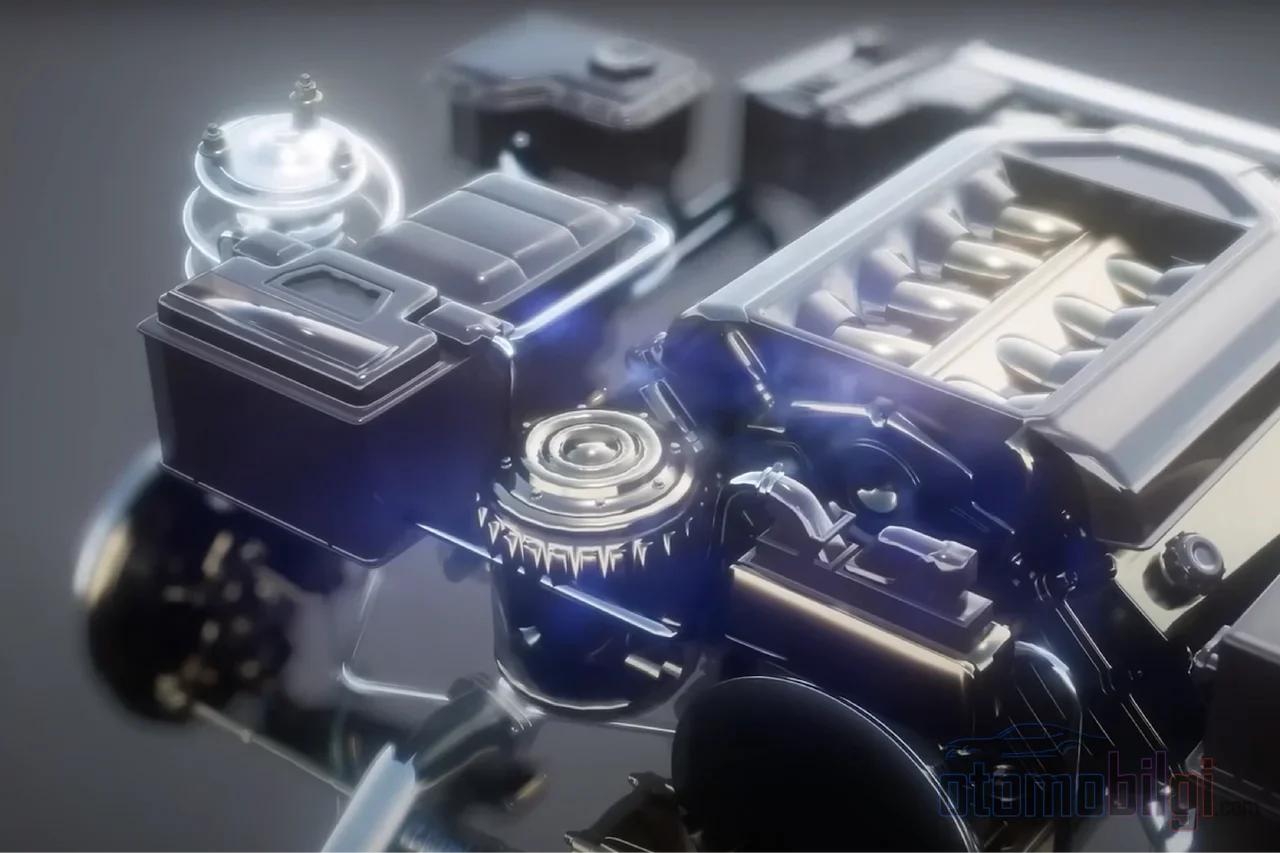
While the debates over hydrogen versus synthetic fuel continue, a third candidate is quietly waiting in the wings: ammonia. Yes, that heavy-smelling substance that stings the eyes and smells like bleach - a fuel candidate that, if turned into a liquid, could power giant ships with its energy. It contains no carbon, is relatively easy to transport, and is in fact already being shipped all around the world. So will it really be possible in the near future to drive to a gas station and fill your car's tank with ammonia, or is there a much harsher reality behind this promise than we expect? Let's put the promise and the reality side by side.
Why Did Ammonia Create Such Excitement?
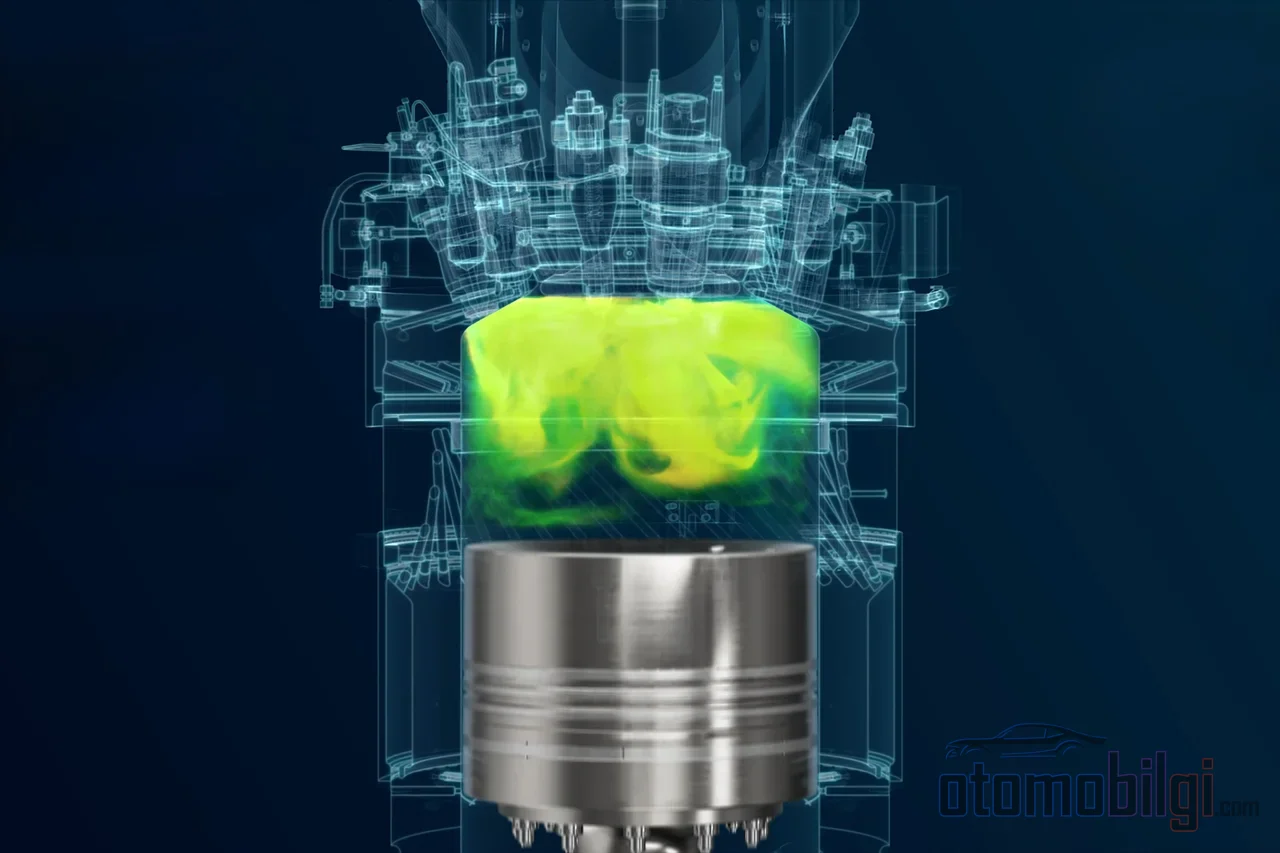
Let's start with the good news. The volumetric energy density of liquid ammonia is approximately 11.65-12.69 MJ per liter, and this figure is significantly higher than both compressed and liquefied hydrogen. In other words, you carry more energy in the same volume. While transporting hydrogen requires massive pressure tanks, ammonia turns into liquid at relatively low pressures. This makes it a hydrogen carrier in its own right: storing and distributing it is cheaper than storing and distributing hydrogen.
And then there's the infrastructure side, which is truly attractive. Ammonia is already an industrial chemical that is produced worldwide, transported by ships, and stored at ports. So it's not some obscure laboratory material tucked away in a corner; there has been a real distribution network for years. Moreover, since it contains no carbon, it doesn't release CO2 when burned. This is exactly where the maritime world gets excited: for shipping, one of the hardest sectors to decarbonize, ammonia is on the table as a strong candidate.
The Odor Problem of a Carbon-Free Fuel: Toxicity and Corrosion
Now grab a coffee and sit down, because things get a bit harsher from here on. Ammonia is toxic. Acute poisoning, skin corrosion, serious eye damage, and respiratory sensitization are among its documented effects on humans. Exposure to high concentrations can cause severe burns and even blindness. So it's not a fuel you'd keep sitting next to that package in your fridge.
What's more, it's a corrosive substance: in engine parts, tanks, pipes - in any material it directly contacts, it causes corrosion over time. This is also why ships require special safety arrangements in fuel preparation rooms, enclosed stations, and leak remediation systems. On the combustion side, its ignition temperature is high and its flame propagation speed is slow, and these two characteristics together strip away every kind of convenience engineers are used to. In short, ammonia is like a bank that treats you very well when lending you money but then hits you with steep interest: everything looks like an advantage, but don't sign before counting the full cost.
Ammonia in Internal Combustion: Why Is It Still So Difficult?
Suppose we somehow tamed that corrosive and toxic nature on the storage and injection side. Inside the combustion chamber, however, a completely different story begins. The flame speed of pure ammonia is so low that it is not suitable for high-revving engines. Let me make an analogy: normal gasoline is a sprinter running in sync with the spark; ammonia, on the other hand, is a walker who marks time in place before getting started. This is why spark timing requires special crank angle and piston position adjustments - like giving the engine a new stomach so it can digest ammonia.
While you rejoice at it being carbon-free, there is also something taking carbon's place: nitrogen. In ammonia-powered engines, the main source of NOx emissions is the nitrogen already waiting inside the fuel. So beyond classic engine technologies fighting the nitrogen coming from the air in the combustion gases, you are facing a problem originating from the fuel itself. Moreover, N2O is among the byproducts - a greenhouse gas roughly 300 times more powerful than CO2 per unit mass. This is exactly where things get confusing: a carbon-free fuel may still not be climate-clean in a full life-cycle assessment. If the NOx and N2O problems are not solved, the "zero carbon" promise may not actually be fulfilled. A nice promise, but you also need to run the irrigation system.
Ammonia in Fuel Cells: The Price of Efficiency Loss
Since the internal combustion route is so bumpy, engineers are also knocking on another door: converting ammonia to hydrogen first and using it in a fuel cell. Here, the math is ruthless. Ammonia lags behind hydrogen in energy density per unit mass (18.6 MJ/kg) and produces roughly 15% lower efficiency in a fuel cell. When racing directly against hydrogen, you are already starting one step behind.
In integrated ammonia cracking and solid oxide fuel cell (SOFC) configurations, total efficiency can rise to around 40%; in this method, ammonia is first separated into hydrogen through thermal processing, then converted into electricity in the cell. In onboard ammonia crackers designed for light automotive applications, you read impressive figures such as 94-95% thermal efficiency and ammonia conversion of up to 99.4%. But be careful: this is a laboratory development. It is not a technology that has come down to the production line or that you will see in your garage. While hydrogen loses about 2.4% per day, ammonia behaves far more conservatively in this regard; meaning ammonia has the advantage during storage. But having an advantage in storage does not make your vehicle go farther. That is exactly the name of the trap.
The Refuel Station Problem for Cars: The 120-400 Meter Issue
Now let's face the most restrictive reality on the automobile side. Ammonia fuel stations will likely require a safety distance of between 120 and 400 meters from residential areas or places where crowds are frequently present. This is not a distance to be thought of the way you think of a gasoline station; setting up an ammonia refuel point within a city is like setting up a depot. Putting an ammonia pump next to a shopping mall means a serious engineering and regulatory debate about that neighborhood.
In shipping, this safety topic has come a long way. The interim guidelines published by the International Maritime Organization in February 2025 require that a water curtain outside the fuel preparation room can be activated in the event of an ammonia leak. Risk analyses prepared on the safe use of ammonia aboard ships address three main hazards: toxicity, corrosion, and fire-explosion; as a result, it is argued that ammonia can be safely integrated into maritime operations. In other words, the regulatory framework is taking shape at sea - but it does not yet exist in the parking lot. Its absence is not an obstacle, but a reality: for a fuel to make it into the automobile, it must first speak the safety language of everyday life.
Pilot Projects: Science or Showmanship?
The shipping side is currently the most mature area. Ricardo's FASTMOVE feasibility study, completed in July 2026, was conducted together with Brunel University and the Port of Cromarty Firth and worked with real experimental data: experimental data on 200 bar high-pressure ammonia injection, CFD spray modeling, and three different high-pressure dual-fuel concept engine designs. These are real engineering outputs, not graffiti on a wall. However, even the study's own language is cautious: single-cylinder engine development and commercialization are explicitly stated as "subject to further work." In other words, scalability has not yet been proven - the answer to whether it can be proven lies in the future.
The world's first ammonia-powered vessel set sail with a dual-fuel design; it can switch back to conventional fuel if necessary. This shows that engineers are taking their job seriously: they are moving forward not with an absolute zero-carbon claim, but with operational flexibility. On the automobile side, the picture is thinner. An academic paper published by SAE in 2026 examines the use of ammonia in automotive internal combustion engines and fuel cells: setting aside advantages such as high energy density and carbon-free combustion, disadvantages such as lower energy per unit volume, NOx potential, and the required engine adaptations are also clearly listed. The concluding sentence draws a frame of hope - it says that with current limitations overcome, ammonia could play a role in sustainable transportation. There is no mass-production evidence, only an academic feasibility.
This is exactly the point that clarifies the whole picture: the evidence to date is at the level of maritime pilots. The automotive side is limited to promising academic papers. So in that case, what place does ammonia have in the future of the automobile? We will give the honest answer in the final section.
Key Takeaways
- The volumetric energy density of liquid ammonia is 11.65-12.69 MJ/L; higher than both compressed and liquefied hydrogen.
- An ammonia fuel cell delivers roughly 15% lower efficiency than hydrogen; its energy per unit mass is 18.6 MJ/kg.
- Ammonia fuel stations may require a 120-400 meter safety distance - a critical constraint for automotive refueling infrastructure.
- N₂O is a greenhouse gas approximately 300 times more potent than CO₂ per unit mass, and one of the byproducts of ammonia combustion.
- The FASTMOVE study produced 200 bar injection data and three dual-fuel concepts; commercialization depends on further work.
Is an Ammonia-Powered Engine a Realistic Option? A Report Card Summary of Promise vs. Reality
The answer to the question is not a single word, because ammonia's story splits in two: where it can be used and where it cannot. In maritime and heavy-duty scenarios, ammonia is a realistic candidate; here, the engineering-level conversion of a chemical that is already transported by ships, stored, and compatible with the world's infrastructure is being tested. IMO's interim guidelines, EMSA's safety studies, and feasibility projects like FASTMOVE show that this field has a concrete regulatory and engineering foundation.
On the automobile side, however, the picture is much harder. In small-volume vehicles, fuel cell efficiency lags behind hydrogen; in internal combustion, flame speed and knock management require serious adaptation; NOx and N₂O emissions cast a shadow over the carbon-free label; and the 120-400 meter safety distance can make urban refueling infrastructure impractical. So ammonia is not the fuel of automobiles for now; it is a technology advancing toward becoming the fuel of the sea, while at best peering into automobiles from the laboratory door. Is it a realistic option? At sea, yes; in your garage, not yet - and failing to see this difference would be the easiest promise trap to fall into.
What do you think - will it take years to carry these maritime developments over to cars, or will ammonia overcome all these obstacles and appear next to gasoline pumps as a third nozzle? Let's meet in the comments.
Sources
- Ricardo completes feasibility study on ammonia as a future marine fuel (FASTMOVE, 2026)
- SAE 2026-26-0128: The Viability of Ammonia in the Automotive Sector
- IEA-AMF Fuel properties: Ammonia
- Akhtar et al., Comparative Analysis of Direct Ammonia and Hydrogen (ACS)
- A critical review on ammonia as a fuel for IC engines (ScienceDirect, 2025)
- AIAA: Impact of Ammonia Blended Fuels on NOx Emissions
- DTU: Safety assessment of ammonia as a transport fuel
- IMO MSC.1/Circ.1687 Interim Guidelines via BIMCO
- EMSA: Safety of ammonia for use in ships
- Applied Energy: Techno-economic analysis of ammonia to hydrogen and power