A Look at Synthetic Fuels in Terms of Electricity Consumption
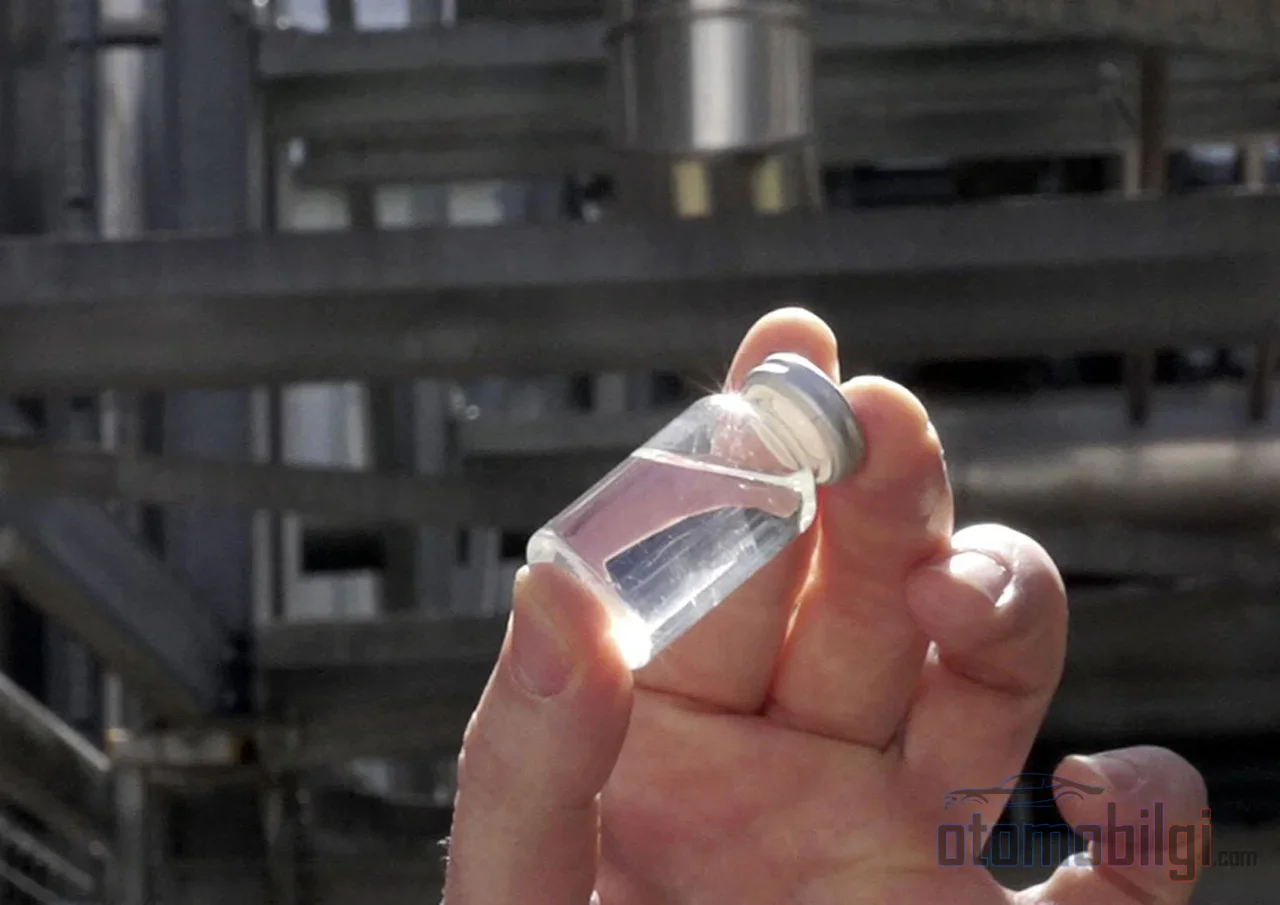
Imagine a car: the fuel you put in its tank comes, just as it says on the label, from wind and sun. The CO2 coming out of the exhaust is then turned back into fuel. Sounds perfect, doesn't it? But what if only a small fraction of the electricity spent producing that fuel actually reaches the wheels? This is exactly where the most critical question about synthetic fuel begins: how many kilowatt-hours of electricity does one liter of synthetic fuel swallow, and how wasteful is that energy compared to an electric vehicle that drives the same amount from its battery? In this article we will follow the well-to-wheel chain step by step - let's get started.
What Exactly Is Synthetic Fuel?
Synthetic fuel, or e-fuel as everyone's short name for it, is a liquid fuel produced not from petroleum extracted from the ground, but from a laboratory chain. There are two basic ingredients: captured CO2 and hydrogen. We obtain the hydrogen by splitting water, that is, through electrolysis - and if we run this electrolysis on renewable electricity, things really turn green.
The production chain roughly goes like this: renewable electricity → hydrogen via electrolysis → CO2 conversion → synthesis → upgrading in the final stage. Considering that every arrow is an energy loss, it's hard not to wonder what we have left along the chain. And that curiosity became the reason I wrote the rest of this article.
How Many kWh of Electricity Does One Liter of Synthetic Fuel Require?
Let's get to the numbers, because this question is the heart of the matter. For a synthetic fuel that is a mix of diesel, kerosene, and gasoline, the renewable energy required per liter is 25.2 kWh. So, compared to electric vehicles in daily use, you could travel quite a distance in an electric car with 25.2 kWh. Whereas when that same energy turns into one liter of liquid fuel, that liter only takes a typical gasoline car a few kilometers. Would you like an analogy? It's like a ferry carrying a bottle of water across and then reselling it on the other shore: shipping is expensive, the product is the same.
Highlights
- Producing one liter of synthetic fuel requires approximately 25.2 kWh of renewable energy.
- Only 6-18% of the initial electricity ultimately reaches the wheels.
- The well-to-wheel efficiency of battery electric vehicles is 70-90%; while in internal combustion engines it is around 17-30%.
- At least 3 tons of CO2 must be captured for every ton of e-fuel.
- Highly integrated plants can achieve efficiency of over 50% from power to fuel.
Losses in the Energy Chain: Where Does It Leak at Each Step?
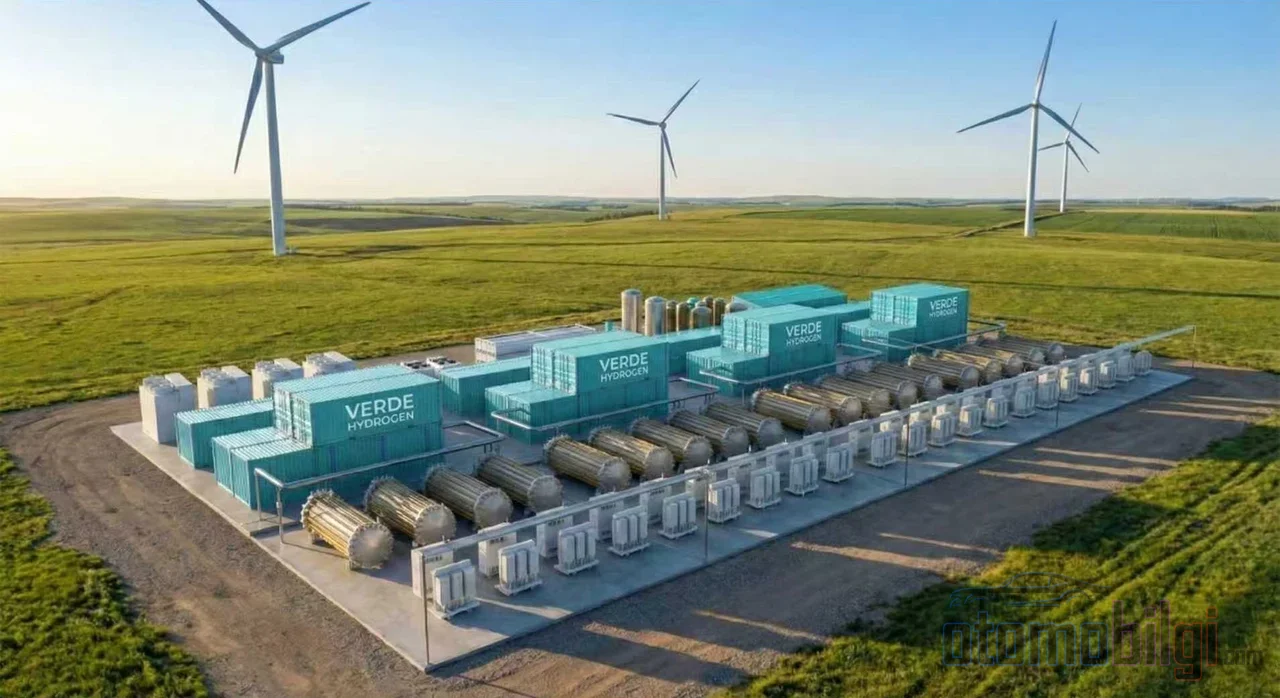
Electrolysis: The Price of Hydrogen
The first link in the chain is converting electricity into hydrogen. Electrolysis is a scientifically quite reliable process, but its efficiency layers are limited: part of the electricity escapes into the air as heat. Moreover, this hydrogen then also requires CO2 capture and conversion - it is essential to collect at least 3 tons of CO2 for every ton of e-fuel. In short, a significant chunk of our energy wallet is spent before we even get started.
Synthesis, Upgrading, Transport, and Engine
Hydrogen and CO2 come together and enter the synthesis stage. Then the fuel begins to be refined and upgraded to the desired properties. Meanwhile, storage and transport come into play - think about where the liquid fuel needs to go, you need a pipeline or a tanker. Finally, the fuel goes into the car's tank, and the internal combustion engine tries to convert it into motion energy. And here is where the biggest loss occurs: internal combustion engines can convert only 17-30% of the energy into motion; the rest escapes as heat through the exhaust and radiator.
Looking at it end to end, only 6-18% of the renewable energy put into its production reaches the wheels. So from that 25.2 kWh bottle, we can extract only a small slice of the work the vehicle puts on the road. I call this the efficiency wall - no matter how fast you run to climb the wall, physics gives you the same response.
What If It Went to an Electric Battery Instead?
Now let's try the same energy another way. Let the renewable electricity leave the power plant and go into the charging cable, then into the battery and the electric motor. Electric motors can convert more than 85% of the energy into motion. If we do the well-to-wheel budget, battery electric vehicles operate in a 70-90% efficiency band. The contrast is incredible: while the synthetic fuel car stays in the 6-18% band, the electric vehicle uses nearly the same electricity five to seven times more efficiently.
| Comparison | Synthetic Fuel Vehicle | Battery Electric Vehicle |
|---|---|---|
| Energy required per liter / per unit of production | Approximately 25.2 kWh | Direct electricity use |
| Well-to-wheel efficiency | 6-18% | 70-90% |
| Engine efficiency | Internal combustion engine 17-30% | Electric motor over 85% |
| CO2 requirement | At least 3 tons per ton | Not directly required |
| Exhaust | Emits CO2 | Zero exhaust |
One question had remained in my mind: With such an efficiency difference, why doesn't anyone object? The answer is simple and a bit painful: advocates of synthetic fuel are addressing a very different audience - millions of existing vehicle owners who haven't given up the gasoline pump.
Where Synthetic Fuel Could Still Make Sense Despite the Efficiency Wall
So if everything is this disadvantageous, why is synthetic fuel still being discussed? Because batteries face serious challenges in some sectors. Aviation and shipping demand liquid fuels with unmatched energy density. Providing the same range with a battery for an airplane or a giant container ship is not yet practical at these scales. The energy density of liquid fuel remains indispensable in these fields.
The direction given by the international energy agency IEA is good news: hydrogen-based fuels could be raised to approximately 15% by 2030, while their share in shipping and aviation is below 1% today. This growth actually suggests that synthetic fuels show their benefit when used in the right place. Studies emphasizing the importance of liquid fuels especially in long-distance passenger and heavy truck transport also support this picture.
The third use case is my favorite discussion: the existing fleet. Synthetic fuel can run in the engines of gasoline vehicles on the road today without the slightest modification, thanks to its drop-in property. Porsche-affiliated sources state that e-fuels could keep existing gasoline vehicles running, but would still be less efficient compared to EVs. For a classic car enthusiast, this means the dream of preserving a classic vehicle collection without electrifying it. If you had a favorite model from an era, would you choose this path?
Recent Developments in Cost and Efficiency
The technical side of the matter is no longer the main discussion; the real issue is the wallet. Switzerland-based Synhelion is targeting production below 0.8 euros per liter and below 1,000 euros per ton at scale, with a cost analysis verified by DNV. This claim is ambitious, because today the cost of green hydrogen, expected at 5-10 euros per kilogram, is higher than anticipated. Synhelion claims that its thermochemical route, by not using green hydrogen, requires approximately 3 times less electricity than conventional e-fuel methods and offers over 90% energy and carbon efficiency. Can this punch a serious hole in the efficiency wall? We haven't yet seen a full-scale production test, but it wouldn't be wrong to say a promising path exists.
Another ray of hope in synthesis technology is the integration of high-temperature electrolysis cells (SOEC) with Fischer-Tropsch synthesis. This approach is calculated to be able to offer power-to-fuel efficiency in the range of 46-67%. In practice, a 1 MW SOEC and Fischer-Tropsch pilot plant managed to produce 57.8 kg of synthetic hydrocarbons per hour with 50.8% liquid fuel-to-power efficiency. is synthetic fuel, or directly capturing and storing CO₂ from the air, more economical? For a positive economy, the cost of renewable electricity needs to fall below the 40-50 euros/MWh range.
On the market side, growth is fast: while the synthetic fuel market was $6.7 billion in size in 2024, it is projected to reach $25.9 billion by 2030. There is also an estimate that biofuel and e-fuel production capacity will exceed 67 million tons per year by 2036. In aviation the picture is simpler: sustainable aviation fuel production will reach approximately 2.4 million tons in 2026, but that is only 0.8% of total jet fuel consumption. So we are in an interesting time: the technology is growing, but it is still tiny compared to the need.
And there is also a long-term question: is synthetic fuel more economical, or capturing and storing CO₂ directly from the air? A peer-reviewed study published in 2026 shows that direct air capture and storage (DACCS) makes synthetic fuels 49–69% cheaper and requires far less renewable electricity. This doesn't undermine synthetic fuel, but it reminds us that we need to question what money and what climate goal it actually serves.
The Efficiency Wall: What Does the Result Tell Us?
To sum up this entire chain, the answer is one clear number and one worldview: one liter of synthetic fuel requires roughly 25.2 kWh of renewable energy, and only 6–18% of that energy turns into useful work at the road. If you direct the same electricity to a battery instead, it reaches the wheels with 70–90% efficiency. So at the level of abstraction the difference multiplies layer by layer - synthetic fuel is not an energy store, it's an energy conversion factory. What physics says is simple: every conversion means a loss.
But the story doesn't end here. In sectors that are still hard to electrify, such as maritime shipping, aviation, and long-distance heavy freight, the energy density of liquid fuel is not up for negotiation. Keeping the millions of gasoline cars on the roads today running with a drop-in fuel is another separate justification. As stated in the Royal Society's policy briefing, losses are high due to the many stages in the chain; but in some cases this loss can be justified. Technical feasibility is no longer the debated issue; the real determinants are cost and scale.
If you ask for my personal opinion: thinking of synthetic fuel not as a conversion of cars to gasoline, but as a bridge for aviation and maritime shipping makes the most sense. What was your take - the cars of the future, or aviation's savior? Let's talk in the comments.
Sources
- Producing synthetic fuels at fossil fuel prices
- Electrochemical Syngas Production Technology Landscape 2026
- Synthetic Diesel (e-Diesel) 2026: Drop-in Compatibility & Production Cost
- E-Fuels: A Comprehensive Review of the Most Promising Technologies
- Policy briefing: Sustainable synthetic carbon based fuels - Royal Society
- Aviation and shipping - IEA
- Sustainable Aviation Fuel (SAF) - IATA
- Cost effectiveness of synthetic fuel and CO2 removal - Cell/Joule
- Synthetic Fuel Value Chain Opportunities and Challenges
- Electric Vehicle Basics - NRDC