Why Will the Per-Liter Price of Synthetic Fuel Remain High?
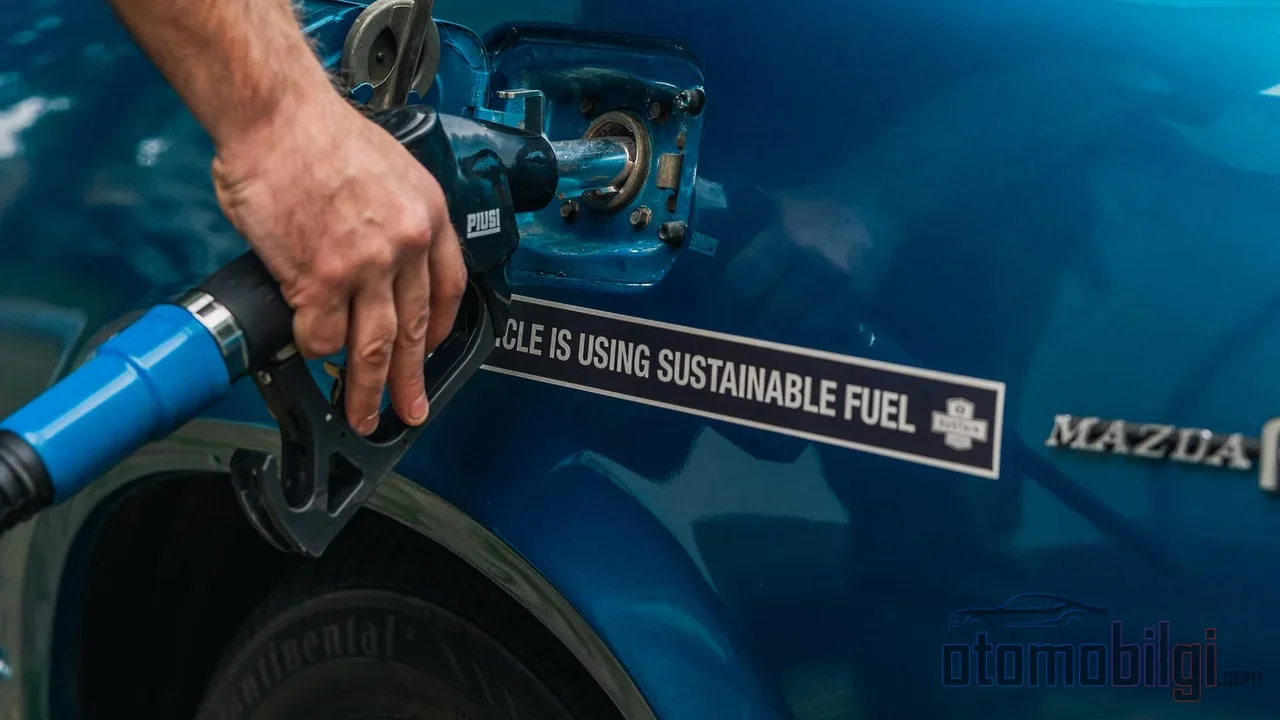
You go to the pump to buy a liter of gasoline, you open your wallet, and you take a deep breath. But what if one day you could get e-fuel, i.e. synthetic gasoline, from the same pump - how much would you pay? The short answer: for now, be prepared for your wallet to hold a grudge against you. Because as of 2026, the production cost of e-gasoline in Europe is around 5,160 euros per ton; the tax-free, VAT-free price per liter is 5.11 euros. Yes, one liter. But the real question is why this figure is so high - and when it will come down. This is where the part most news reports skip begins.
How Is the Cost of a Liter of Synthetic Fuel Broken Down Bit by Bit?
What we call e-fuel is essentially an expensive marriage of three ingredients: renewable electricity, the hydrogen produced from that electricity, and carbon dioxide captured from the air or from a point source. The process known as Power-to-Liquids (PtL) is exactly this: electricity is first converted into hydrogen, and the hydrogen combines with CO2 to become liquid fuel. Sounds simple, doesn't it? But at every conversion step, some of the energy is lost along the way - the total efficiency from electricity to liquid fuel is currently around 50-60%. In other words, nearly half of every unit of energy leaving the factory's input evaporates during the journey.
Efforts are being made even just to keep this chain of losses as short as possible. Some producers using the solar-heat route claim they can use about three times less electricity by skipping the electrolysis step entirely. So the technology itself is part of the cost story - which route you take directly determines the price you pay per liter.
Highlights
- In 2026, the tax-free consumer cost of e-gasoline in Europe is €5.11/l.
- The efficiency of converting electricity to liquid fuel is only 50-60%.
- Independent studies are targeting ~€2/l for 2030; this is based on assumptions of low electricity prices and scale.
- In the US, the annual fuel cost of an electric vehicle is $485, compared to $1,117 for a gasoline car.
- At least 3 tons of CO2 are needed for every 1 ton of e-fuel.
Cost Items: From Hydrogen to CO2
There are four major items, and each one pushes up the price per liter:
- Green hydrogen: This is the biggest item. All the energy in e-fuel is carried by hydrogen produced from renewable electricity, and the current cost of hydrogen is in the €5-10/kg band - well above earlier projections.
- Conversion losses: An efficiency of 50-60% means more electricity for the same liter; and electricity is already the most expensive input.
- CO2 supply: At least 3 tons of CO2 are needed for every ton of fuel. The market price of biogenic CO2 is 150-250 euros per ton; direct air capture (DAC) is even more expensive.
- Facility investment and depreciation: Site preparation, construction, grid connection... High CAPEX is spread across every liter produced. What's more, there is no facility at industrial scale yet; the first facilities with 500+ million liters/year capacity were only announced in 2026.
And of course there is also the distribution chain: getting the fuel from where it is produced to the pump adds its own cost. So there is no single culprit inside those 5 euros - every step drives in a nail.
What Is Today's Per-Liter Price and Why Is the Range So Wide?
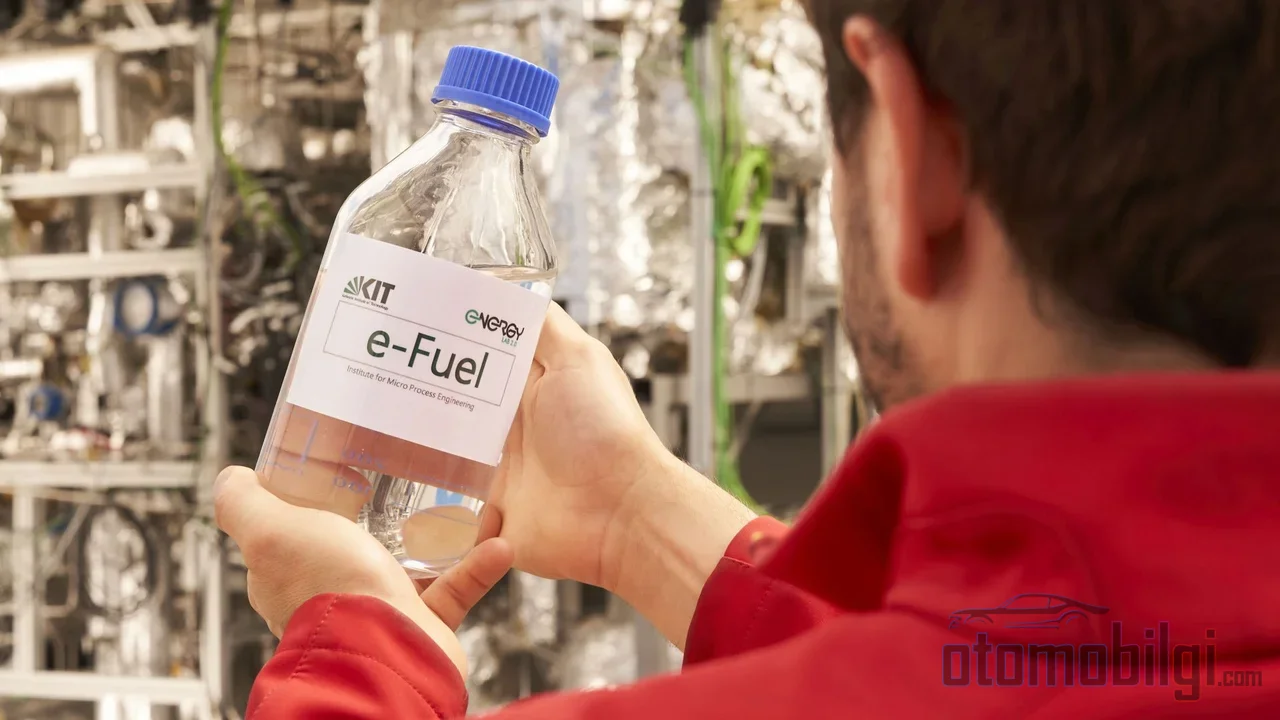
There is something we need to be honest about here: the e-fuel price is not a single number, it is a huge range. Why? Because the figure changes depending on which production route and which assumptions it is based on. With 2026 indicative figures, e-diesel falls in the 2.5-4.0 €/l range - compared to conventional diesel's 0.8-1.5 €/l band, the difference is obvious. Academic levelized cost analyses give 2.8-3.4 €/l and say energy cost is the biggest determinant. An independent 2026 report, meanwhile, puts today's classic PtL e-gasoline at 5.11 €/l.
At the lower end of the band, there is a different story: a producer using a solar-heat route, bypassing electrolysis and fed with biogenic waste, targets under 0.8 euros per liter as it scales up. But careful - this is not classic e-fuel, it is a niche process of its own. The ~$40 per gallon production cost claimed for the fuel of the Porsche-backed pilot plant in Chile represents the most extreme point of the band. In short, to summarize today's reality in one sentence: the per-liter price wanders in a wide band between 0.8 and 5 euros depending on the production route, and where you land in that band depends entirely on your assumptions.
Comparing E-Fuel, Gasoline and Electric in Cost per Kilometer
Okay, the liter is expensive - but what is the situation when you run the car? In July 2026 US averages, gasoline is $3.84/gallon and diesel is $4.86/gallon. E-fuel's 2.5-5 €/l cost is miles above these figures. So synthetic fuel stays far above the pump price today even when compared with the fossil fuel that is its very reason for being.
| Fuel / Form | Cost Indicator (2026) | Note |
|---|---|---|
| E-gasoline (Europe) | 5.11 €/l (tax-free) | Today's classic PtL production |
| E-diesel (indicative) | 2.5-4.0 €/l | Conventional diesel: 0.8-1.5 €/l |
| Gasoline (US avg.) | $3.84/gallon | July 2026, annual fuel cost ~$1,117 |
| Electric vehicle (US) | Annual fuel ~$485 | ~61% fuel savings per mile |
The comparison with electric is even more striking. In the US, running an electric vehicle on "fuel" for a year costs about 485 dollars; for the same period you pay about 1,117 dollars for a gasoline car. 2026 analyses show electrics are ~61% cheaper in fuel and ~50% cheaper in maintenance per mile. The reason is simple physics: in a battery, electricity goes straight to the wheels, while in e-fuel it is converted four times - electricity → hydrogen → liquid fuel → combustion - and you lose energy at every step. This is what opens the gap between every unit of energy you put into the battery and the distance you travel with synthetic gasoline.
International transport associations therefore argue that e-fuels make no economic or environmental sense for cars and cannot replace battery-powered electric vehicles. The opposing side, however, leans on this point: e-fuel is drop-in compatible, meaning it can be used in existing cars without major modifications. For today's cars this is a real plus - but this plus does not lower the price per liter.
On What Assumptions Do the 2030 and 2035 Promises Rest?
So what about the future? The industry's optimistic camp says that, if conditions allow, large-scale production will begin by 2030 and prices will drop to around ~2 €/l; it is estimated that a 5% e-fuel blend would raise the pump price by only about 7 cents per liter. The massive facilities in Texas and Chile are cited as proof of this goal. But - and this is a big but - these figures rest on three aggressive assumptions: a very low renewable electricity price, high capacity utilization, and solid economies of scale. Moreover, some of these projections come from the industry's own lobbying; they should be read with caution.
If the Market Is Growing, Why Is the Price Still Uncertain?
An interesting detail: market size estimates are worlds apart from one another. Forecasts for 2035 range anywhere from 69 billion to 730 billion dollars - such widely scattered estimates are a sign that even the industry itself cannot fully predict the future. And one more thing needs to be distinguished: these figures are market turnover, not the price per liter. Even if the market grows, the price per liter will not come down until electricity prices and facility costs fall.
On the pessimistic side, this reality stands: green hydrogen costs are still far above projections, there is no industrial scale, and the political framework - CO2-based taxation, quotas - is missing. Even analyses conducted since the 2010s reached the same conclusion: when high facility investment and low crude oil prices combine, synthetic fuel remains expensive. Parity with fossil fuel is mentioned only in the earliest scenarios at 2050.
Why Synthetic Fuel Will Remain Expensive: The Clear Answer
Let's summarize - why will the price per liter of synthetic fuel remain high? Because four structural obstacles will not disappear in the short term: green hydrogen, at 5-10 €/kg, remains the largest cost item, multiple conversion losses keep efficiency at 50-60%, CO2 supply is 150-250 euros and above per ton, and industrial-scale facilities have only just been announced. The ~2 €/l target for 2030 requires believing in assumptions of low electricity prices and economies of scale. In other words, e-fuel is expensive because physics and economics make it so - it is not a matter of bad intent or an early-stage issue.
So is this technology meaningless? No - thanks to drop-in compatibility, it can target the existing internal combustion fleet and perhaps especially areas where direct electrification is difficult, such as aviation and shipping. But for cars, battery-powered electric vehicles appear ahead in every item of the cost-per-kilometer comparison. The reality at the pump is this: synthetic fuel could be the fuel of the future, but that future is not yet reflected in pump prices - and even under the optimistic scenario, it will only be reflected by the early 2030s at the earliest.
Sources
- The price of e-petrol in Europe - Transport & Environment
- Producing synthetic fuels at fossil fuel prices - Synhelion
- Costs & Outlook - eFuel Alliance
- Synthetic Diesel (e-Diesel) 2026 - Energy Solutions
- Alternative Fuel Price Report - AFDC / U.S. DOE
- Short-Term Energy Outlook - EIA
- 25 Key Facts & Figures Around Synthetic Fuels 2023 - Saxtons
- Electric vs. Gas Cars: Is It Cheaper to Drive an EV? - NRDC
- World's Largest E-Fuel Production Plant Is Coming to Texas - The Drive
- Overview of the e-Fuels Market, Projects, and State of Development - MDPI