Can Ethanol Engines Become a Bridge to E-Fuel?
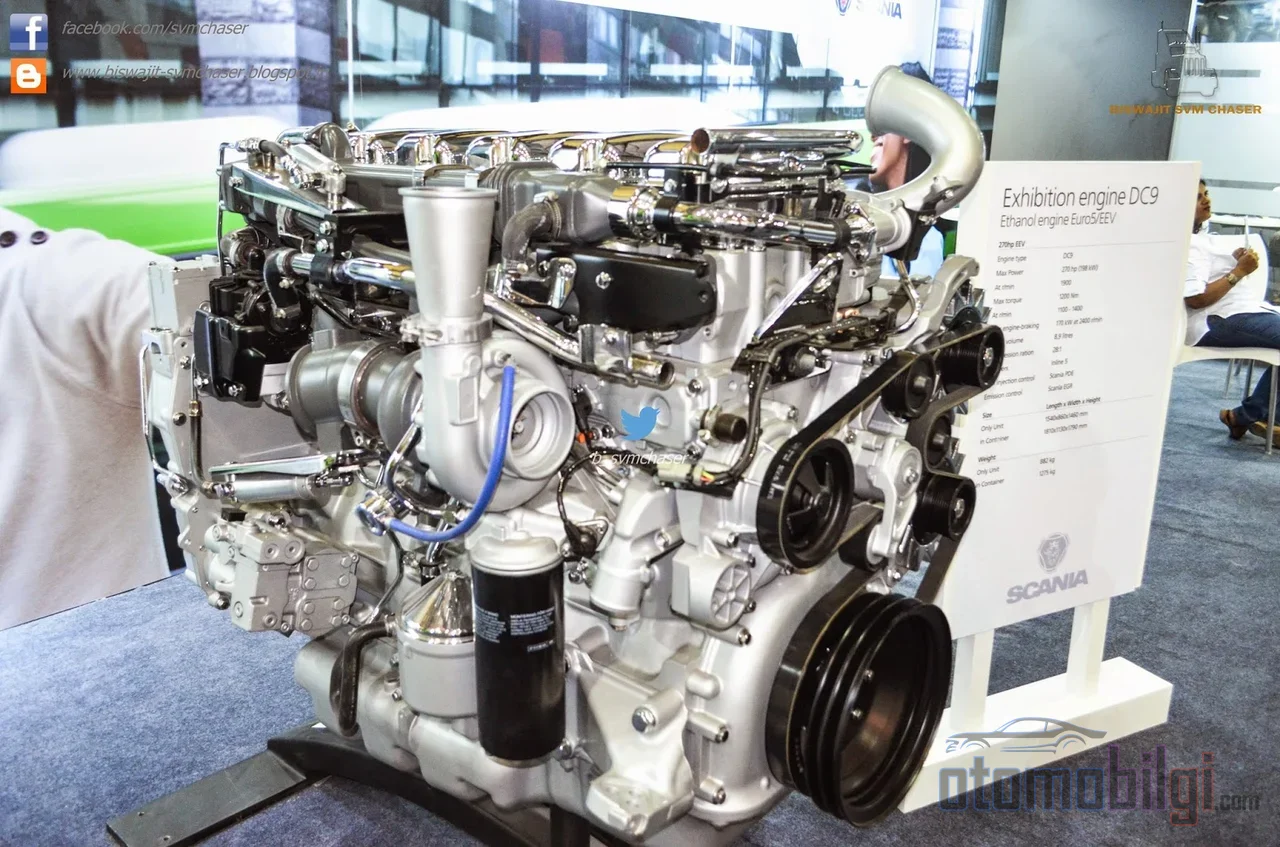
Suppose that tomorrow synthetic fuel becomes reality and starts flowing from the pump, at whatever price per liter. So how would this fuel reach people's cars? This is where a brilliant question comes to mind: Could the ethanol production and distribution network standing ready in every corner of the world serve as a transition bridge on the road to the e-fuel revolution? Or is that bridge a road that never reaches the far shore?
On this page we will examine exactly that. Because on the ethanol side there is a massive machine: more than 16 billion gallons of production per year, thousands of tanker trucks, dedicated storage tanks, flex-fuel engines... On the e-fuel side, however, there are only demonstration-scale facilities and price projections exceeding 5 euros per liter. The idea of a bridge between two worlds sounds wonderful; but there are such cracks in it that it is impossible to walk over without stepping on them.
What Is the State of Ethanol Infrastructure Today?
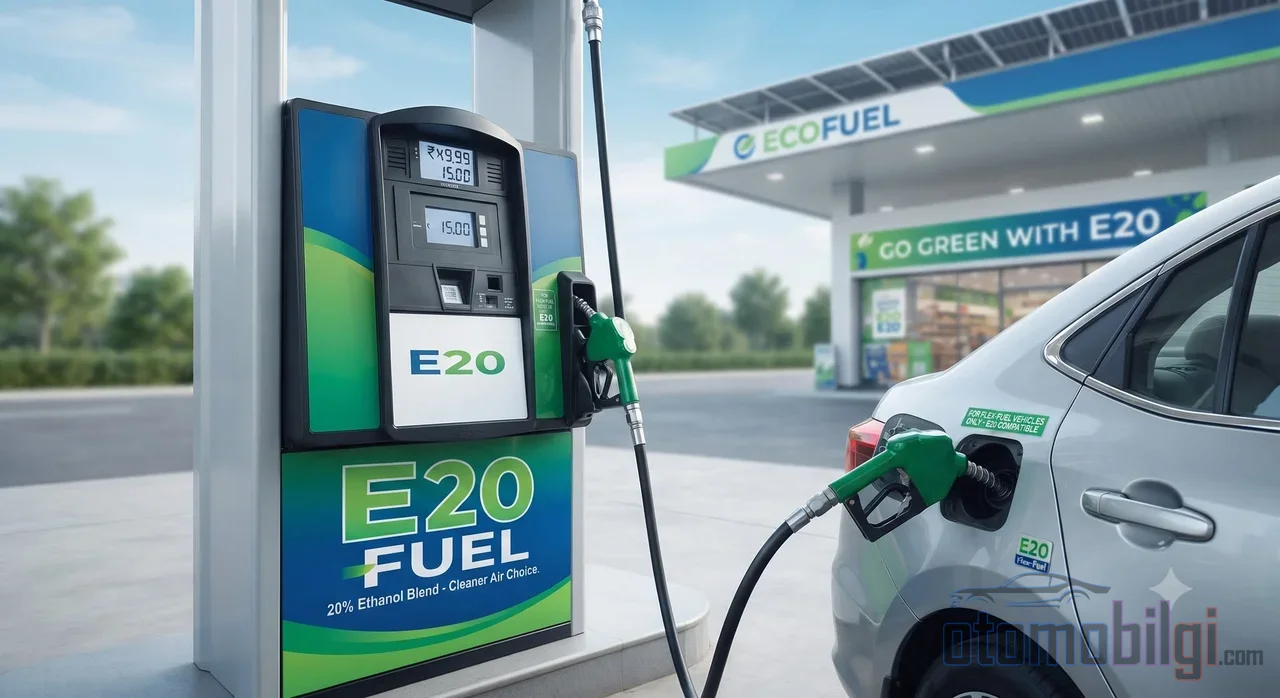
First, let's look at what we have. Most of the gasoline sold in the US already contains ethanol; the most common blends are E10, E15 and E85. E85, as the name suggests, consists of 85% ethanol and 15% gasoline and can only be used in flex-fuel (FFV) vehicles. In the US, as well as in countries like Brazil and India, this infrastructure is the product of decades of investment.
But here is where the interesting part begins: ethanol is not transported through pipelines like gasoline. Since ethanol tends to absorb water, the entire chain from supplier to pump must remain water-free; transportation is carried out with tanker trucks and dedicated tanks. Only blends of 15% and below can be safely transported through existing pipelines. In other words, the ethanol distribution network is a far more specialized and far more expensive system than it appears. According to EPA estimates, the total capital cost of ethanol distribution infrastructure exceeds 12 billion dollars. That money has already been spent; so what do we get in return?
Key Takeaways
- E85 only works in flex-fuel vehicles and reduces fuel economy by 15-30%
- The capital cost of the US ethanol distribution infrastructure exceeds 12 billion dollars
- The price projection at e-fuel demonstration facilities is 5 euros and above per liter
- The energy return of corn ethanol averages only ~1.5:1 across peer-reviewed studies
- Synthetic gasolines are being designed to be used directly in classic gasoline engines
Comparison: Ethanol's CO2 Balance and E-Fuel's Synthetic Cycle
When we open the carbon ledger, we see a significant gap between the two camps. The production and distribution life-cycle emissions of first-generation corn ethanol range from 47.5 to 77 g-CO2e/MJ per liter, even excluding land-use change. By contrast, lignocellulosic (woody plant-based) E85 produces 65-85% lower greenhouse gas emissions compared to reference gasoline. In other words, ethanol is not a single category; what feedstock it is made from changes everything.
On the e-fuel front, the cycle operates on an entirely different logic: renewable electricity powers the electrolysis, captured CO2 is used as a feedstock in synthesis, and synthetic gasoline, methanol or kerosene is produced. Process efficiencies range between 59-89%. Sounds clean, doesn't it? Yet every link in the efficiency chain swallows energy: because of production and direct air capture penalties, e-fuel vehicles demand 2.6 to 3 times more energy than battery electric vehicles. Moreover, according to independent emissions tests, cars running on synthetic fuel emit as much NOx as fossil gasoline ones; meaning there is no magical cleanliness on the exhaust side.
| Criterion | Corn Ethanol (E85) | E-Fuel (Synthetic Fuel) |
|---|---|---|
| Emissions profile | 47.5-77 g-CO2e/MJ (excluding LUC) | Reduction of ~10-20 g CO2e/MJ possible with blending |
| Energy cost | EROI ~1.5:1 (peer-reviewed avg.) | 2.6-3 times more energy than BEVs |
| Engine compatibility | Flex-fuel vehicles only | Can be drop-in in classic gasoline engines |
| Cost | ~85 cents cheaper per gallon than gasoline | Projected at 5+ euros/liter in demo facilities |
| Scale | 16+ billion gallons per year in the US | No commercial scale yet |
Are Flex-Fuel Engines Ready for Synthetic Fuel?
Now let's get into the technical side, because the most critical pillar of the bridge idea is engine compatibility. Flex-fuel vehicles can run on any blend of gasoline and ethanol up to 83%; the system detects the fuel composition and adjusts the injection accordingly. So what does the same engine do with synthetic gasoline?
The answer may be surprising: synthetic gasoline-like fuels are designed to mimic the properties of conventional gasoline, so they can be used directly in classic gasoline engines. In other words, when it comes to e-fuel, there is no need to be flex-fuel; a standard engine is sufficient. In fact, there is quite the opposite problem: since the lubrication characteristics of synthetic fuels may differ, the long-term effects on fuel pumps and injectors are not yet fully clear. On one hand, ethanol demands different rubber compounds, from gaskets to fuel lines; on the other hand, e-fuel stays within the standard while playing with the details.
So on the engine side, the bridge is actually built in the reverse direction: e-fuel's biggest trump card is its full compatibility with the existing vehicle fleet. The advantage of ethanol infrastructure lies not in the engine, but in logistics and politics. And it is precisely on the logistics side that things get messy.
The Food-vs-Fuel Debate and the Energy Density Penalty
Ethanol's agricultural bill
About 40% of the US corn harvest goes to ethanol production; this huge share replaces only 10.5% of the gasoline supply (7% in energy terms). This imbalance is also at the center of the food-versus-fuel debate. The shift of farmland and crops toward fuel affects the food supply from two sides; supply decreases while demand increases. It is argued that distillers grains, which emerge as a distillation byproduct of ethanol production, serve as a balancing factor as animal feed, but this is not enough to settle the debate.
The water and energy reality
The numbers are quite alarming: 992 gallons of water are consumed for one gallon of corn ethanol, while for one gallon of gasoline this figure is 5.6 gallons. On a per-mile basis, E85 consumes 174 times more freshwater than gasoline. The picture is similar on the energy side: the energy return of corn ethanol is about 1.5:1, based on the weighted average of 17 peer-reviewed studies. Even industry-sourced optimistic figures remain around 3:1. In return, corn ethanol's production cycle leans on fossil inputs, from fertilizer (ammonia derived from natural gas) to tractor fuel; no biorefinery uses its own ethanol for distillation heat.
E-fuel's problems, meanwhile, come from a different direction: production more expensive than fossil refining due to the costs of renewable electricity, electrolysis, and CO2 capture. Market projections also reflect this uncertainty; estimates for 2026 range from $15.7 billion to $204.7 billion, and projections for 2034 differ from each other by a factor of five. The figures fluctuate this much because definitions and scopes differ.
What Does the "Bridge to Nowhere" Argument Say?
A comprehensive analysis published in 2026 argues that ethanol was designed as a temporary bridge but has turned into a subsidy mechanism worth billions of dollars per year for more than 20 years. According to this view, the bridge's promise never materialized: cellulosic ethanol, with a target of 21 billion gallons for 2022, had a 2025 production of only 0.5 percent of corn ethanol volume. The report suggests this is not a matter of technology maturation, but a limit of biochemistry and thermodynamics. Progress on the yield side is also slow: the level has risen from 2.68 gallons per bushel (2002) to 2.90 gallons (2022).
According to this critical picture, the bridge metaphor extends to a place where no one goes. Of course, the opposing camp is not sitting idle either: ethanol advocates support with experimental findings the claim that E20 causes no problems in existing vehicles and distribution infrastructure, and that E30 even improves cylinder pressure and combustion quality. On the EU front, it is also argued that E20 blends are essential for transport decarbonization.
An Idea That Bridges Two Worlds: From Ethanol to E-Fuel
So is the bridge entirely a fantasy? When we put the numbers side by side, an interesting middle ground emerges. Studies modeling the transition from biofuel to e-fuel offer transition ranges such as 51-101 kg CO2eq/MWh for methanol production; that is, hybrid scenarios in which the two systems convert into each other are taken seriously scientifically. What is more striking: the idea of producing fuel via Fischer-Tropsch synthesis from waste CO2 released from ethanol production is a real research line evaluated with lifecycle analysis. Perhaps ethanol's biggest surprise may be handing over its own carbon emissio... excuse me, its own waste gas as the raw material for e-fuel.
Viewed this way, the picture becomes clearer: Ethanol infrastructure could be a starting scaffold for e-fuel; with its tanks, tanker chain, blending experience and political support, it is a real asset. But ethanol itself, especially first-generation corn ethanol, is not the goal; it is a transition layer paid for with a carbon and water bill. The solid parts of the bridge are logistics and know-how; the rotting parts are food competition, low energy return and subsidy dependence. If synthetic fuel becomes scalable, it will be possible to dismantle this scaffold and build its own terminal in its place, because synthetic gasoline is already being designed for standard gasoline engines.
Sources
- Ethanol as Fuel: A Bridge to Nowhere
- Chapter 4: Biofuels Transportation
- Review Article Liquid e-fuels for a sustainable future
- Ethanol - Alternative Fuels Data Center - Department of Energy
- Ethanol fuel
- The Ethanol Bridge, Part 3: Why Brazil Escaped Pain at the Pump
- Ethanol and Biofuels: Agriculture, Infrastructure
- UNCORRECTED PROOF
- eFUELS eMETHANOL FOR SYNTHETIC FUELS
- How Ethanol is Made