Are SOFC Fuel Cells Useful in Cars?

Let's say you know hydrogen cars: Toyota Mirai, Hyundai Nexo, some BMW experiments... all of them have a PEM fuel cell at their heart. But have you ever wondered whether a fuel cell operating at oven temperature could be put in a car? Yes, you read that right: oven temperature. The solid oxide fuel cell, or SOFC, operates between 600 and 1,000 °C, and while generating electricity its interior practically turns into a ceramics workshop. Nissan actually put one in a prototype vehicle in 2016, and even BMW tried it years ago. So the question is not entirely a fantasy. But then, hold on a minute: why isn't there a single mass-production car with an SOFC on the roads today? The answer is both exciting and a bit sad; come, let's separate the promises from reality together.
What Is an SOFC and How Does It Work?
SOFC stands for "Solid Oxide Fuel Cell". Its function is simple: an electrochemical conversion device that oxidizes fuel and generates electricity directly. Its electrolyte is a ceramic material, and this electrolyte carries negatively charged oxygen ions from the cathode to the anode. On the anode side, fuels such as hydrogen or carbon monoxide are oxidized electrochemically. To write hydrogen's reaction: H2 + O2- → H2O + 2e-. In other words, hydrogen in, water and electrons out. And these electrons are exactly what we want: the electric current that turns the motor.
The structure consists of four layers, and three of the four layers are ceramic. Hundreds of cells are connected in series to form an "SOFC stack". Common electrolyte materials are ceramics such as YSZ and ScSZ; at the anode, the nickel-YSZ ceramic-metal mixture is most frequently used. In short, these are not thin polymer-membrane devices like PEM's, but miniature ceramic factories designed to withstand the heat.
Why Is High Temperature So Important?
Here lies a revolution: thanks to the high temperature, SOFC, unlike PEM, does not require expensive platinum group metals and does not suffer catalyst poisoning from carbon monoxide. Moreover, light hydrocarbons such as methane, propane and butane can be reformed directly inside the cell; gasoline, diesel, jet fuel and biofuels can also be used via external reforming. In terms of fuel flexibility, SOFC is the most versatile player in the fuel cell world. Of course, it is sensitive regarding sulfur: the fuel must be purified of sulfur before entering the cell.
SOFC vs PEM Comparison: What Do the Numbers Say?
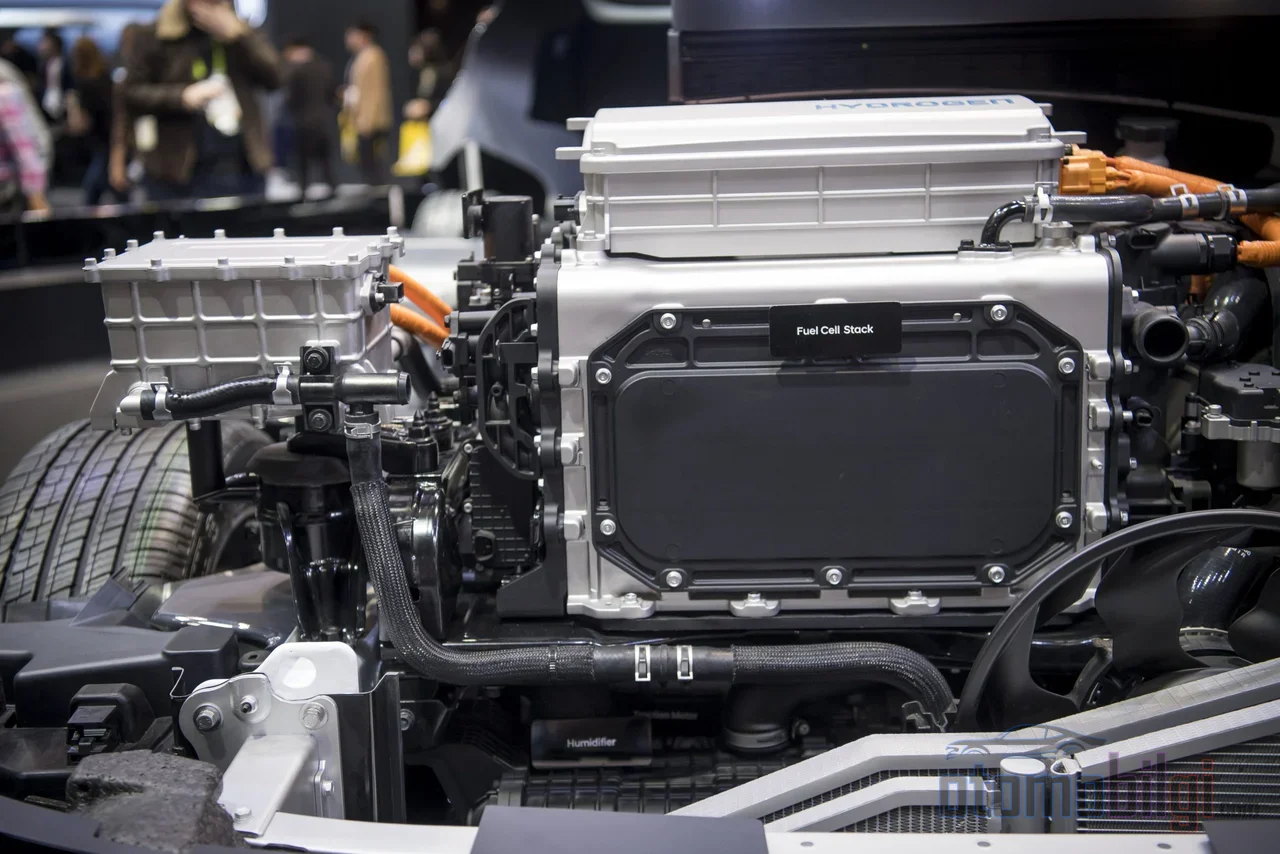
When we put the two technologies side by side, the picture is striking. SOFC is clearly ahead in electrical efficiency: current systems deliver 45-60% electrical efficiency, and in combined heat-power applications total efficiency exceeds 85%. The US Department of Energy's classification also mentions approximately 60% electrical efficiency and stack sizes between 1 kW and 2 MW. On the PEM side, the efficiency story remains more modest.
| Feature | SOFC | PEM |
|---|---|---|
| Operating temperature | 600-1,000 °C | Low temperature |
| Electrical efficiency | 45-60% | Below SOFC |
| Power density | Under 100 W/kg | 1,000 W/kg |
| Start-up time | On the order of hours | Fast |
| Lifespan | 30,000-90,000 hours | 5,000-35,000 hours |
| Catalyst | No platinum group metals required | Platinum group metals |
As you can see, both technologies have their own superpower. SOFC looks like a revolution in efficiency and lifespan; with a lifespan of 30,000 to 90,000 hours, it leaves PEM's 5,000-35,000 hours in the dust. But when it comes to power density, things turn around: while PEM produces 1,000 W per kilogram, SOFC stays below 100 W/kg. In a car, every kilogram counts, and here SOFC comes up heavy.
Highlights
- SOFC is a solid oxide fuel cell that operates between 600-1,000 °C and requires no platinum.
- Its electrical efficiency is 45-60%; total efficiency in combined heat and power is over 85%.
- In 2016, Nissan unveiled the world's first SOFC-powered prototype vehicle (running on bio-ethanol).
- A planar SOFC stack requires waiting roughly 1 hour to reach operating temperature.
- Today there is not a single series-production SOFC car on the roads.
Attempts in Automotive: From Nissan to BMW
Now let's move on to my favorite part: real car attempts. In June 2016, Nissan unveiled the world's first SOFC-powered prototype vehicle. The system, called e-Bio Fuel-Cell, runs on bio-ethanol and used SOFC as a range extender in a series-hybrid electric vehicle. This path from ethanol to electricity seemed like a smart idea in a world where fuel infrastructure is not ready.
BMW's story goes back even further. Partnering with Delphi, BMW developed a gasoline-powered SOFC system; electricity was generated from hydrogen at around 800 °C (about 1,470 °F) through zirconium oxide ceramic conversion. In other words, fill the tank with regular pump gasoline and convert it to electricity in the ceramic cell. On paper, it looks like the holy grail of range anxiety. Today, BMW's hydrogen series-production plan leans on 2028, a partnership with Toyota, and a PEM-based system; the iX5 Hydrogen's storage concept using PEM carries at least 7 kg of fuel. SOFC range extender work, meanwhile, continues on the BMW front as a supporting, early-stage development line.
Do Simulations Keep the Promise?
Numerical models look promising. A DTU simulation study showed that Nissan's SOFC integration increased the range 4-5 times; even with battery capacity cut in half, combined ranges were calculated as 264 km, 705 km and 823 km. Another study modeled a series-hybrid concept combining SOFC with a reforming unit and gas turbine; the EU-funded MESTREX project revealed that SOFC range extenders offer fast refueling and a noticeable range increase, but still fall behind in terms of size, weight and cost. On paper, everything looks great. So why don't we see it on the roads in reality?
Why Isn't It Common in Road Cars?
Here is the heart of the problem: a car is not a stationary power plant. You start it every morning and stop it every evening. It takes about an hour for a planar SOFC stack to reach its operating temperature. Think for a minute: would you wait 1 hour on a winter morning for your car to start and begin generating electricity? Micro-tubular designs promise start-up on the order of minutes, but they have not yet reached series-production automobiles.
The real problem begins after start-up: repeated heating-cooling cycles create thermal expansion mismatches, mechanical stress and structural damage in the ceramic layers. The cells degrade a little more with each cycle. Moreover, electrolytes and metallic interconnect components degrade rapidly at temperatures above 800 °C, shortening cell life. Nickel-YSZ anodes also cause trouble: nickel smoothing and coarsening, carbon deposition, redox instability and sulfur poisoning limit long-term stability. Yes, SOFCs perform excellently in continuously operating data centers, hospitals and universities. But in daily use, a car that constantly turns on and off is the scenario SOFCs like least.
There is one more handicap: low power density. Staying below 100 W/kg, this figure is a serious disadvantage for passenger cars that value lightness and quick dynamics. Researchers clearly state that SOFCs are not suited to large load fluctuations and that their main application area is the medium and large-scale stationary power sector. SOFCs struggle at moments of abrupt gas cut-off and gas supply. In addition, with low-quality fuels, reforming and sulfur cleanup costs reach a magnitude comparable to the fuel cell itself.
Does SOFC Make Sense as a Range Extender?
There is a subtle point here, and two different views actually lead to the same conclusion. One view argues that fuel cells are not suited to frequent on-off cycles but fit perfectly the role of a range extender. The other emphasizes that SOFCs are not suited to load fluctuations. Combining the two, the truth is this: the range extender idea relies on running the SOFC continuously at a steady load. In other words, if the battery handles everyday city driving while the SOFC operates at a constant pace on long journeys and feeds the battery, the warm-up time and load fluctuation problems largely lose their effect. Nissan's bio-ethanol prototype was designed with exactly this logic.
A Different Picture on the Heavy-Duty Side
When it comes to work trucks and fleets, the SOFC story gets more colorful. Cummins developed a diesel-fueled SOFC auxiliary power unit (APU) for Class 7/8 heavy-duty trucks for the US Department of Energy. The logic is simple: while a diesel engine runs at idle with roughly 11% efficiency, the targeted SOFC APU efficiency was 40%. The Department of Energy also issued an official request for information on fuel cell range extenders for light commercial fleet vehicles. So the technology is not dead; it is just looking for its right area of use.
Does It Promise a Future?
In 2025, news from Kyushu University is remarkable: Researchers developed an electrolyte that can operate at 300 °C using scandium-doped ceramics, dubbed the "scandium superhighway," and published the results in Nature Materials. This carries the potential to drastically reduce heating time and thermal fatigue. Moreover, during the transition period to hydrogen, SOFC range extenders running on existing infrastructure fuels are being seriously evaluated.
So, what is the answer to the main question: Do SOFC fuel cells work in cars? With today's technology, the clear answer: no as a primary power source in road cars, but partially yes as a range extender under certain conditions. With its electrical efficiency (45-60%), fuel flexibility and long lifespan, SOFC is attractive on paper; but a heating time on the order of hours, thermal cycle fatigue, and a power density below 100 W/kg conflict with the reality of a daily start-stop passenger car. Nissan's 2016 prototype and BMW's early experiments showed the idea was feasible; but none of them moved to series production, and today there is not a single series-production SOFC car on the roads. As 300 °C electrolytes and micro-tubular designs mature, the range extender idea may come back on the agenda. Until then, SOFC shines on its best stage, namely stationary power and heavy-duty vehicle APUs.
Sources
- Solid oxide fuel cell - Wikipedia
- Nissan announces development of the world's first SOFC-powered vehicle - Nissan Global Newsroom
- BMW, Delphi Partner on Fuel Cells - WardsAuto
- Hydrogen Fuel Cell Technology - BMW Group
- Simulation of a SOFC/Battery powered vehicle - DTU (Bessékon et al. 2019)
- A Recent Comprehensive Review of Fuel Cells - Wiley (Qasem 2024)
- PEM & SOFC comparison thesis - Chalmers (Sjölin 2019)
- SOFC decade of progress - ScienceDirect (Singh 2021)
- Diesel Fueled SOFC for Class 7/8 Trucks - UNT Digital Library / DOE
- Fuel Cell Vehicle Market Analysis - Mordor Intelligence