Synthetic Fuel (E-Fuel): Revolution or Marketing?
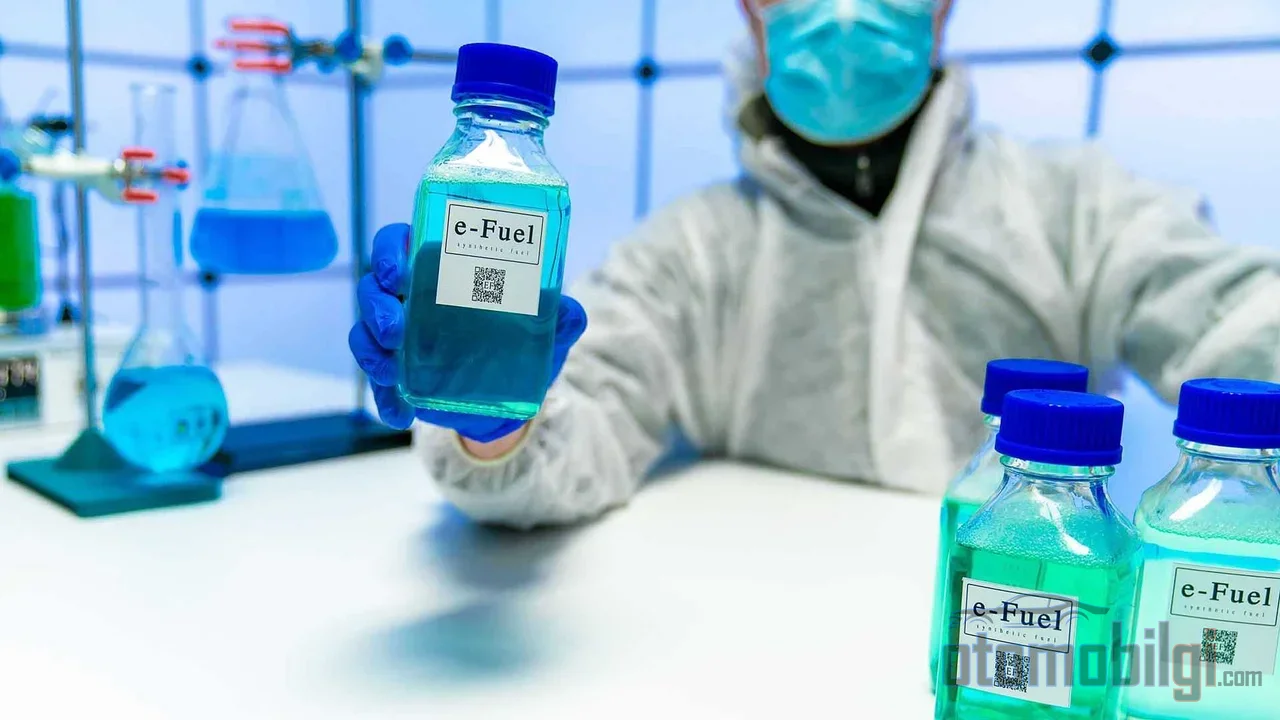
Imagine standing at a gas pump and picturing this: The fuel you just filled up with was produced from carbon captured from the air and wind electricity. Your internal combustion engine runs with exactly the same sound, the same feel, but the liquid coming out of the pump came from the air. Does it sound like science fiction? It isn't - in a remote corner of Chile, the world's first commercial synthetic fuel plant is actually operating. But that plant's annual output only covers a few hours' worth of fuel for a country's cars. Is this really scalable, or are we talking about a fancy pilot project? Let's dive into the production side and do the math.
Most e-fuel articles cover two things and move on: the fuel's use in cars and how much electricity it consumes. But what about the factory? That is, the capital cost of the facility actually producing that fuel, the efficiency chain, and the path to annual targets of hundreds of millions of liters? That is exactly what this page focuses on - not the announcements, but the actual producing plants.
How Much Does an E-Fuel Plant Actually Produce? Haru Oni's Numbers
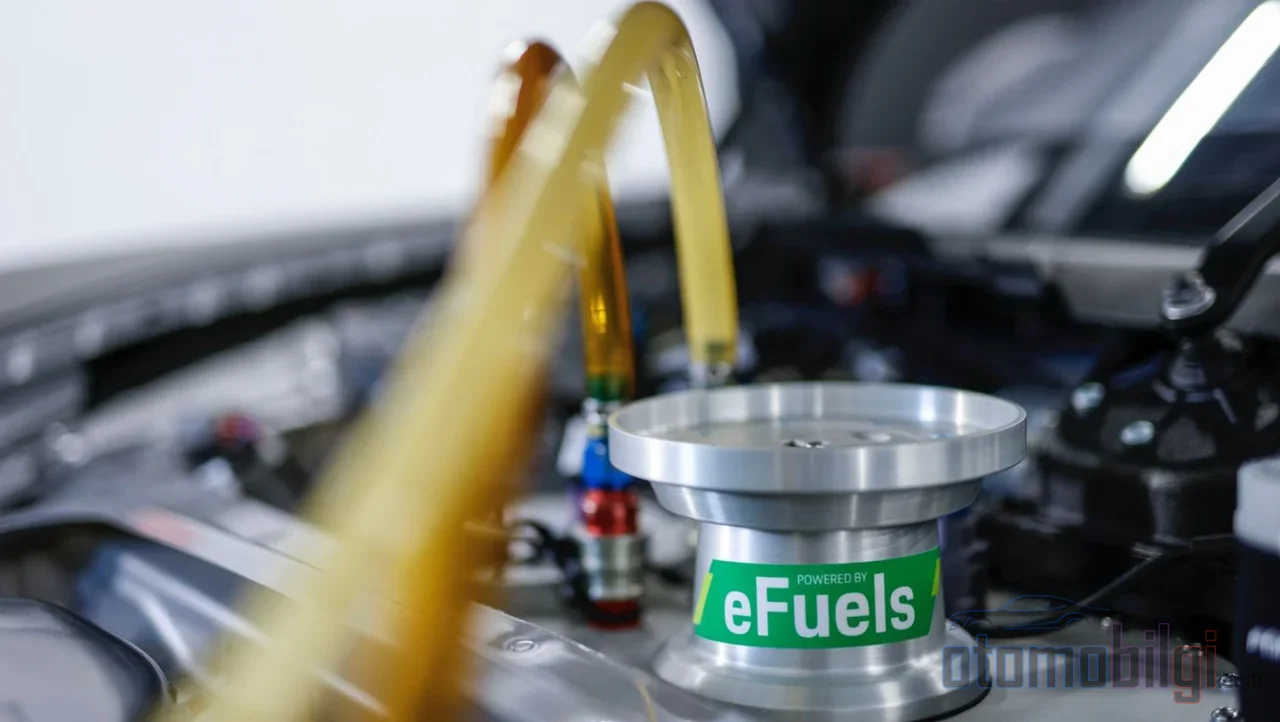
The world's first operational commercial e-fuel plant was built in Chile's Magallanes region and is named Haru Oni. Behind it are names like HIF Global, Porsche and Siemens Energy - so the players are serious. At the heart of the plant are a 3.4 MW wind turbine and a 1.2 MW electrolyzer. During construction, 250 people worked on site; now the plant is operated with only 21 people. That is a promising sign of automation and maturing technology.
Now let's get to the real question: How much does this huge plant produce per year? The answer is a bit disappointing: about 130,000 liters. To put that in perspective: US drivers consumed 136.53 billion gallons of gasoline in 2025. Haru Oni's annual output is almost invisible next to that enormous demand - not a drop in a lake, let's say a drop in the ocean. What's more, it isn't even clear whether the plant has reached maximum capacity; industry observers were still asking that question in mid-2025.
Highlights
- The world's first commercial e-fuel plant, Haru Oni, has a capacity of only 130,000 liters per year.
- Green hydrogen is still at the 5-10 euro per kilogram level; one of the biggest cost items.
- One ton of e-fuel requires at least 3 tons of CO2; biogenic CO2 costs 150-250 euros per ton.
- Only 7% of the hydrogen capacity announced in 2023 was completed on time.
- A hydrogen-free synthesis route claims a cost below 0.8 euros per liter with DNV verification.
The expansion plans are ambitious: the goal was to reach 55 million liters per year by 2025, then exceed 550 million liters per year. But here is the critical detail: there is no verified data on whether these goals, from announcements dated 2021-2022, and that interim target have been met. This gap between the announced target and the producing plant is the most fundamental tension in the e-fuel story.
The Efficiency Chain: From Electricity to Gasoline: Where Is the Road Heading?
To understand why e-fuel is expensive, you need to follow the chain step by step. Think of a street food stand: at every intermediate step from raw material to plate, some food, some time, and some money are lost. With e-fuel, what is lost at every intermediate step is energy.
- Electricity → Hydrogen: The electrolyzer splits water into hydrogen. The reference energy requirement is around 58 kWh per kilogram of hydrogen, meaning system efficiency at roughly ~67%. You can already see that this is where the loss begins.
- Hydrogen → Synthesis: The hydrogen is combined with captured CO2 and converted into liquid fuel. A new energy and equipment cost kicks in here.
- Synthesis → Refining: The resulting crude product is refined into usable gasoline or kerosene. Each step carries the losses of the previous step into the next.
The result of this multi-step chain is that energy losses across all conversions send electricity demand through the roof. What's more, the raw material list doesn't end there: one ton of e-fuel requires at least 3 tons of CO2. Biogenic CO2 trades at 150-250 euros per ton on the market; direct air capture (DAC) is even more expensive. So collecting carbon from the air sounds elegant, but it adds a serious rent to every liter.
Why Is Green Hydrogen Still So Expensive?
One of the biggest disappointments of the last 5-10 years is this: green hydrogen was supposed to get cheaper, but it keeps hovering in the 5-10 euros per kg band. There are two main reasons for this: high electricity prices and the systematic underestimation of facility setup investments (CAPEX). So the cost isn't falling not just because electricity is expensive, but also because building the factory is more expensive and slower than thought. This is the stone at the very bottom of the cost chain, and until that stone moves, the price per liter won't fall.
5-10 Euros Per Liter: When and How Will the Price Fall?
The net result of the chain above is that e-fuel is priced today at roughly 5-10 euros per liter. Modeled unit costs for comparison paint a similar picture: classic e-fuel routes show a total production cost of about 3,400 euros per ton, while the European aviation authority's e-SAF estimate is about 7,700 euros per ton - well above the 700-1,000 euro band of fossil fuel. Modeling studies show that e-kerosene and e-diesel remain at 3-5 times their fossil equivalents on an energy basis.
So what does reaching the 2030 targets depend on? With a rough calculation, three conditions must hold at the same time: falling electricity prices, a genuine decline in electrolyzer and facility CAPEX, and commitments from buyers who guarantee demand. Looking at 2026 CAPEX figures, electrolysis installation runs in the 600-900 dollars per kilowatt band; total setup investment intensity at synthetic fuel plants is 1,500-2,500 dollars per annual ton of output, and at current purchase prices the payback period is 12-15 years. Who can easily set up a factory with a 15-year payback period? Here is where the heart of the delays beats.
| Item | Today's Situation |
|---|---|
| Green hydrogen cost | 5-10 euros per kg |
| Biogenic CO2 price | 150-250 euros per ton |
| Electrolyzer CAPEX (2026) | 600-900 dollars/kW |
| Facility payback period | 12-15 years |
| E-fuel cost per liter | approximately 5-10 euros |
| CO2 requirement | at least 3 tons per ton of e-fuel |
The Gap Between Announced and Realized Capacity
Here is the most questioning part of the e-fuel story. 190 hydrogen projects were tracked over three years, and only 7% of the global capacity announced in 2023 was completed on time. The announced project pipeline has fallen back to 27 million tons per year for 2030; the firmly committed portion is around 4.3 million tons. An independent assessment commissioned by a shipping fuel initiative produced a similar picture: the announced 2030 e-fuel volumes were 2.2 times higher than what was in the official report of the international energy agency. So on paper everything is great, but in the field the commitments are weak.
Why are these projects being delayed? There are several concrete reasons:
- High financing costs and uncertain buyers; the majority of offtake agreements remain non-binding.
- Electrolyzer and critical mineral supply bottlenecks - for example, iridium prices can fluctuate 30-50% annually.
- Permitting processes can exceed 36 months, and installation times are stretching from the planned 24-30 months to 36-42 months.
- Actual utilization rates at facilities remain in the 55-65% range, while the design target is 80%.
As a result: developers are postponing 20-30% of planned capacity additions to after 2030. The Germany example is also striking - as of November 2024, there was not a single operational synthetic aviation fuel facility in the country. The government announced 6 billion euros in funding for hydrogen projects in 2026, so the money is on the table, but the factory is not yet pouring.
What Does Today's Capacity Mean Next to Global Demand?
Let's look at the scale once more: global electrolysis capacity exceeded 4 GW in 2025 and doubled within 2025; more than 2.5 GW of additional capacity is expected to come into operation in 2026. This growth rate is truly impressive. But when you put Haru Oni's annual production of 130,000 liters next to the world's annual gasoline demand of billions of gallons, the gap is, for now, astronomical. An academic review estimates that even all the projects expected to be completed this decade - on the condition that they are completed - could only meet about 20% of global transportation liquid fuel demand. So even in the most optimistic scenario, e-fuel is not the main fuel in the near term.
The demand side is being pushed by regulations: From 2025 onward, European aviation has a 2% sustainable fuel mandate, rising to 6% in 2030, which includes a mandatory synthetic fuel sub-quota of 1.2%. The 2050 target is 70%. Non-compliers face a penalty risk of approximately 14,000 euros per ton. A similar set of rules also applies on the maritime side. The EU automotive package of December 2025 opens a remarkable door for the post-2035 era: The remaining 10% of the 90% exhaust emission reduction could be covered with e-fuels and biofuels. So demand appears guaranteed - the problem is on the production side.
The Hydrogen-Free Path: A New Rival in the Cost War?
What really excites the optimists is a synthesis route that completely bypasses the classic electrolysis-hydrogen chain. A thermochemical method developed by a Swiss company, powered by solar energy, synthesizes fuel directly without producing hydrogen, and draws about half of the energy stored in the fuel from electricity; the rest comes from biogenic waste. This means roughly 3 times less electricity than conventional e-fuel routes, and it claims over 90% energy and carbon efficiency. A cost analysis verified by DNV sees below 1,000 euros per ton at scale - that is, below 0.8 euros per liter - as possible.
Could this be a game changer? Technological feasibility no longer seems to be in question; the real issue is cost and scale. But note: this path falls outside that 5-10 euro calculation that applies to the classic electrolysis-based chain. In other words, the future of e-fuel may take a very different shape than the efficiency chain we imagine today. The bridge in between has still not been built - and the fact that the projects expected to be completed this decade can only cover a fraction of global demand does not change.
So Is E-Fuel Production Really Scalable?
Here is the clear answer we promised: With today's picture, e-fuel production is not yet scalable. While the first commercial facility produces 130,000 liters per year, the world consumes billions of gallons of fuel, and only a small fraction of the announced capacity actually materializes on time. The efficiency chain, expensive green hydrogen and CO2 supply keep the price per liter in the 5-10 euro range. Scalability depends on solving three things at once: falling electricity and electrolysis costs, more committed buyers, and the commercialization of alternatives like the hydrogen-free path. None of these is impossible - but as of today, none of them is complete. E-fuel is currently at the promise stage, and what the facilities have produced so far is just a drop. The next few years will determine whether that drop turns into a river, based on how quickly the commitments turn into real factories. Do you think this fuel will be the savior of the internal combustion engine, or will it remain the fuel of alternatives with slimmer chances, like aviation and shipping? I would love to hear your view in the comments.
Sources
- eFuels pilot plant in Chile officially opened
- HIF Haru Oni
- A lighthouse project at the southern tip of Chile
- Haru Oni: Fuel from Wind and Water
- Producing synthetic fuels at fossil fuel prices
- The green hydrogen ambition and implementation gap
- The Role of E-fuels in Decarbonising Transport
- Review Article Liquid e-fuels for a sustainable future
- What's up with the Production of E-Fuels in Chile?
- E-fuels Market Size, Share | CAGR of 18.31%