Could Methanol Be the Fuel of the Future in Cars?
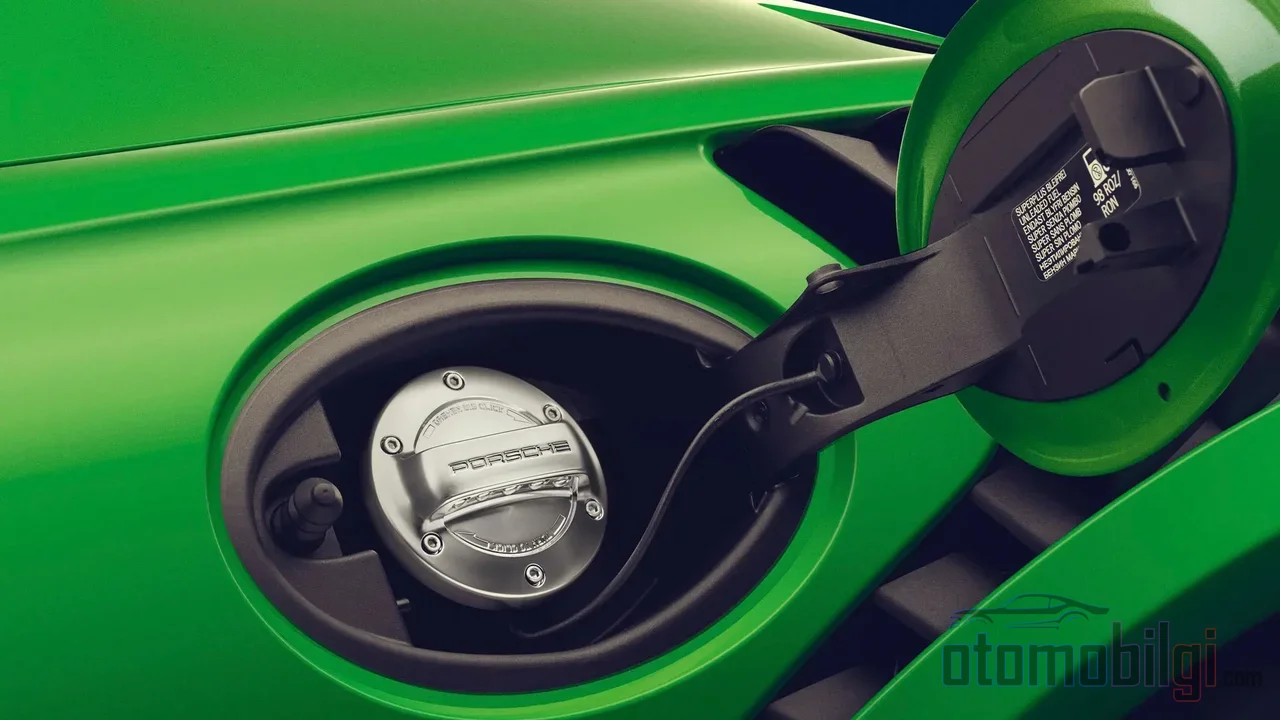
Let's say we have a fuel: an octane number far above gasoline, much lower pollutant emissions than diesel, and unlike hydrogen, a fuel that doesn't require a pressurized tank or cooling down to minus 253 degrees and can be carried in an ordinary liquid tank. For those whose ears are ringing, let's say it: this fuel is called methanol. So if it has such a brilliant resume, why don't we see a single methanol-powered passenger car on the upcoming model lists? Well, this article dissects exactly that problem: could methanol be the fuel of the future for cars, or is the real hero of this story a completely different sector?
What Is Methanol, and Why Does It Look So Good on Paper?
First, let's get to know it. Methanol, also known as wood alcohol, is the simplest type of alcohol. Its biggest asset as a fuel is its resistance to knock: studies give methanol octane numbers between RON 109 and 114, which is significantly above the gasoline you know. What does this mean? A high octane number means the engine can be run at a high compression ratio; which means a serious advantage in thermal efficiency and power. Announcement to those comparing it to turbocharged engines: higher compression means more power and better efficiency from the same engine.
There's also the emissions side. In engines running on methanol, compared to diesel, an approximately 70% reduction in NOx emissions and more than a 90% reduction in particulate matter is reported. And since it contains no sulfur, sulfur oxide emissions are almost zero. So on paper, methanol looks like the quiet hero of an internal combustion future. But wait, the other side of the coin is a thick layer.
Highlights
- Methanol's octane number is RON 109-114, above that of gasoline; it provides a high compression and efficiency advantage.
- Its volumetric energy density is only ~15.8 MJ/liter, roughly half that of gasoline (~31.6 MJ/liter).
- According to US Department of Energy data, 1 gallon of methanol contains 50% of the energy of a gasoline equivalent.
- The country using methanol vehicles on the largest scale is China; the largest methanol fleet is there.
- The production cost of e-methanol is 1,400-2,200 USD/ton, 2-3 times more expensive than its fossil counterpart.
So Why Do You Have to Fill the Tank Twice?

Here's where the first crack in the story begins. Methanol's octane number is fantastic, but its calorific value, that is, its energy per unit volume, is low. While methanol carries about 15.8 megajoules per liter, gasoline carries roughly twice that, 31.6 megajoules. The picture doesn't change on a mass basis either: 22.7 MJ/kg versus gasoline's 44.5 MJ/kg. So you need roughly twice as much methanol fuel to travel the same distance.
Let's translate this into daily life: if your gasoline car goes 600 km with its 50-liter tank, with a methanol tank of the same volume you can go close to half that distance. Or you would need to carry a tank twice as large for the same range; meaning you sacrifice your trunk or living space in the car. A painful picture for anyone who loves the gasoline tank.
Cold Weather Problem and the M85 Solution
Methanol's second trouble emerges in cold weather. Due to its low vapor pressure, reliable ignition becomes difficult below about 10 degrees on the Celsius scale. The historical solution was clever, but one that came with a confession: a blend called M85, containing 85% methanol and 15% gasoline in the mixture. In other words, instead of pure methanol, a formula that clings to gasoline for cold starts without even needing sabotage.
The Rusty Truth: How Does Methanol Eat the Inside of Your Car?
Chemically, methanol is not exactly a gentle fuel either. It attacks aluminum, zinc, and many plastics; its tendency to absorb moisture also accelerates corrosion. Even more interesting, byproducts of combustion such as formic acid and formaldehyde damage engine components over time. Test bench studies conducted in 2025 revealed that even advanced corrosion-resistant coatings require higher-quality materials and coatings to prevent corrosion-wear failures on friction surfaces; meaning costs rise.
The bitter part of the story is this: the aluminum alloys favored in modern engines for lightness are among the metals most vulnerable to methanol. So precisely in the age of lightness and efficiency, methanol takes aim at the engine engineer's favorite material. There is also the safety issue at public stations: methanol is an acutely toxic substance; ingestion or prolonged exposure can cause blindness, even death. Compared to gasoline, it does have some advantages, such as the absence of a visible flame, but both fuels fall within the same flammability and toxicity classes. Since a methanol-air mixture in an enclosed space can enter the ignition range, the explosion risk cannot be ignored either.
Tried It, Didn't Work? California's Methanol Adventure
Methanol was tried in passenger cars before, and on a large scale at that. California ran the Western Hemisphere's largest methanol passenger car program from the late 1980s until it ended the program in 2005. At the 1997 peak, the total number of registered vehicles was about 20,000, and 15,000 of them were in California; around 100 stations were providing service. The vehicles were technically successful, performing as well as their gasoline counterparts. But the program ended not with the failure of the vehicles but of the infrastructure: the scarcity of stations and distribution problems left users alone with the fear of not finding fuel.
In the US, the name that took the alcohol fuel throne was ethanol. The reason is entirely practical: corn-based domestic production and an infrastructure for blending with gasoline. Methanol has neither of these two. Let's also remember that in alcohol fuels, all parts that come into contact with the fuel must be alcohol-compatible; meaning a flex-fuel conversion is a comprehensive job not limited to the engine.
China: The Country That Sets the Rules
In China, the picture is completely different. In 2012, the Ministry of Industry and Information Technology of the People's Republic of China launched a national methanol vehicle pilot program, and in 2019 eight central government agencies promoted these vehicles. Geely has been developing methanol engines since the mid-2000s; the Guiyang taxi fleet has largely switched to methanol and has accumulated tens of millions of kilometers of service experience. China is the country that uses methanol vehicles most intensively in the world. The formula for success is two words: abundant coal (cheap, domestic feedstock, i.e. energy security) and coordinated state industrial policy. But the current side of the story is even more striking: As of April 2026, Geely is positioning methanol primarily for commercial and heavy-duty applications; methanol heavy trucks are being marketed as the flagship product, not passenger vehicles. In other words, even the automotive company that knows methanol best has pulled the ship out of the passenger segment.
E-Methanol: How Realistic, How Expensive?
So far we have talked about fossil-based methanol; there is also a green side. E-methanol is the renewable version, produced from green hydrogen and carbon dioxide. The problem is this: e-methanol is 2-3 times more expensive than its fossil counterpart. 2026 figures show production costs of 800-1,300 dollars per ton for waste-based biomethanol, and 1,400-2,200 dollars for renewable e-methanol. Academic analyses also hover around similar ranges: 69-76% of the cost comes from green hydrogen. The market is growing, admittedly: the global green methanol market reached 3.05 billion dollars in 2025 and is projected to grow to 31.74 billion dollars. But the signals on the cost side are mixed; in Japan, ENEOS announced in early 2026 that it was halting the commercial scale-up of its CO2-based synthetic fuel project due to rising construction costs and high hydrogen expenses.
Why Yes for Ships, No for Passenger Cars?
Now we come to the main question of the article. Methanol today is not shining in the automotive world but in shipping, and there are very good reasons for this. Shipping accounts for about 3% of global greenhouse gas emissions and is nearly impossible to electrify. Methanol behaves here like a complete adventurer: the ship's size tolerates the low energy density, a trained crew manages toxicity and corrosion, and most importantly, methanol is stored in liquid form without requiring cryogenic storage, cooling, or pressurization, unlike hydrogen and ammonia. Methanol-fueled ship orders are also growing; the sector is showing in earnest that it is turning to this fuel.
On the passenger car side, however, the obstacles are stacked layer upon layer:
- Low energy density means a bigger tank or shorter range.
- Corrosion means a requirement for expensive materials and coatings.
- Starting becomes difficult below 10 degrees.
- Toxicity management is challenging at public stations.
- The classic chicken-and-egg dilemma requiring a separate distribution network.
The political wind is also blowing differently. Japan, with its policy targeting 100% of new passenger car sales to be electric vehicles by 2035, has left methanol internal combustion passenger vehicles entirely outside that goal; it chose ethanol for blending. And there is another fact no one can skip: today, no volume or premium automotive manufacturer is developing a methanol drivetrain.
The Clear Answer: Is Methanol the Future of Cars?
Let's give a clear answer to the question of the article. Technologically, methanol is a fuel that can be used in cars, and the Chinese fleet is living proof of it. But in the passenger car segment it is economically and structurally indefensible: low volumetric energy density, corrosion costs, cold-start problems, the need for a separate distribution network, and the direction of electrification policies make this fuel unfavorable for private vehicle owners. Methanol is not a bad fuel; it's just that the right place is not passenger cars. The future of methanol lies in shipping, heavy and commercial fleets, and the chemical feedstock chain, that is, in places where the fuel is taken from storage, managed by trained personnel, and its energy density can be tolerated. The debate between advocates' low-carbon bridge fuel proposal and critics' emphasis on structural barriers is also evolving toward a consensus in the direction of ships and heavy vehicles.
Sources
- Fuel Properties Comparison - Alternative Fuels Data Center (US DOE)
- Methanol is a practical, lower-emission fuel for road transport - Methanol Institute
- Methanol as a fuel for internal combustion engines - Verhelst 2019, ScienceDirect
- Why Methanol Will Not Power Japan's Passenger Cars - Scholarly Review, Fall 2026
- Clean Alternative Fuels: Methanol - US EPA
- Methanol as a gasoline blending component - ACEA Position Paper
- Flex Fuel Engine Modifications - UnderhoodService
- E-methanol: the game changer for decarbonizing shipping - World Economic Forum
- Methanol Fuel Blending and Materials Compatibility Report - TIAX
- Methanol Safe Handling Manual, 5th Edition - Methanol Institute