Is Differential Oil Change Really Necessary?
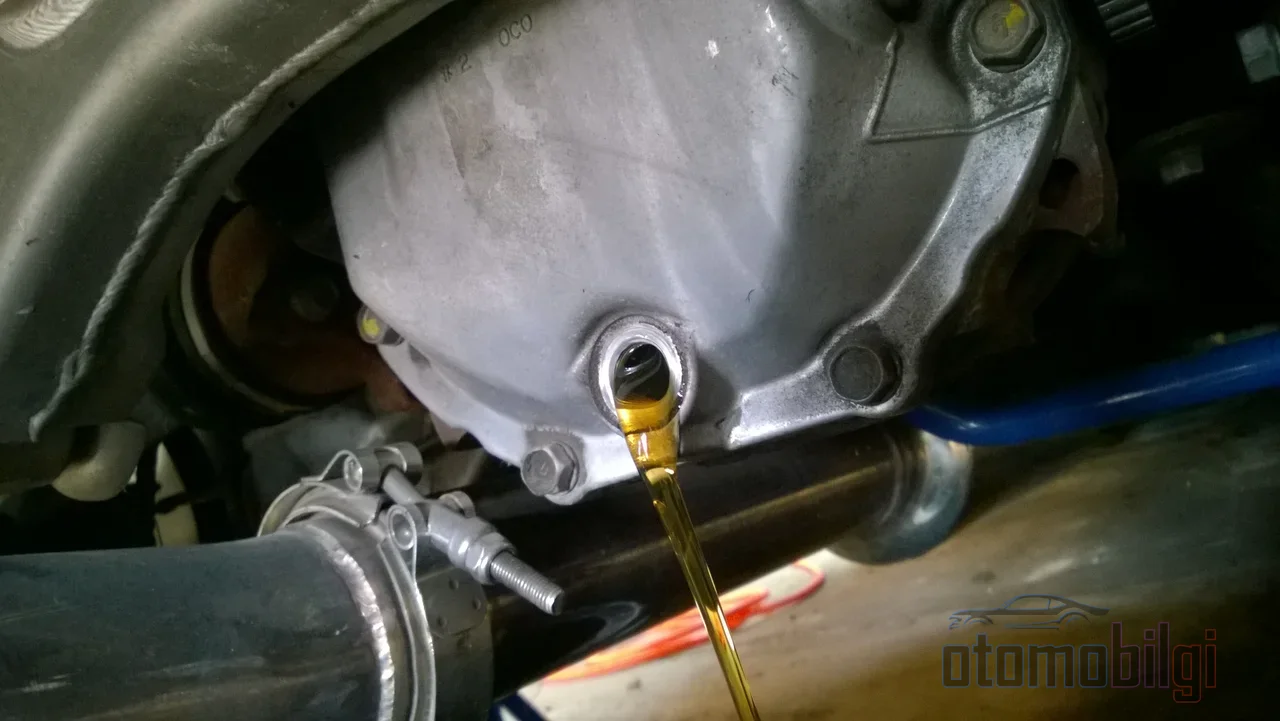
Take a look at typical periodic maintenance checklists: engine oil, oil filter, air filter, brake fluid, pollen filter... Nothing seems to be missing, yet most drivers pore over the list for years without ever seeing a single line about differential oil. And yet, inside the rear axle, a small army of gears that transfers engine power to the wheels turns in desperate need of its own oil. So is differential oil change really necessary, or is it a revenue item invented by the service industry? The answer to this question lies in understanding what the differential actually does.
Why does the differential need its own oil?
The differential is a part of the drivetrain so remote that most drivers will never see it. Its job is twofold: to take the power produced by the engine from the transmission and deliver it to the wheels, and to balance the difference in distance traveled between the inner and outer wheel during a turn. In a corner, the outer wheel traces a longer arc; if both wheels were forced to rotate at the same speed, the vehicle could not take the corner. The differential absorbs this difference with its gears, sending each wheel the speed and torque it needs.
This work is done inside a housing filled with oil. Differential oil -also called gear oil- lubricates the ring and pinion gears, the bearings and any clutch packs, and cools the heat generated by friction. It looks thicker than engine oil and works in a completely different way: engine oil is formulated to withstand high temperature, while differential oil is formulated to withstand high pressure. The two cannot be used interchangeably; nor should it ever be mixed with automatic, CVT or dual-clutch transmission fluids.
The lubrication method is simple enough to be called primitive: there is no pump; the rotation of the gears themselves splashes the oil around inside the housing. The really critical point is this: unlike the engine, the differential has no filter. The gears naturally wear over time, the resulting metal shavings accumulate in the oil, and since they are not captured by a filter, they keep turning while scratching the gear surfaces. It is precisely this accumulation that justifies periodic oil changes.
Key Highlights
- There is no filter in the differential; metal shavings stay in the housing along with the oil.
- Under normal use, sources put the change interval at roughly 50,000-150,000 km; under severe use it shortens considerably.
- In limited slip differentials, a friction modifier additive is mandatory.
- The most common symptom is a high-pitched hum that changes with speed.
How does the differential type affect maintenance?
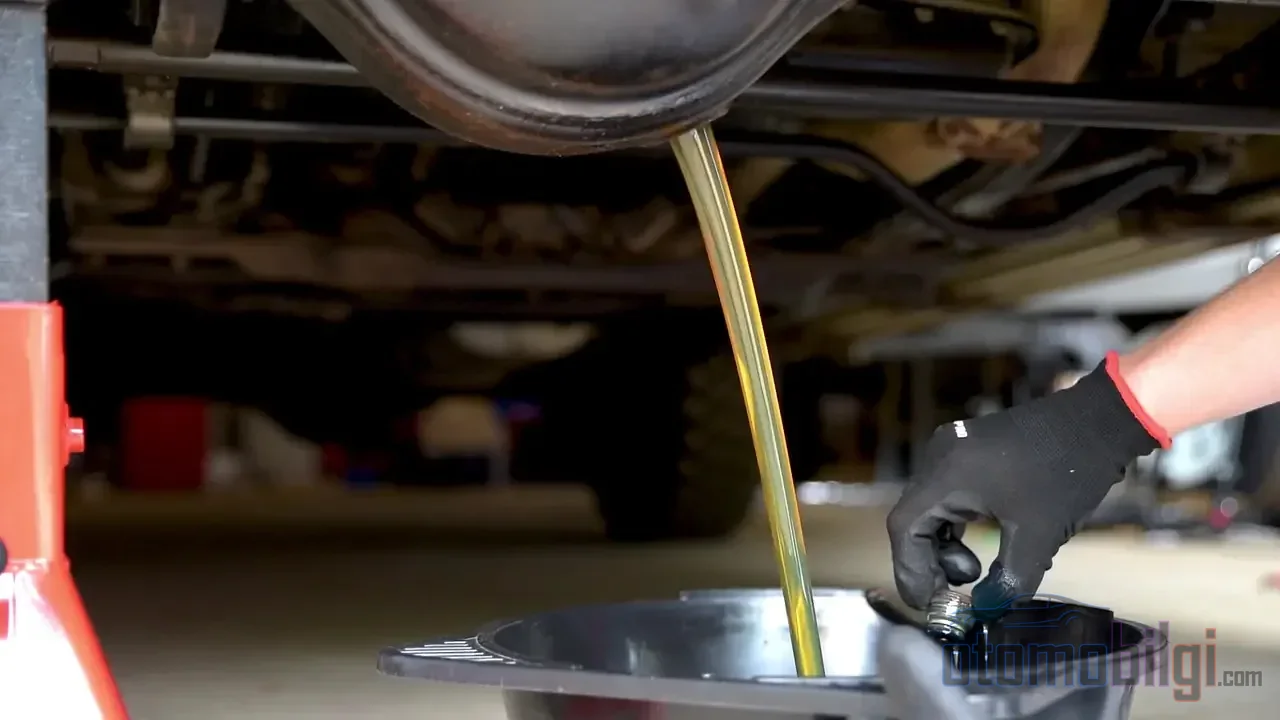
Not every differential requires the same maintenance. The most common design is the open differential; it is simple, cheap and reliable. The locked differential is seen mainly in off-road vehicles. The limited slip differential -LSD- sits somewhere between the two and, thanks to its clutch packs, reduces power loss in corners. The newest technology is torque vectoring differentials.
From a maintenance standpoint, the real difference emerges with LSDs. Clutch-type LSDs require a friction modifier additive -friction modifier-; incorrect viscosity or missing additive can lead to inadequate lubrication, gear wear, and clutch locking. Manufacturers can be quite specific on this: in some applications, a measured amount of friction modifier is prescribed alongside oil of a specific viscosity. For this reason, the "any gear oil will do the job" approach can prove costly for LSD owners.
The oil itself is also divided into two: petroleum-based mineral oils and synthetic oils whose performance can be tuned more precisely. The viscosity and specification in the vehicle's owner's manual should always decide which one is used.
At how many kilometers should differential oil be changed?
This is the most frequently asked question and, unfortunately, one without a single answer. Service sources give a wide range for normal use: for passenger vehicles, there are recommendations starting from 50,000 km and extending up to 150,000 km. While some manufacturers recommend very long intervals for normal use, under demanding use -severe service- conditions the same interval drops to around 50,000 km. In four-wheel-drive vehicles and heavy-duty units, 40,000-50,000 km is a typical range; some manufacturers schedule the first change even earlier, at as short a mileage as 12,000 km under demanding use.
The reason for this scatter is not uncertainty, but a real variable: the interval depends on the manufacturer's recommendation, the axle design, the quality of the oil, and especially on how the vehicle is used. Vehicles that tow trailers, drive in dusty regions, or are driven in a performance-oriented manner wear out their oil much faster. Even the same manufacturer may recommend only periodic checks for normal use, while demanding a change every 30,000 km for towing conditions.
| Usage type | Typical change interval | Note |
|---|---|---|
| Normal passenger use | approximately 50,000-150,000 km | Varies by manufacturer and oil quality |
| Four-wheel drive / heavy duty | approximately 40,000-50,000 km | Varies by axle type |
| Demanding use (towing, dust, performance) | approximately 30,000-50,000 km | Severe service class |
| Limited slip, track use | once a year | Service and community recommendation |
There is a striking practical detail: this interval is so long compared to engine oil that it never appears on most standard periodic maintenance lists. For this reason, differential oil is a point that should be specifically asked about during major services - that is, the comprehensive maintenance at around 50,000-100,000 km. For an exact figure, the primary source is always the vehicle's owner's manual.
What symptoms appear when the oil is low or degraded?
A differential runs quietly; if it has started making noise, you are already too late. Still, the vehicle gives a few signals before going completely silent.
- A high-pitched hum or whine that changes pitch when accelerating or decelerating; this is the most common early warning. An increasing hum in the roughly 50-100 km/h range usually indicates gear wear or a low oil level; fresh oil can soften a slight whine.
- A deep click sound when shifting from gear position into drive.
- A vibration felt especially when accelerating.
- A burnt smell coming from the rear axle area; it is a sign of degraded oil or damage.
- Oil residue or dripping around the axle; the cause of the leak is usually worn seals, a faulty gasket, corrosion, or a damaged fill-drain plug.
If you see a leak, do not keep driving: gears left without oil grind against each other in metal-to-metal contact, heat rises rapidly, and the differential locks up. In the worst-case scenario the wheels lock and the vehicle cannot take corners - this has a safety dimension, not just a wallet dimension.
How is the level checked?
The differential has no dipstick. The check is done by removing the fill plug on the housing: if you insert your finger or a tool into the plug hole and cannot reach the oil, the level has dropped. In a front- and rear-wheel-drive vehicle with two differentials, the oil in both should be changed together for a consistent wear balance.
So is it really necessary? An honest assessment
The opposing view is also noteworthy: in practice, the vast majority of drivers never change the differential oil, and many differentials keep turning without trouble past 300,000 km. This observation is not wrong; the differential is one of the most robust and least strained mechanisms in the vehicle. The service side, however, says the change is critical. The way to reconcile these two positions is simple: the differential tolerates neglect for a long time, but every year it endures, it keeps turning with accumulated metal shavings.
It should also be added: a concern that changing oil never changed at high mileage can trigger a failure is voiced from time to time, but this is not a verified technical finding; it is a rumor that remains at the level of user experience. My observation over thirty years is this: the cost of this job is nothing compared to the axle repair that will have to be paid for if it is neglected. In the past, differential maintenance was a job for master mechanics and nobody thought of it; that it has now become a question that should be asked at every major service is not an exaggeration, but the spread of knowledge.
The clear answer: Yes, differential oil change is necessary - but not as often as engine oil. In normal use it should be changed at major services, and in harsh use at noticeably more frequent intervals; which oil to use and when should always be decided by the vehicle owner's manual.
Can you do the change yourself?
Yes, for someone with mechanical aptitude, this maintenance is easier than it looks. The tricks of the trade are clear:
- First take a short drive so the oil flows better.
- Lift the vehicle on level ground and secure it safely.
- Loosen the fill plug first; after opening the drain plug and draining the old oil, this sequence is essential so the plug does not get stuck.
- Tighten the drain plug to the correct torque with a torque wrench.
- Add the new oil in the amount and specification specified by the manufacturer through the fill hole until it overflows, and tighten the plug.
A word of warning: when choosing oil, the manual is the deciding factor, not your own preference. The wrong viscosity, or missing friction modifier additive in an LSD, can cause problems far faster than not changing it at all.
Conclusion: giving voice to a silent part
Differential oil is the most unassuming pen in the maintenance world: it has no warning light on the dashboard, nor does it create a perceptible difference in performance. And that is exactly why it gets overlooked. Yet the repair cost of an axle is many times over that of the gear oil changed a few times over the years. Open your owner's manual, find your vehicle's differential recommendation, and add this line to the service list yourself at the major service. The silently turning gears cannot thank you; but not letting themselves be forgotten in corners is the very thanks itself.
Sources
- How to know your car needs a diff oil change
- What Is Differential Fluid? | UTI
- What is Differential Fluid | Gear Oil Weight Explained
- Limited-Slip Differential: How It Works and Which Gear Oil to Use
- What Is Differential Fluid? | Jiffy Lube
- Differential Oil vs Transmission Oil: What's the Difference and Why It ...