Why Shouldn't Washer Fluid Be Filled Randomly?
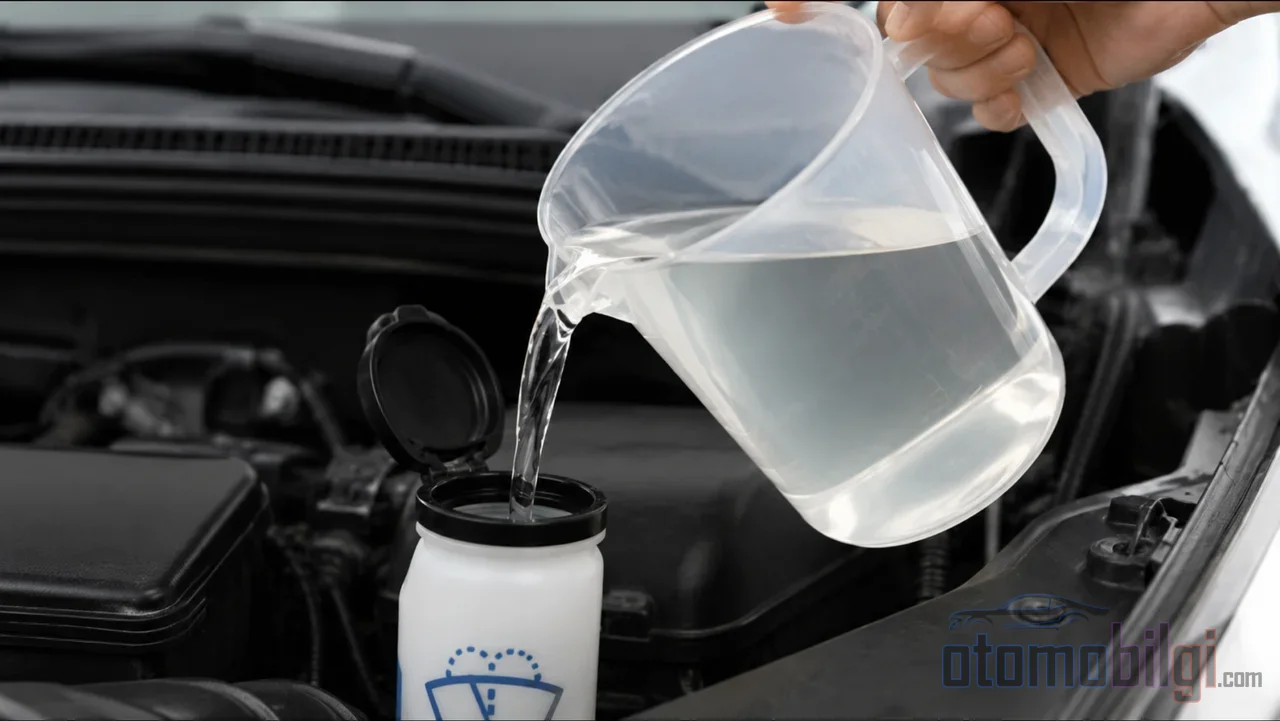
At the very bottom of every maintenance checklist there is a line most drivers never read: windshield washer fluid. The reservoir is opened, a hose is attached, the tank is filled, the cap is closed. I have lost count of how many times I have watched this scene over a career spanning nearly thirty years; each time I have asked the same question - did you really put tap water in that tank? If the answer is yes, you have a small problem that grows by accumulation. Because the washer fluid reservoir is not as simple a tank as it appears; behind it works a small but delicate chain made up of a pump, thin hoses, spray nozzles and wiper blades.
The question of why washer fluid should not be filled randomly is, in fact, the story of two separate risks: limescale and freezing. Both develop slowly, and both eventually present their bill. In this article we will cover both; including types of ready-made washer fluid, how often to check it, and the failure symptoms along the reservoir-pump-wiper line.
Can Tap Water Replace Windshield Washer Fluid?
The short answer: not on a permanent basis. Washer fluid is not just colored water; it carries detergents, surfactants and protective components. When plain water is sprayed onto the glass, instead of breaking down dirt it spreads it, impairing visibility. Washer fluid, on the other hand, dissolves insect residue, removes the oily road film, and prevents streaking and smearing during wiping. In other words, the formula's job is not just to wet, but to clean.
The more serious problem lies inside. Tap water, especially in hard-water regions, carries calcium and magnesium minerals. Over time these minerals accumulate inside the washer lines and spray nozzles; they narrow the openings and reduce spray performance. You know the limescale buildup on your shower enclosure's glass - the exact same process operates in the reservoir, you just cannot see it. Mineral and sediment buildup can cause a pressure drop in the washer pump, or even premature failure. The washer fluid level sensors and heated washer components in newer vehicles are also among the parts affected by sediment.
Key Takeaways
- Tap water, with its hardness minerals, clogs the nozzles and the pump; it is not suitable for permanent use.
- When water freezes it expands by approximately 9%; the reservoir and lines are not designed for that volume.
- Depending on their formulation, winter-type washer fluids can remain liquid down to -20 °F to -40 °F (approximately -29 °C to -40 °C).
- A reasonable interval for level checks: every two months, at every service, and before long trips.
The quiet work of lubrication
There is another function most drivers never think of: washer fluid also manages the friction of the wiper blade against the glass. Without lubrication, the rubber drags dry across the glass, heat builds up, and the edges wear unevenly; wiper life is shortened. In addition, the formula contains components that protect the system's rubber and plastic parts. Ordinary water does not provide this protection; the rubber hardens over time and begins to wipe unevenly.
What should you do in an emergency?
If the tank runs dry in the middle of the road, there is no need to panic. Tap water is acceptable only as an emergency and short-term solution; use for a few days to a few weeks usually causes no problems, but it should be replaced with proper washer fluid as soon as possible. Distilled water is softer than tap water, contains no hard minerals and prevents clogging of the hose-to-nozzle line; but it still has no cleaning power. A temporary emergency mix is also possible: adding about 1 teaspoon of mild dish detergent to roughly 4 liters of clean water, and optionally a small amount of isopropyl alcohol, will do the job. Do not overdo the detergent; excess foam can block the spray nozzles.
Freezing Risk: Expansion That Cracks the Reservoir
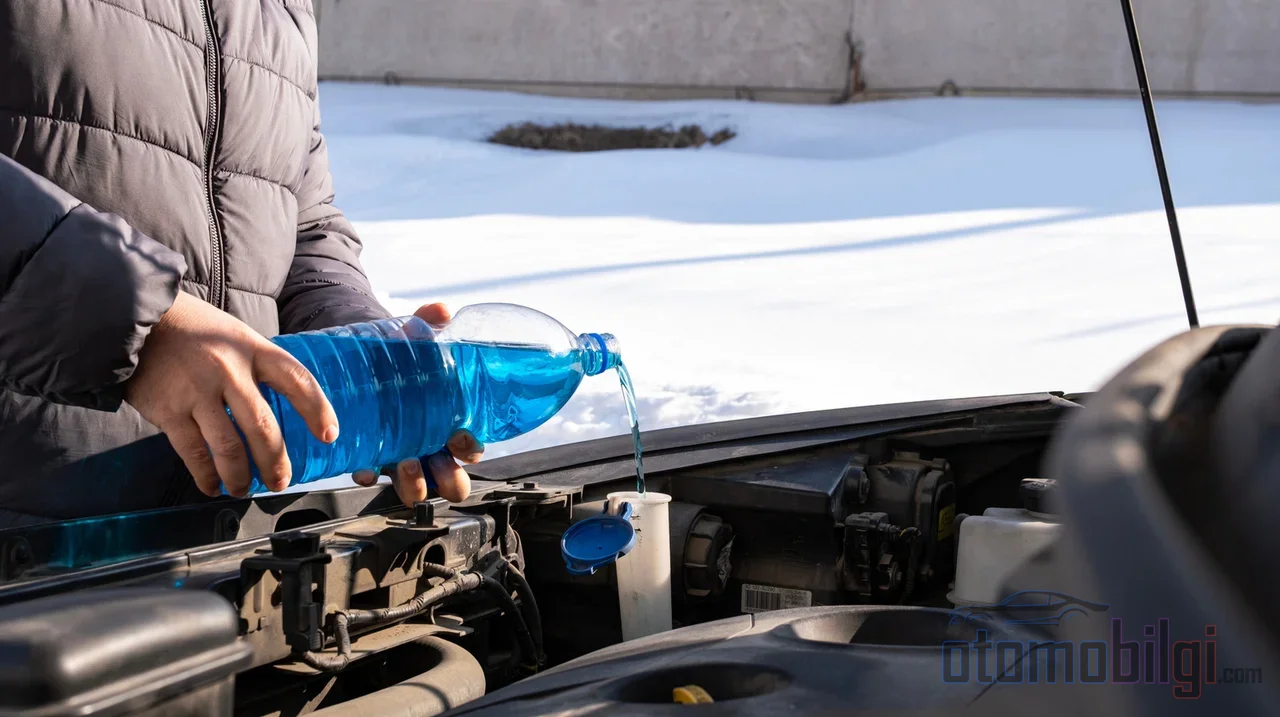
As winter approaches, the stakes change. Ordinary water freezes at 0 °C (32 °F) and expands by about 9% when it freezes. Though that figure looks small, the consequences are not: the reservoir, pump and lines are not designed to accommodate this extra volume. The result is cracks and leaks. Freezing also prevents the fluid from reaching the windshield; in serious cases the tank cracks and the entire system needs repair. The situation you face on a winter morning when you press the button and nothing comes out is most often a frozen line.
Winter formulas solve this problem chemically: they lower the freezing point with methanol or similar alcohol-based ingredients. Depending on their composition, they can stay liquid down to -20 °F or even -40 °F; those formulated for extremely low temperatures contain a higher proportion of methyl alcohol. Adding ethanol also lowers the freezing point. The reverse is also true: summer windshield washer fluid cannot be used in the cold; it freezes and damages the system's hoses and nozzles. When the seasons change, draining the summer fluid from the tank completely in autumn and replacing it with a winter formula is cheaper than repairing the most expensive component.
Types of Ready-Made Washer Fluid: Summer, Winter, Concentrate
The variety on the shelves may look confusing at first glance, but the basic distinction is clear. The main types are standard (summer), winter (with antifreeze properties), all-season and special formulas; all are sold either ready-to-use (pre-mixed) or in concentrate form.
| Type | Key features | Appropriate use |
|---|---|---|
| Standard (summer) | Basic cleaning, dissolves bugs and road film | Warm months; regions with no freezing risk |
| Winter / de-icer | Alcohol-based; stays liquid down to -20 °F | Cold season in freezing regions |
| Extreme winter | High methanol content; protection down to -40 °F | Severe winter conditions |
| All-season | Cleaning and moderate freeze protection combined | Year-round use with a single fluid |
| Concentrate | Diluted with water; some yield more than 6 gallons of product | For those who want easy storage and transport |
A practical note about concentrates: liquid and dry concentrates are fine in summer, but winter use requires a methanol additive. Color also gives a clue - for example, purple fluids are usually concentrate formulas and combine cleaning power with freeze protection in a single product. Fluids labeled de-icer, on the other hand, are specifically formulated to melt ice and snow; perform the task that standard summer fluid cannot do in winter.
To be honest, commercial washer fluid has its share of criticisms too: emptying the reservoir completely every few months and refilling it with fresh fluid prevents contamination inside. solvents can harm the paint; If the pump is making a sound, its motor is running; Even so, methanol also acts as an antifreeze and lubricates the pump. The right choice is made according to the climate your vehicle operates in and the season; not every product is designed for every condition.
How Often Should Washer Fluid Level Be Checked?
There is no need to exaggerate here; a simple routine is enough. In practice, the recommended interval is a check every two months and a glance at every service visit. With heavy use, this interval can shorten to a month, or even to two weeks. As a general rule, all vehicle fluids should be checked at least once a month and before a long trip; washer fluid is the easiest item on this list.
Check the reservoir especially after stormy and muddy weather - insect-covered summer roads and muddy crossings multiply consumption. Before setting off on a long journey, and when the sprayer stops working, the reservoir should be your first checkpoint too. The filling process is simple: park the vehicle on level ground and engage the handbrake, open the hood; locate the reservoir with a white, blue or black cap marked with a windshield/spray symbol. Use a funnel if needed, do not overfill, and close the cap tightly. One more piece of advice on regular renewal: draining the reservoir completely every few months and refilling it with fresh fluid prevents contamination inside.
Washer fluid maintenance goes hand in hand with wiper maintenance: clean the wiper blades once a month with a damp cloth, rinse the reservoir occasionally, and never run the wipers on a dry windshield. Dry friction is a habit that wears out both the blades and the glass.
Reservoir-Pump-Wiper Line: Fault Symptoms
The system is small, but learning the symptoms makes diagnosis easier. The most striking clue is the spray itself: if no fluid comes out, if it comes out weakly, or if it comes out intermittently, something is not right. Weak spray can stem from many causes, from a worn-out pump to a clogged nozzle.
The pump hums but no fluid comes out
That is the classic diagnostic question. If the pump is making a sound, the motor is running; the problem lies elsewhere - the reservoir may be empty, the flow path clogged or frozen, or the hose may have come loose. The signature of a detached hose is clear: while the pump runs, washer fluid drips under the vehicle. Caution: a clogged pump can also hum; sound alone is not proof of healthy operation. An electrical fault and a faulty relay produce the same "no spray" symptom.
The traces of tap water
If the reservoir has been fed with tap water for a long time, the symptoms show up on the glass: white residue on the glass, weak and scattered spray, irregular wiping, squeaking sounds and stubborn streaks. On the line side, moldy hoses and burst or severed tubes are seen. If you are seeing several of these symptoms together, simply replacing the fluid is not enough; the nozzles may need to be cleaned and the system checked.
Conclusion: Right Fluid, Right Season, Simple Routine
To sum up: the washer fluid reservoir should not be filled with tap water, because hardness minerals clog the pump and nozzles, the water freezes in winter and expands by about 9%, which can crack the reservoir and lines, and plain water cannot fight dirt - it only spreads it around. The right approach is simple - choose a formula suited to your climate (alcohol-based winter or all-season in freezing regions), check the level every two months, refresh the reservoir at the change of seasons, and do not dismiss changes in spray behavior as trivial. Thirty years ago, when I was learning this trade, opening the reservoir cap was the most invisible part of maintenance; it still is today. The difference is that now it is the pump, far more than the reservoir, that pays the price for putting in the wrong fluid.
Sources
- Why You Should Stop Using Tap Water In Your Windshield Washer Reservoir
- Can I Use Water Instead of Washer Fluid?
- Is it Okay For to Use Tap Water for Windshield Wiper Fluid?
- Can I Use Tap Water to Refill My Car's Windshield Washer?
- What is the Best Windshield Washer Fluid to Use?
- Best Windshield Washer Fluids
- Windshield Washer Pump Problems: Signs, Causes, What to Do
- Windshield Washer Pump Replacement: Symptoms, Cost and Process
- How Often Should You Refill the Windshield Washer Fluid
- Types and differences of windshield washer fluids