When Should the Fuel Filter Be Changed, and What Happens If It Gets Clogged?
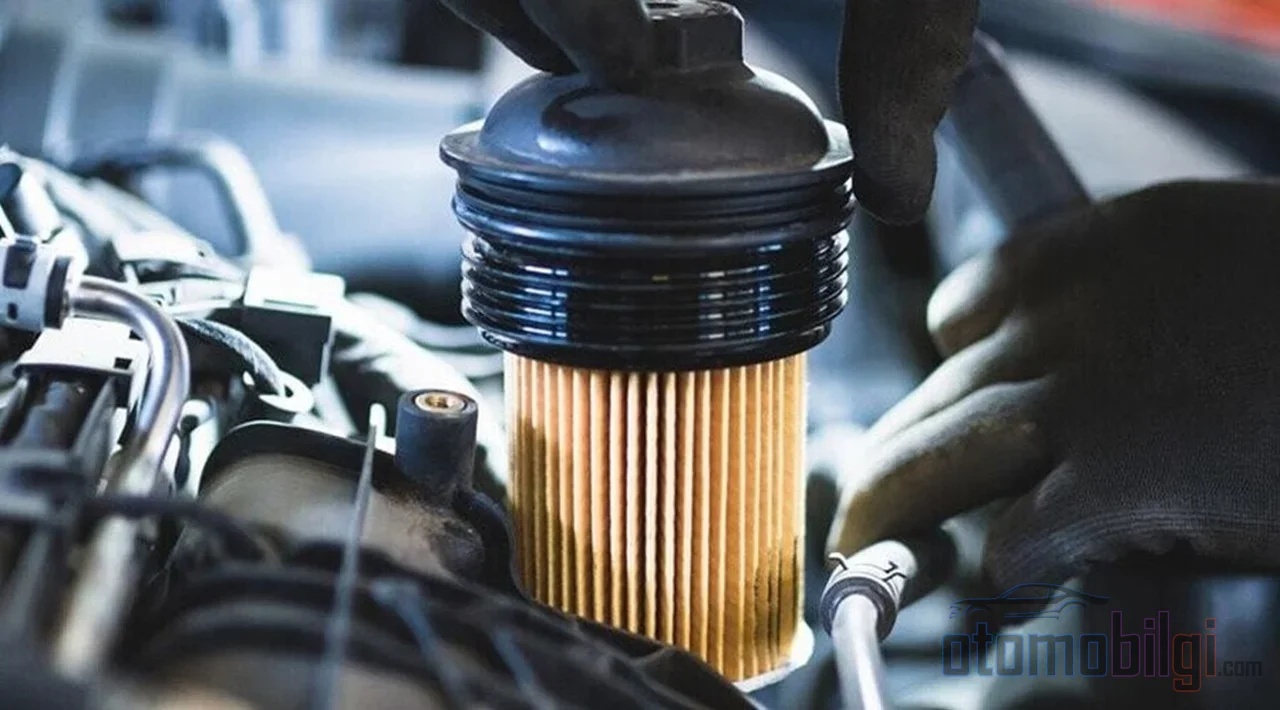
One of the most easily forgotten parts on the maintenance list is the fuel filter. The oil gets changed, the air filter is renewed, the spark plugs are checked; the fuel filter, however, is often not even remembered until the first symptom shows itself. Yet modern injection systems operate with millimetric tolerances and expect the fuel coming from the pump to be clean. When the filter clogs, the signs progress stealthily: first a small loss of power under load, then an irregular idle, and finally the risk of being stranded on the road. In this article, we cover exactly what the fuel filter does, how the car behaves when it clogs, and why replacement intervals are expressed with such widely varying figures.
What Does the Fuel Filter Do and Why Is It So Critical?
Fuel travels a long way from the tank to the engine, and it can encounter contaminants at every stage of that journey. Rust, particles and other impurities accumulate over time in the underground tanks of stations; not to mention the dust and moisture that enter through the tank opening. The fuel filter steps in at exactly this point: by filtering the fuel, it prevents these contaminants from reaching the injectors and the fuel pump.
Modern fuel systems are designed with tight tolerances; the passage channels of injectors operating at high pressure are so fine that even particles invisible to the eye can cause problems. As the filter gets dirty, fuel flow drops, line pressure decreases, and the system begins to struggle. The insidious aspect of the problem is this: the change progresses slowly. The driver may not notice it in daily use; and by the time symptoms appear, the filter is usually severely clogged.
When flow is restricted, the engine cannot get enough fuel and enters a lean condition. This has two consequences: a noticeable loss of power and an increased operating temperature. In other words, a dirty filter not only reduces performance, it also disrupts the engine's thermal balance.
Key Takeaways
- A clogged fuel filter restricts flow, lowers pressure, and puts the engine into a lean condition.
- On diesel vehicles, the replacement interval is noticeably shorter than on gasoline ones.
- Ethanol-blended fuels accelerate filter clogging by drawing in moisture and loosening tank sediment.
- A skipped filter change can lead to the early failure of a strained fuel pump.
What Are the Symptoms of a Clogged Fuel Filter?
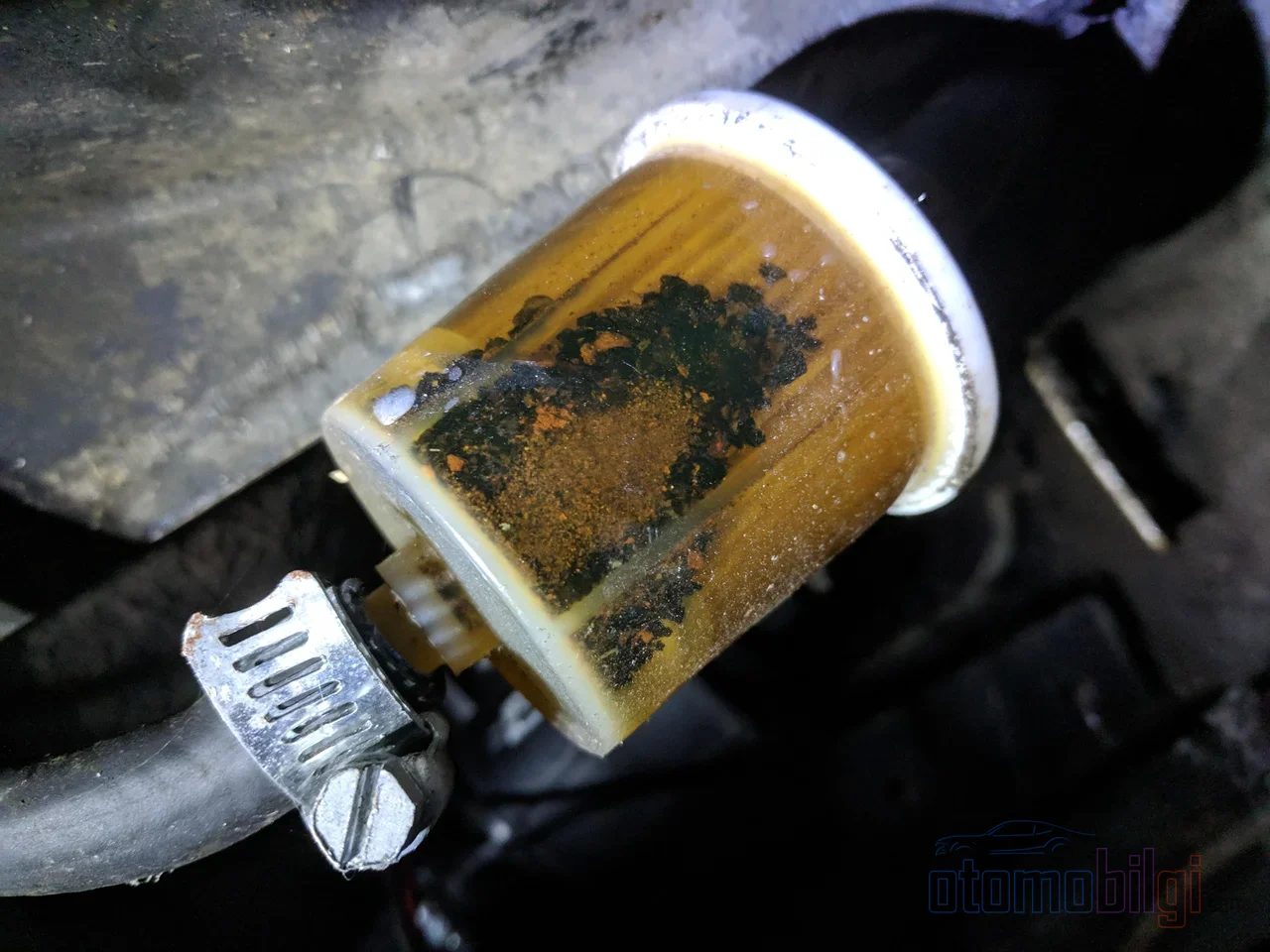
The beauty of the clogging is that it does not progress quickly; its ugliness is that the symptoms can also resemble other malfunctions. Still, the signs that appear are quite consistent, and most of them make diagnosis easier when evaluated together.
Starting and Idle Problems
The most common first symptom is the vehicle cranking longer than normal. Especially during cold starts or in vehicles that have sat for a long time, the engine hesitates; in some cases it stalls as soon as it starts. At stoplights, the idle becomes irregular, the car vibrates or lurches forward. In severe clogging, it is even possible for the engine to stall completely at idle.
Power Loss Under Load and Misfiring
In situations that demand high fuel flow, such as hill climbing, towing a trailer, or overtaking, the engine cannot find the fuel it needs; it hesitates, staggers, or runs with jerks and sputters. A disruption of the air-fuel balance causes misfiring, that is, sputtering, and this is more noticeable at idle. At high speed too, the engine can be seen losing power with sputtering or suddenly stalling.
- Increased fuel consumption: The engine burns more fuel as it tries to maintain performance.
- Gasoline smell in the cabin: Unburned fuel escaping from the exhaust can carry the odor inside; there are other causes as well.
- Fuel pump noise: A pump straining against a blockage makes a different, labored sound than normal.
- Engine check light: Dropping fuel pressure can trigger the light; error codes related to fuel pressure and lean mixture are recorded.
How Is It Diagnosed?
In old-type filters with transparent bodies, dark color and visible debris can be seen with the naked eye; but most modern filters have opaque bodies. The reliable method is the fuel pressure test: pressure is measured with a manometer connected to the test port, and a clogged filter shows the most pronounced pressure drop usually under high-demand conditions. The sound of the pump also gives a clue; a pump that normally produces a slight hum can make whining-like sounds when strained.
There is a misdiagnosis trap to watch out for here: replacing a fuel pump that has actually worn out because of a clogged filter while leaving the filter as it is. In this case, the new pump will work against the same restriction and will fail again in a short time. The filter should always be checked before replacing the pump.
Why Are Replacement Intervals Different for Gasoline and Diesel?
The old approach was simple: replace the filter approximately every 50,000 kilometers regardless of engine type. Today the picture is much more complex. In gasoline engines, if a replaceable filter exists, the typical interval is around 30,000-50,000 kilometers, which usually corresponds to two to three years of use. On the diesel side, things change: diesel injection systems are more demanding in terms of pressure and precision, and filter intervals are noticeably shorter. For passenger diesels, the common recommendation is in the range of 25,000-50,000 km; in older diesels and vehicles with simple injection systems, this figure drops to 15,000-25,000 km. In heavy commercial diesels, the standard interval is 25,000-40,000 km or yearly, whichever comes first; under severe conditions it can drop to engine hours or as low as six months.
| Vehicle type | Typical replacement interval |
|---|---|
| Gasoline (if a replaceable filter exists) | 30,000-50,000 km / 2-3 years |
| Passenger diesel | 25,000-50,000 km |
| Old diesel or simple injection diesel | 15,000-25,000 km |
| Heavy commercial diesel | 25,000-40,000 km or yearly |
| Severe conditions (commercial diesel) | 15,000 km / 400 engine hours / 6 months |
Where Is the Filter in Modern Gasoline Cars?
An important change of recent years needs to be noted here. Some of today's gasoline cars no longer have a separate, replaceable fuel filter at all; the fuel pump inside the tank operates with an integrated strainer, and manufacturers describe these assemblies as maintenance-free. Some manufacturers' official maintenance plans state that the gasoline engine fuel filter does not normally require periodic replacement, and that it only needs to be inspected in cases of suspect fuel use. While in-tank filters typically last up to 160,000 km, the lifespan of filters mounted on the fuel line is around 70,000-100,000 km. Some new vehicles use filters that require no routine maintenance and are designed to last the vehicle's lifetime.
lacquer and sediment accumulate in aging fuel, and when the engine is restarted, these deposits head straight for the filter. no single figure applies to every vehicle. Intervals vary considerably by brand, model, and year; the definitive point of reference is always the vehicle's own service schedule.
How Does Fuel Quality Affect Filter Life?
Modern ethanol-blended fuels clog the filter faster than older formulations. Ethanol attracts moisture; it loosens sediments in the tank and encourages rust formation in metal tanks. All of these eventually reach the filter. Vehicles left parked for long periods are especially vulnerable in this respect: Lacquer and deposits build up in aging fuel, and when the engine is restarted, these residues head straight to the filter.
Poor-quality fuel is a factor in its own right. Fuel containing water, dirt, and particles clogs filters rapidly; dirty fuel over time also leads to clogged injectors, increased consumption, and reduced engine power. Conditions such as heavy towing, frequent use on dusty routes, and low-quality fuel shorten the manufacturer's stated interval considerably. A practical approach is to set a time limit in addition to mileage: replacing the filter every two to three years, even if the mileage has not been reached, is a sensible habit.
The Cost of Delaying Replacement: Is It Only the Filter That Fails?
The fuel filter is on the relatively inexpensive side of maintenance items; yet neglecting it leads to costly consequences. A pump working against a clogged filter draws more current, heats up more, and wears out faster. This directly increases the risk of premature pump failure, and a skipped filter change opens the door to additional wear on the injectors and pump. The cost difference between the filter itself and repairing the pump and injectors is beyond comparison.
On the diesel side, the process progresses in stages. In the first stage, the car runs well on flat roads but loses power under load, and fuel economy worsens slightly. When the filter becomes fully clogged, the engine hesitates, misfires, or stalls. In high-performance applications, an engine starved of fuel at critical moments may face the risk of knock, overheating, and long-term damage.
Let us also clarify one point: modern fuel filters are designed to be replaced, not cleaned. Although some older types of filters can theoretically be cleaned, the effort and cost involved are usually higher than fitting a new filter. The conclusion to be drawn is clear: if the filter is clogged, it will be replaced; the only question is when it will be replaced.
When Should the Fuel Filter Be Changed? Short Answer
The interval specified in the service schedule of the vehicle in question should be taken as the basis. To draw a general framework: in petrol vehicles with a replaceable filter, roughly every 30,000-50,000 km or 2-3 years; in passenger diesels, a change at 25,000-50,000 km intervals is appropriate, and in old, simple diesels every 15,000-25,000 km. If you have a diesel vehicle, take the filter more seriously than the owner of a petrol car; if you use dirty or ethanol-blended fuel, shorten the interval even at low mileage.
In short: the fuel filter is not a glamorous line item in the maintenance schedule, but if neglected, it sends the bill from the fuel pump, the injectors and time lost on the road. Taking a look at the service booklet to know where your vehicle's filter is and at what interval it should be changed is a serious safeguard in return for five minutes of effort.
Sources
- 8 Signs You Need To Change Your Fuel Filter
- How Dirty Fuel Filters Affect Performance
- How To Check If Fuel Filter Is Clogged
- When to Change Your Diesel Fuel Filter - OTR Solutions
- Importance of Regular Diesel Fuel Filter Replacements Explained
- How Often Should Fuel Filters Be Changed on a Diesel Engine?
- Signs of a Bad Fuel Filter: 9 Symptoms You Shouldn't Ignore