Engine Oil Selection: The Difference Between 5W-30 and 10W-40
It must be said that the "5W-30" printed on the oil bottle is not some secret riddle, but a fairly straightforward technical statement when read correctly. Yet only a minority of drivers know exactly what these four characters mean, the practical difference between the two viscosity grades, and which one suits their vehicle. I have been working in this business for over thirty years; in that time oil labels have transformed a few times, popular grades have changed, but the basic logic has never changed. On this page we will explain that logic: the difference between 5W-30 and 10W-40, how climate and engine age affect the choice, and why the manufacturer's manual has the final say.
How to Read the Viscosity Code: What Does 5W-30 Mean?
Viscosity is the oil's resistance to flow; in short, it is a measure of how thick or thin the oil is. The code on the bottle consists of two numbers, and each one describes a different temperature condition. The first number, together with the letter "W" next to it, indicates the oil's cold weather performance. A common misconception needs to be corrected here: the letter W does not stand for "weight"; Winter means winter. The smaller the first number, the more easily the oil flows in the cold. The second number describes the flow behavior after the engine reaches its normal operating temperature; the smaller it is, the thinner the oil stays even when hot.
This system is based on the SAE J300 standard and is defined by the API specification. Winter grades consist of six levels: 0W, 5W, 10W, 15W, 20W and 25W. Thanks to the multigrade oils we use today, we can use the same oil all year round; it was not always like this. Thirty years ago, different single-grade oils were fitted in summer and winter; changing the oil at the change of season was almost a ritual. Multigrade oils consigned these troubles to history.
What Is the Difference Between 5W-30 and 10W-40?
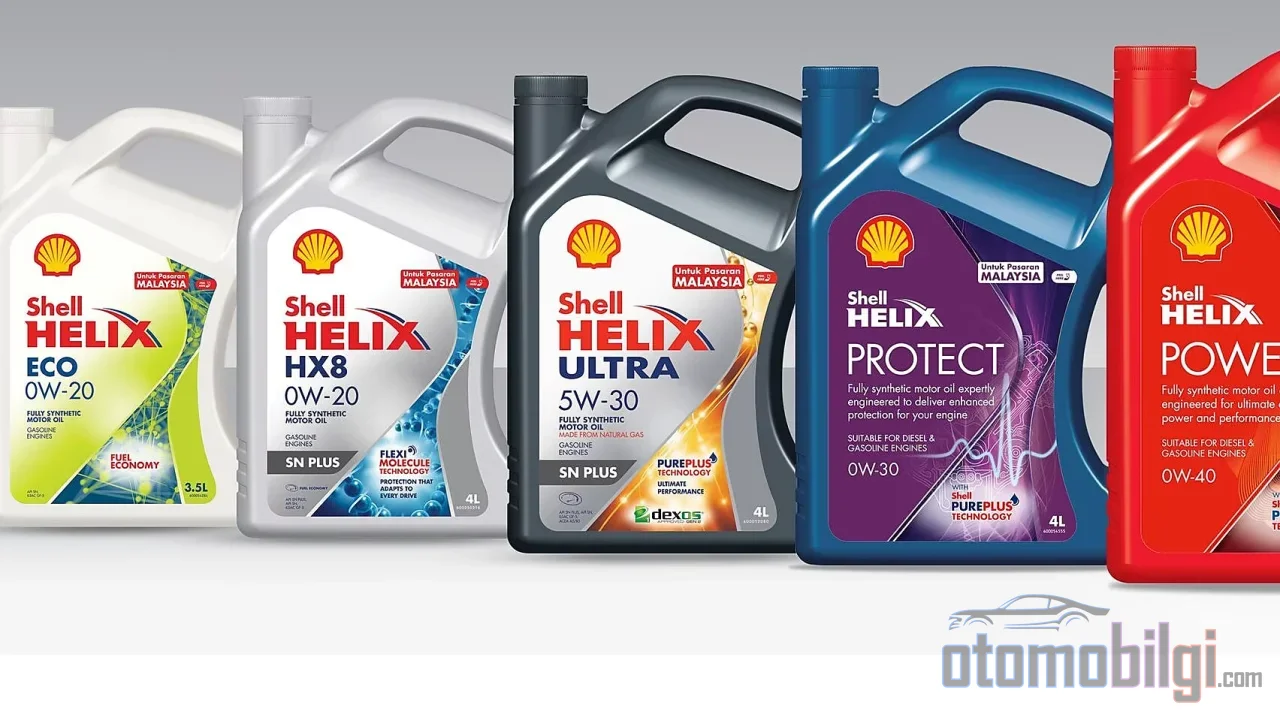
Both oils are multigrade, and both are classified by the criteria of the same standard. The difference emerges in temperature performance. 5W-30 flows noticeably more easily in the cold; on a cold morning it reaches the engine parts faster at startup. 10W-40, on the other hand, offers a thicker film protection as the temperature rises: at operating temperature it is in the SAE 40 class, while 5W-30 stays in the SAE 30 class.
| Feature | 5W-30 | 10W-40 |
|---|---|---|
| Cold flow | Easier | Thicker |
| Operating temperature class | SAE 30 | SAE 40 |
| Standout quality | Fuel economy, cold protection | Thick film protection in heat |
| Typical suitable use | Modern engines, cold climates | High temperatures, older engines |
In short, 5W-30 leans toward fuel savings and compatibility with modern engines because it reduces friction. 10W-40, meanwhile, was the grade that resisted heat better and was preferred in hot environments and, if the manual allowed, in older engines; it still is. It is also worth adding to the picture: grades with lower heat ratings, such as 10W-30, generally form less piston and ring deposit compared to 10W-40; these deposits can over time cause the rings to stick and oil consumption to increase.
Highlights
- The "W" in the viscosity code stands for Winter; not weight.
- The first number indicates cold flow, the second flow at operating temperature.
- 5W-30 flows more easily in the cold; 10W-40 stays thicker in the heat.
- Mileage alone is not sufficient justification for switching to a thicker oil.
- In every case, the primary reference is the vehicle owner's manual.
How Do Climate Conditions Affect Oil Selection?
Oils thicken as they cool and thin as they heat up; this simple physics is why climate plays a decisive role in the choice. In cold regions, oils with a lower first number, i.e. grades like 0W-20 or 5W-30, are advantageous: they maintain their fluidity even at near-freezing temperatures and quickly reach the engine components at start-up. An oil that is too thick failing to flow properly in the cold means delayed protection.
In hot climates, the balance reverses. In extremely hot regions, grades like 5W-40, 10W-40, or in some cases even 20W-50 are recommended; although 5W-30 is a balanced oil, it may be too thin for some engines at very high temperatures. But even here, the golden rule does not change: whatever the climate, the choice must be made within the grades permitted by the manufacturer. The same grade of oil behaves differently depending on the temperature it is in; therefore the number on the bottle should not be read on its own, but together with the conditions of use.
Should a High-Mileage Engine Switch to a Thicker Oil?
This is one of the most debated topics at service shop doors. Some mechanics recommend going one grade thicker in high-mileage engines; the logic is the assumption that thick oil will hold a better film in worn bearings and widened oil clearances, and will maintain oil pressure. Thick oil's heat resistance and protective film thickness really are higher; that is true.
But there is another side to the coin. High viscosity increases internal resistance, worsens heat distribution, and lengthens the time it takes for oil to reach the engine's farthest points. The mileage figure alone is not a sufficient justification for changing the grade either; the correct approach is to look at the vehicle's oil consumption, oil pressure, leaks, engine noise, and maintenance history. For most of those who, without any problem in their vehicle, go off-manual and switch to a thicker oil, the result is "I saw no benefit." There are also oils on the market specially formulated for high-mileage vehicles, marketed with claims of reducing leaks and stopping oil burning; these differ more in additive package than in viscosity, and those matching the viscosity class in the manual should be chosen.
Why Does the Manufacturer's Manual Have the Final Say?
The primary source that tells you the right oil for your vehicle is always the owner's manual; in its maintenance and lubrication sections, the manufacturer clearly defines the appropriate viscosity. A practical tip if only the manual is not at hand: in many vehicles, the viscosity information is also written directly on the oil filler cap. Three factors are decisive in your choice: the vehicle's age, driving conditions, and manufacturer specifications.
The cost of the wrong viscosity is not light: fuel consumption increases, wear accelerates, and in the worst case even engine damage can occur. The grade recommended by the manufacturer is usually the lowest grade the engine can safely run on; fuel economy targets determine this grade. As engine technology advanced, oil passages narrowed and viscosities dropped over time: while 20W-50, 10W-40 and 10W-30 were common in the past, today the most popular grades are 5W-30 and 5W-20, and the fastest growing grade is 0W-20. Some manufacturers also require special specifications they developed for their own engines; so you should make a habit of checking the back label of the oil container to see which specifications are met.
Which Viscosity Should You Choose: The Clear Answer
The short answer: use the viscosity stated in your manual as a multi-grade oil suited to your climate conditions. If the manual offers more than one grade, stay on the 5W-30 side in cold climates or when fuel economy is a priority; stay on the 10W-40 side for an engine constantly strained at high temperatures or an older engine the manual allows. Go outside the manual only if there is a genuine complaint, and preferably with the opinion of someone knowledgeable.
There is no need to fear the code. Once you learn to read it, the difference between 5W-30 and 10W-40 is less mysterious than you might think: one is good in the cold and for efficiency, the other in the heat and for protection thickness. The rest is written in your vehicle's manual. And that, as the only correct answer that has not changed in thirty years, is always open.