When Does Oil Loss Become a Problem?
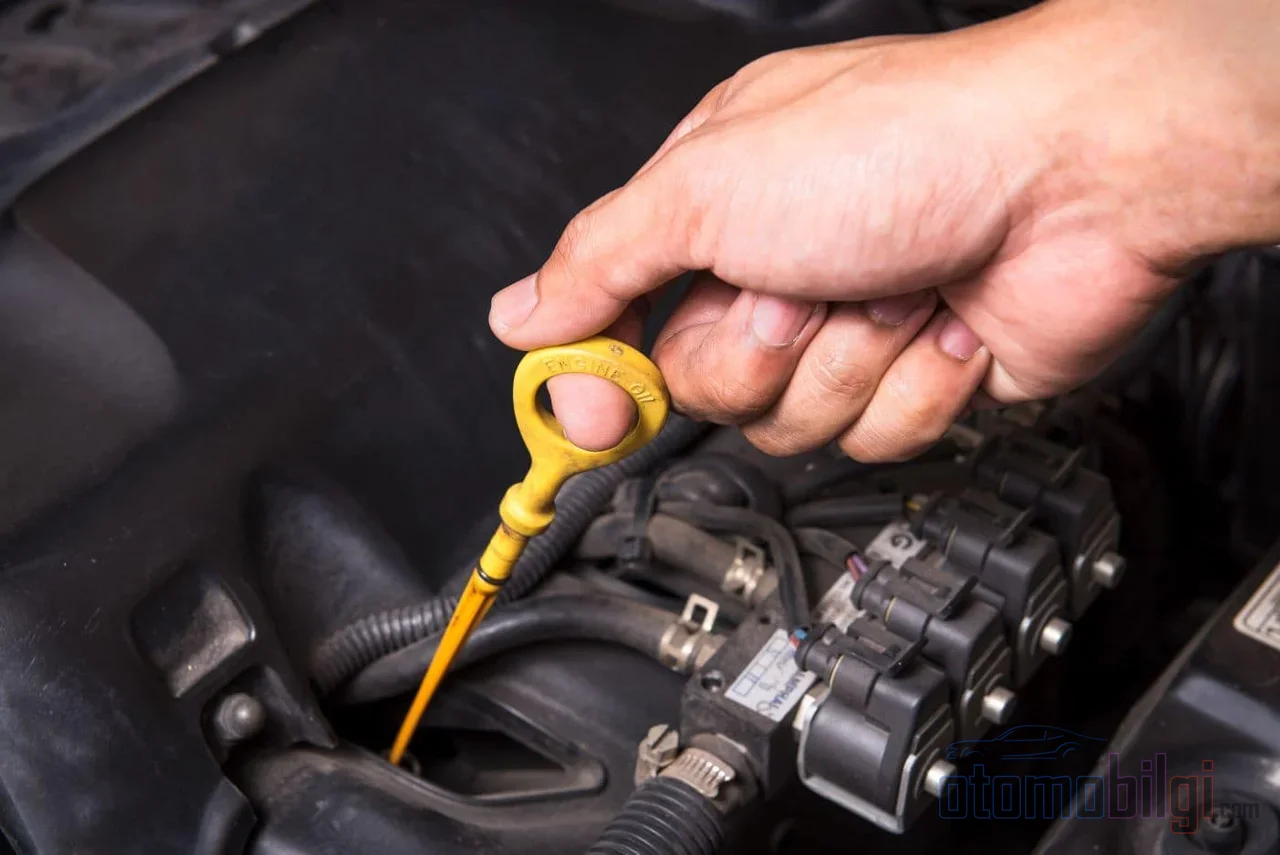
You change the oil on time, there are no stains under the bodywork, no drops on the garage floor; yet every time you pull the dipstick, the level is a little lower. This picture worries many drivers, whereas what is usually going on is a quiet and ordinary physical process: engine oil is consumed at a certain rate over the course of oil change intervals. The real question is where the amount you consume stops being normal and starts being a fault. And that boundary is more contentious than you might think; manufacturers and consumer organizations have been giving different answers to the same question for years.
Every Engine Burns Oil: It Is Not a Fault, It Is a Consequence of the Design
On every downward stroke, the piston leaves a thin film of oil on the cylinder wall; during the power stroke, part of this film is burned in the combustion process. For this reason, imagining an engine with zero oil consumption is technically not correct. There is broad agreement that for passenger cars, consumption of 0.05 to 3 deciliters per 1,000 km is within the normal range; modern engines consume noticeably less than older ones. Calculations based on fuel consumption also assume that the engine uses oil at a rate of roughly one to five thousandths of the fuel it burns.
For vehicles with high mileage, these figures loosen up a bit. In engines that have passed around 120,000 km, needing roughly one extra liter over 2,400 to 4,800 km is not considered unusual. A new engine, on the other hand, should stay below one liter in total over a 5,000 km change interval. The yardstick here is this: if you are adding more than one liter of oil between change intervals, something in the engine or the oil seals has worn out.
Highlights
- The range considered normal: for passenger cars, 0.05-3 deciliters per 1,000 km
- One manufacturer's official limit: roughly 1 liter of extra oil over 3,200 km is considered normal
- General rule: consumption of more than 1 liter in a single change interval is a sign of a fault
- Driving below the dipstick minimum leads to damage that may fall outside the warranty coverage
- Blue or gray exhaust smoke is the clearest sign that oil has entered the combustion chamber
How Realistic Is the Manufacturers' Definition of "Normal"?
This is where the contentious part begins. Some manufacturers define adding one liter per 3,200 km as normal consumption in their owner's manuals, while listing oil change intervals of up to 12,000-16,000 km for the same vehicle; the two standing side by side is a contradiction worth pondering. For aggressive driving, this threshold can be loosened even further: in vehicles driven at high revs and with frequent engine braking, consumption of up to one liter per 800 km may not even count as a fault for warranty purposes; in return, the owner is asked to check the oil level at every refueling.
Consumer organizations do not go along with this picture. In a 2015 assessment well known in the automotive community, it was argued that excessive oil consumption is not normal, and that long change intervals and a low consumption threshold cannot be defended together. User surveys also support the manufacturer's side in a surprising way: in a survey covering hundreds of thousands of vehicle owners, roughly 98 percent of participants never had to add any oil between changes; only the 2 percent minority own engines that consume a liter or more. So, in terms of the industry average, the problem can be considered nonexistent for the vast majority; the minority experiencing the problem is usually concentrated in the same engine families. Among those known for excessive consumption, certain years' 2.0-liter turbo gasoline and 3.0-liter V6 units, large-displacement V8s, and certain 2.0-2.5-liter four-cylinder engines stand out.
Where Does the Oil Go? Possible Paths of the Loss
The oil that decreases on the dipstick has several possible destinations. If no leak is visible, the loss is most likely being burned in the combustion chamber, that is, in the engine; but that is not the only destination.
The four classic entry gates to the combustion chamber
- Piston rings: Worn or broken rings allow oil to pass into the combustion chamber; ring wear causes both compression loss and increased oil consumption. Installing the second compression ring backwards during reassembly is also a classic workmanship error that pushes oil upward.
- Valve guide seals: The vacuum created especially on the intake valves draws oil down the guide into the cylinder. Worn intake seals can push consumption above one liter in a short time; wear develops faster on the exhaust side, which runs hotter.
- Turbo seals: When the piston rings on the turbine shaft wear out or the oil drain line proves inadequate, oil leaks into the intake or exhaust side; oil that reaches hot exhaust components burns and produces the typical blue smoke. Excessively high oil pressure also stresses the seals.
- Crankcase ventilation (PCV) system: When this system is clogged or damaged, it cannot manage crankcase gases correctly and increases oil consumption noticeably; it is usually an overlooked cause with a relatively inexpensive repair.
External leaks are more visible: leaks from the valve cover and oil pan gaskets, drain plug, filter surface, and oil lines leave traces not only on the dipstick but also on the ground. There is also an indirect scenario: in vehicles driven only short distances, especially in cold weather, unburned fuel and condensation mix into the oil and artificially raise the level; on a subsequent long drive, this excess evaporates away, and the driver believes there is consumption that does not actually exist. Engine oil does not truly evaporate into thin air; every observed loss is the result of either burning or a leak. Driving style also changes the balance: towing a trailer, using high revs, and engine overheating increase consumption.
Symptoms of Burning Oil: Smoke, Smell, Dirty Spark Plug
The engine usually gives notice when consumption crosses into the realm of a fault. Blue or gray smoke from the exhaust is the clearest evidence that oil is entering the combustion chamber. Smoke on startup is most often due to the valve guide seals; smoke that increases during acceleration, i.e. as pressure rises, and the smell of burning oil in the exhaust point to a leak on the turbo side. The smell of oil leaking onto the engine's hot metal surfaces is another warning sign.
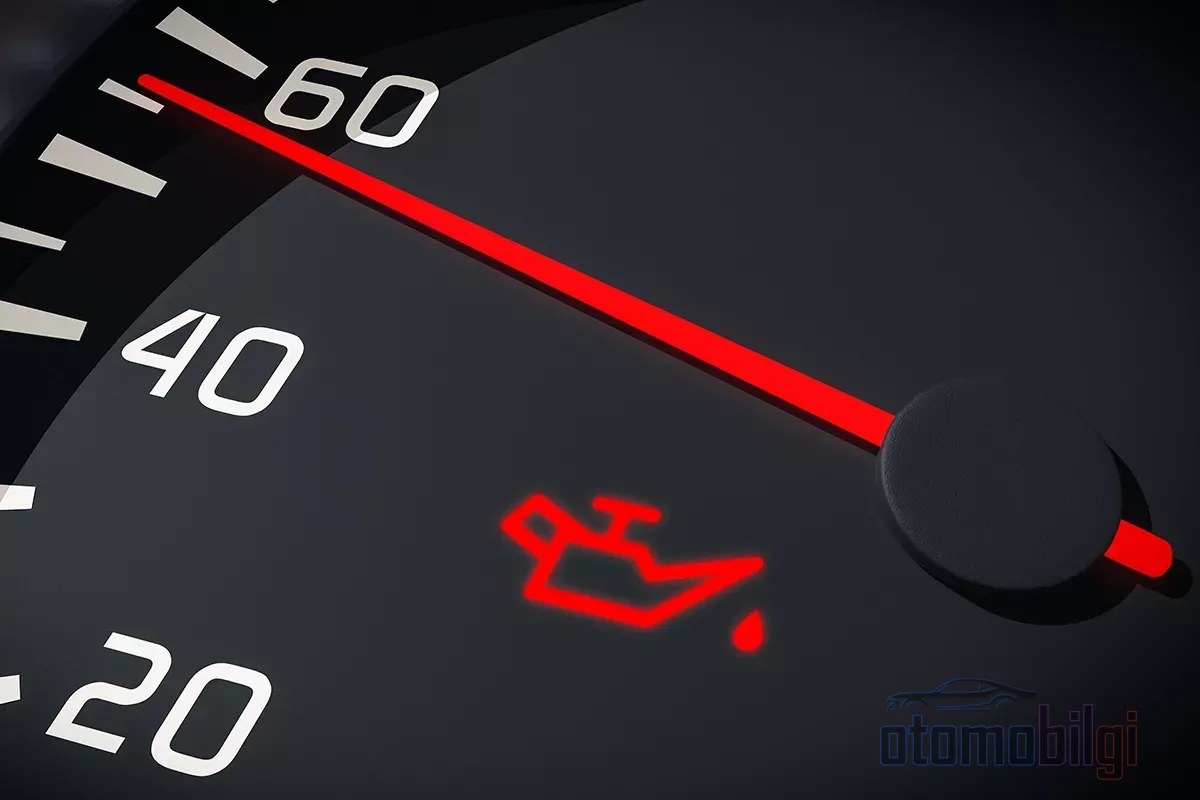
Indirect symptoms are more insidious: an oil-burning engine fouls the spark plugs; this leads to misfires, increased emissions, loss of performance and fuel economy, and can trigger the Check Engine light. In the long run, the anti-wear additives in oil containing zinc and phosphorus can damage the catalytic converter and oxygen sensors; replacement costs are many times higher than engine oil. An oil pressure warning, engine knocking and rising temperature are alarms requiring immediate action.
The Price of Driving With Low Oil
Engine oil is the buffer between moving metal parts; as the level drops, friction increases, the engine overheats and the oil loses its cooling function. Driving a vehicle below the dipstick's minimum level can cause serious engine damage. Here is what really escalates the matter to warranty territory: manufacturer instructions clearly state that damage occurring in an engine run with insufficient oil will not be covered under the new vehicle warranty. In other words, driving with insufficient oil carries not only a mechanical risk but also a financial one. If the level has dropped, the goal is to complete the trip safely in the short term and then investigate the cause; neglecting it with the thought that "it can go a bit longer" can prove costly.
The Correct Method When Adding Oil
Topping up oil is a simple procedure but it has its own rules. First, an accurate measurement is needed: the vehicle should be on level ground, wait 15-20 minutes after shutting off the engine, wipe the dipstick and reinsert it fully before reading again, and each reading should be taken at a similar oil temperature. Afterwards, add oil in small amounts and check again after waiting a few minutes each time; on vehicles with a dipstick, one step corresponds to roughly 250 ml of added oil.
- Park the vehicle on level ground, shut off the engine and wait 15-20 minutes.
- Wipe the dipstick, insert it fully, pull it out and read the level.
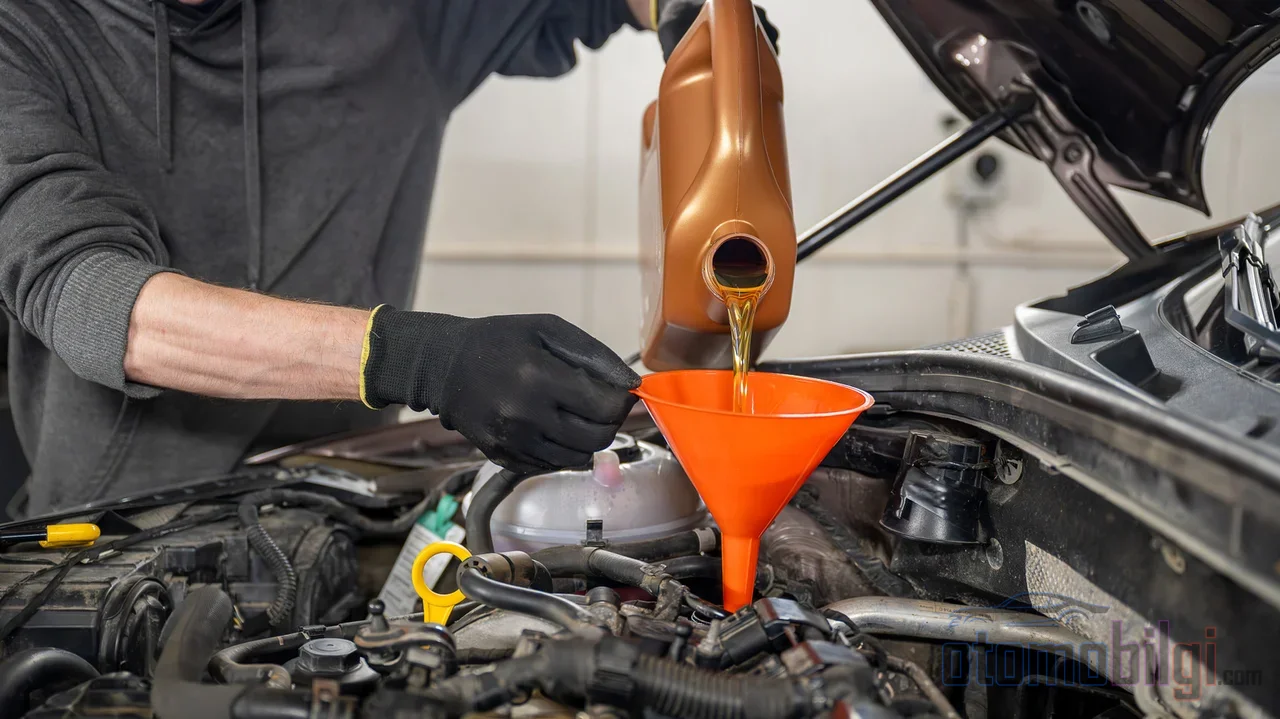
- Add oil in small amounts, of the type and viscosity specified in the manual.
- Wait a few minutes and check again on the dipstick; avoid overfilling, excess oil is a separate problem of its own.
Before normalizing constant oil top-ups, one point needs clarifying: if there is a leak, adding oil does not solve the problem, it requires repair; sometimes simply retightening the valve cover or oil pan bolts is enough. Switching to oils formulated for high-mileage engines, or moving to a thicker viscosity grade, for example from 5W-20 to 5W-30, can help reduce consumption. As for miracle additives: their promises are convincing but they do not stop oil burning.
Short Answer: When Is Oil Loss Considered a Problem?
A measurable framework can be established. Oil loss of up to half a deciliter per thousand kilometers is completely normal; Consumption of up to one liter per 3,200 km is within the acceptable range in terms of owner's manuals and manufacturer service documents. By contrast, consumption requiring one liter of extra oil per 1,500 km or more frequently is a sign of a serious leak or heavy wear and should not be left unexamined. The gap between the loose thresholds in manufacturers' manuals and the stricter approaches of independent organizations has long been a matter of debate; as a driver, the reasonable position is to monitor the level regularly, measure the rate of loss, and take accompanying symptoms such as smoke, odor, or a warning light seriously. The dipstick is a more honest interlocutor than many of the electronic warnings on the dashboard; the driver who reads it regularly catches the problem before learning about it the expensive way through the engine.
Sources
- How Much Oil Consumption Is 'Normal'?
- Excessive Oil Consumption Isn't Normal - Consumer Reports
- Why Is My Car Leaking Oil?
- Causes, What's Normal and Fixes
- Is Your Turbocharger Leaking Oil? Common Things to Look For
- Running an engine without oil: symptoms and what to do
- How much engine oil consumption is normal? (In a modern engine.)
- Oil Consumption: It May Be a Normal Characteristic