When Should the Oil Be Changed in a Manual Transmission?
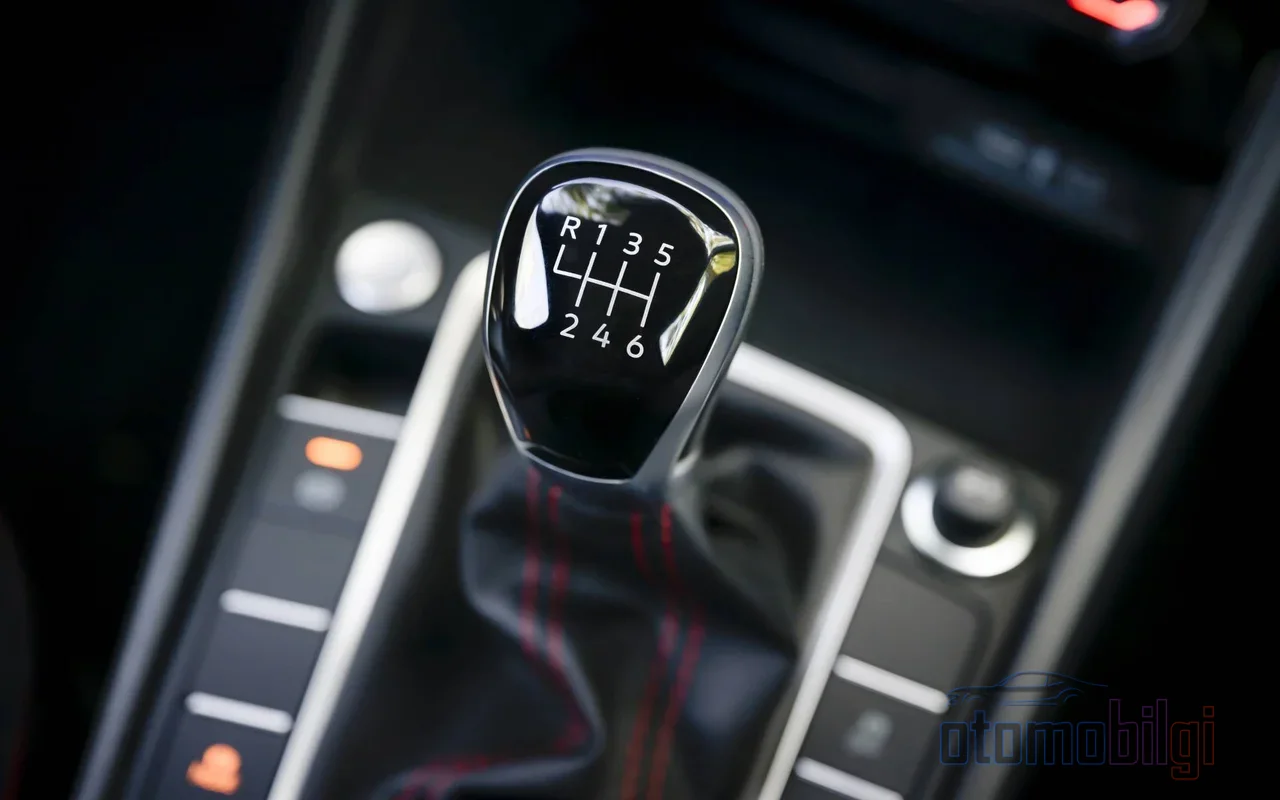
The manual transmission is the loyal, least-appreciated workhorse of the automotive world. While the schedule of everything from engine oil to brake pads is tracked, the few liters of oil inside the gearbox are often never changed, not even by the vehicle's second owner. Yet this oil both lubricates and cools the gears and bearings; when it fails, first comes a hum, then harsh gear shifts, and finally an expensive mechanical repair to remind you of its existence. So when exactly should this oil be changed, and at how many kilometers?
The question is simple, but the answer varies from manufacturer to manufacturer and from one operating condition to another. While some brands describe gear oil as practically lifetime fluid, others require it to be replaced at 50,000 kilometers. To understand the difference, we first need to look at what the oil does, and then at its warning signs.
What Does Oil Do in a Manual Transmission?
Inside a manual transmission are spur and helical gears in constant mesh, synchronizers, and bearings. Gear oil forms a thin film on the surfaces of these parts, preventing metal-to-metal contact, dissipating friction heat, and carrying away wear particles. Unlike engine oil, it is not close to the combustion chamber; it is never exposed to combustion byproducts such as fuel and soot. For this reason it gets dirty much more slowly, but that does not mean it never gets dirty.
Over time, heat, oxidation, and metal particles from gear wear fatigue the oil. The additive package depletes, the oil darkens, and the protective film thins. The insidious part of the process is that the transmission does not announce it all at once, but gradually: the driver keeps shifting through gears that have grown stiff for a few thousand kilometers without noticing the bearing hum, and the bill appears on the repair bench.
How Many Kilometers Should Manual Transmission Oil Be Changed?
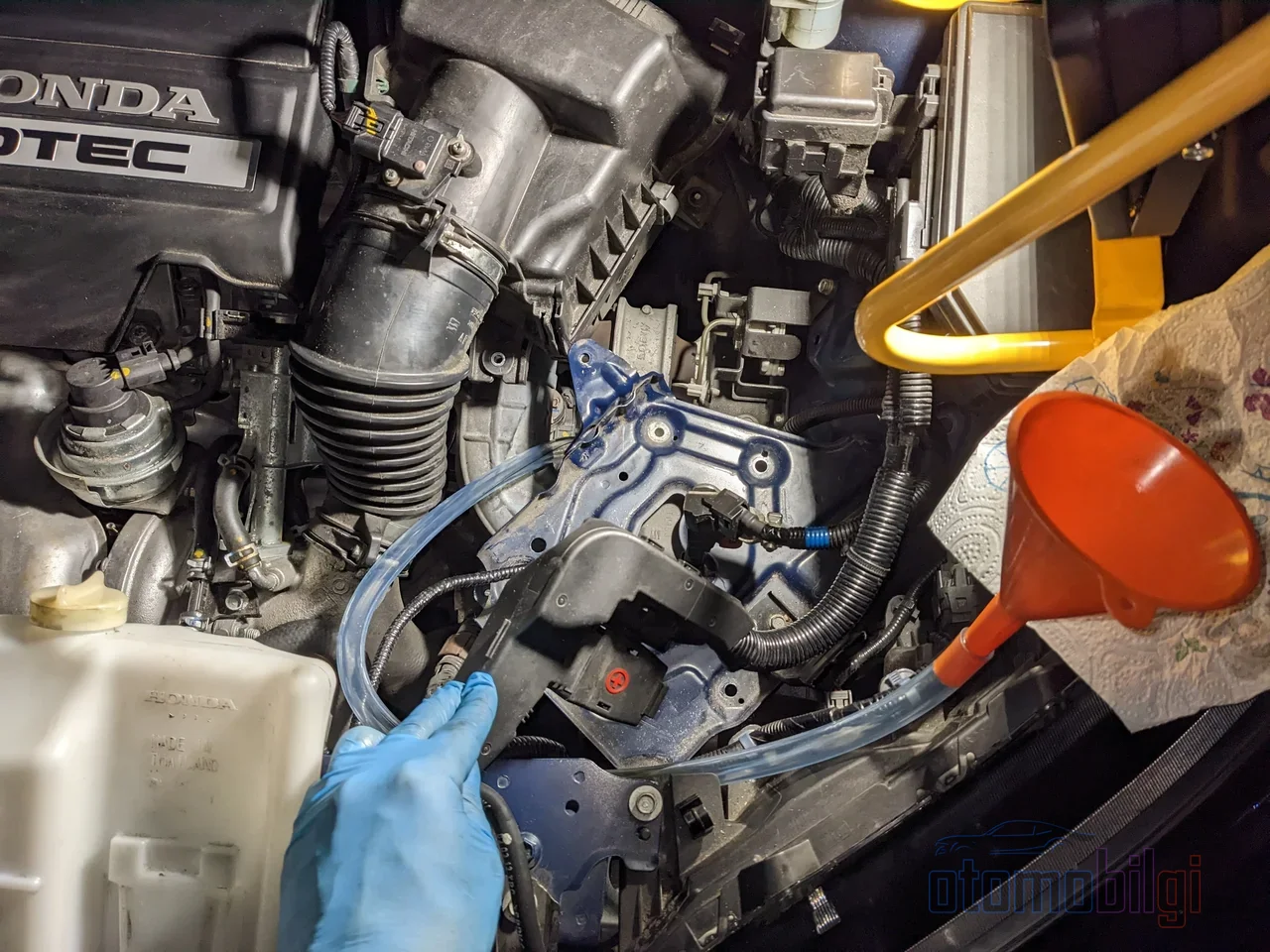
The recommended intervals form a wide band across different sources. The general consensus is that the gear oil in manual transmissions should be changed somewhere between 48,000-100,000 km. Automotive publications and dealer networks mostly highlight the 48,000-96,000 km range; the practical recommendation from independent service experts is a clear and conservative figure of 50,000 km. For vehicles whose manufacturer specifies no value, 100,000 km or 5 years is accepted as a reasonable upper limit.
In some models this interval is pulled even lower; the owner's manuals of some small-displacement vehicles may require a gear oil renewal every 20,000 kilometers. Meanwhile, some manufacturers do not hesitate to describe the oil as lifetime fluid. This approach is met with skepticism in independent service circles: a well-maintained manual transmission can shift smoothly for the life of the vehicle, but the price of this is regular drain-and-fill services.
Key Takeaways
- The general change interval for manual transmission oil is 48,000-100,000 km; the practical recommendation is 50,000 km.
- Towing use and heavy-load conditions shorten the change interval.
- A manual transmission has no dipstick; the level is checked via the fill plug on the side.
- In oil selection, the API GL class and SAE viscosity are two independent requirements; some transmissions call for ATF.
- Manual transmission oil changes in the US market typically come with a service fee of 80-175 USD.
Severe Conditions Shorten Intervals
Regardless of the catalog value, heavy use overrides every schedule. Trailer or towing use, off-road conditions, frequent loaded driving and constant climbing and descending on mountain roads raise the temperature and load on the transmission oil. In these scenarios, most manufacturers recommend bringing the periodic change noticeably forward. Stop-and-go city traffic is also among the conditions that wear out the gears; although it seems mild, it is precisely in this environment that the synchronizers work hardest.
Mileage or Time?
Transmission oil change is essentially a mileage-based task. In a lightly used vehicle, gear oil, unlike engine oil, is less exposed to time-related degradation such as moisture and fuel vapor, so it can remain in reasonable condition for 10 years or longer. Even so, the possibility of oxidation and water absorption in the oil of a vehicle that has sat in a garage for years should not be overlooked; checking the oil in a transmission that has been idle for a long time is a safer path than debating the calendar.
What Symptoms Appear When the Oil Runs Low or Degrades?
When manual transmission oil runs low or degrades, the vehicle signals through several separate channels. Each of these on its own could also be attributed to other faults; when evaluated together, however, the signs are clear:
- Stiffness in gear changes, difficulty engaging gears or delayed engagement,
- A hum, whine and grinding noise that increases with rpm,
- A burnt smell from the transmission housing,
- Leaks in the form of oil spots on the garage floor,
- Vibration, shuddering and a feeling of weak acceleration.
The most common cause of a hum is low or contaminated transmission oil; when the oil is depleted, the parts cannot be lubricated and cooled adequately. If the noise or vibration increases with transmission rpm, gear or bearing wear comes into question. Since clutch pressure, synchronizers and the input shaft bearing can also produce similar noises, the first thing to do when a hum is heard is to check the oil level and condition; before embarking on a search for expensive parts, this simple step usually reveals the source of the problem.
What Do the Oil's Color and Smell Tell You?
New gear and transmission oil is bright in color and translucent; in ATF-based fluids, this color is usually red. As it is used, the oil darkens and loses its transparency, and in advanced oxidation it gives off a burnt smell. A dark brown or black sample requires a change; a light pink appearance indicates water contamination and should likewise be renewed. An oil that has turned from red to brown but is still translucent is considered mildly degraded, and an urgent change is not necessary. Since the intervals vary widely from manufacturer to manufacturer, the oil's color and smell are in practice the best health indicator.
How Is the Level Checked in a Transmission Without a Dipstick?
Most manual transmissions do not have a dipstick like engine oil does. Instead, there is a drain bolt at the bottom and a fill plug on the side. The level check is based on the following logic: the edge of the fill hole defines the correct oil level. When the vehicle is parked on level ground and the plug is removed, the oil slightly overflowing or dripping from the edge of the hole means the level is correct; if nothing flows out, the oil is low and must be topped up.
During the check, the oil's color and smell can also be assessed by taking a sample from the fill hole with a clean stick. If the lower part of the transmission housing and the area around the drain are oily, a leak must be looked for; if a leak has been repaired, it is the right approach to replace the oil without fail.
What Is Done During a Change?
As a service job, the manual transmission is simple: drain and fill. A container is placed under the drain hole, the drain bolt is removed and the old oil is drained. If there is an oil filter and it is accessible, it is replaced at the same time; the gasket is also replaced. If there is a magnet in the sump, the metal particles accumulated on it are cleaned; large visibly present pieces here indicate gear wear and require further inspection. The manufacturer's recommended oil is added in a measured amount, the level is rechecked via the fill plug after the oil settles, and the waste oil is disposed of responsibly.
The Right Oil: GL Class and Viscosity Are Two Separate Decisions
There are two independent parameters that are often confused in gear oil selection: the API GL service category and the SAE viscosity grade. API GL-4 and GL-5 are service classes; Values like 75W-90 or 80W-90, on the other hand, indicate viscosity. GL-4 oils are the typical choice for spur and helical gears in manual transmissions and transaxle designs with synchronizers. GL-5 is formulated with a heavier additive package for hypoid differential gears carrying higher loads; at the same viscosity, GL-5 contains roughly twice the level of sulfur/phosphorus additives compared to GL-4. Some synchronizers cannot withstand these aggressive additives, which is why arbitrarily filling a transmission that requires GL-4 with GL-5 is not a correct upgrade.
On the viscosity side, there is no uniform answer either: options like 75W-80, 75W-85, 75W-90 and similar vary from transmission to transmission; in fact, some manual transmissions require automatic transmission fluid (ATF), because even a thin 75W-80 close to ATF may be sufficient. Indeed, some manufacturers use thin, Dexron-type ATF in certain manual transmissions; these oils are not recommended to be kept for very long mileages. The final reference in every case is the owner's manual; the correct product is the service class and viscosity specified by the manufacturer in the specification.
How Much Does a Change Cost?
The cost data belongs to the US market, and the manual transmission's advantage is that it is a simple job from start to finish. While the typical range given by oil manufacturers for a manual transmission oil change is 80-150 USD, the same procedure on an automatic transmission starts at 150 USD and exceeds 300 USD. The national averages quoted by service chains as of early 2026 are around 150-175 USD for a standard change; a complete service including filter and gasket can rise to the 230-475 USD band. In performance and luxury segment vehicles, fees reach 300-500 USD.
For the same job, there can be a significant difference between a dealership and an independent service; in reader experiences there are cases where the figure a dealership demanded reached four times the offer of services that performed the same job much more cheaply. The balance of materials and labor makes the change inexpensive: when the job is done with a few liters of oil and about half an hour of labor, the total cost can stay around the 200 USD mark.
Is Changing at High Mileage Risky?
There are discussions that problems may arise after the change in automatic transmission vehicles that have gone a long time without maintenance, and some services refuse to perform the change on very high-mileage vehicles with no service history. Manual transmissions carry no such fear: Manual transmission oil can be safely changed at any mileage, including high mileage. Giving fresh oil to a gearbox that has gone many years without a change does no harm; quite the opposite, it is the only protection left.
The clear answer follows from this: manual transmission oil should be changed in the 50,000-100,000 km band, or earlier under heavy use, unless the manual says otherwise; it should be renewed by the drain-and-fill method with oil of the GL class and viscosity specified by the manufacturer. This is the cheap insurance of the manual gearbox; a few liters of oil and an hour of service equal the gearbox's lifespan with that of the vehicle itself.
Sources
- When and how to check and change your gear oil and filter
- Fluid Change Intervals: Who is Right?
- When to Change Transmission Fluid?
- How often should we change gear oil?
- What Are The Signs of Low Transmission Fluid?
- Whining and Other Noises When Shifting Gears
- Transmission Fluid Replacement Costs
- Transmission Fluid Change Cost in 2026
- What is the difference between API GL-4 and GL-5
- 120k miles never had manual trans fluid changed