Ways to Protect Your Money with Periodic Maintenance
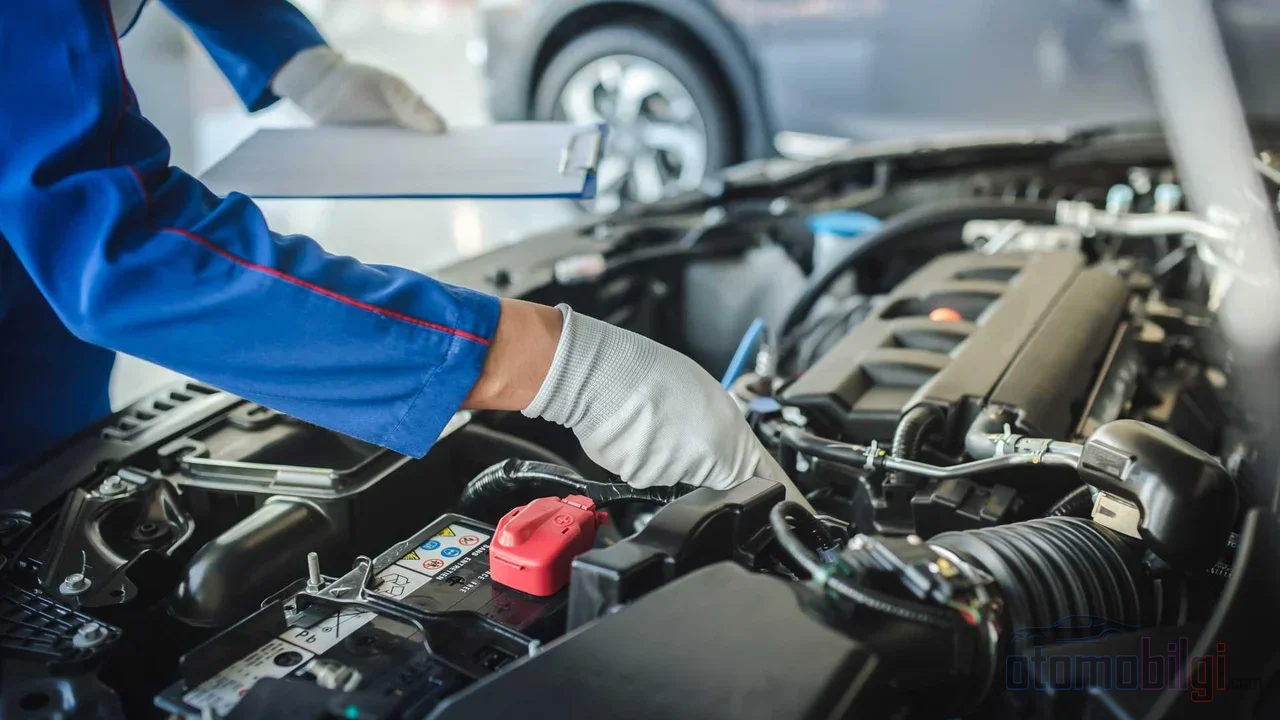
Share This Page
Saving money on periodic maintenance is possible only if the vehicle owner knows what needs to be replaced and when, and what can be postponed. Following the manufacturer's maintenance schedule protects both the engine's lifespan and your warranty rights; services pushed beyond the schedule are usually unnecessary expense. Having been in this business for over thirty years, let me tell you: the most expensive maintenance is the maintenance never done.
Highlights
- The basic rule: every 10,000-15,000 km or at least once a year - whichever comes first.
- Maintenance intervals are tiered by mileage: fuel filter and spark plugs at 30,000, transmission fluid and belts at 60,000, timing belt kit at 90,000.
- If your warranty is still valid, maintenance must be performed according to the manufacturer's schedule; otherwise you may fall outside its coverage.
- Unplanned maintenance can cost, on an industrial scale, an average of 3 to 10 times more than regular maintenance.
- Traffic insurance does not cover maintenance costs; this item is entirely the vehicle owner's responsibility.
What is periodic maintenance, and why is it a responsibility rather than an expense?
Periodic maintenance is the set of routine services performed at the kilometre or time intervals set by the manufacturer: engine oil, filters and fluid checks form its core. The aim is not to pamper the car but to ensure the safety of life of both you and other drivers in traffic. In other words, this is a natural part of vehicle ownership; just as we consider the premium of a comprehensive insurance policy unavoidable, we should consider maintenance just as unavoidable.
Let me point out a common mistake here. Many vehicle owners assume that mandatory traffic insurance covers maintenance. It does not. Traffic insurance only covers damage caused to the other party; maintenance is an expense entirely your own responsibility. The moment this distinction becomes clear in your mind, it becomes easier to place maintenance spending in the right category: unlike an insurance premium, the amount of maintenance is determined by your own decisions.
In the past, the maintenance schedule sat on the pages of the service booklet; today most new-generation vehicles display a "maintenance due" warning on the instrument panel, and this system takes into account both the mileage and engine running time. Still, it pays to be careful: even if no warning appears, you must not exceed the mileage limit in the manufacturer's booklet. The system really is smart, but you are the one protecting your car's value out of your own pocket.
Which part requires maintenance at how many kilometres?
The general rule is simple: every 10,000-15,000 km or at least once a year - whichever comes first applies. For diesel vehicles this interval is around 10,000-15,000 km; in hybrids it can extend up to 15,000 km. If the car has been sitting in the garage for a long time, do not say "the kilometres haven't been reached". Fluids such as engine oil and antifreeze lose their properties over time; even a low-mileage vehicle needs annual maintenance.
As the kilometres accumulate, the services get heavier too. The table below gives the backbone of a typical schedule; the final word for your own vehicle is always the manufacturer's booklet.
| Mileage | Services performed |
|---|---|
| 10,000-15,000 km | Engine oil, oil filter, and air filter replacement |
| 30,000 km | Routine maintenance + fuel filter, spark plug check, oil drain plug gasket |
| 60,000 km | Transmission oil, alternator belt, spark plugs; timing, brake pad inspection, wheel alignment |
| 90,000 km | Timing belt set, V-belt, and major component replacements |
In a standard service, beyond oil and filters, tires, suspension, exhaust, brake system, battery, and lighting are also checked. As for duration, keep your expectations realistic: a standard service takes on average 1-2 hours in the hands of a skilled technician this can drop to 1.5 hours. If additional part replacement or fault diagnosis comes into play, it is perfectly normal for it to extend to 3-4 hours.
There is also the matter of driving style. A vehicle driven in stop-and-go city traffic needs maintenance sooner than one doing long-distance driving. Short-distance use, heavy traffic, and harsh climate conditions shorten the interval. Some sources recommend a check-up every 6 months for those who want to play it safe; if your engine is frequently started cold, take that advice seriously.
How does neglected maintenance turn into a major expense?
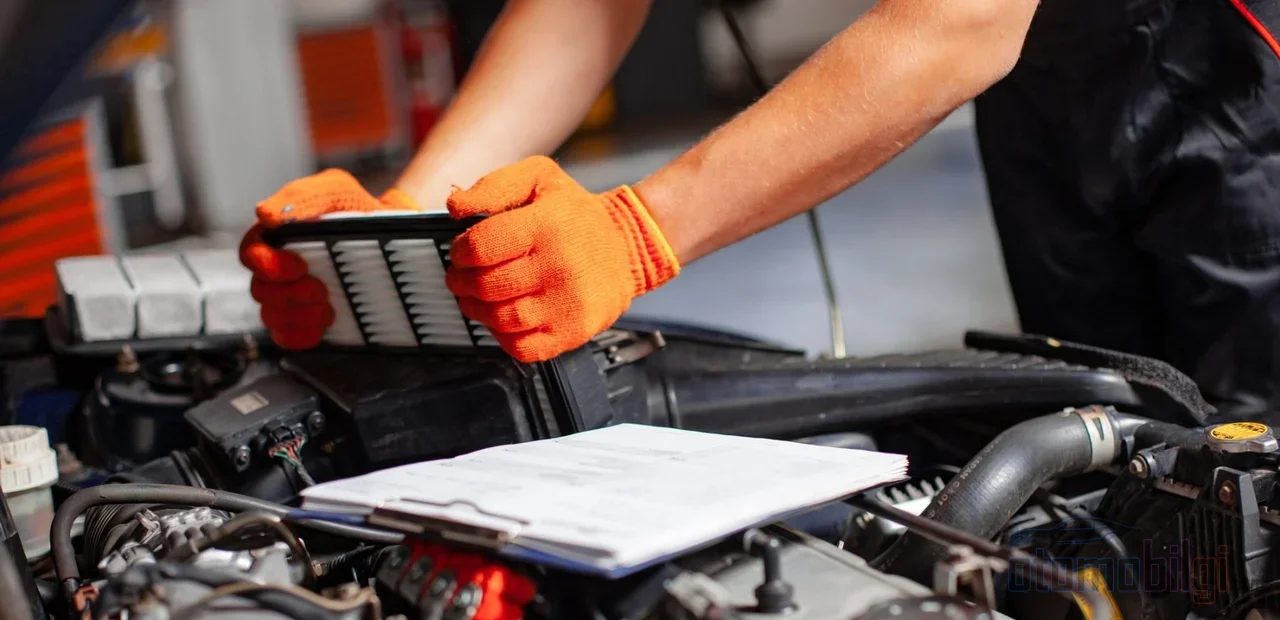
The most frustrating aspect of maintenance spending is that when deferred, it remains invisible. Dirty oil and clogged filters first slightly increase fuel consumption; the difference is so small that nobody notices at the pump. But if the engine oil is not changed, viscosity degrades, friction and wear increase, the engine overheats - and one day a costly failure silently comes knocking. At this stage, irreversible damage may emerge.
There are three known causes of fuel economy loss: a dirty air filter, old engine oil, and weakened spark plugs. In other words, the extra money the driver who says "paying for maintenance is expensive" spends at the gas station is actually a hidden form of maintenance cost. On top of that come chain-reaction problems: brake system failure, rapid tire wear, electrical faults, and damage spreading one by one through the drivetrain.
Components that enter the engine interior, such as the timing belt, are the most ruthless in this regard. Because they give no warning, they are easy to neglect, but when they snap they cause serious engine damage. There is a well-known comparison on the industrial equipment side: unplanned maintenance costs on average 3-10 times more than periodic maintenance. This figure is factory data and does not translate directly to a vehicle; but every car owner senses the nuance of that ratio firsthand.
The calculation on the warranty and resale value side
The cost of not following the maintenance schedule is not only mechanical. While the warranty is active, having periodic maintenance performed according to the manufacturer's schedule is the fundamental condition for the warranty to continue. Skipping the schedule can leave you out of coverage; then an unbudgeted repair bill for a non-warranted failure lands on top of the deferred maintenance.
In used car sales too, a regular service history speaks volumes. Vehicles without maintenance records fetch lower values; a car with a documented, recorded history is the one that sells reliability to the buyer. You can track your service record through official inquiry systems using your plate or file number, as well as through service records. This is what has convinced me to do the same job for years: a maintenance expense is not written in a cost ledger, but in a value-preservation file.
Authorized service or independent service: how does cost find the balance?
This debate has been going on for years and has no single answer - the answer changes depending on your vehicle's warranty status. At first glance, independent services seem more economical; examples circulate on forums of a part costing 2,000 TL at an authorized service but 500 TL at a private one. These figures are user anecdotes, not statistics; but everyone also knows that the price difference at authorized services is real.
Base the comparison on three criteria: warranty status, part quality, and workmanship. If your warranty is still valid, the debate is already closed - maintenance must be done according to the manufacturer's calendar and through an authorized channel. If the warranty has ended, the formula of independent service + original parts can be a sensible balance; this is also the most prominent view in online discussions. One nuance to remember is that some independent services prefer repairing rather than replacing parts - it is fast and cheap, but depending on the nature of the job it can turn into a disadvantage. On the authorized side, appointment congestion and procedures can prolong the work.
The aftermarket parts issue is part of the same equation. A low-quality part looks like savings in the short term; in the long term, it can cause permanent damage to the engine. If the engine presents the bill for a cheap part, the balance is completely upset. My principle has not changed for years: original for critical components, balance pricing for aesthetic and secondary work.
How do you distinguish mandatory maintenance from extras aimed at boosting sales?
This is where the most money is lost in maintenance. The procedures listed in the manufacturer's calendar are mandatory; protection packages, cosmetic procedures, and additional items added as "we recommend" that you will see on the invoice but that are never mentioned in your booklet are upselling. The simplest way to make the distinction is this: before going in for maintenance, read in your booklet what needs to be done at that mileage and compare the quote against that list. For every item not on the list, ask "is this really necessary now"; a procedure whose urgency cannot be explained is a procedure that can be postponed.
There is also the matter of trust. It is known that scenarios are discussed where maintenance is performed at an authorized service but the procedures are done incompletely or not at all; the warning "if money was taken without your car even being touched" is not an exaggeration. There is a practical way to verify this: take a short test drive after the maintenance and confirm the procedures performed with the service report. A procedure written on the invoice should be felt in the vehicle or visible in the report; if neither is present, know to ask.
When looking at the total cost of ownership, the maintenance item includes not only periodic servicing but also cosmetic procedures such as washing and protection, as well as tire replacement. Therefore, the first step in reducing expenses is to break the items down: avoiding sudden acceleration changes can save up to 30% on fuel; weekly washing and cleaning road salt from the wheel arches in winter prevents corrosion. This is money earned not from a maintenance schedule but from driving habits - and it is the kind no service center can sell you.
Conclusion: stick to the schedule, read the quote
The way to save money on maintenance comes down to two habits. The first is loyalty to the manufacturer's schedule: servicing before the mileage runs out or the yearly period ends protects the warranty and resale value, and prevents breakdowns that could end up costing 3-10 times more in the long run. The second is the habit of reading the quote: questioning any procedure not listed in the booklet, striking the balance between original and aftermarket parts according to the nature of the job, and considering an independent shop as a serious option if the warranty has expired. As I learned over thirty years, the secret to this business is not stinginess but the schedule.
Sources
- What Is Periodic Vehicle Maintenance? | Türkiye Sigorta
- What Is Periodic Vehicle Maintenance? What Is Done at the 10,000 Kilometer Service? | AXA Sigorta
- What Is Periodic Maintenance? How Often Should It Be Done? | Volkswagen
- What Is Periodic Vehicle Maintenance? When Is It Done and What Does It Cover? | Car Maintenance Package
- What Happens If Periodic Maintenance Is Delayed or Neglected?
- How Should Periodic Maintenance Be Tracked During the Warranty Period?
- Authorized Service or Independent Service? | Casservis
- The Cost Difference Between Unscheduled Maintenance and Periodic Maintenance
- 5 Tips to Reduce Vehicle Expenses
- Service Information System