Does Fuel Consumption and Power Suffer When the Air Filter Gets Dirty?
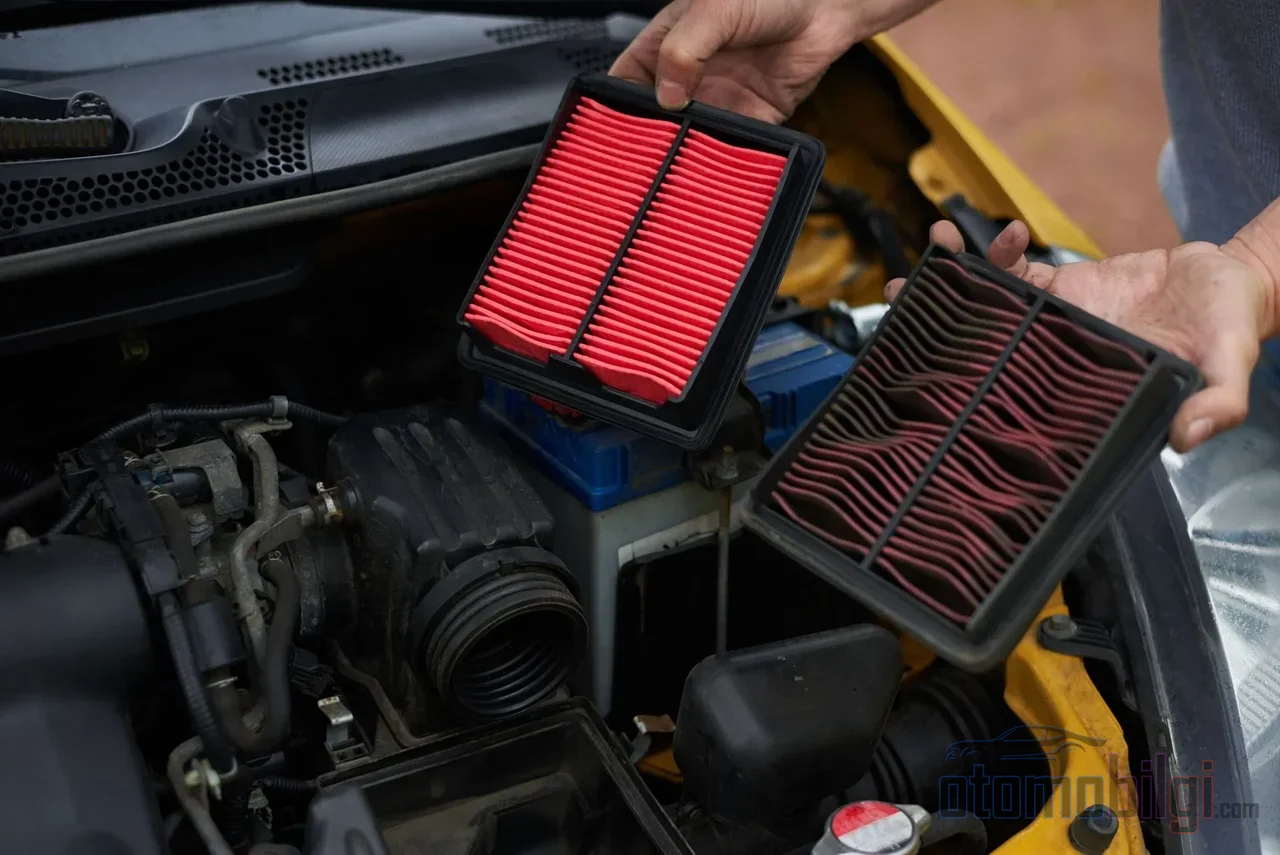
The engine air filter is one of the least discussed items on periodic maintenance lists. When an oil change comes up, everyone has an estimate; when it comes to the air filter, the matter is usually settled with the sentence "it looks dirty, let's replace it." Yet this small part is the only door through which the engine breathes, and what happens when that door narrows is more calculated than you might think, but also more subtle. The answer to the question of whether a clogged air filter really affects consumption and power depends on your engine's age and technology; moreover, some of the figures circulating on this subject are overly optimistic for today's vehicles.
What Does an Air Filter Do and What Happens When It Clogs?
The air filter's job is simple: to trap dust, dirt and other foreign particles in the air entering the combustion chamber. As a machine burning gasoline or diesel, the engine draws hundreds of liters of air every kilometer; the cleanliness of this air directly determines combustion quality. A clean filter helps maintain a balanced air-fuel mixture, and when sufficient air enters the engine, fuel is used more efficiently.
When the filter clogs, the equation reverses. Less air can be filtered, and the engine loses oxygen per unit of volume. The result is twofold: power drops, because the engine cannot reach the amount of air it wants; and the mixture is disrupted, because the ratio between the air entering the engine and the fuel injected shifts. In older carbureted systems, this shift led directly to a rich mixture, meaning more fuel than necessary going into the combustion chamber. In modern fuel-injected vehicles, however, the electronic control unit (ECU) detects the restriction in airflow through sensors and partially reduces fuel injection. In other words, contemporary engines can compensate for clogging on their own; but this compensation is not free of cost.
Highlights
- Switching to a clean filter in older carbureted engines can improve consumption by up to 10%.
- In modern fuel-injected vehicles, the consumption effect is smaller; according to single-source claims, it is around 2-6%.
- The common manufacturer recommendation is replacement every 15,000-30,000 miles; dusty climates shorten this interval significantly.
- Paper filters cannot be washed and reused; even if the filter looks dirty, the real criterion is light transmittance.
Power Loss and Fuel Consumption: What Do the Numbers Say?
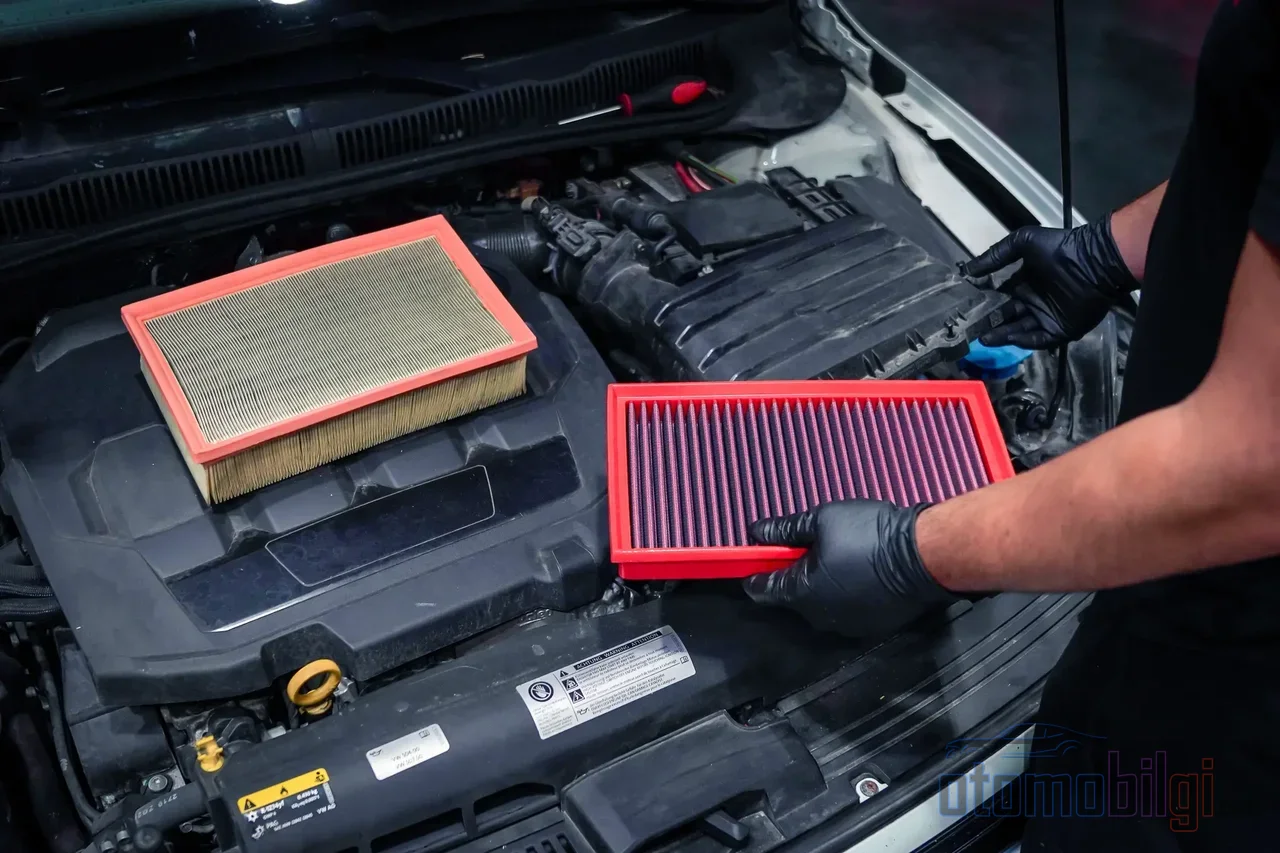
The most solid reference on this subject is the data from the U.S. Department of Energy: replacing a dirty air filter in older, carbureted engines can improve fuel economy by up to 10%. This figure was true for vehicles from thirty years ago and is still true; a carburetor cannot mechanically adapt to the restriction in airflow and reflects the rich mixture directly onto fuel consumption. Similarly, according to a calculation put forward by a maintenance chain, a dirty filter causes an economy loss of 6-11% in carbureted engines.
Modern fuel-injected vehicles soften this picture. According to the same source, losses are 2-6% in injection engines, 2-5% with direct injection, 4-8% in turbocharged engines, and up to 8% in diesels. Since these figures come from a single commercial blog, they should not be read as definitive data; still, the direction is correct. A clean filter is felt in injection vehicles less in fuel consumption and more in acceleration and throttle response: the engine responds faster to revving when it is not starved of air.
The opposing voice should also be heard. As experienced technicians point out, the ECU constantly makes fuel corrections; a filter clogged enough to truly affect consumption would most likely have already triggered the check engine warning as well. Some degree of filter contamination is normal; replacing it early by saying "it looks dirty" is not expected to provide a significant gain per liter. To be realistic, marketing this part as an exaggerated consumption hero is an old habit of automotive sales culture.
Rich Mixture, the Check Engine Light, and Spark Plugs
The most classic chemical result of restricted airflow is a rich mixture: too much fuel and insufficient air go into the cylinder. Incomplete combustion follows. The driver usually notices this through smell; an unusual gasoline odor from the exhaust is the first clue that the mixture is not burning completely. The symptom list is briefly as follows: slow acceleration, rough idling, and misfire.
A dirty filter neglected for a long time creates cascading effects. Unburned excess fuel leaves carbon deposits on the spark plugs; these deposits pave the way for misfires, rough idling, and difficulty starting when cold. Incomplete combustion also increases the amount of pollutants exiting the exhaust; a clean filter lowers emission values and helps pass the emissions test.
Does the Check Engine Light Come On?
On its own, a dirty filter rarely triggers this light in modern vehicles. For the light to come on due to the filter, the restriction must be advanced enough that the MAF (mass air flow) sensor gives incorrect readings; in that case, rich or lean mixture codes may be triggered. For example, fault code P0172 means there is too much fuel in the air-fuel mixture in the first cylinder bank, and severe air starvation is counted among the possible causes. In practice, the driver notices two things before the light: that acceleration has dropped and consumption has increased.
How to Tell If It Is Clogged?
The most common method is visual inspection. If the filter element has excessive dirt, debris, and noticeable darkening, it is time to replace it. A more reliable test is the light test: hold the filter up to a bright light source; if light does not pass through most of the pleats, the filter is no longer doing its job. In short, "it looks dirty" is a subjective judgment, while light impermeability is a measurable criterion.
One warning: handle the filter you removed for inspection carefully. During removal, there is a risk that the contaminated surface may come into contact with the engine-facing side; filter manufacturers therefore recommend replacing a filter that has been removed for inspection. Making sure the gasket sits properly before refitting the cover is the most critical two seconds of the job.
Restriction Indicator: A Little-Known Solution on the Road Side
Especially in trucks and diesel commercial vehicles, the restriction indicator is standard equipment. This gauge measures the vacuum on the clean side of the filter in inches of water and keeps the highest restriction value experienced in its memory; that is, it shows not a momentary state but the vehicle's worst condition over a period. The yellow zone is a gradual warning, and the red zone is the signal to replace. In fleet applications, to establish a baseline, the indicator is reset after a new filter is installed and a measurement run is made at full throttle and maximum rpm. The absence of this gauge in passenger cars means the driver has to keep track of this task themselves.
Replacement Interval: Mileage or Climate?
Manufacturer recommendations vary over a wide band. Filter manufacturer FRAM reports that most manufacturers recommend replacement every 12,000 miles (approximately 19,300 km) or once a year. Ford, depending on the model, officially recommends the 15,000-30,000 mile range. The common industry recommendation is also in the 15,000-30,000 mile band; 15,000-25,000 miles under normal conditions and 10,000-15,000 miles under severe conditions is a reasonable plan.
The real determining factor is not mileage but dust in the air. Dusty and dry climates seriously shorten the filter's life; construction sites and dirt roads narrow the interval by up to 50-75%. A concrete example: in an arid and dusty region, the filter in a vehicle whose manufacturer recommends 30,000 miles was found completely clogged at only 14,000 miles. For drivers living on rural or dusty roads, checking every 10,000-20,000 km is a healthier habit than the interval in the book. Within the scope of periodic maintenance, the air filter is often remembered together with the oil change; the right approach is to give it its own line in the maintenance calendar according to your own climate conditions.
Long-Term Effects and the Expensive Filter Debate
A very dirty filter is not just a performance issue. An overloaded filter element may allow dust and particles to leak into the engine; this wear gradually reduces the engine's life and reliability. Components such as the MAF sensor are also at risk of contamination. A filter that is completely missing or absent is an entirely different disaster scenario: widespread damage, including the turbocharger, is inevitable in an engine running without a filter. In other words, the filter is not an expensive part; the cost of having no filter is expensive.
Are High-Flow Filters Worth It?
High-flow, often washable, filters are sold on the market. The improvement margin of these products is typically limited to 1-3%; a standard quality paper filter is sufficient for almost every driver. The golden rule is this: a clean and cheap filter performs better than a dirty and expensive one. One practical warning as well: do not clean and reuse paper filters; this process damages the filtration structure. Only washable cotton or synthetic filters made specifically for this purpose can be washed.
Short Answer: Does it affect it?
It does, but the extent depends on your engine's technology. In an older carbureted vehicle, a clogged air filter noticeably increases consumption; switching to a clean filter can deliver up to a 10% improvement. In a modern fuel-injected engine, the ECU largely compensates for the restriction; the impact on consumption stays limited to a few percentage points, while the loss in acceleration and throttle response is felt behind the wheel. The check engine light rarely comes on due to a dirty filter alone; the real warning signs are declining acceleration and rising consumption. Plan your filter by your climate, not by mileage: 15,000-25,000 miles on asphalt city roads and 10,000-15,000 miles in dusty, harsh conditions are exactly the reasonable range. Setting aside the two minutes this small part deserves on your maintenance calendar is one of the cheapest investments in your engine's life.
Sources
- Dirty Air Filter Symptoms: 3 Signs Your Engine's Air Filter is Clogged - FRAM
- How Often Should I Change the Engine Air Filter? - Ford
- Does a Dirty Air Filter Affect Gas Mileage? - FleetRabbit
- How Does a Clean Air Filter Improve Your Car's Performance?
- Clean Air Filter, Clean Engine - Champion Auto Parts
- How a Contaminated Air Filter Can Turn On the Check Engine Light - PG Filters
- P0172 and P0175 Trouble Codes - AutoZone
- How to Read an Air Filter Restriction Gauge - Air Filter Blaster
- How Often Should You Change Your Car Air Filters - BMTech
- Can a Dirty Filter Reduce Fuel Efficiency? - Quora