Does the Engine Overheat? Reading the Temperature Gauge Correctly
Share This Page
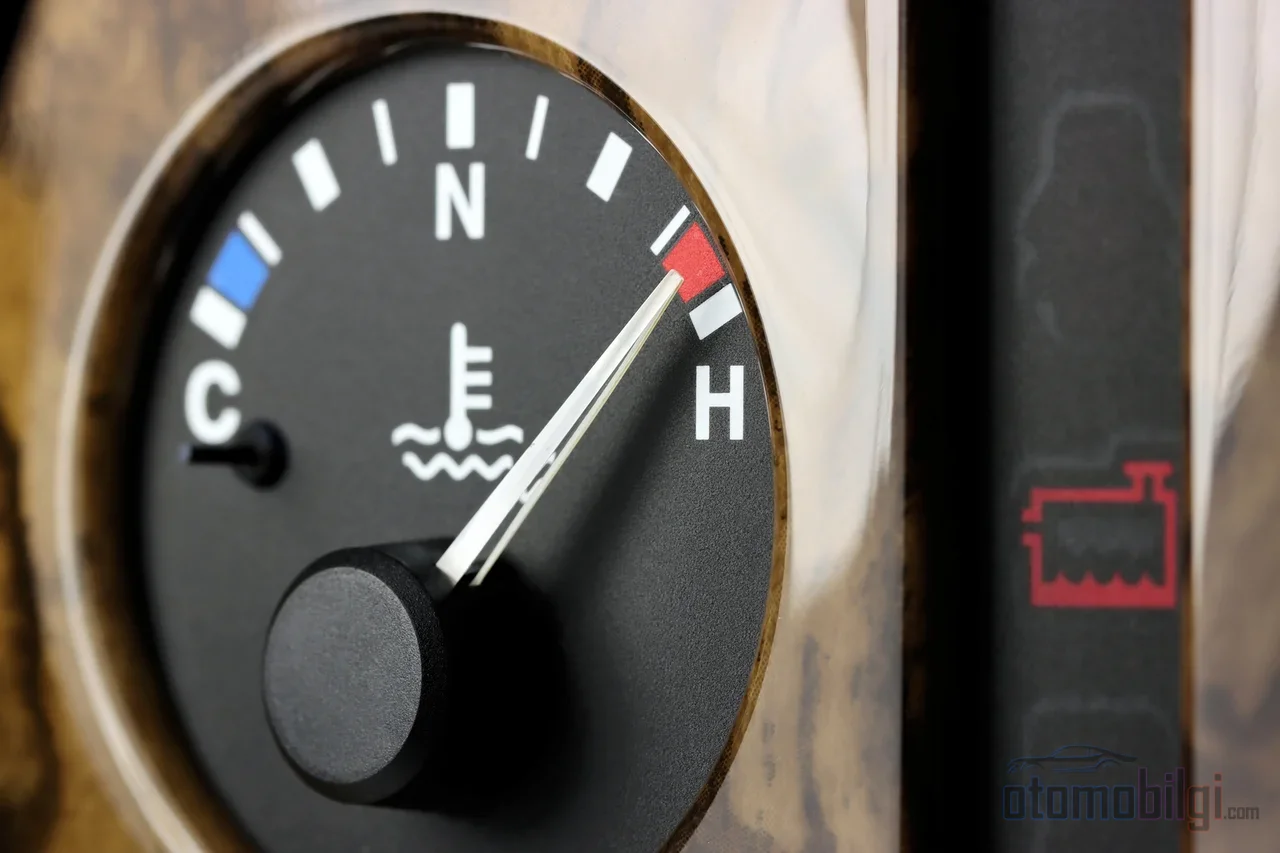
The most honest answer to the question "Do engines overheat?" is this: most engines warn you on the instrument panel long before they actually overheat. The temperature needle normally sits in the middle of the gauge, in the 90-105 °C range; if the needle permanently climbs above this zone or the thermometer-shaped warning light comes on, the engine is running hotter than normal. The real issue is knowing what to do at that moment before the temperature rises any further. This page simply explains how to read the gauge correctly and the steps to take when the temperature climbs.
Highlights
- The normal operating temperature in most vehicles is in the 90-105 °C range; ideally, the needle stays in the middle of the gauge.
- If the gauge reads high before the engine has even warmed up, the problem is usually in the sensor, grounding, or wiring, not in the engine itself.
- On an overheated engine, never open the radiator cap; boiling liquid and steam can cause serious burns.
- The engine must be stopped for at least 15 minutes to cool down, and the gauge should be monitored during this time.
- Air conditioning raises the temperature slightly, while the heater temporarily lowers it; small fluctuations alone do not count as a fault.
How to Read the Temperature Gauge and What It Means?
On analog gauges, the needle swings between "C" (cold) and "H" (hot); after the engine warms up, the needle stays steady in the middle or slightly below. This is the clearest sign that the system is working properly. In newer vehicles, you may encounter two different setups: digital displays show the actual coolant temperature as a number, while in some models there is no gauge at all, only a red warning light that comes on when a threshold is exceeded. Vehicles with gauges provide continuous, gradual tracking; vehicles with only a warning light tell you things are getting bad much later. That is why, in vehicles with a warning light, you need to know that the light can indicate both low coolant level and overheating.
If the needle sits slightly below or slightly above the middle, there is no need to panic. The temperature value naturally fluctuates depending on driving conditions: the temperature rises somewhat when the air conditioning is running, and when the heater is on, the gauge temporarily drops because heat from the fluid is transferred into the cabin. A permanent deviation is a problem; brief movement usually is not.
A high reading does not always mean overheating
There is a nuance that thirty years of experience teaches here: the measurement method can mislead the gauge. The gauge's sensor is usually located on the cylinder head, close to the combustion chamber, and naturally reads hotter; the engine control unit's sensor is on the intake manifold. A difference of around 10-20°F between the two locations is considered normal. Moreover, the surface temperature measured with an infrared thermometer can come out a few degrees lower than the internal coolant temperature; this is not a fault, it is simply the nature of the measurement.
The degree marking on the thermostat is also often misunderstood. For example, a 180°F thermostat indicates the temperature at which the valve begins to open, not the engine's full operating temperature. Fan efficiency, the radiator's condition, and coolant flow determine the actual temperature. For this reason, it is normal to see a temperature slightly above the thermostat rating.
Here is how you distinguish an actual installation problem: if the gauge reads high immediately upon starting, before the engine has even warmed up, the culprit is most likely the sensor, a poor ground connection, or a shorted sensor wire. It is not related to a hot engine.
What Are the Early Signs of Overheating?
Overheating reveals itself even before the gauge does. For someone who has spent many years on the road, these signs feel familiar; for new drivers, it is best to list them in their most practical form:
- The gauge permanently shifting above its normal position.
- Steam or smoke coming from under the hood.
- A sweet smell - this means coolant is leaking; a burnt rubber smell points to belts, while a hot oil smell indicates overheating mechanical parts.
- Ticking or creaking-like noises; an overheated engine is the reaction of parts that the oil can no longer protect.
- Noticeable power loss in the engine.
- A sweet-smelling liquid pooling under the vehicle.
- The engine staying excessively hot even after a short drive.
If even one of these signs appears, it is enough to be cautious; if two appear together, it is time to end the drive. Not continuing to drive up to the safety limit while the engine is overheating is the cheapest way to prevent one of the most expensive repairs.
What to Do and What Not to Do When the Engine Starts to Overheat?
First the right steps, then the dangerous ones. Going in order is best:
- Ease off the accelerator and turn off the air conditioning; both put extra load on the engine.
- Turn the heater to its highest setting to dissipate heat faster. Sacrificing driving comfort is a classic maneuver for cooling the engine.
- Pull over to a safe spot and stop the engine immediately. The "I'll drive a bit further" attitude directly shortens the life of parts such as the cylinder head and gasket.
- Wait for the engine to cool for at least 15 minutes and keep monitoring the gauge during this time.
- After the system has cooled, check the coolant level; top it up if it is low, but do not continue driving without identifying the source of the loss.
The list of things not to do is shorter but carries more weight. While the cooling system is running, it builds up pressure; if the radiator cap is opened on a hot engine, boiling liquid and steam will erupt, and this can cause permanent injuries reaching third-degree burns. The "do not open when hot" warning on the cap is not decoration, it is a safety warning. You should also avoid opening the hood while the engine is still hot; the steam comes out from the hood, not into your face.
Let us underline that there is a reasonable difference of opinion among sources: some services recommend opening the hood so that heat escapes faster, while others argue that the hood should stay closed until the engine cools down, against the risk of steam. We believe it is right to choose the safe side when in doubt - waiting costs nothing, a burn does. Another frequently asked question is how far you can drive with an overheated engine: the answer is to pull over to a safe place as soon as possible; there is no formula for extending the time.
Cooling System Components: Which Part Gives Which Signal?
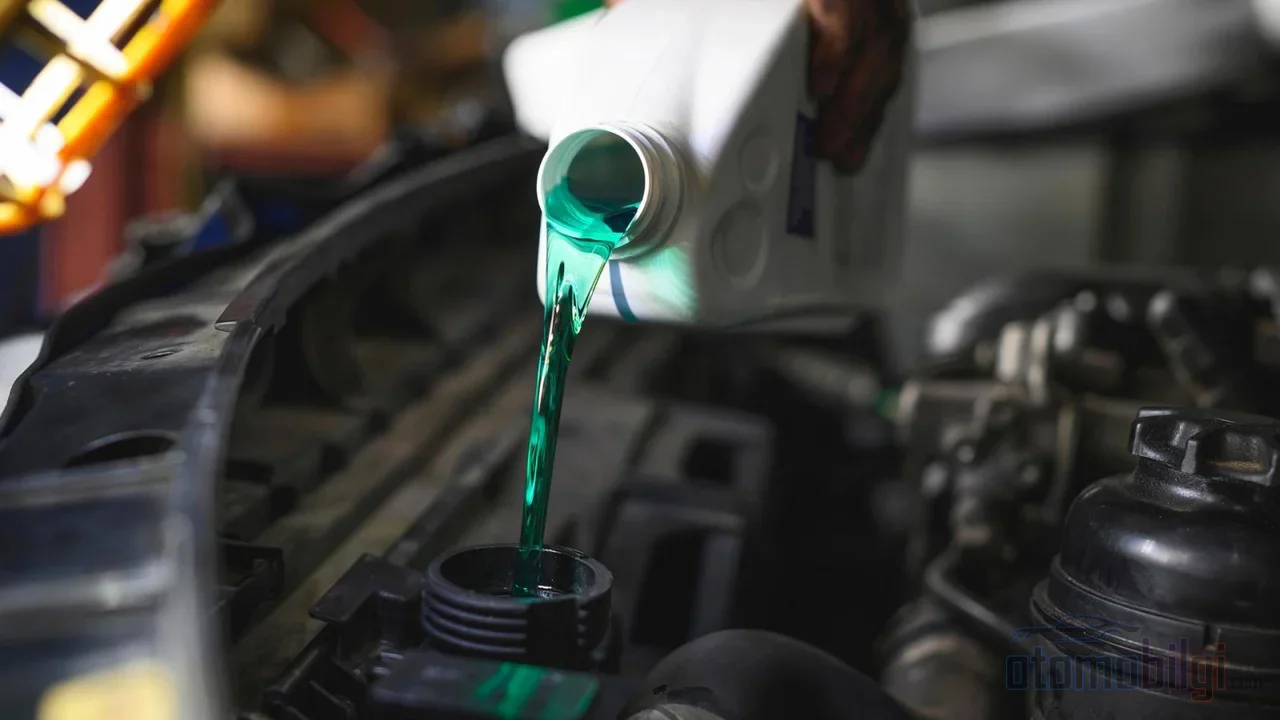
Overheating rarely stems from a single cause; it is most often the result of silent wear in one link of the system. Summarizing the maintenance signals of the main components in a table makes the job easier:
| Component | Failure Signal | Note |
|---|---|---|
| Thermostat | If installed open, the engine runs cold; if installed closed, it overheats | Most often gives no advance warning |
| Thermostat flow test | If the upper radiator hose reaches approximately the same temperature as the engine, there is flow | A simple hands-on check method |
| Radiator fan | Overheating, especially at stops | The fan is not triggered when the thermostat does not open |
| Radiator | Coolant leak, rust, low level, unusual noises | Requires regular visual inspection |
| Water pump | Leak from the front of the engine, humming/squeaking noise, steam, rust and corrosion | Can fail even without a visible leak |
| Water pump (silent onset) | Small leak, slight humming, fluctuating gauge reading | The area around the pump's drain hole should be checked |
One of the common weaknesses of these components is that they can hide the failure for a long time. The water pump is particularly stubborn: it can abandon its job from within without any visible leak on the outside. When you see green or yellow fluid on the ground, always have the source located; topping up the level does not solve the problem, it merely postpones it. A similar situation applies to the thermostat - when it stays stuck closed, the coolant does not circulate, the fan does not engage, and the gauge rises rapidly.
How Is Cooling System Periodic Maintenance Done?
The essence of cooling system maintenance is three habits: checking the level on a cold engine, visual inspection, and timely coolant renewal. The coolant level should only be checked when the engine is cold and off; with a hot engine, an accurate reading cannot be obtained and opening the cap poses a risk. If a temperature check is needed, it is done through the reservoir tank. A low level is always a message: it is either leaking from somewhere or evaporating - top it up, but also have the source identified.
Hoses, clamps, the radiator, and the water pump should be regularly inspected for cracks, wear, rust, and leaks. If a hose feels soft, spongy, or has a cracked surface in your hand, the time for replacement is approaching. The summer months are especially critical for these checks; hot weather is the period that places the heaviest load on a weakened cooling system. When the coolant ages and loses its protective properties, the system should be flushed and renewed with fresh fluid.
In the past, you set off with a needle on the dashboard, a fan belt underneath it, and a couple of practical tips in mind; now digital screens give precise readings and fans are electronically controlled. The only thing that hasn't changed despite changing technology is this: when the system is checked regularly, overheating stops being something that happens to you and becomes just a figure you monitor.
Conclusion: Know Your Gauge, Listen to Your System
Overheating is not a fault that announces itself suddenly; it is a process that gives early signals but only speaks to those who know how to read them. A steady needle gives you peace of mind, while a rising needle demands that you slow down, turn on the heater, and pull over safely as soon as possible. Never open the cap on a hot engine, wait for it to cool down, and then check the fluid level and hoses - these three habits prevent the vast majority of overheating-related engine damage from the start. The rest is a matter of discipline: periodically inspecting the hoses and fluid - a habit that rewards you more than technical knowledge does.
Sources
- A Guide to Your Car's Temperature Gauge: What's Normal and What's Not
- My Temperature Gauge Is Reading High - Or Is It?
- How to Read a Temperature Gauge on a Car
- What Is a Normal Engine Coolant Temperature?
- What to Do (& Not Do) When Your Car Overheats
- What Should I Do If My Car Is Overheating?
- Engine Coolant Over Temperature Warning
- Never Open a Hot Radiator
- What to Do When Your Car Overheats & How to Prevent It
- Radiator Fan Not Working
- When a Thermostat Fails
- 5 Symptoms of a Failing Water Pump
- Coolant Leak Fix: Causes, Symptoms, Solutions
- Summer Safety Checklist: Cooling System Maintenance
- Why Is My Engine Temperature Warning Light On?