What Happens When the DPF Filter Gets Clogged and How Is It Cleaned?
Share This Page
Many drivers who notice their diesel vehicle trembling slightly at idle and responding sluggishly when they press the accelerator first blame the injectors, then the transmission. Yet the culprit is usually sitting in the middle of the exhaust line, a pile of soot lodged inside a honeycomb-patterned ceramic block. When the DPF filter clogs, the vehicle does not deny it; it lights up a warning, cuts power, and burns fuel. In this article, I explain what your filter does, why it clogs, how that self-cleaning process we call regeneration works, and your realistic options when you are faced with a blockage. I have been in this business for over thirty years; the diesel with DPF is one of the most misunderstood parts I have seen in my career.
What Is a DPF and Why Does It Protect Your Engine?
The diesel particulate filter is a device that traps the soot and fine particulate matter in the exhaust gas. The gas passing through the porous ceramic channels leaves the particles on the walls; the most common material is a ceramic called cordierite, with a melting point of approximately 1200 °C. When it works well, this filter removes more than 85-90% of the soot from the exhaust, and under suitable conditions efficiency approaches one hundred percent. In other words, the sole reason diesel vehicles no longer spew soot from the tailpipe today is this silent guardian.
The regulatory side is also clear: PSA Peugeot Citroën was the first manufacturer to make the filter standard in its passenger cars in 2000. When the Euro 5 emission standard came fully into force in January 2011, the DPF became effectively mandatory in diesel cars. That smoky exhaust image we used to associate with diesels became history precisely because of this part.
Why Does the Filter Clog: The Difference Between Soot and Ash
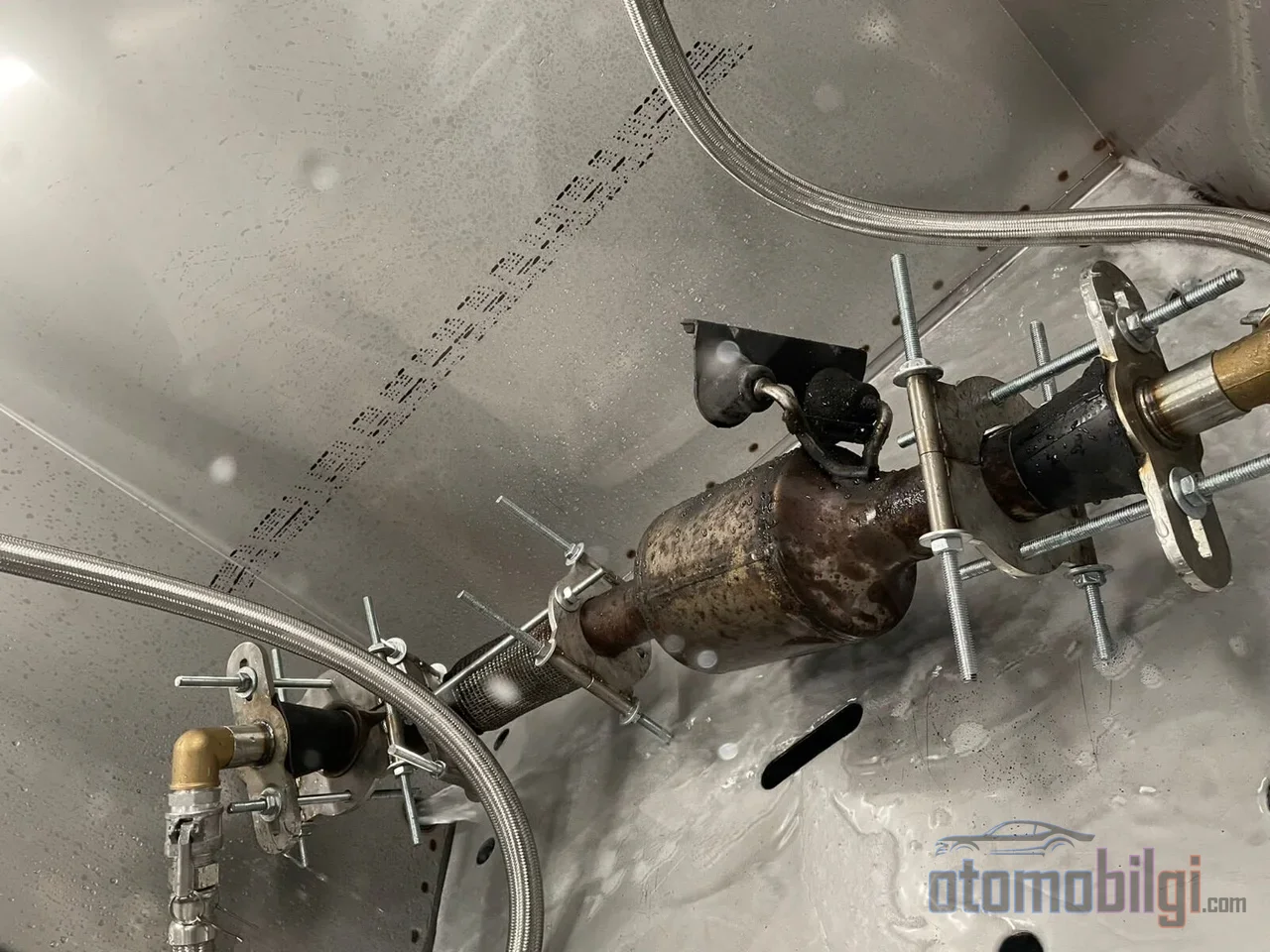
There is a distinction that most people overlook here. Two types of deposits form in the filter, and they are not cleaned the same way. Soot is destroyed by being converted into carbon dioxide through a process called regeneration. Ash comes from the metallic residues in the fuel and oil; it cannot be converted by heat, but it can be removed by removing the filter and cleaning it with compressed air on a professional machine. This is why the DPF is removed and cleaned every few hundred thousand kilometers.
The main causes that accelerate soot accumulation are:
- Short and low-speed journeys - the most common cause, explained in detail below
- Use of the wrong type of engine oil
- Low-quality fuel and consistently running at a low fuel level
- Injector failures and injection timing problems
- Excessive idling and performance-oriented hardware modifications
Key Takeaways
- The DPF traps 85-90% or more of the soot in diesel exhaust
- During active regeneration, exhaust temperature can rise to 800 °C
- Ignoring the warning light for a long time can permanently damage the filter
- A new DPF can cost $3,000-10,000 from the manufacturer; cleaning is far cheaper
What Happens When the DPF Filter Clogs? Symptoms Appear in Sequence
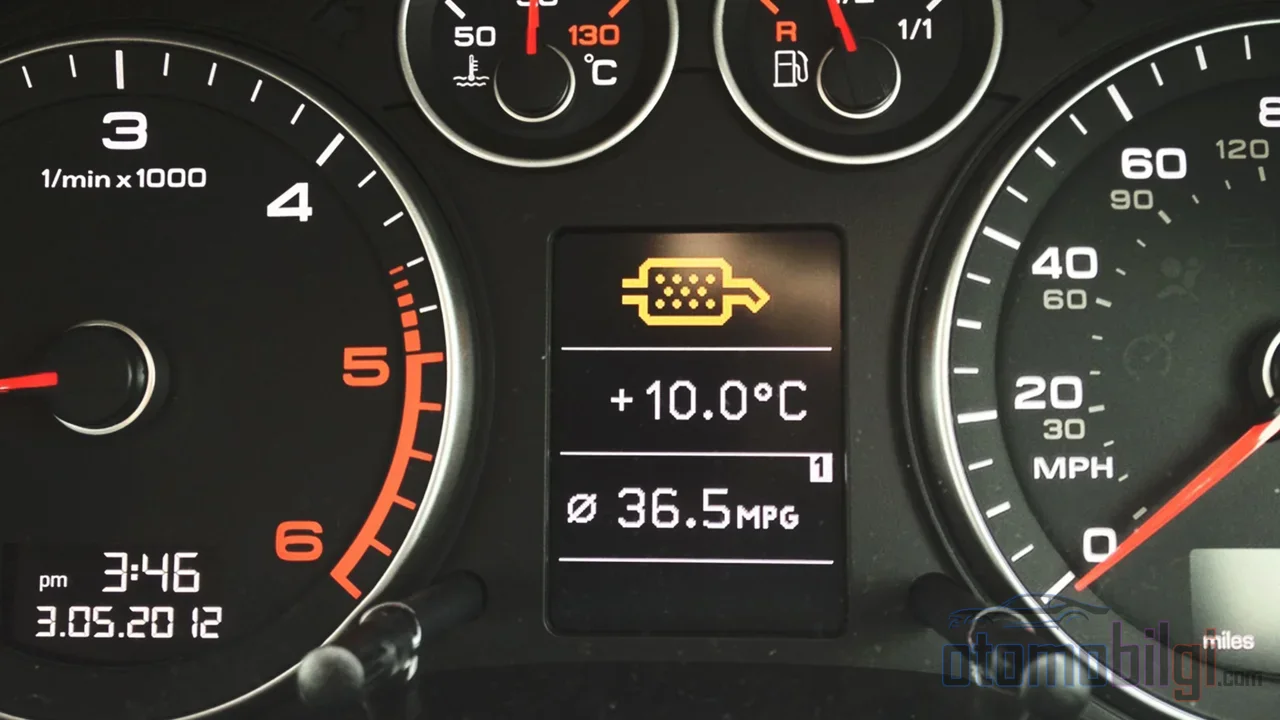
The clogging does not happen overnight; the vehicle first warns you gently. The first sign is usually an orange DPF warning light or message on the dashboard. Then comes a loss of power and torque - the engine feels like it cannot breathe against the clogged filter. The third symptom is increased fuel consumption: a clogged filter makes the engine work harder, and efficiency drops noticeably. In advanced cases, regeneration fails to complete at all and unusual behavior is observed at the exhaust.
Ignoring the light comes at a heavy price. A driver who ignores the warning and does not use the vehicle at high speeds for long periods prevents the filter from regenerating properly; beyond this point, use can permanently damage the filter and replacement becomes mandatory. The cost of a new DPF can range from 3,000 to 10,000 US dollars; on an older, high-mileage vehicle this amount can even exceed the vehicle's value. Cleaning is many times cheaper than replacement. That is why taking that orange light seriously is the simplest form of saving money.
Passive and Active Regeneration: The Self-Cleaning Filter
Regeneration is the process by which the filter burns accumulated soot and converts it into carbon dioxide, and it occurs in two forms. Passive regeneration works continuously and slowly at normal exhaust temperatures, aided by the catalytic effect of nitrogen dioxide, without requiring extra energy. On long drives under load, the exhaust stays hot enough, so this natural cleaning takes place with ease. This is why older diesels did not have this problem: those cars lived, unlike today's, on long roads and under load.
When passive regeneration is not enough, active regeneration kicks in. When the soot level reaches a certain threshold, the engine control unit raises the temperature by injecting extra fuel into the exhaust flow; during this, the exhaust temperature can rise to as much as 800 °C. The sign a driver may notice is the high exhaust temperature lamp on the dashboard. Both processes operate automatically and require no driver intervention - but there is one prerequisite: the exhaust must be able to reach that temperature.
Why Does Short-Trip City Driving Ruin the DPF?
This is exactly where diesel users most often fall into the trap. Slow, short city trips prevent the exhaust from reaching the temperature required for regeneration; the process either never starts or is cut off before completion. A diesel that takes ten minutes from home to work in the morning and ten minutes back in the evening may go four months in winter without ever cleaning its filter. Half the soot removed in each regeneration returns in the next one as a more resistant layer.
Short trips also harm the engine as a whole: fuel mixing into the oil, residue buildup in the injectors and turbo wear are among other consequences that can be added to DPF clogging. The practical measure is simple. When the warning light comes on, it is recommended to drive at higher speeds for about 10 minutes more so the filter can reach a state where regeneration is possible. Diesels used continuously in city driving need to periodically do long distances under load; regeneration occurs at road speeds that city streets cannot provide. A diesel vehicle is, by its nature, a highway car - if it was bought for short-distance chores, the filter's lifespan is in debt from the start.
Options for a Clogged Filter: Cleaning, Forced Regeneration, or Removal?
Choosing the right first option when the filter is full protects your wallet. Let us first lay out the available options side by side:
| Method | How It Is Done | When It Makes Sense | Point to Watch Out For |
|---|---|---|---|
| Active/passive regeneration | Automatic, without driver intervention | When the soot threshold has just been exceeded | Requires sufficient road speed |
| Forced regeneration while parked | Started from the panel or at a service center | When other regeneration is insufficient | Takes 20 minutes to 1 hour; not available on every system |
| Removal and cleaning | The filter is removed and washed thermally, with water, or chemically | Ash accumulation and advanced clogging | Does not replace regeneration; it is a different process |
| Filter removal/deletion | Complete removal of the component | Not a legal repair path | Illegal and punishable in many countries |
Forced regeneration is not a cure-all
This manual procedure, initiated by a technician at the service center, is performed with the vehicle stationary when passive and active regeneration are insufficient, and can take from half an hour to an hour. It is essential that the exhaust outlet is kept away from flammable materials; some new engines can perform this procedure on their own by raising idle to around 1400 rpm while parked. But honesty is required here: a single regeneration does not remove the entire accumulation; part of it remains inside the filter. Also, hot regeneration performed on the vehicle and removing the filter to restore it to its factory flow level are completely different processes; advanced clogging requires the latter.
Why the removal ban should be taken seriously
Forums claim that removing the DPF and deleting the software improves fuel economy; while the technical side of this claim is debatable, the legal side leaves no room for debate. In the US, the Clean Air Act prohibits tampering with any emission control device on a vehicle and provides for severe fines. In the United Kingdom, inspection regulations tightened in 2018 look for a properly fitted and functioning filter; driving without a filter can lead to fines of up to 1,000 pounds. The situation is similar in many countries. Even setting aside the environmental cost, a diesel without emissions control cannot pass inspection or post-accident legal proceedings.
Practical Maintenance Tips: How to Keep the Filter from Clogging
Let me tell you with a conclusion drawn from long years: In most vehicles with DPF problems, the real issue is not the filter, but the way the vehicle is used. The following habits significantly extend the filter's lifespan:
- When the warning light comes on, as soon as possible drive for about 10 minutes at high speed under load; do not interrupt regeneration midway
- Use the correct approved engine oil; the oil formulation directly affects soot formation
- Buy quality fuel and don't run the tank at very low levels for long periods
- Avoid prolonged idling
- Don't delay the symptoms of injector failure; faulty injection fills the filter rapidly
- If your diesel is used mainly in the city, plan deliberate long-distance drives at regular intervals
There is also the matter of expectations. There is an inverse relationship between soot and nitrogen oxide production; as soot decreases, nitrogen oxide increases. Manufacturers have adopted the principle of improving emissions first inside the engine itself, resorting to the filter only at strict limits. In other words, the DPF is not a luxury item; it is the inevitable consequence of this equation. That is how it should be treated.
Conclusion: When the Light Comes On, Act Wisely
Let me summarize. When the DPF clogs, the vehicle warns with an orange light, followed by power loss and increased fuel consumption. The cheapest thing to do when the light comes on is to drive the vehicle at high speed under load for about 10 minutes; regeneration will clean itself. Diesels driven mainly in city traffic need periodic long-distance driving; this is not a preference but a necessity. Soot goes away with regeneration, but ash does not; that is why removing the filter for professional cleaning at certain mileage intervals is a far smarter expense than replacement. Removing and cancelling it, however, is neither legal nor wise. The essence of the matter is this: The DPF, when used well, is a part that lives a trouble-free life; usually it is not the part that creates the problem, but the user who condemns their diesel to short trips.
Sources
- Diesel Particulate Filters: A Beginner's Guide
- How does a Diesel Particulate Filter work?
- Understanding How a DPF System Works
- Diesel particulate filter
- Diesel particulate filters: guide to DPFs
- What is a Diesel Particulate Filter (DPF) System?
- DPF Regeneration: A Comprehensive Guide
- A Technician's Guide to DPF Regens
- How Does DPF Regeneration Work in Diesel Cars?