Habits That Wear Out Your Car Early

Share This Page
Habits that wear your car down early are rarely deliberate bad driving; they're small behaviors repeated unknowingly, like revving a cold engine high, holding the clutch half-pressed, forcing the steering wheel at full lock, braking into potholes, and letting the car idle for long periods while parked. Each of these shortens the lifespan of specific parts regardless of the maintenance schedule. The good news is that for each one there's a practical, unexaggerated alternative behavior.
Highlights
- A significant portion of engine wear occurs during cold starts; the exact rate is unknown, but the first minutes are critical.
- The clutch is a wear item and with correct use it can last up to about 128,000 km or more.
- About one-third of damaged vehicles have problems caused by potholes.
- Aggressive driving can reduce highway fuel economy by 15-30% .
- Properly inflated tires improve fuel economy by 0.6% or more.
High Revs on a Cold Engine: Why Are the First Minutes Critical?
When you start the engine, oil takes a certain amount of time to reach all moving surfaces from the sump. Pressing the accelerator before the oil is circulating means leaving the engine unprotected at the moment it's under the most stress. This rule doesn't change in winter or summer: accelerating immediately after startup increases wear regardless of ambient temperature.
How much wear occurs during cold starts is a debated topic; claims such as 75% on their own cannot be verified, and some mechanic circles find these rates exaggerated. But the disagreement is about the rate, not the basic fact: giving the oil time to warm up and circulate, and not staying above idle revs until the engine warms up, is the correct behavior in every case. There used to be a tradition of "warming the car up at idle"; now it's clear, both from technical sources and in terms of fuel economy, that this approach is wrong. The correct approach is to start the car, set off shortly after at a gentle pace, and never reach high revs until the engine warms up.
How Does Holding the Clutch Half-Pressed Kill the Plate?
Not releasing your foot from the pedal after shifting gears, and especially lightly touching the pedal while driving, causes the clutch plate to slip. As spring pressure decreases, the plates slip, and a slipping plate wears out much faster than one making full contact. This isn't limited to the plate alone; the throw-out bearing, pilot bearing, and diaphragm spring also wear out early. With good use, the clutch can deliver about 128,000 km ; half-pressed use noticeably shortens this period.
Because the clutch is considered a "wear part" by manufacturers, this type of usage-related damage is usually not covered by the warranty. The solution is simple: after shifting gears, rest your foot in the dead pedal area. On hill starts, rather than holding the clutch half-pressed continuously, attempting a start assisted by the handbrake protects both the pressure plate and your nerves. In short reverse maneuvers, clutch control may be unavoidable for safety; the problem is that it becomes a habit throughout driving. One more note: in modern vehicles, coasting in neutral does not save fuel; it may even prove costly for the pressure plate and bearing.
Is Forcing the Steering Wheel to Full Lock a Problem?
Turning the steering wheel all the way to the end is not a problem in itself; the problem is holding it there. A steering system left waiting at full lock places an unnecessary load on the hydraulic pump and the rack. Trying to turn the steering wheel while the vehicle is stationary should also be considered in the same category; while far less force is needed when the vehicle is moving, the pump operates at maximum pressure when the vehicle is stationary.
Applying excessive force to the steering wheel shortens the lifespan of the components more than one would think. Even more dangerous is the steering lock engaging during driving; this is a situation that could lead to a serious accident and must never be encountered. Practical rule: there is no harm in turning to full lock, but do not hold it there, and do not turn the steering wheel while your vehicle is stationary.
Should You Brake Into a Pothole or Go Through Without Braking?
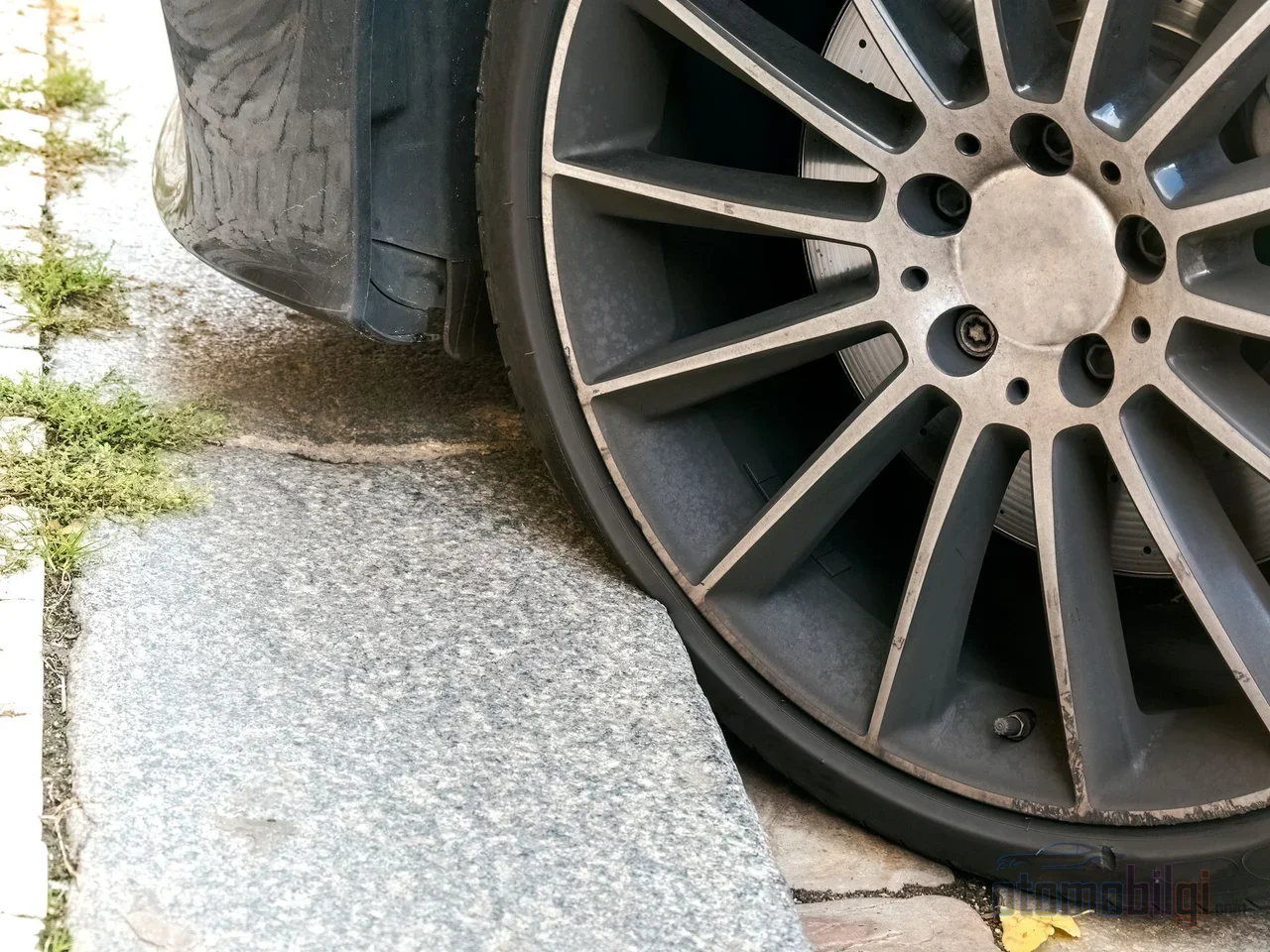
A pothole transmits its impact to the entire suspension: first the tire, then the wheel rim, from there to the shock absorbers and struts, extending in a chain all the way to the steering rack. Braking directly over a pothole strains this chain even further; at the moment of braking, the suspension cannot absorb the impact efficiently and the damage grows. Wheel imbalance, bushing wear, and strut damage are among the most common marks left by potholes.
Knowing that approximately one third of damaged vehicles had a pothole behind them summarizes the seriousness of the matter. The correct behavior: if possible, spot the pothole in advance, slow down, and pass over it while releasing the brake. When the brake is released, the suspension can absorb the impact freely; when entering with the brake applied, the same impact is transmitted to the components under load. It should also be noted that vehicles traveling on the road at maximum load are particularly sensitive on this matter; exceeding the maximum load specified in the manual makes the suspension less resilient at every pothole.
Prolonged Idling While Parked: Warming Up or Straining?
Leaving the car idling for longer than a few minutes warms the engine slowly and can cause damage in the long run. Therefore, idling for more than a few minutes is unnecessary both in terms of fuel and emissions. The claim about cylinder wall damage is a more nuanced matter: such damage applies not to most modern vehicles but to certain older models. In other words, idling for a long time with an old vehicle is riskier than doing so with a new one. In every case, the right approach is the same: not trying to warm the engine by revving it at idle, but warming it up with gentle driving.
Other Common Mistakes Involving the Gearbox, Brakes, and Fuel Tank
Each of these may seem minor on its own, but together they significantly shorten the life of components:
- Resting your hand on the gear lever applies constant pressure to the selector fork and leads to premature wear. Let your hand rest not on the lever but on your knee.
- Rapidly shifting between D and R without stopping damages the transmission band; do not make this shift before the vehicle has come to a complete stop. Automatic transmission repair is one of the most expensive scenarios for your wallet.
- Constantly running the fuel tank near empty carries the sediment at the bottom of the tank to the filter and injectors. The fuel pump and catalytic converter are also at risk in this regard. Refuel at a quarter tank and fill up before long trips; do not rely on the range indicator.
- Not using the parking brake leaves the transmission under load through the parking mechanism and shortens its life. The parking brake is a must when parking on a slope.
- Holding the brake pedal continuously on a hill can cause brake overheating and, in the worst case, brake failure. Use the parking brake during stops.
- Late braking accelerates wear on pads and discs and increases fuel consumption. Anticipate traffic and brake early and gently.
- Accelerating at low revs in a high gear strains the engine unnecessarily; it is especially harmful when the engine is cold, the car is loaded, or you are on a hill. Downshift and raise the revs.
- Harsh engine braking, when overused, wears out the engine and drivetrain. Controlled use is beneficial for slowing over long distances and on downhill slopes; excess is harmful.
- Driving over speed bumps without slowing down can damage the front and rear of the vehicle, its underside, and the exhaust system.
- Ignoring warning lights turns a small problem into a major repair. Engine, brake, steering, airbag, oil pressure, cooling, and tire pressure lights require immediate attention.
Driving Mistakes That Increase Fuel Consumption
There is also a category of mistakes that does not wear out components but wears out your wallet. Aggressive driving can reduce fuel economy on the highway by 15-30% Avoiding hard acceleration, sudden braking, and excessive idling can improve efficiency in stop-and-go traffic by up to 40% Low tire pressure increases rolling resistance and causes the engine to burn more fuel; keeping the tires at the correct pressure improves efficiency by 0.6% while also extending tire life. Unnecessary load is part of the same equation: every extra item carried in the car increases the energy the engine consumes.
The common denominator of these items is driving pace: gentle acceleration, keeping speed as steady as possible, and anticipating traffic to avoid sudden braking and acceleration. Thirty years of experience boils down to this: what damages a car is usually neither hard use nor long journeys, but small moves repeated hastily and thoughtlessly. Fixing these is cheaper and more effective than any maintenance appointment.
Sources
- 10 driving habits that are damaging your car
- 7 Bad Driving Habits Damaging Your Car
- Driving Habits That Can Damage Your Car
- What Does Riding the Clutch Mean?
- Get Your Shift Together And Stop Riding Your Clutch
- Pothole Damage & Your Suspension System
- 4 Things You Shouldn't Do When Hitting a Pothole
- How Potholes Damage Suspension and Steering Systems
- Steering wheel full lock
- What Causes A Steering Wheel To Lock While Driving?
- Myth vs Fact: Why Idling Your Car Is A Bad Idea
- How Long Can I Keep My Car Running While Parked?
- How Long Can You Leave Your Car Running?
- The Impact of Driving Habits on Fuel Consumption
- Efficient Driving to Conserve Fuel
- Fuel-efficient driving techniques
- Driving Tips for How to Save Gas
- Increase Gas Mileage Driving Tips