Car Window Fogging: Why Does It Happen and How to Fix It?

The first minutes of the morning: you are about to set off in a hurry and the windshield is covered in a blanket-like dark fog. You turn on the wipers, nothing changes; because the problem is not on the outside of the glass, but on the inside. Almost everyone who has driven a car has experienced this scene, but few really know the mechanism behind the fog they see above. Yet understanding this mechanism is also the key to removing the fog in a few minutes and with the right method.
Window fogging is not a malfunction; the rule is a simple physical phenomenon. In this article, we will first explain this physics in plain language, then address step by step the solutions that work, from air conditioning to interior air circulation, and from the cabin filter to windshield washer fluid. There is also a misconception that has persisted for three years: it is thought that air conditioning only works in summer, in hot weather. This is the biggest enemy of quickly removing fog.
The Physics of Fogging: Where Rain Cannot Hold, It Falls
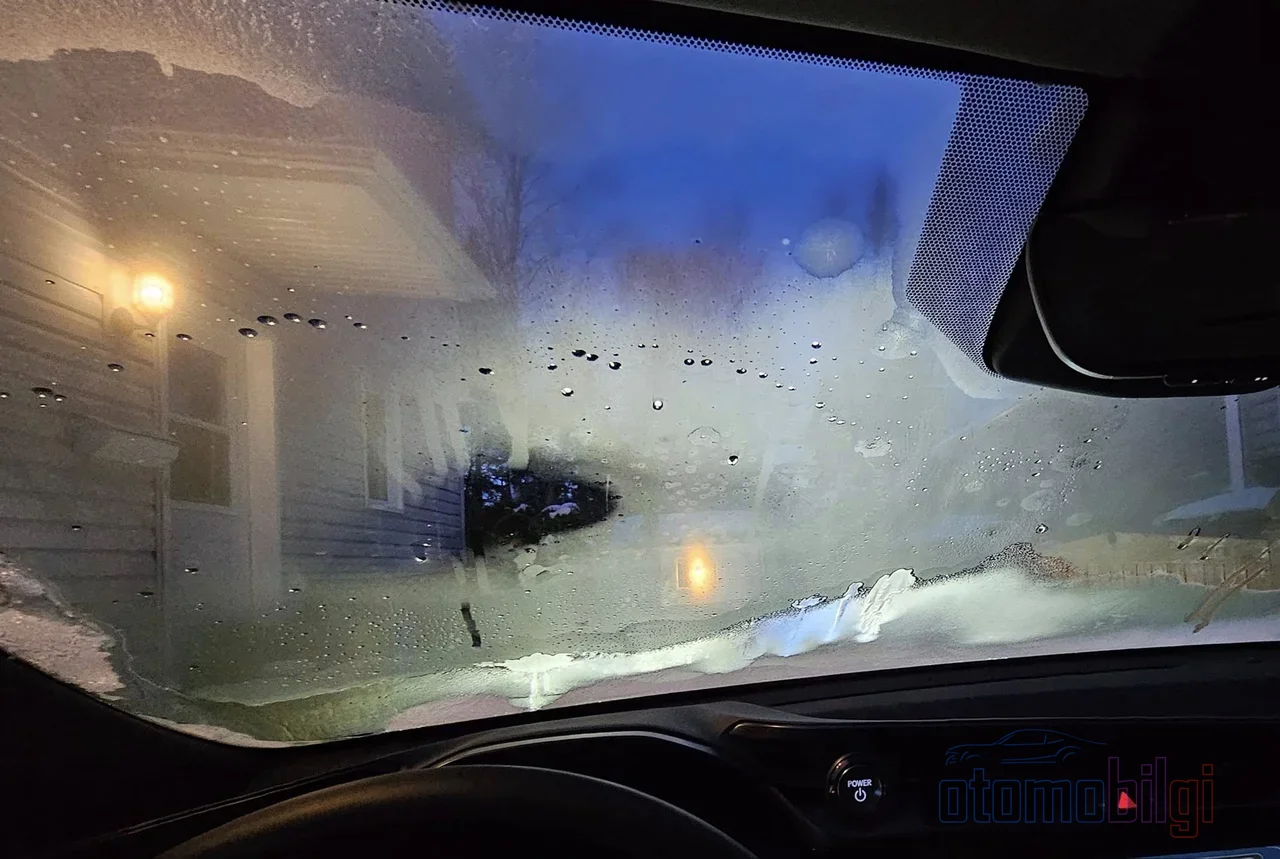
Depending on its temperature, air holds a certain amount of water vapor invisibly. As the air cools, this carrying capacity decreases and the threshold called the dew point is exceeded: the air can no longer hold the water it has captured in gas form, and releases the excess as tiny droplets onto the nearest cold surface. This is exactly the fog you see on car windows. Think about why you see your breath on a cold winter day; when the humid air inside touches the cold surface of the glass, condensation forms almost instantly.
The key point here is the temperature difference. While the heated, and therefore moisture-laden, air circulates inside the cabin, the windshield is constantly cooled by the cold air outside. When humid air touches the cold glass, water vapor turns into droplets. This is the common cause of fog forming on the front, rear and side windows: humid air meeting a cold surface at the same point.
Highlights
- Fog forms when humid air condenses upon touching the cold glass surface; it is not a malfunction, it is physics.
- In winter, fog forms on the inner surface of the glass, while on summer days when the air conditioning is running it forms on the outer surface.
- The fastest solution: defrost mode, air conditioning on, interior air circulation off, and the fan at high speed.
- Air conditioning does not only cool; it dries the air by removing its moisture, and should also be used in winter.
- Fog that keeps recurring may be a sign of a clogged cabin filter, wet carpet, or an air conditioning fault.
Where Does the Moisture in the Cabin Come From?
To understand fog, you need to know the source of the moisture. The most obvious source is the person themselves: every breath contains water vapor, and as the number of passengers in the cabin increases, the moisture mixed into the air also increases. A morning journey made with four people is not the same as one made alone.
- Moisture carried inside by wet clothes, shoes, rain and snow gets trapped in the carpet and floor mats, and slowly mixes back into the cabin air for days.
- Shaking off snow and mud from your shoes before getting out of the vehicle, and not leaving wet items in the car, prevents this buildup from the start.
- If there is a persistent, routine smell, it may indicate that the carpet lining or the interior trim panels have stayed wet without drying out between rains.
- Using heated seats and the heater helps dry out the cabin.
So the fogging is often not a window cleaning problem, but a cabin moisture management problem. Unless you dry the source, wiping the windshield has only a temporary effect.
Why Does Fogging Occur on the Inside Surface in Winter and on the Outside Surface in Summer?

The answer to which surface the fog forms on is found by identifying which side holds the moist and warm air. In winter, the warm and humid air is inside the cabin; the cold surface is the glass; the fog forms on the inner surface of the glass. In summer the situation reverses: while the air conditioning is running, the cabin is cool and dry, and the humid, warm air is outside. This time a spotted fogging appears on the outer surface of the glass. The cold, dry air blown by the air conditioner can cool the glass below the dew point of the outside environment.
The practical implication of this is clear too: in winter, fog on the inner surface is addressed from the inside with warm and dry air; in summer, for fog on the outer surface, instead of turning off the air conditioner it is enough to slightly reduce its power, ease the temperature difference between the cabin and the outside, and run the wipers when necessary. On humid days, a well-charged air conditioner can cool a narrow strip at the level of the lower vents of the windshield so much that external fog forms there; this is a normal physical reaction and does not mean the glass is defective.
What Should You Do Step by Step to Remove Fog Quickly?
There is a tried-and-tested sequence that can be easily applied. The basic goal is two things: heating the glass surface and reducing the humidity of the air reaching that surface. The steps below do both at once.
- Select the defrost mode. This mode automatically activates the air conditioner, runs the fan at high speed, and directs warm, dry air onto the windshield.
- Set the temperature to a high level. The cleanest way to vaporize the moisture on the glass is warm air; cold air cannot do this job.
- Keep the air conditioner on. The air conditioner does not only cool; it works like a dehumidifier by removing moisture from the air.
- Turn off the interior air recirculation button. While this mode is on, the vehicle reuses the humid air inside the cabin and the condensation cannot be eliminated; when it is off, dry air is drawn in from outside.
- Also activate the rear window defroster and, if present, the heated mirrors.
- If you cannot move forward in the rain, leave the windows slightly open for a few minutes; air circulation prevents the glass from warming up.
There is a fine distinction here: sudden and very hot air can widen the temperature difference between the glass and the cabin. A balanced approach is to start with the defrost mode and raise the temperature gradually as the cabin warms up. One point is worth noting: keeping the interior air recirculation on can speed up the process in some special cases. The right thing is to decide according to the context; on a foggy winter morning it should unquestionably be turned off.
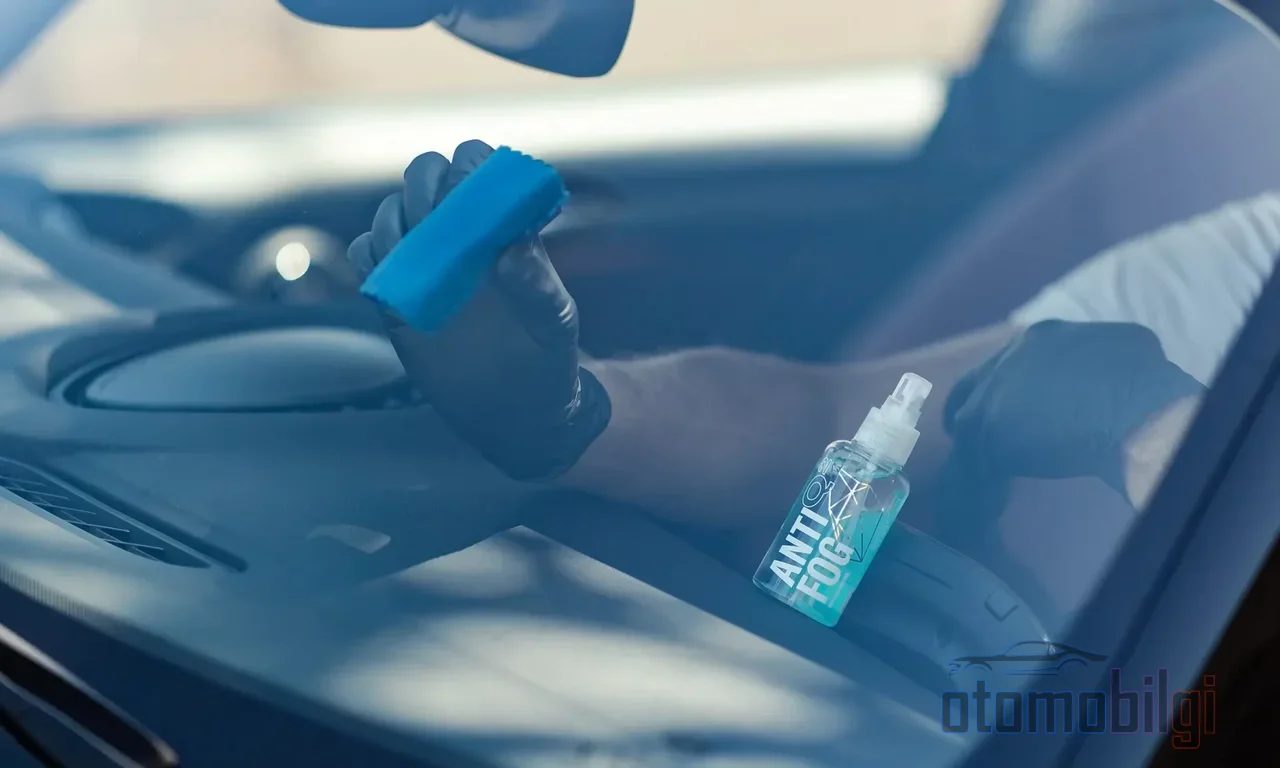
Dirty and greasy glass makes it easier for condensation to cling; regularly cleaning the windows and, if necessary, anti-fog sprays are also among the practical aids.
Should the A/C Compressor Also Run in Winter?
Yes, it should. The A/C compressor not only cools the air, it is the main force in removing moisture. Manufacturer manuals confirm this too: when the defrost position is selected, the system automatically turns on the A/C, because air passing through the A/C is stripped of moisture and the fog on the windshield clears quickly. Running the A/C in cold weather is designed for this purpose; it does not harm the compressor. As the cabin warms up, the A/C also suppresses the moisture in the carpet, shoes, and clothing from mixing back into the air. In short, the A/C is not just a summer feature; it is the vehicle's drying system.
The Role of Washer Fluid and Making the Right Choice
Washer fluid does not directly remove fog, but it helps in two ways. First, winter freeze protection: washer fluids are basically a mixture of methanol and water; products containing ethanol or isopropanol prevent freezing. Frozen washer fluid can cause cracking and leaks in the reservoir, lines, or nozzles. Methanol is a toxic substance; it must be kept away from children and animals. Second, visibility quality: water-repellent (hydrophobic) washer fluids improve visibility by making water bead up and roll off the glass, but some manufacturers warn that such products can cause streaking, stains, and squeaking. In vehicles with rain sensors, a streak-free washer fluid with good cleaning performance should be preferred; residue left on the glass can confuse the sensor. A blurry windshield problem is sometimes caused not by fogging, but by deterioration of the plastic lines running from the reservoir to the nozzles; if the blurriness is constant, it is wise to have the lines checked.
If the Fog Keeps Coming Back: The Cabin Filter and Other Suspects
If the windshield fogs up once a minute while in defrost mode, or clears very slowly, the problem is most often the airflow. All defrost air passes through the cabin filter first; a filter clogged with dust and pollen restricts the outside air flow and the system cannot blow enough dry air onto the glass. The cabin filter should be replaced at regular intervals; a damp, clogged filter also paves the way for a musty smell.
If the airflow is still weak after replacing the filter, another problem should be looked for. The checklist is short: wet carpets and floor mats, restricted airflow, water leaks, climate system malfunction. Water seen in the passenger footwells may indicate that the evaporator's drain line is clogged; trapped moisture leads both to musty odors and to fogging. A faulty A/C compressor is also among the causes of fogging.
Let us also note one warning: if the fog inside smells sweet or an oily film forms on the glass, it may indicate that refrigerant may be leaking into the cabin. This is a safety issue that should not be delayed.
In summary: Why Do Car Windows Fog Up and How Do You Clear Them?
The short answer is this: window fogging is condensation that forms when moisture-laden air touches the cold glass surface and cools below its dew point; in winter it appears on the inner surface because the cabin is humid, and on summer days when the air conditioning is running it appears on the outer surface because the cabin is dry. The fastest way to eliminate it is to use the defrost mode, the air conditioning on, interior air recirculation off, and warm air together.
In the long run, however, the solution lies in keeping the cabin dry: not leaving wet items in the vehicle, keeping carpets and floor mats dry, replacing the cabin filter periodically, and using the air conditioning regularly throughout the year. Wiping the fog off the glass treats the symptom; drying out the cabin solves the problem. The difference is the difference between a morning journey that takes a few minutes and one that always starts out wet.
Sources
- What's the Fastest Way to Defog Car Windows? - Consumer Reports
- How to demist your car's windows - Ford Ireland
- How to Defog Windshield in Any Weather - Allstate
- The Ultimate Guide on How to Defog Windows in Your Car - AAA Northeast
- How to Prevent Condensation in Your Car - AutoZone
- How to demist your car windows quickly: 6 easy steps - Parkers
- Car Windows Fog Up and Will Not Clear - Filterbuy
- Why Is My Windshield Fogging Up Inside? - J.C. Lewis Ford
- How to Prevent your Vehicle from Fogging Up - Lancaster Toyota
- How to Choose the Best Windshield Washer Fluid - American Mfg Co