What Changes in Your Car When the Pollen Filter Is Clogged?
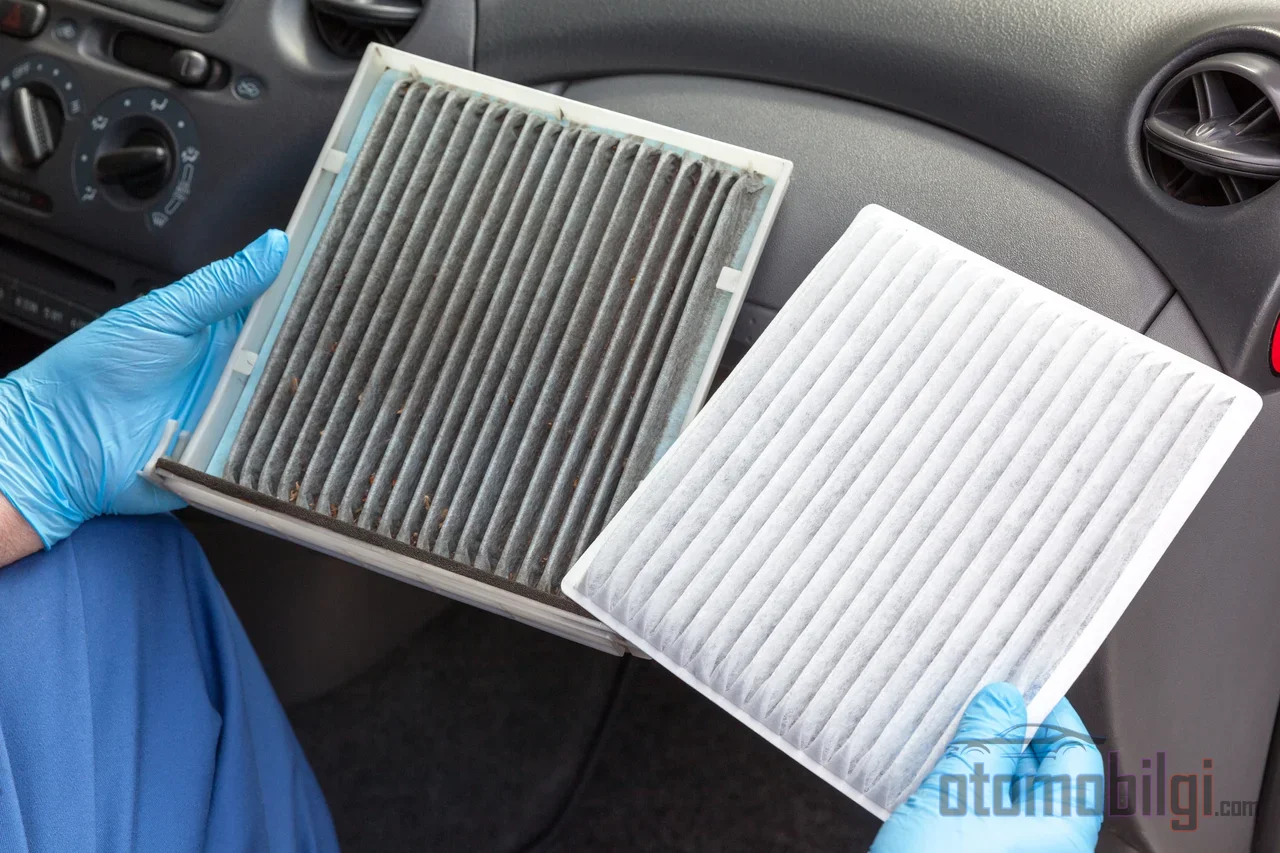
Are you among those who turn on the air conditioning on the first cold autumn morning and notice the air isn't what it used to be? Most drivers assume this symptom is a fault with the AC, go to the authorized service center, and get brushed off one way or another. Yet the culprit is usually a small part tucked away out of sight behind the dashboard, quietly doing its job for years: the pollen filter. Engine oil, brake pads, battery... Our maintenance agendas always consisted of just these three; yet the cabin filter is a part that directly affects both comfort and safety, and moreover, one that most vehicles can have replaced by their owners themselves.
As someone who has been in this business for over thirty years, I can safely say this: In the past, this filter wasn't even a separate line item in most vehicles' catalogs; now it is standard in nearly every modern car, and when neglected, the bill is heavier than we think. So what exactly changes in the vehicle when it gets clogged?
Highlights
- Standard replacement interval: once a year or approximately 20,000-25,000 km.
- The first sign of clogging is weakened airflow even when the fan is at high speed.
- Stubborn window fogging is not a comfort issue but a safety hazard.
- An activated carbon filter provides odor and exhaust smoke control that a standard filter does not.
- In most vehicles, replacement can be done without tools, in under 15 minutes.
What Does a Pollen Filter Do?
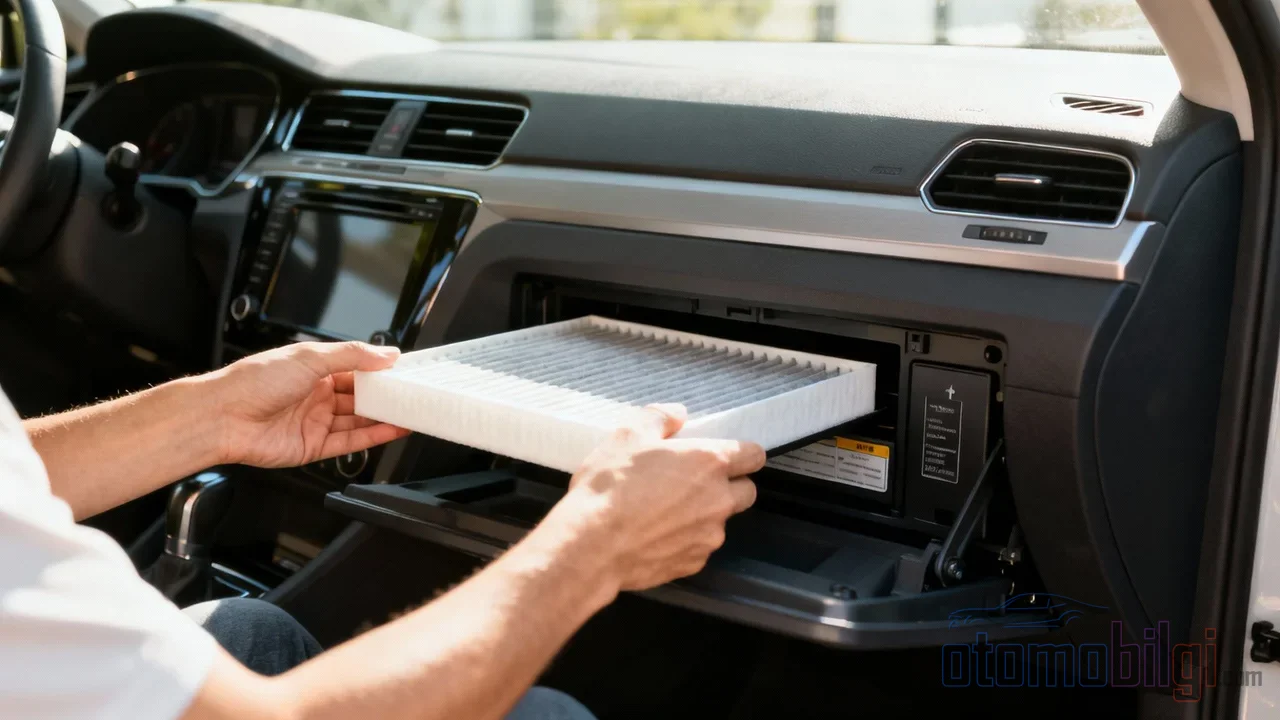
The cabin filter is the sieve at the last door of the outside air drawn in by the air conditioning and heating system. It is usually located behind the glove compartment and captures particles such as dust, pollen, exhaust smoke, and road dirt from the air before it enters the cabin. Although its task seems simple, this thin layer ultimately determines the quality of the air that reaches your lungs.
For those who spend long periods in traffic and for allergy sufferers, this filter is not a luxury but a necessity. Paper-based fibers, activated carbon, or electrostatically charged fibers are used as manufacturing materials; which one is chosen directly affects how much the filter captures and how long it lasts.
Symptoms That Appear When the Filter Clogs
Clogging doesn't happen all at once; the filter gradually becomes unable to pass air, and the vehicle tells you this in several different ways. The most common of these and the first sign is weakened airflow: even when you set the fan to the highest level, the air coming in front of the windows is not as strong as before. The air conditioning also gets its share of this; cooling the cabin on a hot day takes noticeably longer, and cooling becomes irregular.
Stubborn Window Fogging
Clearing water vapor from the vehicle's windows relies on strong airflow. When the filter is clogged, this flow is restricted, the windshield fogs up late, and the defroster does not work at the speed you want. The defroster can only clean the window to the extent that air reaches it; meaning weak flow means weak visibility. If you are losing time trying to clear the window on winter mornings, the culprit is not always the heating system. This is not a comfort issue; it is a direct safety hazard.
Odor, Noise and Allergies
Over time, the filter traps organic matter such as leaves, dust and moisture; in a dark and damp environment, this buildup becomes a favorable breeding ground for mold. If you notice a sharp, sour smell spreading into the cabin every time you turn on the fan, the filter has most likely gotten wet and started to ferment. The same moisture buildup accelerates the process when combined with water leaks in winter.
A severely clogged filter gives another sign as well: sound. As the blower motor forces air through, you may hear unusual noises such as whistling or humming. In addition, a dirty filter can no longer trap particles; it may even blow the pollen and dust it captured some time ago back into the cabin. If sneezing, coughing and itchy eyes increase while driving, this is a concrete sign that the air quality inside the cabin is deteriorating. Increased dust accumulation in the cabin is part of the same picture.
Which Filter Type Suits You: Standard or Activated Carbon?
There are two basic types compared when choosing a filter, and the difference lies in the kind of things they capture:
| Feature | Standard Filter | Activated Carbon Filter |
|---|---|---|
| Dust and pollen capture | Yes | Yes |
| Odor control | No | Yes |
| Exhaust smoke control | Limited | Yes |
For those who spend a lot of time in heavy stop-and-go traffic, the difference of the activated carbon version is noticeable; not taking the smoke of the vehicle ahead into the cabin is a tangible comfort in daily use. There are also filters on the market that use HEPA-class media; since the claims that these capture very small particles largely come from the manufacturers' own marketing, it is wise not to accept this advantage as an absolute fact without independent verification.
When Should the Pollen Filter Be Replaced?
If you are looking for an average guideline, here is a practical measure: once a year or every 12,000-15,000 miles (approximately 20,000-25,000 km). Under ideal conditions, some manufacturers allow intervals of up to 30,000 miles; the reason for this wide range is that the filter's lifespan largely depends on the environment the vehicle operates in.
Three conditions shorten this lifespan: dusty or rural environments, regions with very high pollen counts, and dense city traffic filled with countless exhaust clouds. It also makes sense for drivers with allergies to shorten the interval; as the filter begins to fill up, the protection it provides diminishes. Since intervals vary from one manufacturer to another, the recommendation in the vehicle's owner's manual should be taken as the primary reference.
For those who want extra confidence in the schedule, there is also a simple test: remove the filter and hold it up to the light. If light cannot easily pass through the material, the filter has largely completed its job.
What Happens If You Don't Replace It?
The cost of neglect is greater than it first appears. First, air quality drops and allergy symptoms worsen; then the restricted airflow starts to strain the air conditioning and heating systems. The most expensive end of this strain is the blower motor: an engine under constant strain can fail completely over time and produce a repair bill far more expensive than the price of a filter. In other words, postponing a maintenance item that seems small can escalate, through a domino effect, into a systemic failure.
How Can You Replace the Cabin Filter Yourself?
Here is the nice part of this job: replacing the cabin filter is one of those tasks that, in most vehicles, does not require waiting for a mechanic. It can be done in under 15 minutes without even touching the toolbox. Although the steps vary slightly from vehicle to vehicle, the logic is the same everywhere:
- Get the new filter and the correct filter for your vehicle; the location and part number are written in the manual.
- Locate the access point of the filter; in most vehicles it is behind the glove compartment.
- Empty the glove compartment and open or remove it according to the instructions in the manual; in some vehicles a clip or a few screws is enough.
- Remove the old filter from its housing. I do not mean to surprise you, but the debris inside it alone usually tells just how long the replacement has been delayed.
- Clean the filter slot, if possible, with a vacuum or a damp cloth.
- Insert the new filter, paying attention to the airflow direction arrow on it, and put the cover back in place.
The only detail requiring attention is the airflow direction; the arrows must point toward the AC unit. The rest is a matter of practice, and after the first replacement you will never think about it again.
Conclusion: Small Part, Noticeable Difference
When the pollen filter is clogged, four things change in the vehicle: airflow weakens, the windshield fog takes too long to clear, odor and dust increase in the cabin, and allergy symptoms worsen. If you are experiencing all four of these symptoms at once, the time for replacing the filter has long since come. Fitting it in once a year, between two engine oil services, protects both your wallet and your lungs. Writing this into your calendar, like other maintenance items, is the cheapest insurance the years have shown.
Sources
- 5 Signs Your Cabin Air Filter Needs Replacing | Filterbuy
- Common Symptoms of a Faulty Cabin Air Filter - Innova
- How to Choose a Cabin Air Filter: A No-Nonsense Guide | Filterbuy
- Cabin Air Filter in Winter: Musty Heat & Foggy Windows | Filterbuy
- How to Replace a Cabin Air Filter at Home (Step-by-Step) | Filterbuy
- Signs of a Bad Cabin Air Filter - AutoZone
- Clogged Cabin Air Filter & AC Performance Issues Explained - Rancho Express Lube
- How Often to Change Cabin Air Filter: 5 Warning Signs - Hamilton Tires