When Does a Car Air Conditioner Need Maintenance, and When Should It Be Regassed?
Share This Page
Air conditioning maintenance and gas refill are not the same thing: Maintenance covers a broad job such as replacing the filter, cleaning the evaporator and a general check of the system. A gas refill, on the other hand, is only needed when the refrigerant in the system has been depleted, and almost the only normal cause of depletion is a leak. In short, if the air conditioner is not cooling, you first need to read the symptom correctly, and then proceed by ruling out leaks so you do not pay for an unnecessary refill.
Highlights
- If the system is sound, air conditioning refrigerant is not consumed like fuel; a recurring need for refill is a sign of a leak.
- The cabin filter is usually replaced once a year or approximately every 19,000-24,000 km; more often in dusty conditions.
- The main source of musty odor is buildup in the evaporator and ducts; turning off the air conditioning about 3 minutes before arrival and leaving the fan on prevents the odor.
- The air conditioner should also be run in winter; the circulation of refrigerant and oil prevents the seals from drying out and cracking.
When Is a Gas Refill Needed? Reading the Symptoms Correctly
The air conditioning system is a closed circuit. In a properly working system, the refrigerant absorbs heat from the cabin and expels it outside through the condenser in the engine bay, and it is not consumed in this cycle. One of the sentences I heard most often in my thirty-year career is "I had it refilled every summer"; this sentence actually describes an undetected leak, not a maintenance ritual. A low refrigerant level usually results not from normal wear but from a leak.
The symptoms, however, are discriminating. If the air never cools or only becomes slightly cool, the refrigerant level has probably dropped enough to prevent the evaporator from reaching its optimum cooling temperature. The compressor clutch engaging and disengaging rapidly, or never engaging at all, also points to the same picture. A hissing, bubbling or whistling sound from the engine bay indicates that refrigerant under pressure is passing through a damaged spot; squeaking-type noises may belong to a strained compressor.
- No cooling at idle, cooling while driving: This may indicate a problem with the condenser's airflow or the system's refrigerant charge.
- Weak airflow: A clogged cabin filter is the most common cause of this and the cheapest to fix.
- The fogged windshield taking too long to clear in humid weather: If you do not account for the air conditioner removing moisture, you will miss this symptom.
- Oily residue around hoses, connections and the compressor: This is a visible sign of a leak; the refrigerant leaves a trace along with the circulating oil.
- Recent replacement of the compressor, condenser or lines: A system with a replaced component is evacuated and precisely refilled.
This must not be confused with the water puddle under the car. Water dripping from underneath while the air conditioner is running is normal; it is condensate. The real warning is a visible refrigerant leak.
Gas Leak or Gas Deficiency? Telling the Difference
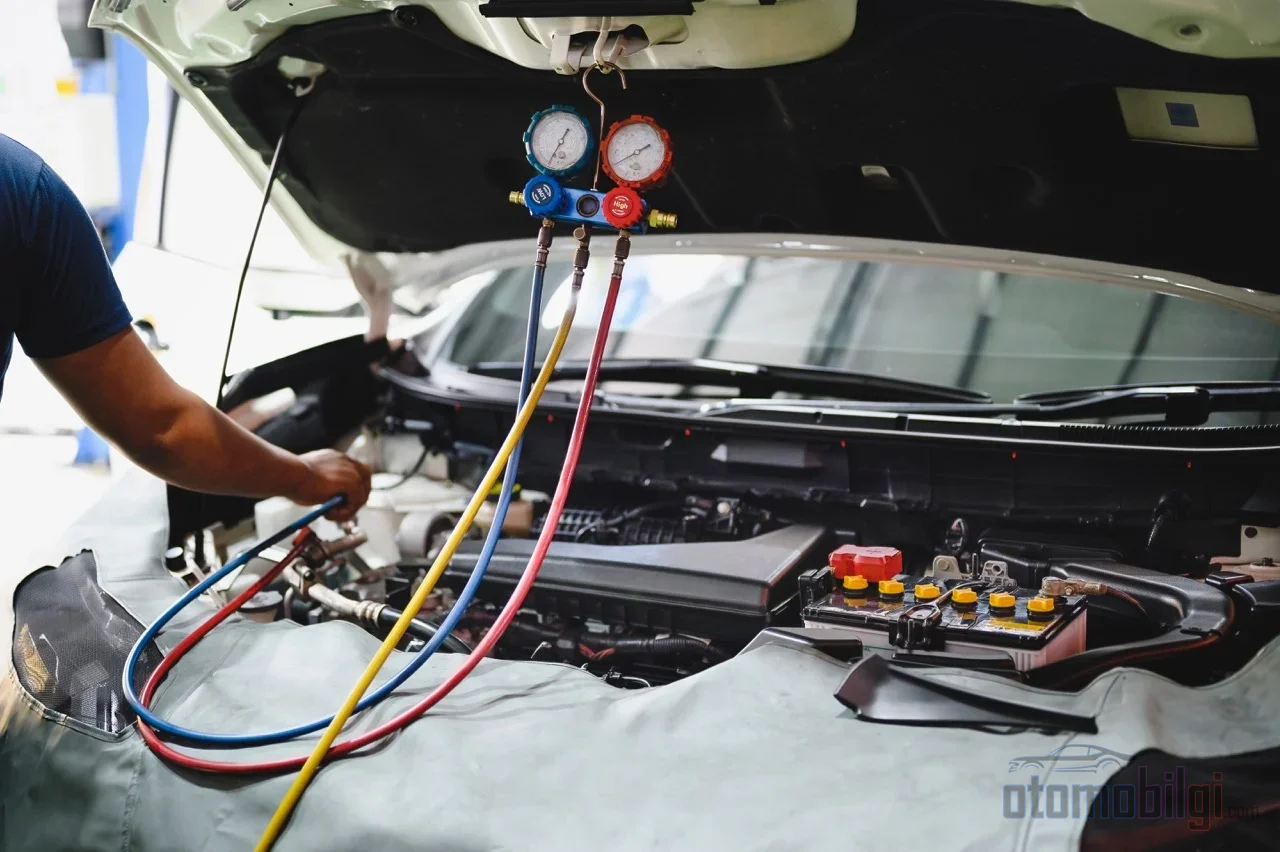
First, let's be clear: there is no such separate ailment as refrigerant shortage. In a closed circuit, if the fluid decreases every few months, there is a slow but persistent leak, and this requires diagnosis and repair. The basic diagnostic method is pressure measurement; without a special manometer, a home user cannot measure the refrigerant level accurately. If the pressure is low, there is usually a leak; its location is identified with UV dye, and repair comes first.
The practical conclusion to draw from this: A recharge performed without fixing the leak is a temporary measure; the system quickly returns to the same point. In the past, compressors had short lifespans for this reason; nowadays everyone has telemetry in their phone, but the logic has not changed - continually adding water to a leaking pot is not the same as repairing the pot.
Cabin Filter: The Part That Quietly Reduces the Air Conditioner's Efficiency
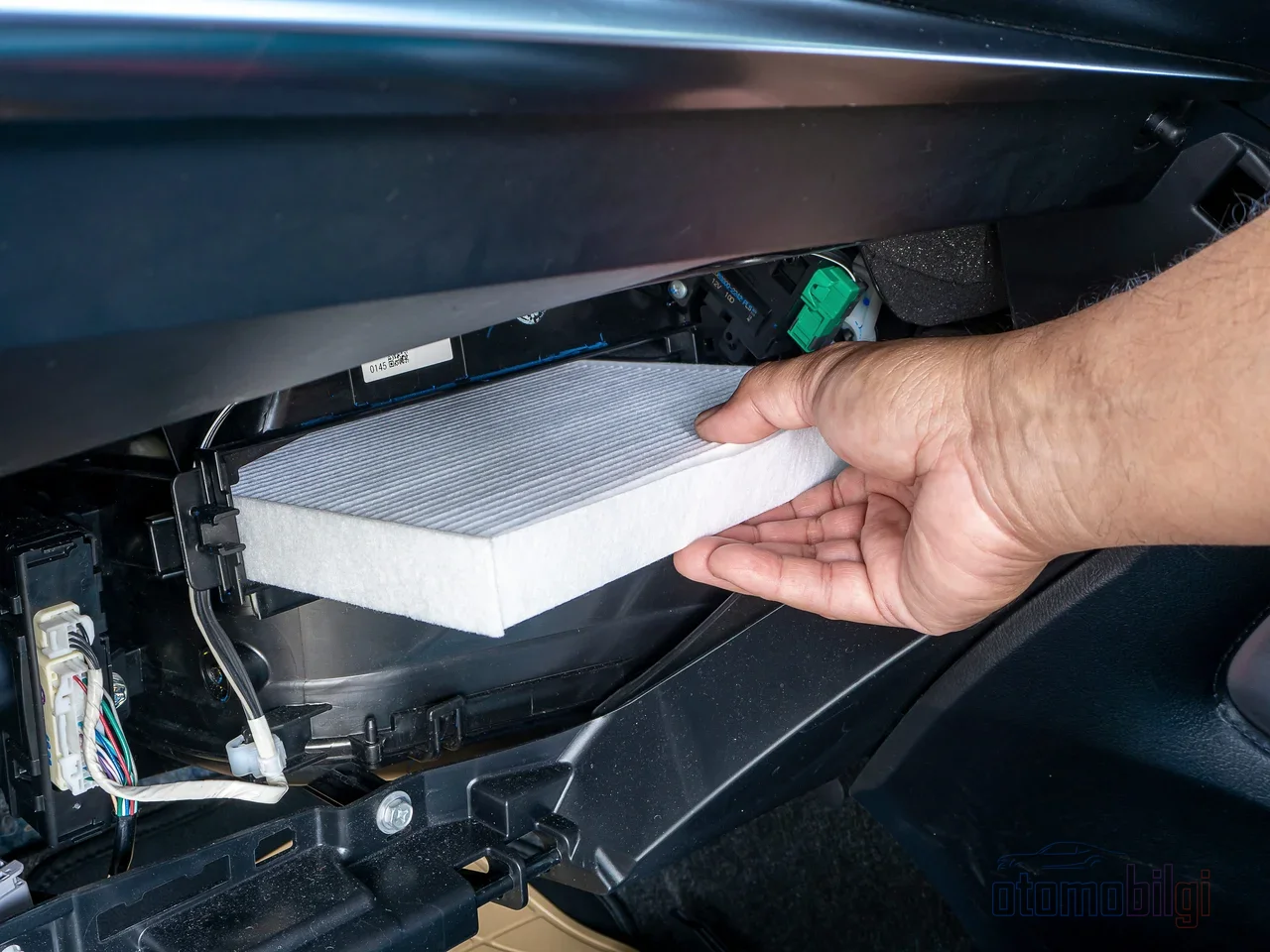
Also known as the pollen filter, the cabin filter traps the dust, pollen, and leaf debris entering the ventilation system. As it clogs, the airflow weakens and the driver does not notice that the air conditioner is operating below its potential; because the filter clogs slowly and the eye adapts as a matter of habit. In addition, a clogged filter causes the HVAC system to work harder, reducing fuel efficiency as well.
How often should the pollen filter be replaced?
The common recommendation is once a year or in the 19,000-24,000 km range; some manufacturer and service sources give a spectrum ranging up to 24,000-48,000 km depending on driving conditions, and more frequent replacement is recommended in dusty and dry conditions. The reason this range is so wide is the diversity of conditions; what matters most is always the vehicle's owner's manual. At a service, replacing the filter when it is not clogged with dust and pollen is not mandatory; you can easily object to the automatic filter replacement recommendation at every service.
Why Does a Musty Smell Occur, and What Does Evaporator Cleaning Do?
The musty smell when the air conditioner is turned on is usually not the voice of a fault but of buildup. The evaporator is the cooling surface inside the glove compartment that cools the air, and moisture condenses on it; over time, this moisture paves the way for mold and bacterial buildup. A sharp, slightly sweet chemical smell, on the other hand, points to a different story: a leaking refrigerant.
The solution steps proceed in a logical order: cleaning the evaporator core, clearing the drainage, replacing the cabin filter, and, if necessary, disinfecting the system. Household vinegar or baking soda can provide temporary relief; however, special air conditioning system cleaners give more lasting results.
The most practical habit for preventing the smell
About 3 minutes before reaching your destination, turn off the air conditioner and leave the fan running. This way, the moisture on the evaporator dries and the humid environment where mold feeds is eliminated. This is the most effective known method for preventing the startup smell, and it costs nothing.
Should the Air Conditioner Also Be Used in Winter?
It should be used. Running the air conditioning at regular intervals in winter ensures that the refrigerant and compressor oil circulate within the system; this prevents the seals and gaskets from drying out and cracking. In the past, mechanical advice used to circulate like "run it once a week in summer"; today the understanding is simpler and more practical: Run the system so that its components do not deteriorate from remaining unused.
There is also a completely practical benefit: the air conditioner is a dehumidifier. When used together with the heater, fogged windows clear noticeably faster; on damp winter mornings this is the quickest route to visibility and safety. Still, to be honest, the "obligation to run it at intervals in winter" is the legacy of an opinion debated in professional circles, considered old wisdom; the essence of the debate is the same purpose - keeping the system alive.
Service Intervals, the Charging Process, and Warnings Against Exaggerated Recommendations
Most manufacturers recommend that the air conditioning system be inspected during routine maintenance visits, or at least once every 1-2 years The charging interval, meanwhile, is not a fixed calendar item: if the system is sound, the air conditioner does not require regular recharging like engine oil. The content of a genuine recharge procedure is also simpler than it is made out to be - recovery of the old gas, vacuuming the system to remove moisture, and adding the exact amount of gas specified by the manufacturer. The procedure typically takes 1-2 hours if a leak or component failure is added, the duration increases.
| Symptom | What it indicates | General approach |
|---|---|---|
| Weak airflow | Most often a clogged cabin filter | Filter check and replacement |
| Musty smell | Buildup in the evaporator and ducts | Cleaning, drainage check, filter |
| Air not cooling at all | Low refrigerant level | Pressure test, locating the leak |
| Hissing, bubbling sounds | Refrigerant leaking under pressure | Leak detection and repair |
| Compressor not engaging | Critically low level or clutch failure | Professional diagnosis |
Do not pay money for these three recommendations
- "Recharge every year." If the air conditioner is sound, periodic recharging is unnecessary; the habit of annual recharging can mask a leak problem.
- "Filter replacement at every service." If the filter is not clogged with dust, pollen, and leaf debris, replacement is not mandatory.
- DIY recharge kits. The wrong gas type or amount can cause serious damage; at best it will last a few months. Hybrids and electric vehicles require special equipment and gas; in these vehicles the air conditioning system can also be used to cool the high-voltage battery, making its maintenance even more critical.
Proportion matters on the cost side as well: a recharge is an item far too small to compare with a compressor replacement. Compressor failure is the price you end up paying for a system whose maintenance was neglected; regular checks and a clean filter are free insurance.
In summary: Symptom First, Then Diagnosis, and Recharge Last
Don't reverse the order. When cooling weakens, check the cabin filter; if there is an odor, review your evaporator habits; if the gas is low, find the leak with a pressure test, repair it, and only then ask for a recharge. Run the air conditioner in winter too, and keep the maintenance schedule in the owner's manual above any recommendation at every service. The whole matter boils down to one sentence: Air conditioning gas doesn't run out, but the system leaks - recharging is always the last step, not the first.
Sources
- 9 Signs That Your Car A/C Needs to be Recharged
- Signs Your Car's AC Needs a Car AC Tune Up Before Summer
- Freon: Signs Your Car Needs It
- Car A/C Repair Costs
- Why Your Car's AC Smells Bad (and How to Fix It)
- How to Get Rid of a Musty Smell in Your AC
- Does a Cabin Air Filter Affect Your AC?
- What's a Cabin Air Filter and When Should You Replace It?
- How Often To Change Cabin Air Filter?
- Understanding Your Car's Air Conditioning System During Winter
- Is running a car's air conditioner in the winter good or bad?
- Automotive Air Conditioning Leak Detection
- How Often Should Your Car's Air Conditioning Be Serviced?