Lexus LBX: The New Hybrid Player in the Premium B Segment
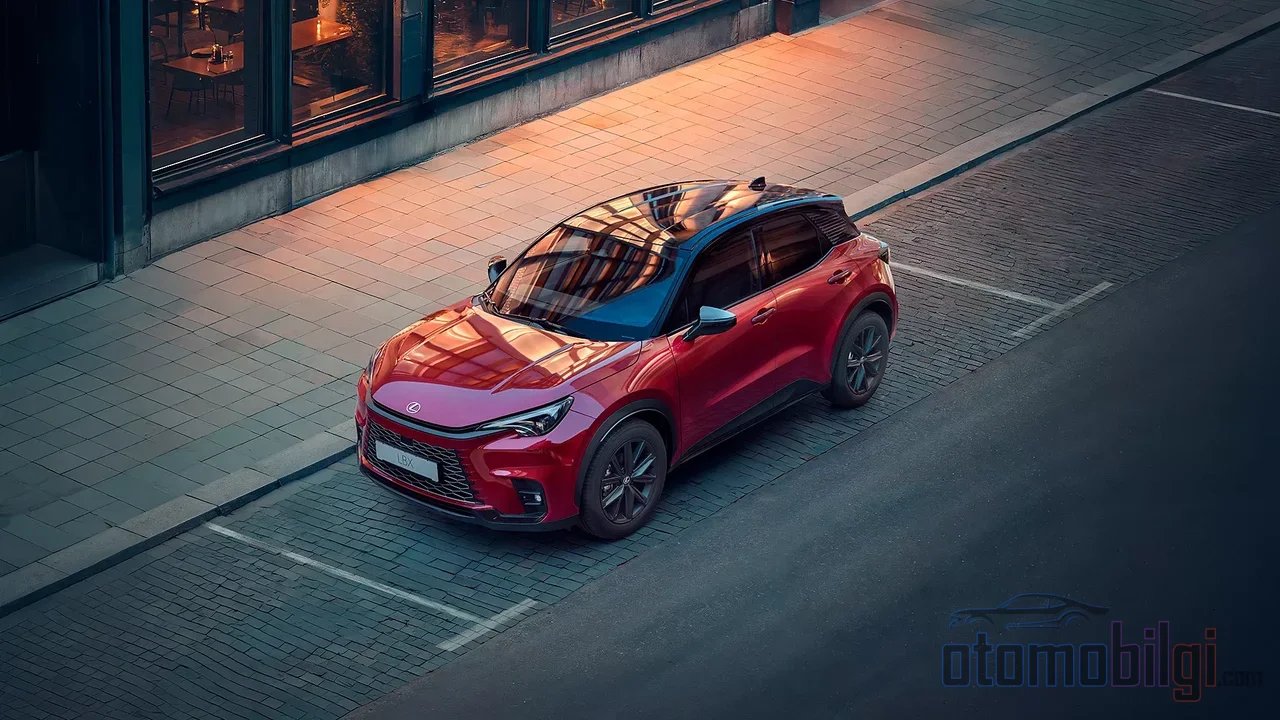
The idea of a B-segment Lexus split the automotive world in two when it was first announced. One group questioned what a premium brand squeezed into a 4,190 mm body could actually mean; the other argued that the idea of a quiet, high-quality cabin draped over Toyota's proven full hybrid architecture was exactly what city life needed. The Lexus LBX is the tangible answer to that debate: the brand's most compact and entry-level model, sharing the same platform as the Yaris Cross yet clearly differentiated in system output, interior quality and depth of equipment. So does this partnership make the LBX an "expensive Yaris Cross", or does it offer a genuinely different experience in the B segment?
Hybrid System: The Harmony of a 1.5-Liter Three-Cylinder Engine and Electric Motor
At the heart of the LBX sits a 1,498 cc, three-cylinder, inline, 12-valve DOHC gasoline engine. Chain-driven and equipped with Dual VVT-i, this naturally aspirated unit produces 67 kW (about 90 hp) at 5,500 rpm and 120 Nm of torque at 3,800 rpm on its own. Combined with the electric motor, total system output reaches 136 hp (100 kW), with maximum system torque at 185 Nm. The task of putting the power to the road belongs to an e-CVT type variable automatic transmission.
The details that keep this engine from being just another three-cylinder lie in the depth of its development process. Formula 1-derived technologies such as a long stroke, increased valve angle and laser-clad valve seats were used to raise the engine's thermal efficiency. The electronically variable valve timing, VVT-iE, optimizes gas exchange across the rev range. The logic chain is simple: As thermal efficiency rises, the same fuel produces more work and consumption drops.
There is innovation on the hybrid battery side as well. The LBX uses a new-generation bipolar nickel-metal hydride battery. This structure provides higher power density in the same volume; in other words, as the battery shrinks, the electric motor engages more frequently in stop-and-go city traffic. The new transaxle unit also delivers 17% higher output compared to conventional units of the same size; the two motor-generators are placed on separate shafts and the power control unit (PCU) is mounted on top of the transaxle. This compact packaging translates directly into gains in both weight and interior space.
Performance and Consumption Figures
The numbers paint a balanced picture for its class. The front-wheel-drive version completes 0-100 km/h acceleration in 9.2 seconds, while the E-Four all-wheel-drive version does it in 9.6 seconds. Top speed is 170 km/h in both versions. WLTP combined consumption starts from 4.4 l/100 km; CO2 emissions pass through the 100 g/km level. Owing to its full hybrid architecture, the LBX charges itself without being plugged in; user experiences also show that real-world consumption of 4-5 liters, close to this official figure, is possible in city driving. Even in independent measurements, the LBX leaves most of its petrol rivals behind in fuel economy.
Highlights
- System output of 136 hp / 185 Nm from a 1.5-liter three-cylinder full hybrid
- 0-100 km/h: 9.2 seconds (FWD), 9.6 seconds (E-Four AWD)
- WLTP consumption starting from 4.4 l/100 km, CO2 from 100 g/km
- Trunk: 402 liters (FWD), 317 liters (AWD); 60:40 folding seats
- The same GA-B platform as the Yaris Cross, but it stands apart in power, cabin quality, and quietness
City and Highway Character: The Contribution of a Premium Compact Platform
The LBX is the first Lexus to use the GA-B global platform. This platform is also found in the Yaris Cross; however, Lexus engineering changes what comes next in a serious way. The wheelbase has been extended, the track width increased, and body rigidity raised. An aluminum hood, hot-forged steel reinforcements, and the use of structural adhesives create a package optimized for both weight and chassis behavior. A hip point height of 285 mm provides an unexpectedly sedan-like driving position in the B segment.
The most interesting element contributing to its driving character is Braking Posture Control, a first in its class. This system reduces the body's forward dive under braking and roll within corners; a measurable comfort layer that curbs the ferry-like feel in a compact SUV. On the suspension side, there is a MacPherson strut at the front, while the rear architecture varies according to the drivetrain: The front-wheel-drive version uses a torsion beam, while the E-Four uses a multi-link (double wishbone) layout. A turning circle of 5.2 meters is also a practical value that makes urban maneuvers easier.
Quietness is one of the clearest areas where the LBX distinguishes itself from the Yaris Cross. High-damping roof insulation, a large roof silencer, hood-area sealing, and the reduction of engine noise with a balance shaft show that quietness engineering is applied layer by layer. At upper trim levels, acoustic glass comes into play on the windshield and front side windows. On long journeys, a top speed of 170 km/h is not frustrating; the LBX carries a character built not on speed, but on covering kilometers without effort.
Interior, Trunk Practicality, and Equipment
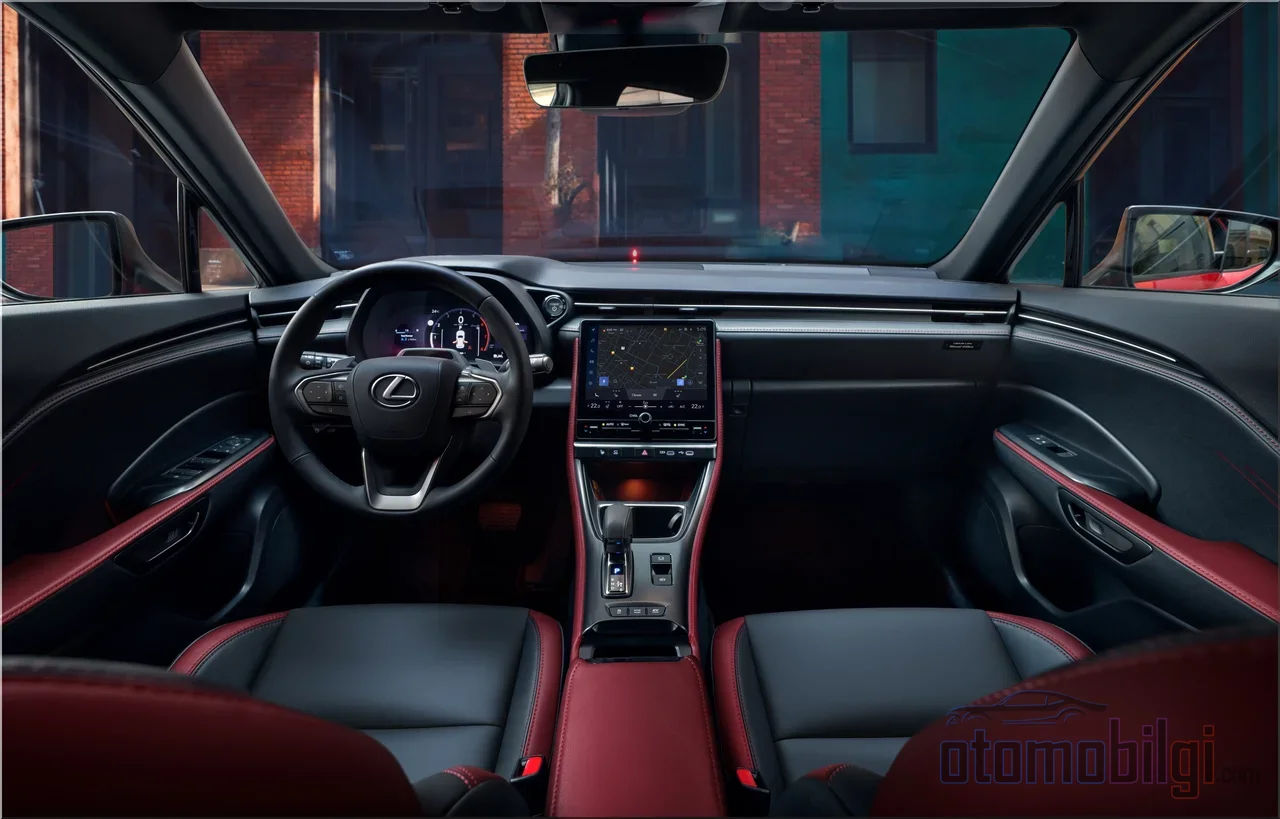
When you step into the cockpit, you understand what the Tazana concept means: All critical controls have been brought closer to the driver, minimizing hand and eye movement. The instrument panel comes as a fully digital 7 or 12.3-inch unit; an optional head-up display is available. The 9.8-inch Lexus Link Connect touchscreen offers cloud-based navigation, a voice assistant, wireless and wired Apple CarPlay with wired Android Auto support, and over-the-air (OTA) software updates. The optional digital key allows the vehicle to be shared with up to 5 people via a smartphone app.
Material quality establishes an unusual vocabulary for the B segment. The semi-aniline leather upholstery also used in the LC, a vegan interior option made of synthetic leather, and a hierarchy between them and L-aniline leather specific to the LS via the Bespoke Build program are available. Trim panels with a Tsuyusami charcoal effect combine with ambient lighting that reaches 50 colors and can be set across five different themes (Healing, Relaxing, Arousing, Focusing, Exhilarated). On the audio side, the optional 13-speaker Mark Levinson Quantum Logic Surround can be chosen instead of the standard 6-speaker system. The nanoe-X air quality system and Lexus Climate Concierge are also parts that complete cabin comfort. The e-Latch electronic door system locks automatically above 4 km/h and works together with Safe Exit Assist.
In the trunk, the drivetrain layout is the deciding factor: In the front-wheel-drive version, 402 liters under the tonneau board, and 317 liters in the E-Four version. 60:40 folding rear seats, a power tailgate with adjustable opening angle (79 degrees by default) and a tool and repair kit bay under the deck cover the practicality side. 402 liters is a volume that can comfortably take two 75-liter suitcases under the tonneau. To be honest, rear seat knee room stays within B-segment limits; the LBX pays that price in favor of a premium cabin and quietness.
Equipment Approach: Atmosphere Levels
Instead of the classic trim ladder, Lexus offers four "Atmospheres" in the LBX: Elegant and Relax with a refined character, and Emotion and Cool with a sporty stance. Even the entry level comes with rich equipment; the Bespoke Build personalization program is also an extension of this approach. On the safety side, the latest generation Lexus Safety System+ is standard: Level 2 partial automation, active lane tracing, traffic sign response, automatic emergency braking with intersection support (AEB), automatic braking in reverse maneuvers and blind spot monitoring. Eight airbags come as full equipment at the Sports Luxury level. The Advanced Park system works with 4 cameras and 12 ultrasonic sensors; it can memorize three different parking spaces and allows remote parking via smartphone.
Technical Specifications Table
| Specification | Value |
|---|---|
| System output | 136 hp (100 kW) |
| Maximum system torque | 185 Nm |
| Gasoline engine | 1.5 L three-cylinder, 90 hp / 120 Nm |
| Transmission | e-CVT variable automatic |
| 0-100 km/h | 9.2 s (FWD) / 9.6 s (AWD) |
| Top speed | 170 km/h |
| WLTP consumption | From 4.4 l/100 km |
| Trunk capacity | 402 L (FWD) / 317 L (AWD) |
| Length / wheelbase | 4,190 mm / 2,580 mm |
| Turning circle | 5.2 m |
What Sets It Apart from Its B-Segment Rivals: Why Not Just a Yaris Cross?
The short answer to the question is this: Although the LBX shares the same GA-B platform and the foundation of its hybrid architecture with the Yaris Cross, it offers a different experience with a stronger hybrid output (136 hp), premium cabin materials, systematic quietness engineering and a unique positioning in the B segment. It is possible to support this distinction with figures and structural differences.
First, power: The Yaris Cross's system output falls short of the LBX's; Lexus has redefined the vehicle's character by carrying the same underlying architecture to a higher output point. Interior elements such as semi-aniline leather and the Mark Levinson sound system are layers without an equivalent in a Toyota in this segment. The noise reduction effort is also not just equipment, but an investment requiring body and insulation engineering.
On the market side there is a more striking fact: None of the classic premium rivals like Audi, BMW and Mercedes-Benz offers a full hybrid small SUV in this class. This gap positions the LBX almost alone in the premium B-SUV segment. Its length of 4,190 mm is clearly below the segment average (approximately 4,542 mm); in other words, the LBX plays not with a size advantage but with an identity advantage. A sales target of 24,000 units was set for its first full year in Europe, and first deliveries began in March 2024. Production taking place at the Iwate plant in Japan also shows the model's special place within the brand: the LBX is the first Lexus produced at this facility.
Measurable Decision Points
- Drivetrain choice creates an 85-liter difference in the trunk: 402 L (FWD) versus 317 L (AWD).
- The 0-100 km/h difference is only 0.4 seconds; the real price of E-Four is not speed, but volume.
- The WLTP starting point of 4.4 l/100 km does not require plugging in, since it is a full hybrid.
- The vegan interior option is offered with synthetic leather.
Conclusion: An Identity-Focused B-Segment Answer
When evaluating the LBX, the right question is not "how big or how fast is this car"; it is the question of "how is a premium experience defined in this segment". Lexus's answer is clear: carrying a proven full hybrid architecture to a high output point of 136 hp; solving quietness layer by layer starting from the body structure; equipping the cabin with unusual materials for a B-segment vehicle and presenting all of this in a compact body of 4,190 mm. Consumption figures of 4-5 liters in the city, a turning circle of 5.2 meters and a 402-liter trunk cover the daily-use side. The fact that rival premium brands do not offer a hybrid SUV in this class leaves the LBX alone; it retains the distinction of being one of the few options that can use the words hybrid and premium in the same sentence in the B segment.
Sources
- Dynamic Press Launch of the All-New Lexus LBX - Lexus Europe Newsroom
- Lexus LBX Active Specifications
- Lexus LBX e-Brochure MY26
- 2026 Lexus LBX Price and Specifications - CarExpert
- 2026 Lexus LBX Safety and Security - CarExpert
- Lexus LBX Review - RAC Drive
- Lexus LBX Boot Space and Practicality - Parkers
- Lexus LBX Dimensions and Boot Space - Motor1 UK
- Lexus LBX Premium Plus Design Review - BusinessCar