2026 Renault Clio E-Tech Long-Distance Fuel Economy Test
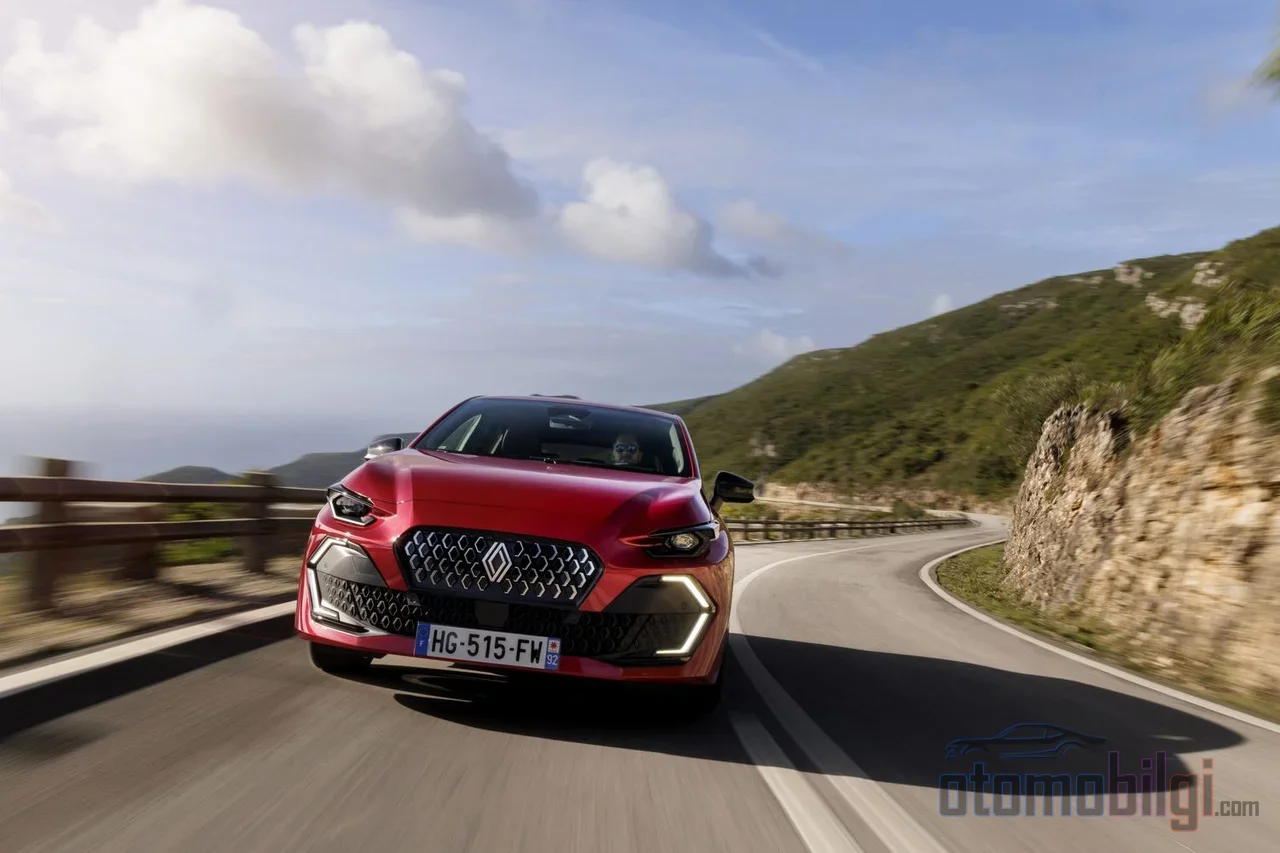
Most reviews introduce the Clio E-Tech in city traffic: a B-segment hybrid that glides silently on electricity in stop-and-go, its engine falling silent at traffic lights. Yet the real test of this system begins on the highway lane. What does an architecture that delivers up to 80% electric driving in the city do at a steady 120 km/h? How does the fuel economy picture change over long distances? The answers to these questions are of the kind that could change the decision of anyone thinking about buying a hybrid, depending on their route.
How Does the E-Tech's Series-Parallel Architecture Behave on the Highway?
At the heart of the Clio E-Tech lies a series-parallel hybrid architecture. This means the system can work both like a series hybrid - meaning the internal combustion engine generates electricity as a generator and the vehicle is driven solely by the electric motors - and can also connect the engine directly to the wheels in parallel mode. Two electric motors serve in the system; one of them has an output of 36 kW. Energy recovery is also in play: the battery charges itself while on the move, without being plugged in.
The logic of this architecture in the city is clear: at low speeds and short repeated accelerations, the electric motor takes on most of the work, and the gasoline engine kicks in only when needed. Over long distances, however, the equation changes. At steady highway speed, aerodynamic drag increases quadratically with speed, so the power required reaches a size a small battery cannot sustain for long. The system solves this correctly: at high speed, it engages the internal combustion engine directly via a mechanical connection, because in mechanical transmission, converting energy first to electricity and then back to motion creates a loss. In other words, on the highway the E-Tech deliberately becomes a car that runs its gasoline engine more - this is not a weakness, but the correct application of the architecture.
At continuous high speed, the flow is predictable: while the engine remains engaged, the battery is typically kept at a medium level, leaving a margin for sudden overtakes. This margin is essential for long climbs and overtaking; on flat highway sections, however, the electric contribution remains limited. This setup, which requires no plugging in, also creates no range anxiety over long distances: the 39-liter fuel tank combined with low combined consumption yields a range of up to 900 km according to manufacturer figures; there is also information pointing to approximately 1000 km for the new generation.
Two Generations, Two Characters: 145 hp and 160 hp Versions
In Turkiye, there are currently two actors in this story. The facelifted Clio V is sold with the 145 hp 1.6-liter E-Tech Full Hybrid: H4M-1.6 engine code, 205 Nm of torque, E-Tech multi-mode automatic transmission, and front-wheel drive. The official WLTP combined consumption is 4.2 L/100 km; 0-100 km/h in the 9.3-9.9 second range, with a top speed of 180 km/h.
The new (6th generation) Clio, which went on sale in 2026, takes the range even higher: the 1.8-liter, 160 hp E-Tech Full Hybrid with 270 Nm of torque comes with a 1.4 kWh battery and a MultiMode automatic with 15 ratios. This hybrid setup, strengthened by the brand's multi-clutch transmission approach, completes 0-100 km/h in 8.3 seconds; top speed is stated as 170 km/h. A notable detail: despite being more powerful, the new generation has a lower top speed. This is a nuance tuned to a long-distance profile - the efficiency band is kept in the region that arrives before the theoretical ceiling speed.
| Feature | Clio E-Tech 145 hp | New Clio E-Tech 160 hp |
|---|---|---|
| Engine | 1.6-liter | 1.8-liter |
| Power / Torque | 145 hp / 205 Nm | 160 hp / 270 Nm |
| Battery | Hybrid battery | 1.4 kWh |
| 0-100 km/h | 9.3-9.9 s | 8.3 s |
| Top speed | 180 km/h | 170 km/h |
| Fuel tank | 39 liters | 39 liters |
Highlights
- 4.2 lt/100 km WLTP combined consumption (145 hp version, official figure).
- Up to 80% electric driving capability in the city.
- Range of up to 900 km with the 39-liter tank.
- Trunk volume in the hybrid is 301 liters; 391 liters in the gasoline version.
- New generation: 160 hp, 1.8-liter, 1.4 kWh battery, 8.3 s 0-100 km/h.
What Is Consumption in the 90-130 km/h Range Really Like?
This is where the real question of the page lies. There is an official combined consumption of 4.2 lt (145 hp) and figures pointing to a range of around 3.9-4.8 lt (160 hp); since the combined cycle is city-weighted, these figures alone do not tell the long-distance reality. The E-Tech's efficiency curve largely retains its city character up to the 80-90 km/h band: one owner of the new generation says that at a smooth 80-90 km/h cruise the transmission stays efficient, while at highway speeds consumption rises noticeably. In user experiences, there are examples reaching 5.6 lt and above at highway speeds.
A data point from the class is also useful as a reference: a 90 hp 1.0 turbo gasoline Clio consumes 4.9-5.1 lt/100 km at a steady 110 km/h in user experience. This shows the hybrid doesn't work magic on the highway, but it doesn't deteriorate surprisingly badly either. It can be summarized as follows: in the 90-110 km/h band, the E-Tech offers a steady cruise close to its combined consumption; as you climb to 120-130 km/h, the gasoline engine's share of engagement increases and values above 5 lt become the norm. Frankly, an independent set of measurements for this vehicle at a steady 90-120 km/h is not yet widely available; this gap is the area where a real long-distance measurement would be the most valuable contribution.
How much of the city savings advantage is preserved on the highway? A rough calculation: a test drive reported consumption of around 3 lt/100 km in the city - this should be read cautiously as it is a single measurement. But the logic is this: the consumption that drops well below the combined value in the city rises well above the combined value on the highway. The two totals balance out around the WLTP combined figure. A long-distance-oriented user should not look for the brochure's 4.2 lt figure at their own cruising speed; at 110 km/h a realistic expectation is around 5 lt, and at 130 km/h above even that.
What Does High Speed Do to the Battery and Mechanics?
Sustained high speed is overcome not by draining the hybrid system's battery, but by keeping it near mid-charge. E-Tech's small battery (1.4 kWh in the new generation, 1.4 kWh; some sources list it as 1.2 kWh - possibly a version difference) does not have enough energy to be discharged for long periods at highway speeds; the system knowingly keeps it at mid-charge. This is a strategy that protects the battery from excessive cycling load and extends its life. Regenerative braking mainly pays off on descents, on country roads with accelerating and slowing, and in the city - on a flat highway the gains are limited.
On the transmission side, the number of ratios in the multi-mode automatic is the heart of the matter. The 15-ratio setup in the new generation tries to keep the engine in its efficient rev band at every speed; still, at a constant 130 km/h, the internal combustion engine's rpm will naturally be higher than at 80 km/h, and consumption will follow accordingly. Also, an isolated user complaint should be noted: a Clio 6 owner complains about the vehicle stalling while cruising at 40-60 km/h - a single but technically significant piece of feedback pointing to fine-tuning of the hybrid mode transitions.
Practicality on Long Journeys: Boot, Cabin and Living
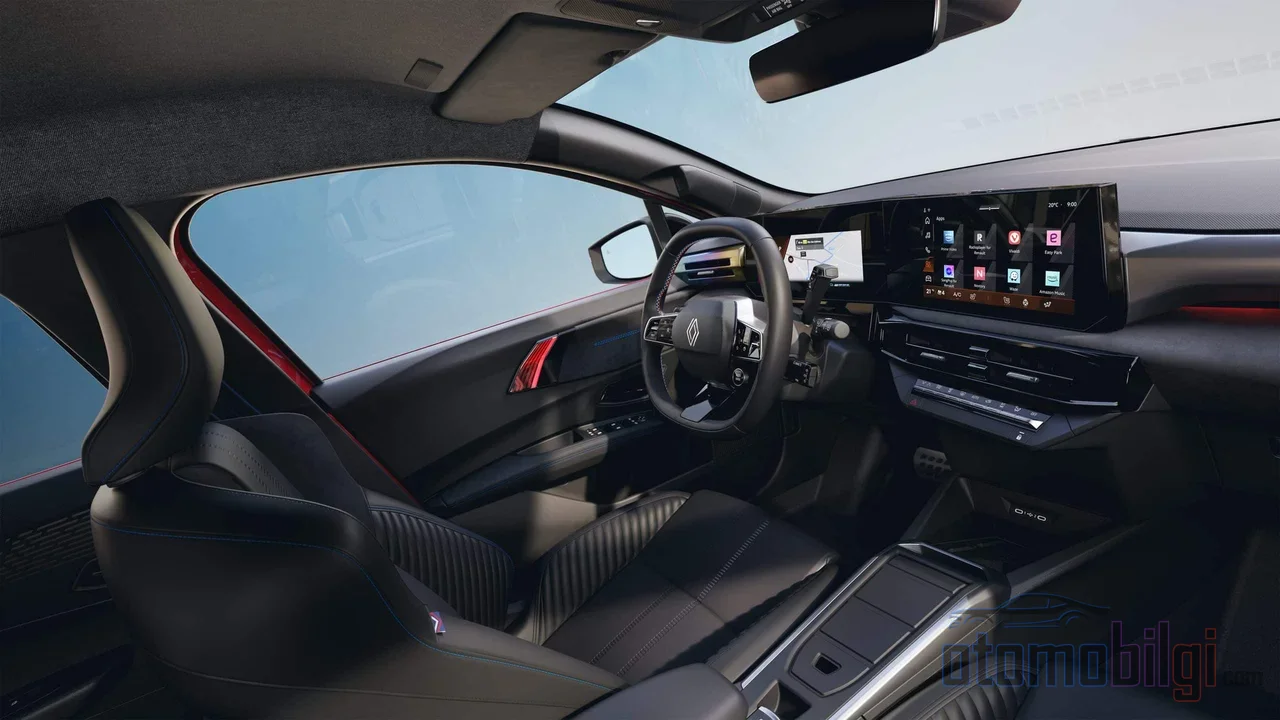
The price of the hybrid shows up in the boot. The boot volume, 391 liters in the petrol Clio V, drops to 301 liters in the E-Tech because of the battery. When the seats are folded, the picture improves: the official brochure says 979 liters, while different measurements show a range of 1069-1094 liters; for the new generation Clio 6 E-Tech, 309-1094 liters are given. So the difference is noticeable in daily use, but it narrows with holiday loads.
The facelifted cabin gets a customizable 10-inch digital display, 14 advanced driver assistance systems, new LED headlights and an expanded chrome grille. For long journeys, the most functional of these is the driver assistance package: on steady motorway stretches, the steering and speed assistants significantly reduce fatigue. In the new generation, values such as a turning circle of 10.4 m and a drag coefficient of 0.30 also keep the city-versus-motorway dilemma balanced. The role played by the production and development infrastructure in Bursa across this range is a separate source of pride; local know-how works on the engineering side of calibration specific to the Turkiye market.
On the Rival's Turf: Where Does It Stand Against the Toyota Yaris Hybrid?
The other half of the B-segment hybrid equation is the Toyota Yaris. In comparisons made with the 130 hp version of the 1.5 Hybrid, the power difference varies depending on the Clio's version; the figures show differences of up to around 8% depending on the version. The focus of the debate is mostly urban: both systems' electric-petrol balance is measured where they are most efficient, in the city, and the Yaris's combination can offer low consumption in town. The Clio's trump card is a more accessible starting price and up-to-date interior and exterior design; on the Yaris side, warranty strength and standard safety equipment stand out.
To be honest when it comes to long journeys: there is no measurement in the comparison material regarding the Yaris's highway consumption advantage. Both hybrids are expected to engage the petrol engine similarly on the highway; if there is a difference, it will show in the equipment, comfort, and transmission calibration. A practical note: a manual option is still available in the Clio range, and both cars come with a fully automatic CVT.
Is the Clio E-Tech Worth Buying for Long Journeys? Conclusion
The Clio E-Tech does not deliver on the highway the figures it does in the city, because it cannot: its small battery becomes useless at high constant speeds, and the system handles this correctly with a mechanical connection. The realistic picture is this: consumption close to combined figures at a constant 90-110 km/h, cruising around 5 lt; above 5 lt at 120-130 km/h; and figures dropping dramatically in the city. A driver focused on long journeys should choose this car not for its efficiency, but because it does not sacrifice efficiency: With its 39-liter tank offering a range approaching 900 km, driving assistance equipment, and a trunk approaching 1000 liters with the seats folded, it makes the long-distance equation consistent for a B-segment hybrid. For those asking about its identity, the answer is clear: this is a hybrid that adds long-distance capability to a city car's identity - not the other way around.
Sources
- Renault Türkiye - E-Tech powertrain systems
- Renault Clio E-Tech Official Brochure (145 HP)
- Renault Clio Full Hybrid E-Tech 145 HP - User Manual
- Renault Group - Series-parallel hybrid architecture
- Vehicle Catalog - Renault Clio V facelift E-Tech Full Hybrid 145
- Ultimate Specs - Renault Clio 6 Full Hybrid E-Tech 160
- Otomobil.com.tr - New Renault Clio test drive: Fuel Consumption and Performance
- Arabalar.com.tr - New Clio: Smarter, More Efficient
- Otopanorama - Renault Clio 5 dimensions and trunk capacity
- Otopark Forum - New Clio 6 user opinions
- Reddit r/Renault - E-Tech 110 km/h highway consumption
- Oto Sözlük - Clio vs Yaris Hybrid comparison
- Sifirarababul - Renault Clio vs Toyota Yaris
- Sikayetvar - Renault Clio 6 complaints
- YouTube - New Renault Clio 1.8 E-Tech MultiMode Esprit Alpine 2026 test