How Does the 2026 Toyota Corolla Hybrid Use So Little Fuel in the City?
Share This Page
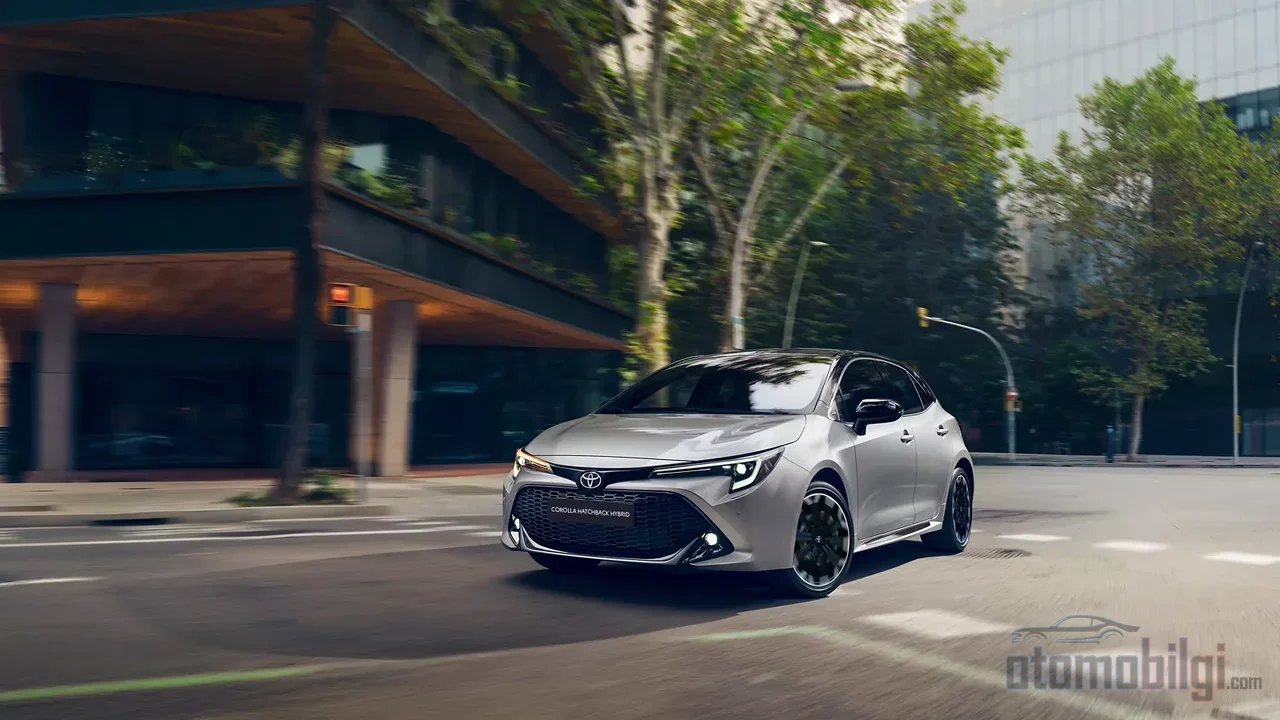
The Toyota Corolla 1.8 hybrid owes its low consumption in the city to its series-parallel hybrid architecture: the electric motor and the petrol engine can move the car separately or together, while the system itself manages which source is engaged and when for maximum efficiency. In this architecture, stop-and-go traffic is largely the electric motor's job; the petrol engine only kicks in within its efficient operating range. The result is a combined consumption of 4.5-4.7 L/100 km according to official WLTP figures, and in real-world city use a 4.0-4.5 L/100 km band. What distinguishes the Corolla sedan from the C-HR and RAV4, which share the same technology, is the body style: a 452-liter trunk and a classic sedan rear seating layout.
Highlights
- Current Corolla 1.8 Hybrid sedan has a total system output of 140 HP, 0-100 km/h in approximately 9.3 seconds.
- Real-world city consumption in user data is predominantly in the 4.0-4.5 L/100 km range.
- According to official figures, trunk capacity is 452 liters; it can be opened remotely with the button on the smart key.
- 2026 trim levels: X-Pack, Hybrid Dream, Dream X-Pack, Hybrid Flame, Flame X-Pack.
- The sedan uses the same 5th-generation hybrid technology as the C-HR; the difference lies in practicality, not in consumption.
Why the Toyota Corolla hybrid burns so little fuel in the city: how the series-parallel architecture works
The answer to this question lies in a single sentence: the Corolla hybrid's fuel consumption depends on where the petrol engine is run, and that decision belongs entirely to the system. In Toyota's own words, the electric motor and the petrol engine can move the car at the same time or on their own; the system selects the combination that delivers maximum efficiency at every moment. Urban stop-and-go traffic is precisely the environment where this architecture operates at its most efficient: at low speeds and from a standstill, the electric motor takes over, and the energy released during braking is recovered back into the battery.
The petrol side is a 1.8-liter naturally aspirated engine running on the Atkinson cycle. The Atkinson cycle keeps the expansion stroke longer than the compression stroke, using the fuel's energy more completely; the price of this is low specific output, that is, fewer horsepower per liter. In a conventional car this would be a disadvantage, but in a series-parallel system the missing power is covered by the electric motor during momentary needs. The engine keeps itself in its efficient rev range, and electric power covers any shortfall in demand. This is precisely the equation that pulls city consumption down.
On the transmission side, there is no gearbox in the conventional sense. The unit is called the e-CVT, meaning an electronically controlled continuously variable transmission; but unlike a classic belt-driven CVT, it is a distinct architecture that balances the engine and generator electrically. The observation circulating among users that "the reason it revs high is the weak engine running on the Atkinson cycle" is technically accurate: during sudden acceleration the engine revs rise, but speed does not always increase at the same rate, because the revs are managed according to the efficiency band while the speed is controlled through the electric motor.
Why are the transitions imperceptible?
Leaving the transition between electric mode and normal driving to the vehicle rather than the driver is the system's most visible feature. Long-term user accounts also emphasize that the transition happens imperceptibly; the gasoline engine engages seamlessly when needed. A detail that stands out in Corolla Cross reviews is that the electric motor participates in task sharing not only at low speeds in the city, but in every phase where it is needed. This means a dynamically recalculating balance at every moment, beyond the simplified perception of "electric at low speed, gasoline at high speed."
Power, transmission and technical identity: 140 HP, e-CVT and 9.3 seconds
The total system power of the current Corolla 1.8 Hybrid sedan sold with the facelifted body is 140 HP; the drivetrain is e-CVT, with front-wheel drive. 0-100 km/h acceleration for the sedan is approximately 9.3 seconds. This figure shows it is not the fastest in its class, but that is not the hybrid's goal either: system power has been kept high enough to provide the necessary support ratio at the moment of need while preserving the gasoline engine's efficiency band.
In the previous generation, non-facelifted versions listed the same 1.8 hybrid unit as 122 PS ; comparing these two values in the used car market is a common source of confusion. The engine block, however, is familiar from the Corolla Cross brochure: 1798 cc, inline 4-cylinder, 16 valves, DOHC and VVT-i. In other words, the technical identity did not undergo a fundamental change during the plus years; development was concentrated in power electronics, software and hardware.
| Specification | Corolla 1.8 Hybrid Sedan |
|---|---|
| Total system power | 140 HP |
| Engine | 1798 cc, 4-cylinder, DOHC, VVT-i |
| Transmission | e-CVT, front-wheel drive |
| 0-100 km/h | ~9.3 seconds |
| WLTP combined consumption | ~4.5-4.7 L/100 km |
| Trunk capacity | 452 liters |
Realistic fuel consumption: 4.0-4.5 in the city, so why higher on the highway?
The WLTP figure on paper is in the 4.5-4.7 L/100 km band; real-world use shows a different distribution than you might expect. A compilation of user data shows city consumption mostly in the 4.0-4.5 L/100 km range, mixed use shifts to the 4.5-5.0 band, and long-distance values can rise above 5.0 liters . Long-term user experiences report that the average varies between 4.0 and 4.5 liters, and can even drop to 3.5 liters with calm driving; on a loaded and brisk Istanbul-Izmir-Istanbul run, the average rose from 4.5 to 5.3 liters. Long-distance measurements taken at a constant 110 km/h speed also point to roughly 5 liters.
The reason for this distribution is architecture: in the city, the share of the electric motor and regenerative braking is close to maximum, so consumption can drop below the WLTP figure. On the highway, however, the vehicle travels for long periods at constant load on the gasoline engine, the share gained from electricity narrows, and aerodynamic drag increases rapidly. That is why experienced hybrid users have a clear summary: this system is not ideal for long-distance consumption and engine drone at high climbing speeds; it is a true city car.
Usage patterns that raise consumption
- Aggressive throttle and high cruising speed: under hard use, the average has been reported to exceed 10 liters - even the hybrid approaches typical gasoline consumption when run at low efficiency.
- Steady highway pace: in this regime where electric assistance drops, it is hard to fall below the 5-liter band; one user also shared that they could not get below 5.2 liters in the city, meaning the band widens depending on the person and route.
- Short and cold trips: journeys that end before the battery balance and engine warm-up are completed reduce the electric share.
There are indeed user examples seeking solutions to high-consumption complaints on the manufacturer's hybrid models; but the general picture is that consumption is largely explained by driving style and route profile. Around 4 liters in the city and around 5 on the highway is this car's character; expecting the opposite goes against how a hybrid works.
Sedan practicality: the 452-liter trunk and rear seat layout
The least discussed yet most decisive aspect of the Corolla hybrid when it comes to the purchase decision is the body type. According to official figures, the sedan's trunk volume is 452 liters; although a different value such as 471 liters appears in secondary content, the measurement given in the manufacturer's mobile brochure should be taken as the basis. This volume is made possible by placing the hybrid battery in the passenger compartment, unlike classic Corolla sedans; in other words, being a hybrid here does not turn into a compromise on trunk space. Opening the trunk remotely with the button on the smart key is also a small but consistently useful comfort detail in everyday use.
On the rear seat front, the vehicle is described as a 5-seater, and the classic sedan body offers a different seating position and roofline compared to SUVs. The "Rear Seat Reminder" feature listed on the 2026 model year specification page is catalogued as a system that alerts the driver about a passenger or item forgotten in the back seat - a functional detail for family use. It is also worth noting that the trunk volume on the official specification page is given based on measurement up to the trunk cover/roof; equalizing the measurement method is essential when making comparisons.
Trim levels and safety packages: what is available at which tier?
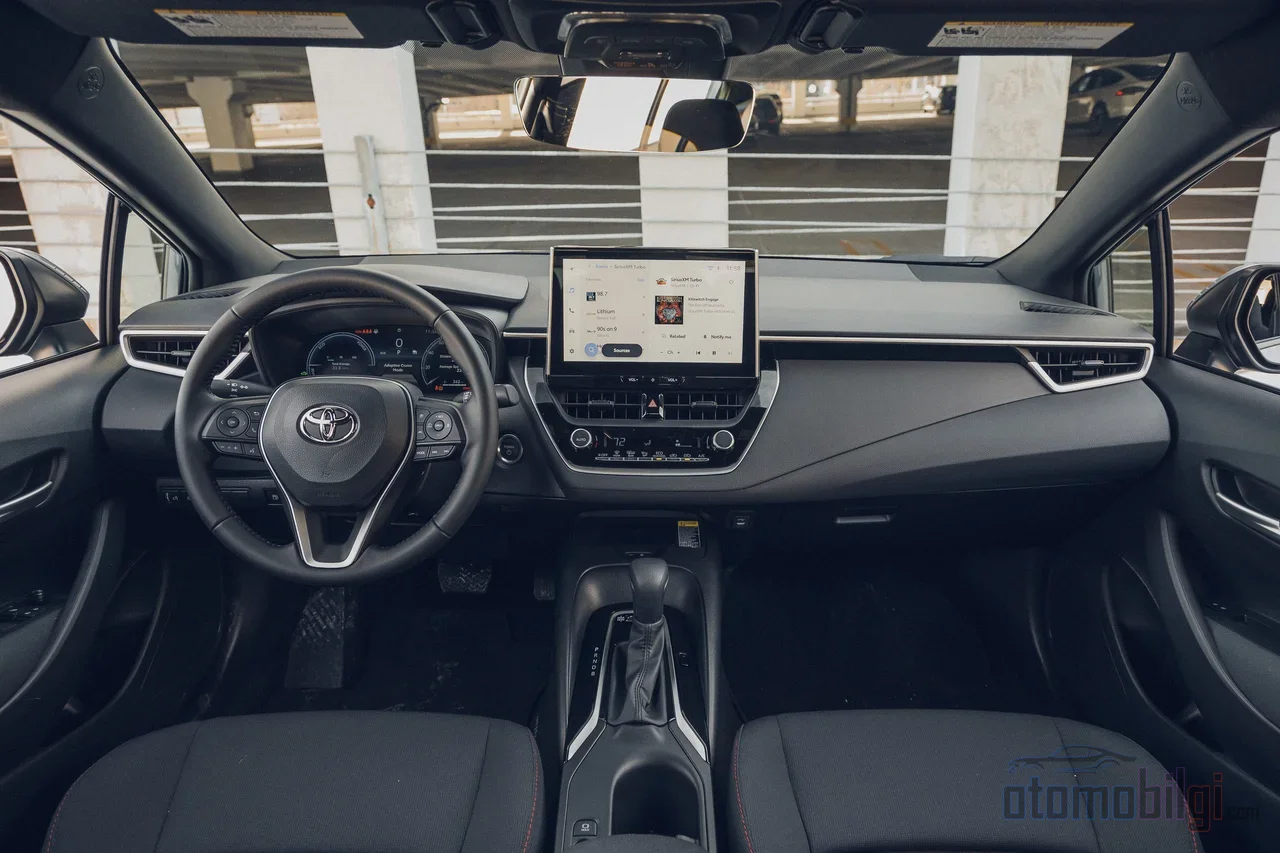
The trim ladder in the official 2026 brochure consists of the following five tiers: X-Pack, Hybrid Dream, Dream X-Pack, Hybrid Flame and Flame X-Pack. The entry level includes manual air conditioning, an 8-inch Toyota Touch 2 multimedia system (Apple CarPlay and Android Auto) and a 4.2-inch color TFT display. In the updated packages, advanced driver assistance systems such as adaptive cruise control, lane keeping assist, collision-avoidance braking and traffic sign recognition approach standard level.
The list thickens on higher trims: an optional 10.5-inch infotainment screen, 12.3-inch driver display, heated front seats and wireless phone charging. The hybrid versions are positioned as the most efficient option within the same grade. So in terms of hardware, the sedan offers a wide ladder in its class, from a simple entry point to a well-equipped top; the facelifted body, enriched with technological equipment, makes this ladder all the more meaningful.
Corolla sedan, C-HR or RAV4? The difference is not in technology but in practicality
All three models share Toyota's 5th generation hybrid technology; this brings them close to one another in maintenance costs and fuel economy, and all of them come with Toyota Safety Sense. Although the C-HR appears to have the same horsepower as the Corolla, software differences set apart the acceleration and top-speed character; thanks to its aerodynamics and lightweight body, the C-HR delivers consumption roughly 0.2 L/100 km lower than the Corolla Cross. The RAV4, with its 2487 cc engine, is in a completely higher class and, in terms of scale, belongs to a family above in this comparison.
What sets the sedan apart is therefore not technology but form: a 452-liter trunk, the classic sedan rear-seat layout, and a difference in usability arising from the body type compared to the C-HR. In comparisons where a significant price difference is pointed out between the C-HR and the Corolla sedan, the decision comes down to practicality: simple carrying capacity and a classic seating layout, or crossover stance and design? In comparisons with the Honda Civic e:HEV, the view that the facelifted Corolla's technological equipment is richer while the Civic is more spacious comes to the fore; on the Civic side, the future costs the turbo unit might create are raised, while on the Corolla side, the battery debate is brought up.
Who should buy it?
The profile is clear: for the driver whose daily route is mostly urban, who spends hours in stop-and-go traffic, and who measures low operating costs by real usage rather than figures on paper, the Corolla 1.8 hybrid sedan is a sensible choice. A user whose routine is constant long highway journeys benefits less from the same system; the consumption band shifts upward and the engine drone is a bonus. The five equipment grades are designed to offer a stop for every budget between these two extremes.
Conclusion: low consumption is no accident, it is the result of the architecture
The Corolla 1.8 hybrid's low consumption in the city cannot be attributed to a powerful electric motor or a small gasoline engine alone; it is the natural output of a series-parallel architecture that manages the division of labor between the two at every moment. The band of 4.0-4.5 L/100 km in the city and above 5 liters on the highway is the characteristic signature of this architecture, and the recommendation depends on your usage profile. Combine the 452-liter trunk, sedan rear seating arrangement, and the same technology shared with the C-HR/RAV4, and the picture becomes clear: within the same hybrid family, the sedan that stands out for practicality and city efficiency is the Corolla.
Sources
- Toyota Hybrid - What Is Hybrid?
- COROLLA Technical and Equipment Specifications 01/2026
- Toyota Corolla Sedan Features
- Toyota Corolla Mobile Brochure
- Toyota Corolla Cross Technical/Equipment Brochure 2026
- Should You Buy the Toyota Corolla 1.8 Hybrid? Fuel and Cost (2026)
- Toyota Corolla Hybrid 1.8 User Reviews
- From a Long-Term Owner: Toyota Corolla Hybrid
- Toyota Corolla Hybrid or C-HR Hybrid?
- 2026 Toyota Corolla Hybrid: Updated Equipment
- Toyota Corolla Package Ranking 2026