Will the 2026 Hyundai Tucson Hybrid Replace the Diesel?
Share This Page
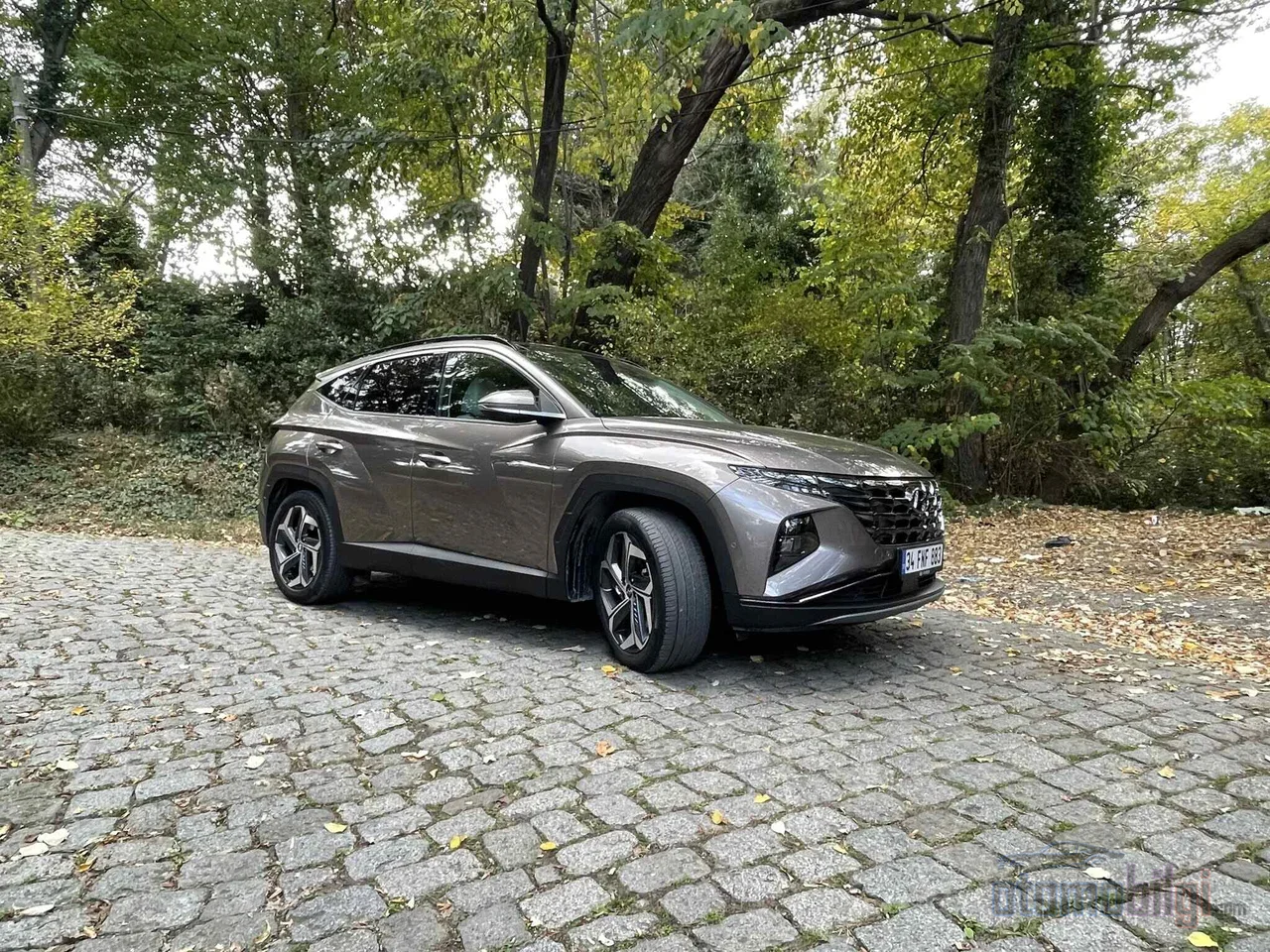
Yes, the Hyundai Tucson Hybrid sold in Türkiye can easily replace diesel for a family whose use is mostly short city trips. The 1.6 T-GDI turbo petrol engine, combined with a 47.7 kW electric motor, produces a total system output of 215 PS and, without requiring external charging, can drop to diesel-like consumption figures in city traffic. The question is a bit more nuanced for drivers who mostly cover long distances: the difference gap there depends on the character of the petrol engine.
Highlights
- Full hybrid system: 1.6 T-GDI petrol engine + 47.7 kW electric motor, 215 PS total output
- 1.49 kWh lithium-ion polymer battery, no external charging required, recharged through regenerative braking
- City consumption generally falls in the 5.0-6.5 L/100 km range, with some users getting below 6 liters
- Cargo volume is 620 liters with the seats upright, 2. 1,799 liters when the second row is folded down
- In the new generation introduced in October 2026, the hybrid version produces 245 PS / 380 Nm
How Does the Hybrid System Work: What Does Full Hybrid Mean?
The Tucson Hybrid falls into the full hybrid (HEV) category of the three hybrid types on offer. The difference from mild hybrid is that the electric motor does not merely provide assistance; when conditions and traffic allow, it can move the car entirely on electric power. The difference from plug-in hybrid is even more critical: the battery is a lithium-ion polymer unit with a capacity of 1.49 kWh and it is not plugged in. All the energy comes from regenerative braking; when slowing down, the electric motor turns into a generator and recovers kinetic energy.
While driving, the system seamlessly switches between the petrol engine and the electric motor depending on the situation; when necessary, it engages both together. The regenerative braking level can be adjusted with the paddles behind the steering wheel, which means touching the brake pedal less in city driving. Power delivery is handled through a hybrid transmission that works with the logic of a conventional torque-converter automatic; the low-speed shift sensitivity of a 7-speed dual-clutch DCT is absent in this version.
From an engineering standpoint, the key point is this: since the battery is small, there is no charging hassle, no hunt for an outlet, and no range anxiety at all. The only cost of the full hybrid is that the battery can offer fully electric driving only at low speeds and over short distances.
How Does the Consumption Profile Shape Up in the City and on Long Trips?
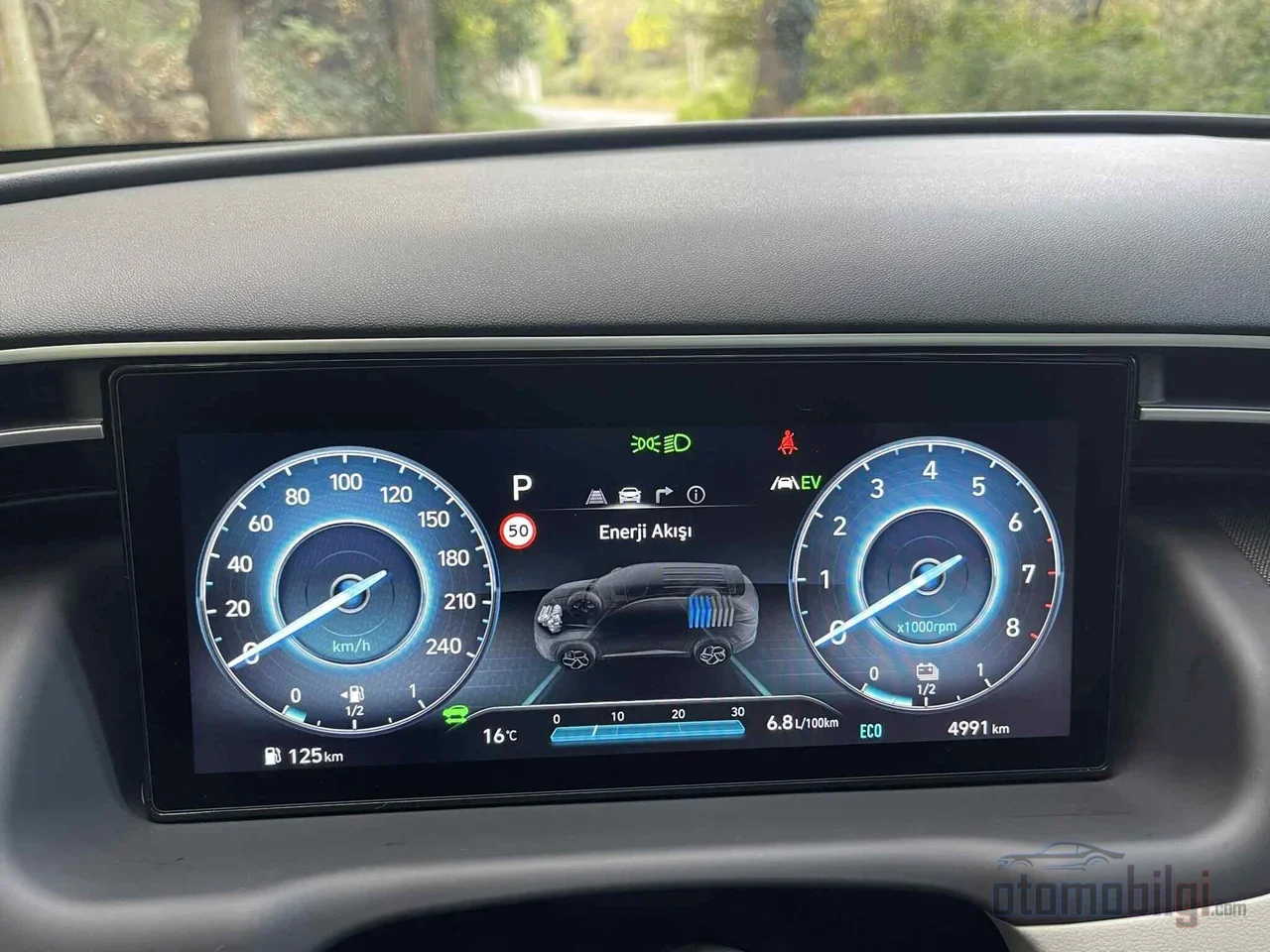
It is undeniable that, by its nature, the hybrid delivers its best results in stop-and-go traffic; city consumption settles in the 5.0-6.5 L/100 km range. A hybrid owner who has driven 29,000 km reports an average of 6.1 liters, while other users see figures around 6 liters in the city. Test drive averages have also produced more conservative measurements such as 7.4 liters; the realistic range is wide because driving style and traffic congestion make a difference even in a hybrid.
On long trips, the picture changes. At steady highway speeds, the share falling to the electric motor decreases; even so, consumption on the hybrid version over long distances is reported in the 4.5-5.5 L/100 km band. There are also examples of intentionally accelerating drivers reaching 7.5 liters. In short: in the city the hybrid's advantage is clear; on long journeys the advantage narrows but does not disappear.
As for the comparison with diesel: diesel Tucson owners report expected consumption of around 6.4 liters; so on paper the hybrid does not look far ahead. The difference opens up in everyday use. The diesel engine requires regular long-distance driving for particulate filter regeneration; it is a well-known fact that complaints of filter clogging occur in usage limited to short distances. For a family living in the city and taking a long trip once or twice a week, the full hybrid eliminates this problem at its root. Opinions on the forums also point in the same direction: for short urban use, choosing a gasoline or hybrid instead of diesel is the more sensible option.
Trunk and Interior: Space Practicality for the Family User
In a family SUV, the two areas where paper beauty is easily exhausted are the trunk and the rear seats. In the facelifted Tucson Hybrid, trunk volume with the 2nd row seats upright is 620 liters; depending on the equipment level, variations measuring 616 liters or 598 liters are also available. When the seats are folded, the load floor area expands to 1,799 liters; a volume that can handle a child seat, a stroller, and the weekly shopping load all at once. For bulky jobs like a winter tire set, folding down the 2nd row is enough.
The body dimensions are also in the reasonable band for the class: approximately 4.5 meters in length, a size that fits in a family garage without giving up road presence. In the interior, head and legroom offer more than the RAV4 Hybrid in both front and rear seats; this can be decisive in the decision of families carrying two child seats in the rear, especially. On the equipment side, the Elite level features 19-inch alloy wheels, an electrically opening sunroof, a height-adjustable smart tailgate, and a solar windshield.
| Feature | Value |
|---|---|
| System power | 215 PS (1.6 T-GDI + electric motor) |
| Electric motor | 47.7 kW |
| Battery | 1.49 kWh lithium-ion polymer, no external charging |
| Trunk volume (2nd row upright) | 620 liters (616/598 liter variation depending on equipment) |
| Trunk volume (2nd row folded) | 1,799 liters |
| Kerb weight (hybrid) | 1,542-1,697 kg |
| Maximum speed | ~201 km/h |
| Urban consumption | 5.0-6.5 L/100 km |
| Long-distance consumption | 4.5-5.5 L/100 km |
Equipment and Technology: Screens, Safety and the New-Generation Roadmap
In the facelifted generation, the cockpit gained a panoramic structure formed by two 12.3-inch screens; the instrument cluster and the navigation-equipped infotainment system merge in a single curved panel. The E-Shift by Wire gear console placed behind the steering wheel is also a signature of this generation. The safety package includes 7 airbags (including the center console airbag), the Lateral Wind Stabilization Control System, and the Hyundai SmartSense active safety package.
The new generation, introduced in October 2026, raises the bar one notch higher: The Android Automotive OS-based Pleos Connect infotainment system, Gleo AI voice recognition, a 12.9 or 17 inch center screen + 9.9 inch instrument cluster, Bang & Olufsen sound system with 12 speakers, Digital Key 2 and OTA updates. Micro Pixel Lighting grades night vision with 25,600 LED pixels; the in-cabin monitoring unit can detect the presence of a child. Also, thanks to the class-first HEV Stay Mode, climate control, the sound system and device charging can keep working while parked with the internal combustion engine off. On the power side, the new generation hybrid steps up from the previous one with 245 PS and 380 Nm, while a towing capacity of up to 1,910 kg is a serious plus for families pulling a caravan or boat.
Tucson's Position Against the RAV4 Hybrid and Sportage Hybrid
In the C-SUV hybrid market, Tucson's main rivals are the Toyota RAV4 Hybrid and Kia Sportage Hybrid. In urban efficiency, the RAV4 Hybrid, with its 5.0-5.5 l range, stands as the most efficient in its class; the Tucson hybrid follows right behind with 5.5-6.5 l. In return, Tucson pulls ahead in cabin space: it offers more head and knee room in the front and rear seats, and user reviews frequently mention that the interior is better suited to family needs. Towing capacity is another variable in Tucson's favor.
The relationship with the Sportage Hybrid is more technical in nature: the two vehicles share largely the same mechanical underpinnings. The difference is concentrated at the equipment and trim level; for example, which trim offers adaptive cruise control differs between the two brands. Space quality is similar in both models, but Tucson offers a somewhat quieter cabin at highway speeds. So the choice between this pair rests less on technical differences and more on equipment pricing and brand preference.
Weak Points to Know About
A balanced assessment should also put the class's known shortcomings on the table. Early oil consumption in some 1.6 T-GDI engine units, the 7DCT transmission's harsh shifts at low speed, and suspension top bushing noise are the standout issues in the gasoline versions; the hybrid stays out of this transmission-related criticism because it does not use a DCT. The disappointment of gasoline Prime package buyers regarding consumption and lack of equipment also reflects a reality: the difference between the hybrid and the gasoline is not just the engine, but the level of experience.
On the other hand, price is the most critical point of the debate. The arguments in favor of the hybrid are strong in terms of fuel savings, performance and equipment; but the price tag being noticeably higher than the gasoline version can delay the decision of low-mileage users. In the choice between full hybrid and plug-in hybrid, forum opinions are consistent for those without home charging: under Türkiye's conditions, the full hybrid is a more sensible balance point. The PHEV's 17.1 kWh battery and electric range of up to 81 km only deliver their full value to users with regular access to home charging.
Conclusion: The Verdict for a Family with a Diesel History
The criteria of a family that has used a diesel Tucson for years are clear: not silence, but range comfort and low running costs. The Tucson Hybrid resolves the city leg of this equation surprisingly well; city consumption in the 5-6.5 lt band, the absence of particulate filter concerns, and a transmission without a DCT completely eliminate the classic diesel risks of predominantly short-distance use. On long journeys it does not fully give back diesel's efficiency premium; the 4.5-5.5 lt band is still respectable, and remarkable in the face of 215 PS of power.
For a user with high annual mileage whose routes pass through highways, diesel may still have a defensible side. But in a family profile where the vehicle spends most of the day in the city, the Tucson Hybrid goes beyond merely replacing the diesel - it performs that role with less operational risk. Launching in October 2026, the new-generation 245 PS hybrid with luggage capacity of up to 695 liters strengthens this argument one step further. The conclusion is clear: yes on mechanical and practicality criteria, but on the budget criterion the price tag has to be accepted.
Sources
- Hyundai TUCSON Hybrid | Highlights
- New Hyundai TUCSON: Bold Design, Advanced Hybrid Technology and New-Generation Connectivity Features
- TUCSON Hybrid and N Line Brochure
- TUCSON Hybrid/Plug-in Hybrid Owner's Manual
- Hyundai TUCSON Hybrid 1.6 T-GDI 215 PS Elite HEV 4x2 AT Test - Automobile Magazine
- Hyundai Tucson Hybrid Review: Fuel Consumption - TechReview
- Hyundai Tucson 1.6 T-GDI HEV 4x4 Elite Plus Hybrid | E-Motoring
- Tucson Hybrid vs RAV4 Hybrid - US News
- Toyota RAV4 vs Hyundai Tucson (2026) - GetDriveWiser
- New Hyundai Tucson vs Kia Sportage - What Car?
- Hyundai Tucson Elite N Line Hybrid Long-Term Review - Chasing Cars
- The Difference Between Mild Hybrid, Full Hybrid and Plug-in Hybrid - Araclo
- Hyundai Tucson 1.6 T-GDI Hybrid Test & Impressions - Oto Ruyası
- Should You Buy a Hyundai Tucson? Detailed 2026 Review - Otomerkezi
- hyundai tucson - ekşi sözlük
- Hyundai Tucson Fuel Consumption Complaints - Şikayetvar
- The Most Fuel-Efficient Hyundai Tucson! | 1.6 Turbo 230 HP Hybrid