How Good Is the Fuel Economy of the 2026 Toyota Yaris Hybrid in the B Segment?
Share This Page
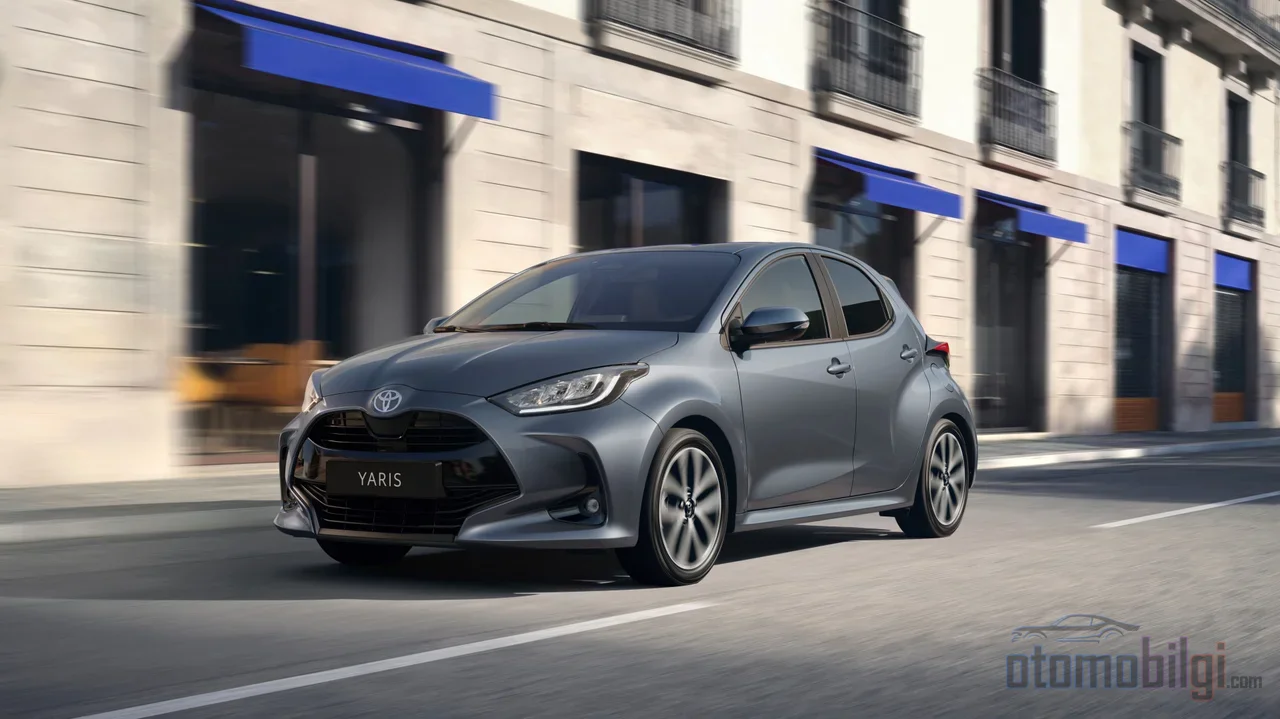
Yes: The Toyota Yaris Hybrid carries a full hybrid system in its B-segment body sourced from the family segment, making it one of the most efficient cars in its class in city consumption. The 1.5-liter system where the Atkinson-cycle gasoline engine and electric motor work together produces 116 HP of power, WLTP combined consumption is stated as 3.9 lt/100 km and it never needs to be plugged in. The question is, how much practicality and long-distance character is sacrificed when this technology sits in a small body? In this article, we examine the identity of the Yaris Hybrid with clear figures, from system architecture to competitor comparisons.
Highlights
- Full hybrid system: 116 HP, no need to plug in, it charges itself.
- WLTP combined consumption of 3.9 lt/100 km; user data shows city driving in the 3.5-4.8 lt range.
- Trunk capacity of 270-286 lt: at the limit of the B-segment, narrower than rivals.
- Hybrid battery warranty of 5 years / 100,000 km, extendable to 10 years / 160,000 km with authorized service maintenance.
- Toyota's smallest full hybrid: positioned below the Corolla, C-HR and RAV4.
How Does the Full Hybrid System Work?
The system in the Yaris Hybrid is neither a plug-in hybrid nor a mild hybrid; it is a full-fledged full hybrid architecture. It has six core components: gasoline engine, electric motor, generator, power control unit and power split device. The power split device continuously optimizes the task distribution between the internal combustion engine and the electric motor according to driving conditions. The battery is charged with the energy produced by the gasoline engine and especially through regenerative braking; in other words, the kinetic energy that would be lost while decelerating is recovered into the battery.
The gasoline engine operates with the Atkinson cycle instead of the traditional Otto cycle. In this cycle, the expansion stroke is kept longer than the compression stroke, thus achieving greater conversion of combustion energy into mechanical work. This engine, which is weak on its own, is complemented at low revs by the instant torque of the electric motor. The result: in stop-and-go traffic, the system can drive for hours on electricity alone, with zero emissions. In slow-moving traffic, it is also confirmed in user experiences that it can switch to electric mode up to approximately 50 km/h.
On the transmission side, there is no classic belt-driven CVT; the hybrid transmission has its own operation and the gear lever offers P/R/N/D/B positions. B mode comes into play especially on downhill descents: while acting as an engine brake, it also charges the battery at the same time. If you are descending on a windy mountain road, your frequency of pressing the brake pedal visibly decreases.
How Much Fuel Does the Yaris Hybrid Consume: City and Long-Distance Consumption
Giving a single figure to this question would be misleading, because the Yaris Hybrid's consumption profile sharply differentiates according to the driving environment. The factory-side WLTP combined value is 3.9 lt/100 km. In city use, the hybrid advantage reaches its highest point: real-world data shows between 3.5 and 4.8 lt/100 km showing a band ranging between. Users satisfied with the system report averages of 3.7 liters out of town and around 4.8 liters in daily 60-kilometer city use. There are examples dropping to the 4.5-4.6 liter band even in aggressive use and on rough routes. In fast driving, consumption can climb to around 5-6 liters; the determining factor here is the right foot, not the car alone.
The long-distance side is a different story. Since the hybrid system's architecture favors low speeds, the share of electric support decreases at constant highway speeds and the consumption gap narrows. 120 km/h consumption increases noticeably; dropping below 5 liters at 90 km/h becomes difficult. Also, the 36-liter tank keeps the city range surprisingly long (~650-700 km) while limiting the refueling interval on long-distance trips. In other words, this car's capability map is city-centric: ideal for a vehicle going to the supermarket, school, and work; less ideal for someone consuming 800 kilometers of highway every week.
If we scale this up annually, the difference becomes clear: an average 4.2 lt/100 km Yaris Hybrid burns about 630 liters of gasoline per year, while a standard gasoline B-segment car averaging 7.2 lt burns 1,080 liters. The annual difference of 450 liters between them is the yardstick against which you should evaluate, based on your own mileage, whether the hybrid premium is justified.
Interior and Trunk: How Far Can the B-Class Limit Be Pushed?
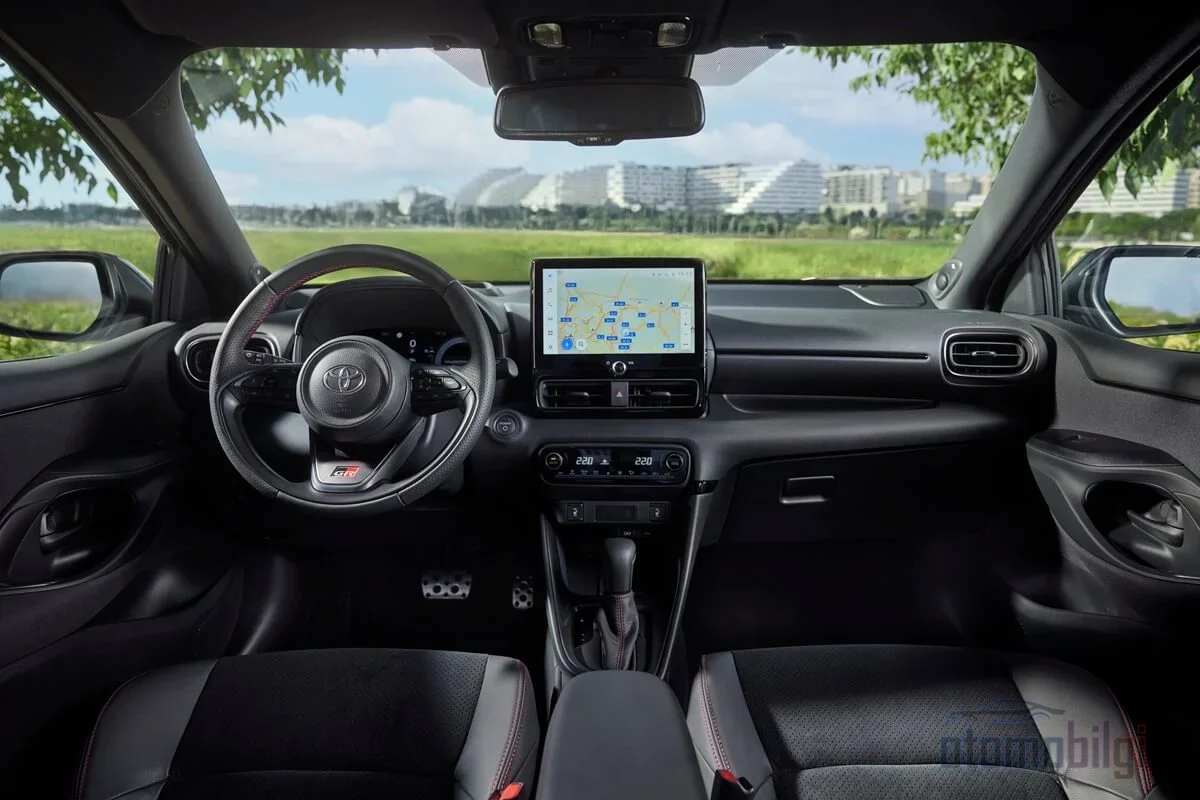
Here we encounter the Yaris Hybrid's most vulnerable side. Trunk volume is 270 liters; in hybrid equipment there are also measurements reaching up to 286 liters. For comparison: its sibling Yaris Cross offers a 397-liter trunk, while B-segment SUV rivals are in the 411-434 liter band. The limits of the hatchback Yaris quickly become apparent when it comes to baby strollers and large luggage units. For a family of five going on vacation, trunk planning can be a genuine engineering problem; in two-person use, the issue practically disappears.
Interior material quality is also a focus of criticism. The hard plastics on the door panels and dashboard are average for the class, but they lower the perceived quality. 110 km/h There is feedback that sound insulation weakens above this speed and the suspension works harshly on rough surfaces. In return, the equipment level has been kept above the class average: 8-inch multimedia screen, Apple CarPlay and Android Auto compatibility are standard, and considering that the Toyota Safety Sense safety package is an identity shared across all of the brand's hybrid models, a serious active safety set is expected even in the small body. Equipment options like the Passion X-Pack add a personal layer to the identity with a black roof option and a more aggressive look.
How Is It Different from the Corolla Hybrid?
While Toyota's hybrid lineup in Türkiye is largely told through the Corolla, C-HR and RAV4, the Yaris was always skipped as the smallest link in this story. In fact, the mechanical language is the same: an Atkinson-cycle gasoline engine, two electric machines and power splitting. The differentiation comes at three points. First, size and weight: since the Yaris serves less mass with its smaller body, the same system logic operates with higher efficiency. Second, positioning: while the Corolla Hatchback starts in Türkiye at a 2,230,000 TL band, the Yaris is positioned in a lower band, making it Toyota's lowest entry point into hybrid. Third, the 130 HP hybrid unit (with its more powerful electric motor and torque) seen in the facelifted Corolla models is not available in the Yaris hatchback; in Türkiye the Yaris is still sold with the 116 HP version. This difference is not felt at low speeds, but it is felt during full-load hill climbs.
Its Position Against Rivals: Clio and MG ZS Hybrid+
Two names stand out in the B segment with a full hybrid claim. Laying the comparison on the table across three axes draws the clearest picture:
| Model | Power | Hybrid type | Standout feature |
|---|---|---|---|
| Toyota Yaris Hybrid | 116 HP / 141 Nm | Full hybrid (e-CVT logic) | Urban efficiency, value retention, mature system |
| Renault Clio 1.0 TCe | 90 HP / 142 Nm | Not hybrid (gasoline) | Larger trunk and rear seat space, conventional gearbox |
| MG ZS Hybrid+ | 194 HP | Full hybrid (1.83 kWh battery) | Performance and 7-year warranty |
On the Clio side, the electrically assisted 1.0 TCe operates at a more accessible power level and uses a conventional gearbox instead of a belt-driven CVT; trunk volume and rear seat generosity are above the Yaris. In return, the Yaris's hybrid transmission adapts much more naturally to full hybrid operation, and in urban consumption the difference between them reaches a meaningful level. While the Clio earns praise for interior comfort, the Yaris responds with quietness and equipment level.
The MG ZS Hybrid+ is a different equation: 1.83 kWh battery capacity, 194 HP of power and an eager transmission character offer a livelier package on paper, with a long warranty behind it too. Toyota's experience in hybrid technology, however, dates back decades. The Yaris's main trump card here is the maturity of its hybrid architecture and its historical strength in second-hand value retention. For a buyer in the B segment who wants a full hybrid and prioritizes efficiency over performance, this balance tips in the Yaris's favor.
Battery Warranty, Maintenance and Things to Know
The first question that comes to mind when switching to hybrid is battery life. Toyota gives the hybrid battery a 5 years / 100,000 km warranty and, under the Warranty Ten program, can extend it to 10 years / 160,000 km with the condition of authorized service maintenance. There are hybrid battery examples worldwide exceeding 300,000 kilometers; meaning this structure, which manages charge cycles with regenerative braking, carries less risk of permanent battery degradation than plug-in systems.
Two practical notes to know: the conventional 12V battery had experienced discharge complaints during long parking periods, and the 2026 production has improved on this; it makes sense for owners of older models to have their battery checked. The second note concerns LPG: converting the hybrid system to LPG is technically not suitable and carries the risk of voiding the warranty. If you are a buyer who calculates fuel costs based on LPG, the Yaris Hybrid will require you to redo that equation.
Verdict: An Identity Audit
The Yaris Hybrid does not win on every front while pushing its class; it consciously chooses the front on which it will win. Luggage capacity, interior materials, and highway character are limited by B-segment realities. In return, it offers real-world consumption in the 3.5-4.8 lt range, a full hybrid with no need to plug in, a matured system architecture, and Toyota's heritage of safety. Its identity is clear: this is not a family car, it is a city car. Two adults, regular urban use, and a budget scenario where fuel cost is a genuine expense item - that is the environment where this car works most efficiently. If this describes you, the Yaris Hybrid is the answer to a question that has never been asked in the B segment until now.
Sources
- Toyota Hybrid - What Is Hybrid?
- Yaris Hybrid Model and Price List 2026
- Toyota hybrid - how does it work?
- Toyota Yaris Cross Hybrid Review 2026
- How Much Fuel Does the Toyota Yaris Hybrid Use?
- toyota yaris hybrid
- Yaris Hybrid
- New Toyota Yaris Hybrid Cool e-CVT
- 2025 Renault Clio 1.0 TCe vs 2024 Toyota Yaris 1.5 Hybrid
- MG ZS Hybrid+
- 2026 Toyota Yaris and Yaris Cross hybrid battery problem
- 2026 Toyota Yaris Hybrid Price and Specifications