Toyota Yaris Cross Hybrid: Which Is the Right Vehicle for Whom?
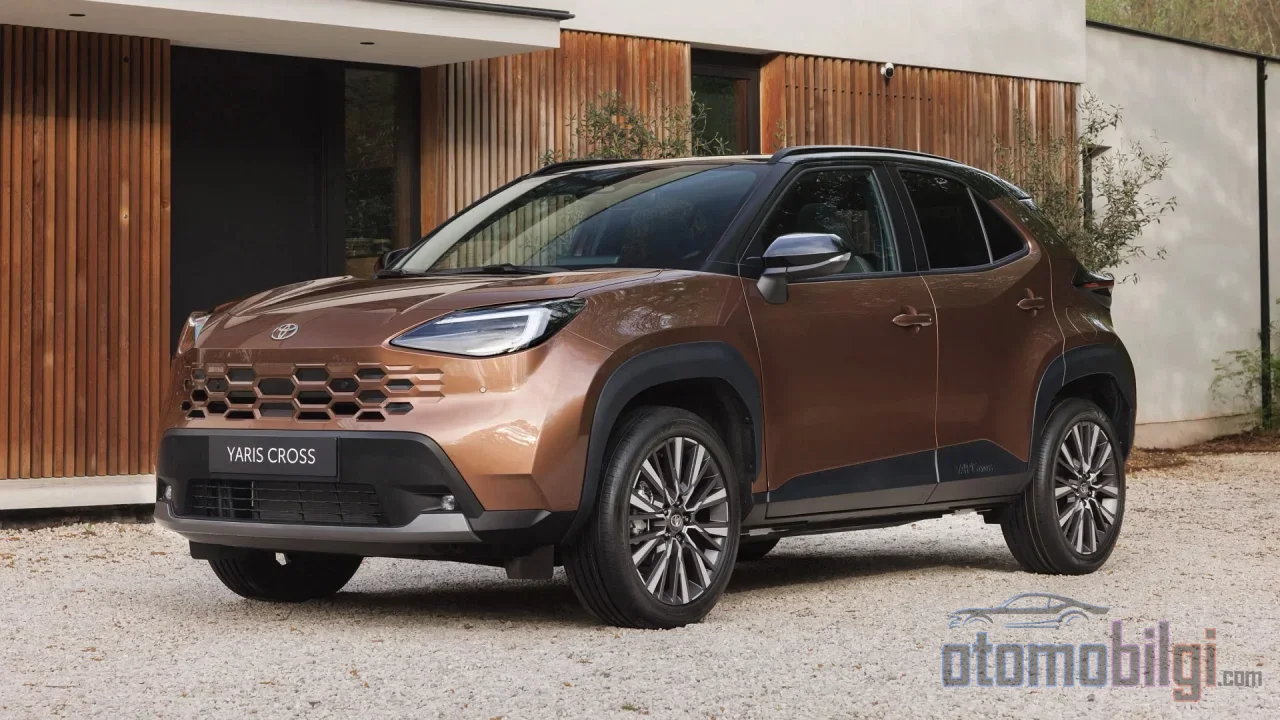
The hardest job for a B-SUV is fitting big promises into a small body. The Toyota Yaris Cross Hybrid is precisely at this point an interesting engineering experiment: The same platform as the Yaris hatchback, the same 1.5-liter three-cylinder naturally aspirated engine and the same full hybrid architecture, but with a higher driving position and an SUV body. So what does this combination really consume in stop-and-go city traffic, and how does its character change on long roads? The numbers give clearer answers than you might expect.
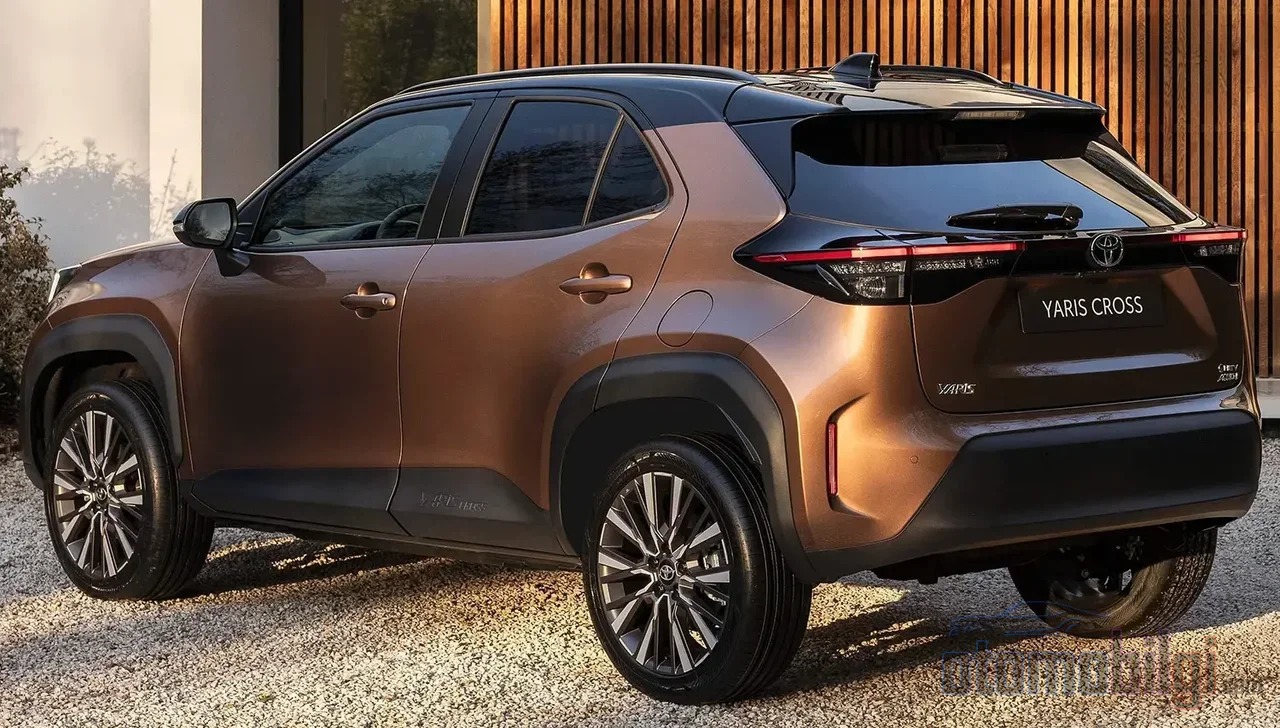
The Yaris Cross, Toyota's best-selling model in Europe, reached a sales figure of 200,000 units in 2025, and in 2026 it went on sale with a refreshed front design, new LED headlights and a grille matched to the body color. Produced at the Toyota Motor Manufacturing France facilities in France, the model comes with two power levels, Hybrid 115 and Hybrid 130, and a choice of front-wheel drive or AWD-i four-wheel drive. On this page, we will examine the entire picture, from how the hybrid system works to real consumption figures, and from interior practicality to the ownership experience.
How Does the Full Hybrid System Work?
At the heart of the Yaris Cross is a naturally aspirated engine with a displacement of 1,490 cc, three inline cylinders and DOHC 12 valves. VVT-iE valve timing is used on the intake side and VVT-i on the exhaust side; the compression ratio is a high value specific to hybrid use, at 14.0:1. The engine alone produces 91 Hp (68 kW) at 5,500 rpm and 120 Nm of torque at 3,600 rpm.
The interesting part is on the electric side. The permanent magnet synchronous motor called MG2 produces 59 kW and 141 Nm in the Hybrid 115 version and 62 kW and 185 Nm in the Hybrid 130, and the system operates at up to a maximum of 580 volts. In other words, at city speeds the electric motor, with its torque character, is more decisive than the gasoline engine. Total system power is 116 Hp (85 kW) in the Hybrid 115 and 130 Hp (96 kW) in the Hybrid 130. For those who want four-wheel drive, there is an additional induction-type motor on the rear axle producing 3.9 kW and 52 Nm; the AWD-i system has no driveshaft, the rear wheels are driven directly by electricity. Power transmission is managed by an e-CVT; the energy storage is a lithium-ion battery with 48 cells, a nominal voltage of 177.6 V and a capacity of 4.3 Ah.
Highlights
- The Hybrid 130 version offers 130 Hp of system power and 185 Nm of electric motor torque
- WLTP combined consumption is in the range of 4.4-5.0 l/100 km
- 0-100 km/h acceleration is 10.7 seconds in the fastest version
- Cargo volume is 397 liters up to the roof, and 1,097 liters with the seats folded
- Turning circle is only 5.6 meters - a striking figure in the compact class
Technical Specifications Table
| Specification | Hybrid 115 (FWD) | Hybrid 130 (FWD) | Hybrid 130 (AWD-i) |
|---|---|---|---|
| System power | 116 Hp (85 kW) | 130 Hp (96 kW) | 130 Hp (96 kW) |
| Electric motor torque | 141 Nm | 185 Nm | 185 Nm |
| 0-100 km/h | 11.2 sec | 10.7 sec | 11.3 sec |
| WLTP combined consumption | 4.4-4.5 l/100 km | 4.4-4.8 l/100 km | 5.0 l/100 km |
| CO2 (WLTP) | 100-101 g/km | 100-109 g/km | 114 g/km |
When the battery is combined with the 36-liter tank, the range calculation is easy: With combined consumption of around 4.5 l/100 km, a theoretical range exceeding 800 kilometers is possible. The recommended fuel is 95 octane and above. The suspension is MacPherson at the front and a torsion beam at the rear; the braking system is described as ventilated discs at the front and solid discs at the rear.
City Consumption: Stop-and-Go Is Actually an Advantage
The classic knowledge about hybrid systems is this: stop-and-go traffic is where the system works most efficiently, because at low speeds the vehicle mostly moves on electricity and braking energy is recovered regeneratively back into the battery. The Yaris Cross confirms this theory in the real world. In a real-world test program in Australia, city consumption was measured at 4.0 l/100 km; it came out at 4.3 on rural roads and 5.0 l/100 km on the highway. So in this car the city is more efficient than the highway - a character exactly the opposite of gasoline and diesel automobiles.
Owner experiences also support this picture: even in the cold season, levels of 60 mpg (approximately 4.7 l/100 km) are reported in city use, and with the engine and battery warmed up, values dropping to 70 mpg (below 4.0 l/100 km) are seen on mixed roads. The critical point is the initial warm-up: until the engine reaches operating temperature, the hybrid battery does not kick in, and especially in winter the vehicle runs entirely on gasoline for the first 2-10 minutes. This is the engineering explanation for consumption staying above the declared values on short, cold daily journeys.
Long Distance: The Hybrid's Weak Sibling?
At constant speeds, especially highway paces, the hybrid system's advantage diminishes; the electric motor cannot stay engaged and the 1.5-liter three-cylinder naturally aspirated engine carries all the work alone. Long-term test data clarifies this picture: in purely highway use, consumption rises to 50.6 mpg (approximately 5.6 l/100 km). In the first drive test after the facelift, 4.8 in the city, 5.8 overall average and 6.7 l/100 km on the highway were measured - these values show a more realistic profile reflecting dynamic use.
In summary: a 4.0-4.8 l/100 km band in the city is normal, and a 5.0-6.7 l/100 km band on the highway is the expected range. These are still low values for its class; but one must know that the vehicle's character changes clearly depending on the way it is used. For a high-mileage family highway user, the small turbocharged gasoline engines in rivals may give similar results; for a city user, the difference is clear.
Interior and Luggage Practicality
Luggage: What Do the Numbers Say?
The luggage figures vary by specification, and reading this distinction correctly is important: up to the tonneau cover 266-350 liters, up to the ceiling with five seats 320-397 liters, and 1,097 liters with the rear seats folded down. The most commonly accepted figure is 397 liters, about 100 liters more than the Yaris hatchback. That figure is one of the ambitious ones in the class; but it is behind the Ford Puma's 456 liters. In AWD-i versions, the rear electric motor takes up about 77 liters of space from the trunk, which is the invisible price of choosing all-wheel drive.
Cabin Flexibility
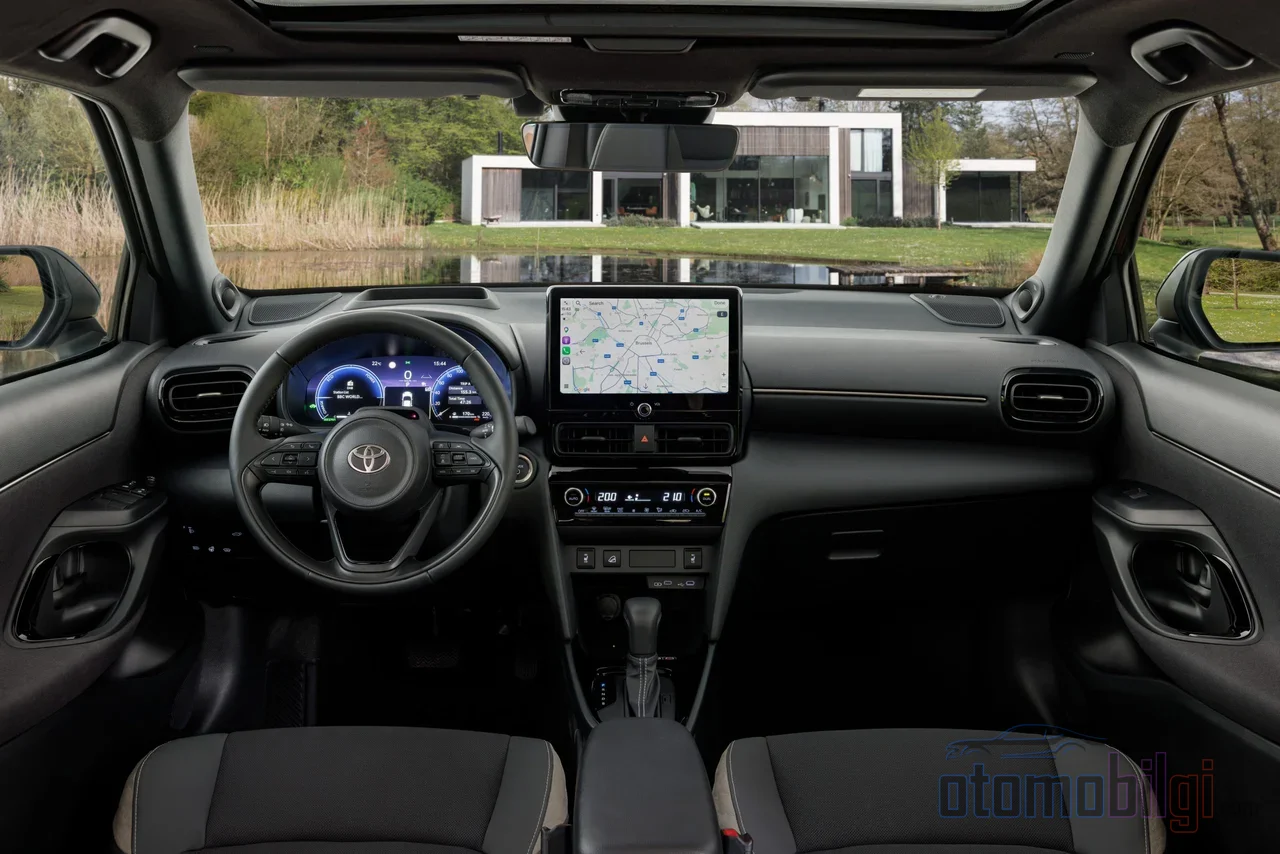
In high-spec versions, the rear seats fold in a 40:20:40 ratio (60:40 on the entry level), and the trunk floor is also split into two pieces, allowing taller items to be carried. A sensible flexibility solution for a body measuring 4,172-4,197 mm long with a 2,560 mm wheelbase. On the other hand, the criticisms are clear: there is plenty of hard plastic used in the cabin, and the trunk volume is generally considered narrow. Kerb weight ranges between 1,190 and 1,355 kg; the braked towing limit is 750 kg.
Equipment and Technology
With the 2026 update, the multimedia side grew considerably: top trims offer a 10.5-inch multimedia screen and a 12.3-inch digital instrument cluster. The highest trim features wireless phone charging, a power tailgate with a kick sensor, a 360-degree Panoramic View Monitor, blind spot monitoring and Advanced Park Assist; even the entry level has LED headlights and auto-folding mirrors as standard. The GR Sport version can only be chosen with the Hybrid 130 powertrain, in front-wheel drive form.
There is also a noteworthy detail on the sustainability side: the SakuraTouch partial leather seat upholstery in the top trim is produced with plant-based PVC, waste cork and recycled PET content; Toyota reports that producing this upholstery emits 95% less CO2 compared to genuine leather.
How Does It Stand Out From Its Rivals?
In the B-SUV segment, the alternatives to the Yaris Cross are wide: Renault Captur, Peugeot 2008, VW T-Cross, Škoda Kamiq, Hyundai Kona, Ford Puma and Audi Q2 can be counted. In this crowded field, the Yaris Cross's clearest point of differentiation is its powertrain: while most of the segment relies on small turbocharged petrol engines, here there is a full hybrid that requires no charging and measurably drops into the 4-liter band in the city. Its 5.6-meter turning circle (5.3 m curb to curb) is also a practical asset on narrow city streets.
Its closest technical rival is the Honda Jazz's 1.5 e:HEV system: the Jazz, with real-world city measurements of 68.8 mpg, is still in the race for the consumption championship - but it drops to 43.4 mpg on the highway; so there is no difference in character, only a difference in measurement. The Yaris Cross's answer to the Jazz's space advantage is its SUV body, a higher driving position and the AWD-i option. Very few rivals in this size can offer all-wheel drive through electrification.
Ownership Experience and Things to Watch Out For
Owners' overall assessment of the hybrid powertrain is positive; its efficiency and driving experience are praised. There are two notable structural issues. The first is the 12-volt auxiliary battery: drainage has been reported in vehicles left parked for long periods, a situation that can be managed with a trickle charger; it does not pose a problem with regular use. The second is user complaints about a clogging risk in the GPF filter. Toyota ranked 19th out of 30 brands in the 2026 driver satisfaction surveys - a data point showing that a segment-leading reliability image is not as sharp in current surveys. On the warranty side, 3 years / 60,000 miles is offered with annual service periods of 10,000 miles.
On the warranty side, 3 years / 60,000 miles is offered with an annual service period of 10,000 miles. The model is still on sale: In the United Kingdom, it is available to order with a starting price of £27,445, and the Hybrid 130 has become standard across all versions; In Australia, 2026 model year vehicles are available at dealers in the AU$36,685-45,216 driveaway range.
Who Is This Car Right For? The clear answer is this:
The clear answer is this: The Toyota Yaris Cross Hybrid is one of the most consistent options in its segment for users whose focus is city and mixed use, who do not want to deal with plug-in charging infrastructure and its extra cost, but who want low consumption and practicality. The 4.0-4.5 l/100 km urban range is verified in the real world; The 397-liter cargo area, 40:20:40 folding seats, and 5.6 m turning radius carry everyday use. a cabin weighted toward hard plastics, rising consumption on the highway, and the care the 12V battery needs during long-term parking. A high-mileage city user turns this list into a positive; A high-mileage city user turns this list into a plus; while a weekly highway long-distance driver should also consider more balanced alternatives.