2026 MG ZS Hybrid+: Can It Scare Toyota in the Small SUV Class?
Share This Page
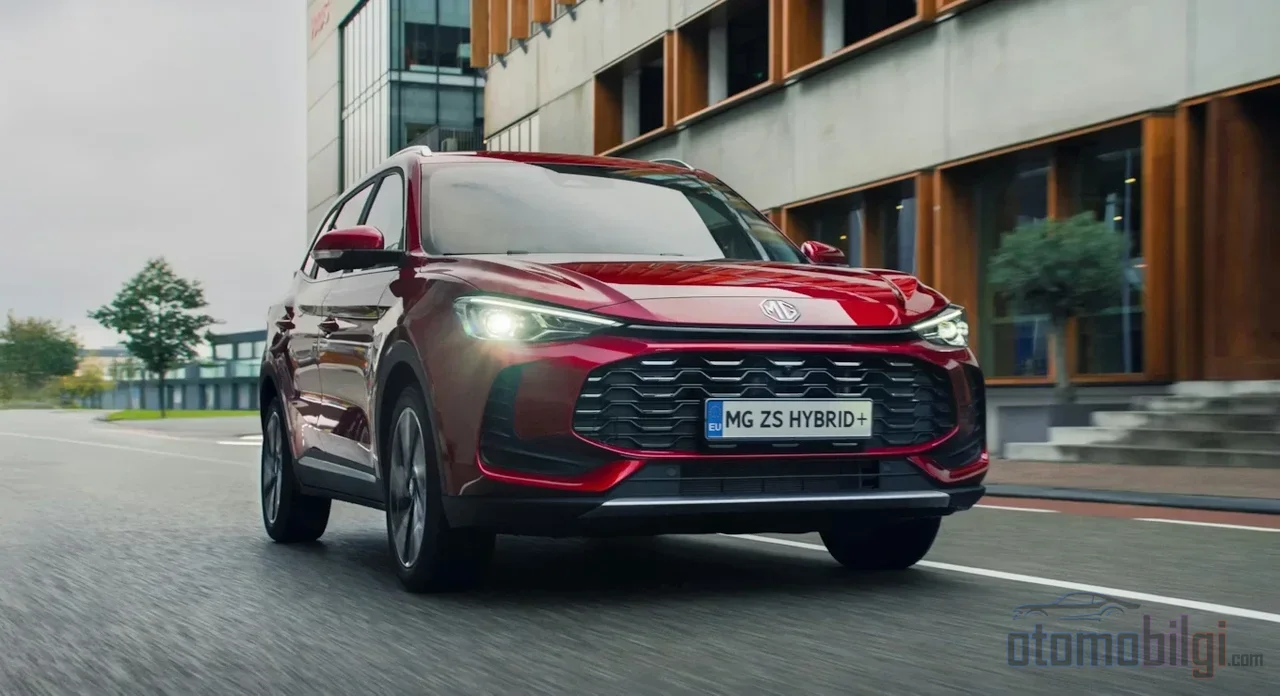
The MG ZS Hybrid+ is a full hybrid C-SUV that combines its 1.5-liter naturally aspirated petrol engine with a 136-horsepower electric motor through a 3-speed hybrid transmission, 197 PS reaching a total system output. Without needing a charging station, this system self-charges the battery through braking and the petrol engine, driving primarily on electric power in the city while targeting a WLTP combined consumption of 5.1 L/100 km . In a market accustomed to Toyota's small hybrid SUVs, it is trying to stand out with its equipment-to-budget balance.
Highlights
- Total system output 197 PS: 102 PS 1.5 petrol engine plus a 100 kW electric motor
- 1.83 kWh NMC battery, full hybrid architecture requiring no charging
- WLTP combined consumption 5.1 L/100 km, CO2 emissions of 115 g/km
- 443 liters of trunk space; rising to 1,457 liters with the seats folded
- In Türkiye, it is sold brand new only as the Hybrid+ with a single equipment level
Why Is the New ZS Now Hybrid Only?
In the Turkish market, MG's small SUV was sold with petrol options for a long time: the 1.0 T-GDI turbo and 1.5 VTi naturally aspirated versions were sought-after names on new car price lists for years. With the new generation, this picture has changed; the petrol versions were withdrawn from the new car lineup, and the MG ZS Hybrid+ was offered for sale with a single engine option and a single equipment level. In other words, MG has tied the model's future entirely to a full hybrid architecture.
This is a test of courage. Because in the small hybrid SUV class, there is a brand that has cemented itself in buyers' minds and become synonymous with hybrid technology: Toyota. MG's move targets precisely the weak point of this perception: offering the same hybrid comfort, higher system output, and top-level equipment with a comparatively more accessible budget. To understand the model's identity, we first need to look at how the system works.
The Anatomy of the System: 102 PS Petrol Plus 136 PS Electric
Under the hood is a 1,498 cc, four-cylinder, naturally aspirated petrol engine. Producing 102 PS and 128 Nm on its own, this engine was never designed to work alone; the side carrying the real load is the electric motor, which produces 100 kW (136 hp) of power and 250 Nm of torque. The combination of the two reaches 197 PS in total system output, a figure above most of the class's established Japanese rivals.
The system's distinctive component is the transmission. Unlike many single-ratio full hybrids, the ZS Hybrid+ uses a 3-speed hybrid transmission. What this means is: the electric motor can operate efficiently across a wide speed range, while the petrol engine will engage at points where it can hold the right rev band. The manufacturer's promise of "seamless and smooth transitions" is built precisely on this mechanical setup. The performance signs of the front-wheel-drive layout are also clear: 0-100 km/h in 8.7 seconds, with a top speed of 168 km/h. For a small hybrid SUV, 8.7 seconds means serious acceleration capability.
On the battery side, there is a 1.83 kWh capacity NMC pack. Compared to plug-in hybrids, this small capacity is the natural result of the full hybrid philosophy: the battery requires no external charging, continuously replenishing itself with energy recovered during braking and produced by the gasoline engine. The electric driving share emerges as an output of this architecture; it is stated that in city traffic the vehicle can progress almost entirely electric and silent. Fully electric driving up to 100 km/h is a claim from the manufacturer's marketing language; it must be taken into account that in the real world this limit will vary depending on driving style and battery condition.
Electric in the City, Gasoline on the Open Road: Consumption Character
The official figures are clear: WLTP combined consumption 5.1 L/100 km, CO₂ emissions 115 g/km, fuel tank capacity 41 liters. It is worth reading these three together; the relatively small 41-liter tank is consistent with the logic of a full hybrid. Since the system is efficient, a large tank is unnecessary, and the vehicle draws a steady long-distance character with ranges approaching over 800 km depending on conditions.
The real-world usage table is somewhat more colorful. In city-heavy usage, user reports point to an average of around 5.5 L/100 km ; that is, close to the WLTP value, even a satisfying level. In external tests driven with a gentle foot, consumption was seen to drop below the WLTP value into the mid-4-liter band, while under aggressive use it stayed above 5. On long journeys and at high speeds, consumption naturally increases; this is physics every full hybrid shares: as aerodynamic drag grows exponentially with speed, the share of electric assistance decreases. In the short term, the picture is still attractive for anyone calculating annual costs: a user driving 15,000 km per year, paying 65 TL per liter, faces an annual fuel cost of approximately 53,600 TL with a real-world average of 5.5 liters.
One detail to note: the system is designed to run on high-octane (95 and above) gasoline. Also, the 1,498 cc displacement falls into the 1301-1600 cc bracket on the motor vehicle tax (MTV) side; in 2026, the tax to be paid for 1-3 year-old vehicles in this bracket is 12,028 TL. For the reader calculating total cost of ownership, these two items must absolutely come to the table alongside the brochure consumption value.
| Specification | Value |
|---|---|
| Gasoline engine | 1,498 cc, 102 PS / 128 Nm |
| Electric motor | 100 kW / 250 Nm |
| Total system power | 197 PS |
| Battery | 1.83 kWh (NMC) |
| Transmission | 3-stage hybrid, front-wheel drive |
| 0-100 km/h | 8.7 s |
| Top speed | 168 km/h |
| WLTP consumption / CO₂ | 5.1 L/100 km / 115 g/km |
| Cargo capacity | 443 L / 1,457 L |
Dimensions and Cargo: The Practicality Exam of the Small SUV Class
Approximately 4.43 meters in length, 1,818 mm in width and 2,606 mm wheelbase places the ZS Hybrid+ in classic B+ / small C-SUV proportions. The long wheelbase is reflected in the interior; rear knee room is above what this class typically expects. The 40:60 folding rear seats add flexibility for carrying loads, while the real leap is seen in the trunk: the previous generation's 359-liter cargo area has been replaced by a 443-liter volume; with the seats folded down, this figure extends to 1,457 liters. The cargo floor, adjustable to two levels, is a small but meaningful detail that makes a difference in daily use.
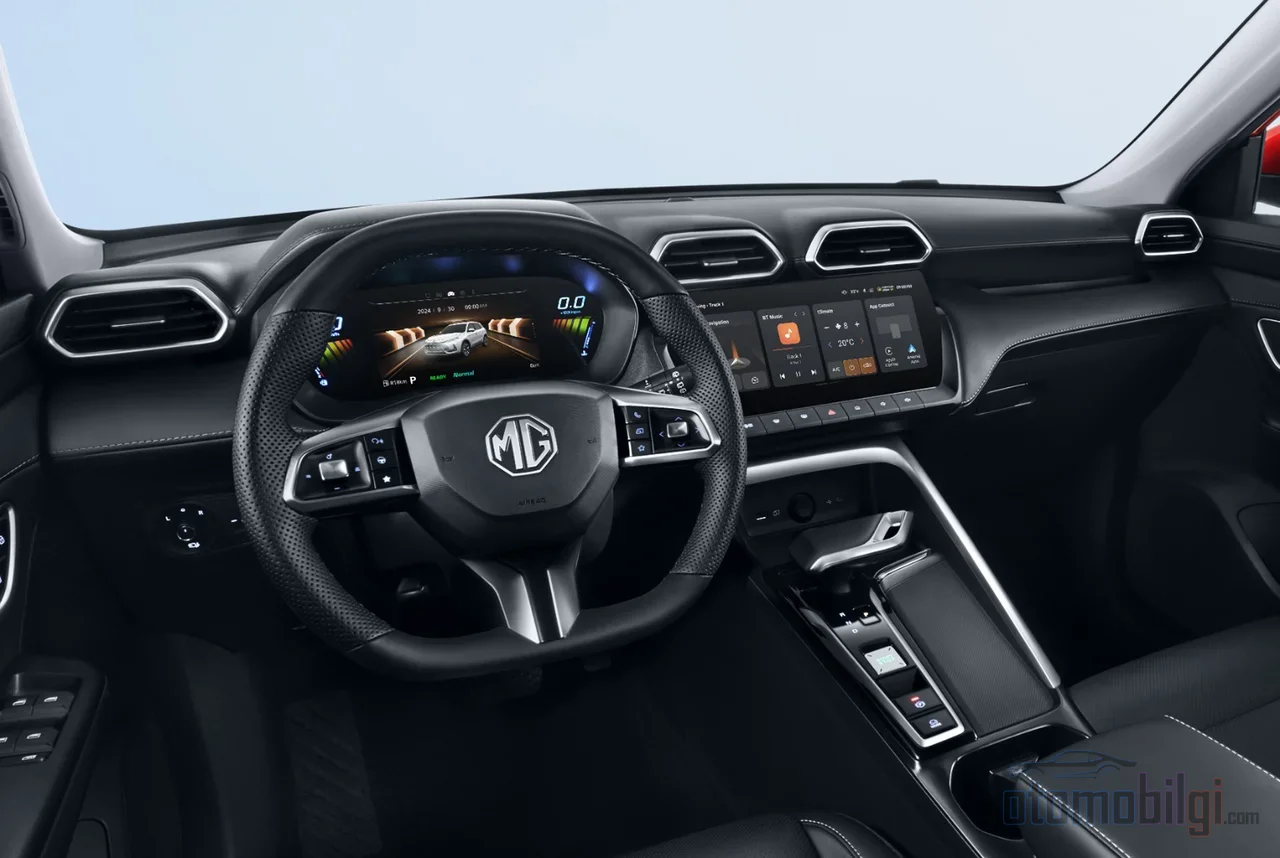
On the cockpit side, since there is a single equipment level, everything is standard: 12.3-inch digital display and 12.3-inch touchscreen side by side, Apple CarPlay and Android Auto ready via wired connection, a 6-speaker audio system, and the jet-wing style gear lever are complementary details. The comfort list is not empty either: vegan leather seats, heated front seats, a heated steering wheel, and improved sound insulation. Foreign press highlights the quality leap in the interior; compared to the previous generation's hard plastics, soft-touch materials and two-tone upholstery noticeably elevate the perception. The suspension setup is comfort-oriented; the surprisingly good ride comfort on the chassis side is also a result of this calibration.
MG Pilot: The Safety Package That Comes With a Single Trim
In all ZS Hybrid+ vehicles in Türkiye, the MG Pilot driver assistance package is standard. Its content goes above class standards:
- Adaptive cruise control and automatic emergency braking
- Lane keeping and lane change assistance
- Blind spot monitoring and rear cross-traffic alert
- Door opening warning and speed assist
- 360° camera system
The electrically opening panoramic glass roof, as of the 2026 model year, is optional on the Luxury level and has been offered as a gift or at a discount during some campaign periods. The main message on the equipment front is this: a single trim option eliminates the buyer's "which package should I get" dilemma; safety and comfort are already waiting ready at the table.
Can It Scare Toyota? Comparison With the Yaris Cross and C-HR
The answer to the question must be sought on two separate axes: mechanical and perception. On the mechanical axis, the picture speaks in MG's favor. The Yaris Cross, as Toyota's small hybrid SUV, has around 130 horsepower; the C-HR carries 5th-generation hybrid technology but its price tag is noticeably higher. The ZS Hybrid+, with its 197 PS system output and 3-speed transmission, stands in an above-class position in acceleration and driving liveliness; its cargo volume, at 443 liters, is also above the class average.
The perception axis is more complicated. When the words "reliability" and "resale value" are mentioned in hybrid technology, the first brand that comes to mind in Türkiye is Toyota. The reliability and after-sales perception of the Corolla Cross Hybrid, along with the brand prestige of the Honda HR-V e:HEV, are two areas MG is still trying to build. That's why MG's strategy is clear: compensating for resale value with price advantage and equipment abundance. On the assurance side, 7-year warranty emphasis is also part of this equation.
| Model | Power | Standout aspect |
|---|---|---|
| MG ZS Hybrid+ | 197 PS | Equipment/price balance, trunk capacity |
| Toyota Yaris Cross | 130 hp | Hybrid technology perception, brand trust |
| Toyota C-HR | 5th generation hybrid | Design, resale value |
| Corolla Cross Hybrid | 140 PS | Reliability perception, ~4.5-5 L consumption |
| Honda HR-V e:HEV | 131 PS | Brand perception, ~5-5.5 L consumption |
Criticized Points: Battery Management and Service Network
Beyond the official figures, there are also tested realities, and skipping them from an engineer's perspective would be wrong. In an independent test conducted in foreign markets, it was noted that after the battery was drained to the 15% level, an unexpectedly complete charge depletion occurred, and in this situation the 102 PS gasoline engine left on its own (with effective power even lower at low revs) caused a noticeable loss of performance. The manufacturer announced that it resolved this issue with a software update in the Australian and New Zealand markets; confirming through the service network when the update has been applied to vehicles in Türkiye is a sensible step before purchasing.
Two more themes stand out in user reports: battery/electrical system and driver assistance sensor warnings on some vehicles, and potentially slow service and spare parts access in smaller provinces. The perception of resale value being weaker compared to Toyota is also an existing reality. These are not flaws that disqualify the model; but they are variables that should be taken into account by someone planning long-term use of a hybrid vehicle.
Conclusion: An Accountant-Friendly Full Hybrid
MG ZS Hybrid+ is a systematic answer to the small hybrid SUV class: with its transmission, engine power, and luggage capacity, it stays above the class average while trying to balance its weak point, brand perception, with a long warranty period and abundance of equipment. It is not realistic for a single model to shake Toyota's hybrid reputation built up over the years; but for a buyer who drives thousands of kilometers a month and reads the fuel bill and the equipment list at the same time, the equation changes. A vehicle whose battery management software is confirmed to be up to date truly makes its rivals' case difficult in the consumption and equipment categories. To be scary? Maybe not. But it's enough to mess up the math.
Sources
- MG ZS Hybrid+ | The Fuel-Saving Hybrid+ SUV
- Fuel Consumption Is Truly Impressive | MG ZS Hybrid+
- MG ZS Hybrid+ Coming to Türkiye in February!
- Should You Buy an MG ZS? Petrol and Hybrid Prices and Problems 2026
- MG ZS Essence Hybrid+ review: almost done
- MG ZS 2026 Review, Price and Specifications
- MG ZS Hybrid+ SE 2026 Detailed Technical Specifications
- MG ZS Hybrid or Toyota C-HR? 2026 Hybrid SUV Test
- This time it really makes sense: 2026 MG ZS Hybrid+ Luxury review
- 2026 MG ZS Hybrid+ review - Henry Man