Honda Jazz e:HEV Achieves 885 km of City Range on a Full Tank
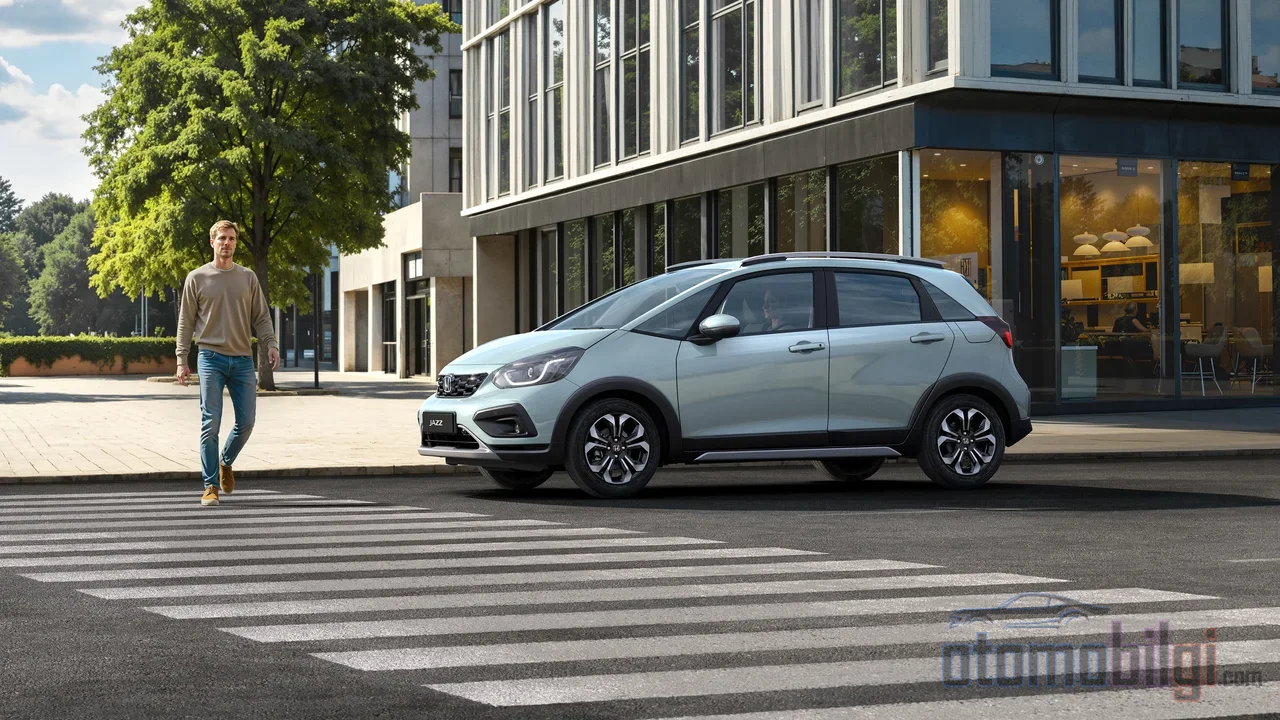
In city traffic at the wheel, the Jazz e:HEV's petrol engine is often completely silent. A small diagram flows on the instrument panel showing which energy source is driving the wheels, and when you stop at traffic lights you can often see that only the electric motor, fed by the battery, is running. So what makes this small hatchback so efficient in the conditions where stopping and starting is most costly, namely narrow city streets? The answer comes from an engineering philosophy different from Toyota's Powersplit solution: Honda's two-motor i-MMD system removes the internal combustion engine from the driving equation at low speeds.
How Does the Two-Motor e:HEV System Work?
At the heart of the Jazz e:HEV are three main components: a 1.5-liter Atkinson-cycle petrol engine, a drive motor, and a generator motor. The trick of the system lies in how these three are connected to each other. At low speeds, the system behaves like a series hybrid: the petrol engine is never connected to the wheels, it only generates electricity by turning the generator, and the drive motor propels the vehicle on its own. At high-speed cruising, a lock clutch engages and the petrol engine is connected directly to the axle, switching to a parallel hybrid arrangement.
These transitions happen automatically without driver intervention, according to battery charge state and driving conditions. There is also no EV mode button in the system; the vehicle decides for itself which mode is efficient. During deceleration, regenerative braking recovers kinetic energy and feeds the battery.
Three Driving Modes
- EV Drive: During startup, acceleration, and city driving, the vehicle moves solely with the electric motor, without consuming petrol or producing exhaust emissions; the petrol engine is completely off.
- Hybrid Drive: The petrol engine drives the generator, and the electricity produced goes to the drive motor; when needed, power is also added from the battery.
- Engine Drive: At highway speeds, the lock clutch connects the petrol engine directly to the wheels; this is the most efficient arrangement at high speeds.
On the electric side, the drive motor produces 90 kW of power and 253 Nm of torque. For a 1.2-ton B-segment car, this instantaneous torque value provides a light-feeling push at starts and mid-range revs. On the power electronics side, the PCU raises the operating voltage up to 650V, increasing efficiency. The Atkinson-cycle DOHC engine is designed for high thermal efficiency; the engine displacement is 1497 cc. Using magnets free of rare-earth elements in the system's drive motor is also a deliberate engineering choice from a supply chain perspective.
Highlights
- Total system output of 109 PS (80 kW), 0-100 km/h in 9.4 seconds
- Electric motor of 90 kW / 253 Nm; in the city, the petrol engine is often disengaged
- WLTP consumption at 3.8 L/100 km; real city averages around 4.4 L/100 km
- 5 stars under the new Euro NCAP standards; Honda SENSING as standard equipment
- Rear seats that fold or flip up with Magic Seats, offering a spacious interior for its class
Honda Jazz e:HEV Technical Specifications
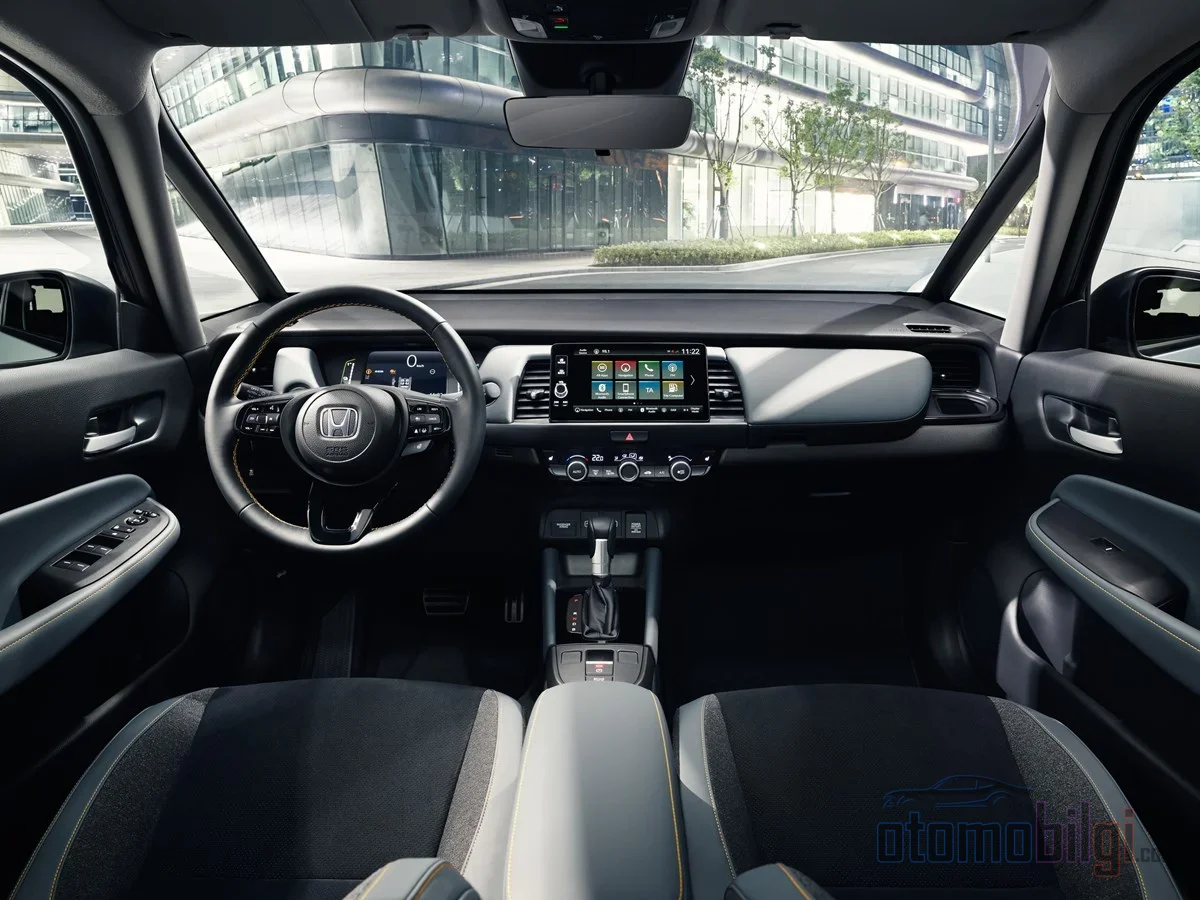
A measurement note before filling in the technical table: performance figures are taken from Honda's official European press releases. Different measurement standards (such as ECE, ISO) can sometimes produce results that differ by a few horsepower or tenths of a second; the official figures used here are those referenced below.
| Specification | Value |
|---|---|
| Total system power | 109 PS (80 kW) |
| Electric motor power | 90 kW |
| Electric motor torque | 253 Nm |
| Petrol engine | 1.5-liter Atkinson DOHC, 79 kW (107 PS) |
| Petrol engine torque | 131 Nm |
| 0-100 km/h | 9.4 seconds |
| Top speed | 175 km/h |
| WLTP consumption target | 3.8 L/100 km |
| CO2 emissions | 102 g/km (110 g/km in some versions) |
| Kerb weight | 1228-1251 kg |
The most striking line in the table is the torque figure. 253 Nm is a higher number than many 1.0-liter turbocharged petrol engines in the same segment, and this torque is delivered to the wheels from zero, without gear changes, in a single stage. What this means in daily use is this: every command you give to the accelerator pedal in the city turns into propulsion without waiting for a rev increase.
City Consumption: The Numerical Counterpart of the Electric Feel
The most tangible benefit of the two-motor architecture shows up in consumption. Honda's claim on the WLTP cycle is 3.8 liters per 100 kilometers; on the official cycle it matches with 62.8 mpg and a CO2 value of 102 g/km. The real world shows a reasonable deviation: in long-term field tests, the city average was measured at 4.4 L/100 km, and 4.3 L/100 km was seen on a combined 150-kilometer journey. User data points in a similar direction: some owners report consumption figures of around 66-67 mpg.
What is interesting is that the weak point is not city traffic, but the high speed range. User experiences show that the best consumption is achieved in the 65-80 km/h band, while the value rises noticeably in the 90-110 km/h range. This can be explained entirely by the system architecture: in EV and Hybrid Drive modes the car behaves almost like an electric vehicle, while at sustained high speeds it switches to Engine Drive mode and the petrol engine carries the load directly. In a small hatchback with steep aerodynamics, this is a natural result. With city-weighted use, a range of up to 550 miles, that is approximately 885 kilometers, is possible on a full tank; even with mixed use weighted toward highways, figures approaching 700 miles per tank have been reported on a WLTP basis.
Magic Seats and Interior Practicality
The Jazz's identity is not limited to its drivetrain. The Magic Seats concept, carried on since the first generation, has been preserved in the fourth generation as well: the rear seats both fold flat to enlarge the luggage floor and, by flipping their cushions up, open a vertical load area behind the front seats. This second configuration offers flexibility not found in classic hatchbacks for tall but narrow items, from a potted plant to a shopping bag.
The rear seat is wide enough to accommodate three adults, offering an interior that grows with the vehicle across generations. So the Jazz combines the efficiency of the two-motor system with family car practicality as well; a combination that not every car in its segment can deliver.
Safety and Equipment: Honda SENSING
The Jazz e:HEV has received 5 stars under the renewed and more demanding Euro NCAP protocols; it scored 87 percent in adult protection and 83 percent in child protection. At the heart of the safety package is Honda SENSING, which includes Adaptive Cruise Control that follows with height and distance information, lane keeping assist, forward collision warning, lane departure warning and systems that mitigate the risk of leaving the road. The front center airbag is also part of the new generation of passive safety equipment.
Its Position Against the Toyota Yaris Hybrid
In the B segment, the first rival that comes to mind when full hybrid is mentioned is the Yaris Hybrid. In published comparisons, there are assessments that the Yaris is roughly one-tenth of a liter more efficient in dense stop-and-go traffic, and Toyota's system is found advantageous in the overall efficiency balance. However, real-world data balances the picture: Jazz users report real-world consumption figures comparable to those of Yaris owners. In other words, Toyota's small advantage on paper does not turn into a decisive gap in practical use.
Moreover, the two cars solve the same problem with different methods. The Yaris's Powersplit arrangement continuously blends the power of the engine and electric motors with a planetary gear set; Honda's i-MMD system, on the other hand, clearly separates the modes and completely takes the gasoline engine out of the loop at low speeds. Where the Jazz truly stands apart is the space inside it: Together, the Magic Seats and a rear seat for three adults offer a noticeably more flexible use than what the Yaris's hatchback body provides.
Why Is the Jazz e:HEV So Efficient in the City?
The short and clear answer: because at city speeds, the Jazz e:HEV is effectively an electric car. In the two-motor i-MMD system, the gasoline engine stays completely off during startup and city driving, with the 253 Nm torque electric motor driving the car silently and with zero exhaust emissions; the gasoline engine only steps in as a generator when needed and locks up to connect directly to the wheels at high speeds. The stop-and-go rhythm of the city coincides with this architecture's most efficient operating zone.
From an engineering standpoint, the critical element is this: being able to decouple the gasoline engine from the wheels means being able to run it always at the rpm and load point where its thermal efficiency is best. When driving resistance is low in the city, this electric power transmission chain delivers a more efficient result than the friction and transmission losses of a mechanical connection. The system's more than 1 million sales in the US over 12 years and its spread across Honda's product lineup from the Accord to the Civic, from the CR-V to the Prelude, demonstrate the scalability and maturity of this architecture.
As a result, the Jazz e:HEV stands above the class averages with its 109 PS system output and 0-100 km/h time of 9.4 seconds, while offering real-world consumption of just over 4 liters in the city and a fully electric, silent driving experience. Add the practicality of the Magic Seats and a five-star safety package, and it stands out in the small hatchback segment as a product of systematic engineering.