How Do the Two Engines Work Together in the Renault E-Tech?
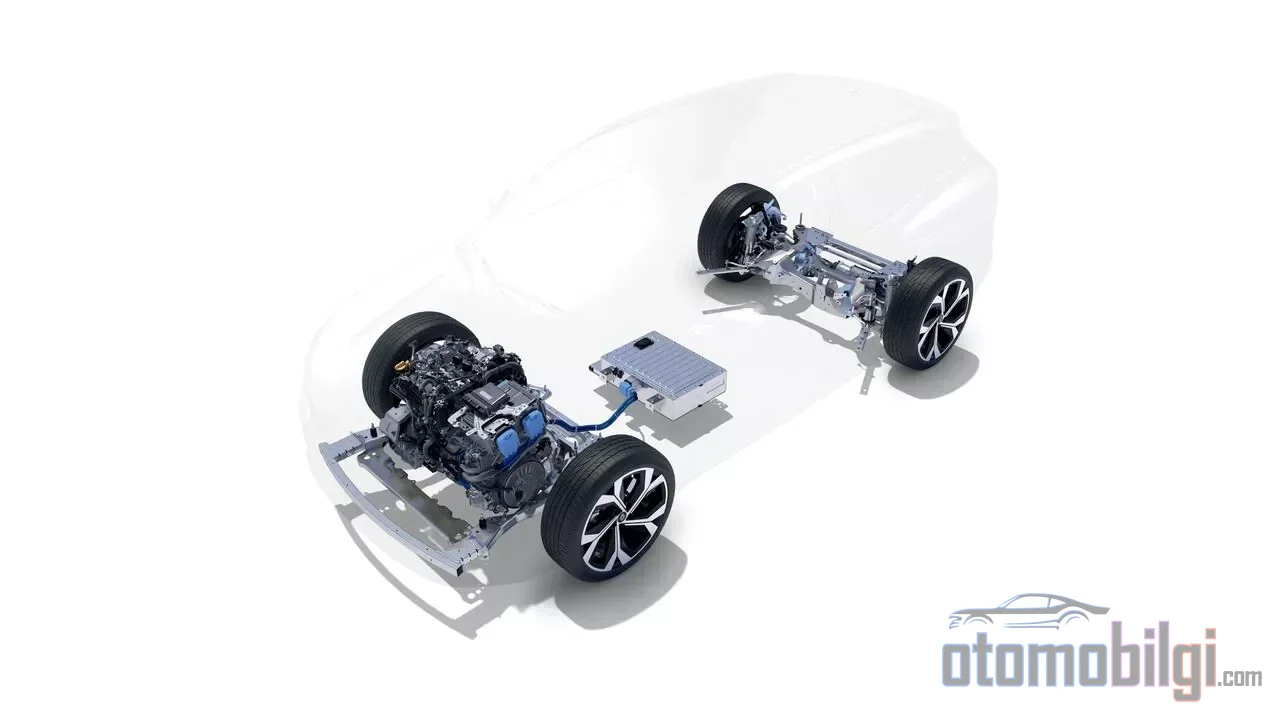
When you tell most drivers that under the hood of a hybrid car there are two electric motors and an internal combustion engine, they turn the question around: how are three power sources connected to the wheels at the same time, and doesn't one get in the way of the other? In Renault's E-Tech full hybrid system, the answer to this question rests on a choice rarely seen in the industry: a structure that combines series and parallel hybrid architectures in a single gearbox, protected by more than 150 patents. So when does one of the two electric motors become a generator, under what conditions does the internal combustion engine join the wheels, and why can the Austral E-Tech drive entirely on electric power up to 130 km/h?
Series-Parallel Architecture: Two Worlds Meet in a Single Gearbox
Hybrid systems fall roughly into two schools. In a series hybrid, the internal combustion engine never drives the wheels; it only turns a generator, feeds the battery, and the electric motor propels the vehicle under all conditions. In a parallel hybrid, both power sources are connected directly to the wheels and can work alone or together. The strengths and weaknesses of both approaches are clear: the series architecture offers mechanical simplicity and smoothness, but because it converts energy twice, highway efficiency is limited; the parallel architecture is efficient, but managing the transitions is complex.
Renault E-Tech uses a series-parallel architecture that combines the advantages of these two schools in a single drivetrain. The system consists of three power sources: an internal combustion engine and two electric motors. The critical point is that the role of one of the electric motors is not fixed; depending on speed and load conditions, the distribution of tasks is redefined by the system in real time. This flexibility is the source of all the driving character we will cover in the rest of the page.
Job Description of the Three Power Sources: E-Motor and High-Voltage Starter Generator
Examining the E-Tech 160 version piece by piece clarifies how the architecture works. The main electric motor, that is, the e-motor, produces 36 kW (50 hp) of power and 205 Nm of torque. This motor can do two jobs on its own: driving the wheels and pumping kinetic energy back into the battery during braking or deceleration. The second electric motor is a high-voltage starter generator (HSG) with a power of 15 kW (20 hp). Don't be misled by the word generator in its name; this unit assists the gearbox by controlling the engine speed during gear changes - to put it with the technical information reported by Top Gear, the second motor's main job is to manage the flywheel speed.
On the internal combustion side, the current version has a 1.8-liter four-cylinder petrol engine (80 kW, 172 Nm of torque, usable from around 2,000 rpm). Running on the Atkinson cycle, this engine is designed for efficiency: 350 bar direct injection and an expanded expansion phase are classic engineering moves aimed at extracting the maximum possible from the energy carried by the fuel. The battery-side figures follow the same logic: The 1.4 kWh, 230-volt lithium-ion pack offers roughly 20% more usable capacity than the previous generation's 1.2 kWh unit. The key point to note is this: this is not a plug-in system. The battery is not charged by plugging it in; the energy comes entirely from regenerative braking and, when needed, from the internal combustion engine acting as a generator.
Highlights
- In the E-Tech series-parallel architecture: two electric motors + internal combustion engine, with 5 driving modes selected by the system from 15 possible combinations.
- E-motor: 36 kW / 205 Nm; the second motor serves as a 15 kW generator-starter unit.
- Clutchless dog clutch transmission: 2 gears for the electric motor, 4 for the internal combustion engine; a design inspired by F1.
- Electric driving is possible up to 130 km/h; up to 80% of city driving time is fully electric.
- Range of up to 1,100 km in the Austral E-Tech; WLTP consumption of 4.3 L/100 km in the Symbioz.
Dog Clutch: The F1-Derived Logic of the Clutchless Transmission
The most distinctive component of the architecture is the transmission. Instead of the classic synchromesh and clutch arrangement, Renault has chosen the dog clutch type known from motorsport. This structure contains no clutch or synchromesh; it locks the gears directly to each other. Since friction losses are reduced, efficiency increases, and shifts are completed faster. It should be added that Renault positions this part as a solution that replaces both the gear and the synchronizer ring: fewer parts, less power loss, a mechanically simpler arrangement.
The gear distribution is also unconventional. 2 gears are provided for the electric motor and 4 gears for the internal combustion engine. When the two motors are combined with this number of gears, theoretically 15 different operating combinations emerge; the system software reduces them to 5 modes that the driver will not notice. The automotive press had referred to this transmission as a drivetrain assembled like building blocks - the modular logic of the three torque sources really does resemble a LEGO box. In user forums, the system is regarded as a genuinely complex structure with a real transmission, far from the rubbery feel of a CVT; this nuance between the claim of simplicity and technical richness is a fitting framework for understanding the system's character.
Five Modes: When Is Which Motor a Generator, and When a Propellant?
The heart of the system is how the division of labor changes according to speed and load conditions. In each of the five modes, the roles of the motors are set up differently:
| Mode | What It Does | Typical Scenario |
|---|---|---|
| 100% electric | Only the e-motor drives the wheels | Low speeds, urban, maneuvering |
| Dynamic hybrid | Both motors produce full torque together | Overtaking, hills |
| E-drive | The electric motor propels, the internal combustion engine charges the battery | Steady speed on the highway |
| Fuel only | The internal combustion engine kicks in when the battery is empty | Driving on a depleted battery |
| Energy recovery | The wheels turn the e-motor as a generator | Braking, deceleration |
The e-drive mode in this table is the moment when the answer to the question becomes clearest. In this mode, while one of the two electric motors drives the wheel, the other, together with the internal combustion engine, becomes a generator chain: the energy of the fuel is first produced mechanically, then converted into electricity, and finally turned back into motion. In a purely parallel system, this division of tasks cannot be set up so cleanly; and in a purely series system, the engine can never directly touch the wheels. E-Tech can draw on both worlds at the moment it is needed. Although e-drive engages automatically, it can also be triggered by the driver; manual control acts as a balancing tool that feeds the battery at highway speeds.
There is a single rule that applies under all conditions: the vehicle always sets off in electric mode. This explains why the system stays so electric in city traffic - according to official data based on internal tests, up to 80% of driving time can be fully electric, and fuel savings of up to 40% are possible compared with a conventional gasoline engine.
Where Does the 130 km/h Electric Driving Window Come From?
The system's most talked-about feature is that the Austral E-Tech can offer electric mode up to 130 km/h. The source of this threshold in the architecture is the combination of the e-motor's two gears and its loss-free drive capability arising from its clutch-free design. In a single-gear electric drive, the motor drifts into an inefficient region as speed increases; the second gear delays this drift, carrying the motor's efficient operating band up to highway speeds. The dog clutch's synchromesh-free, low-friction shifts keep this gear change at a level the driver barely perceives. The result: in the city and on fast roads, as long as there is energy in the battery, the e-motor alone can move the vehicle.
It is necessary to pay attention to where the figures come from. The 130 km/h threshold and the 80% city figure are manufacturer data based on Renault's internal tests; under different conditions this window will of course narrow. For example, advertising content has given the electric driving speed as approximately 113 km/h - such differences arise from unit conversions and measurement definitions, and do not change the system's fundamental capability.
A Concrete Example from the Field: Austral E-Tech
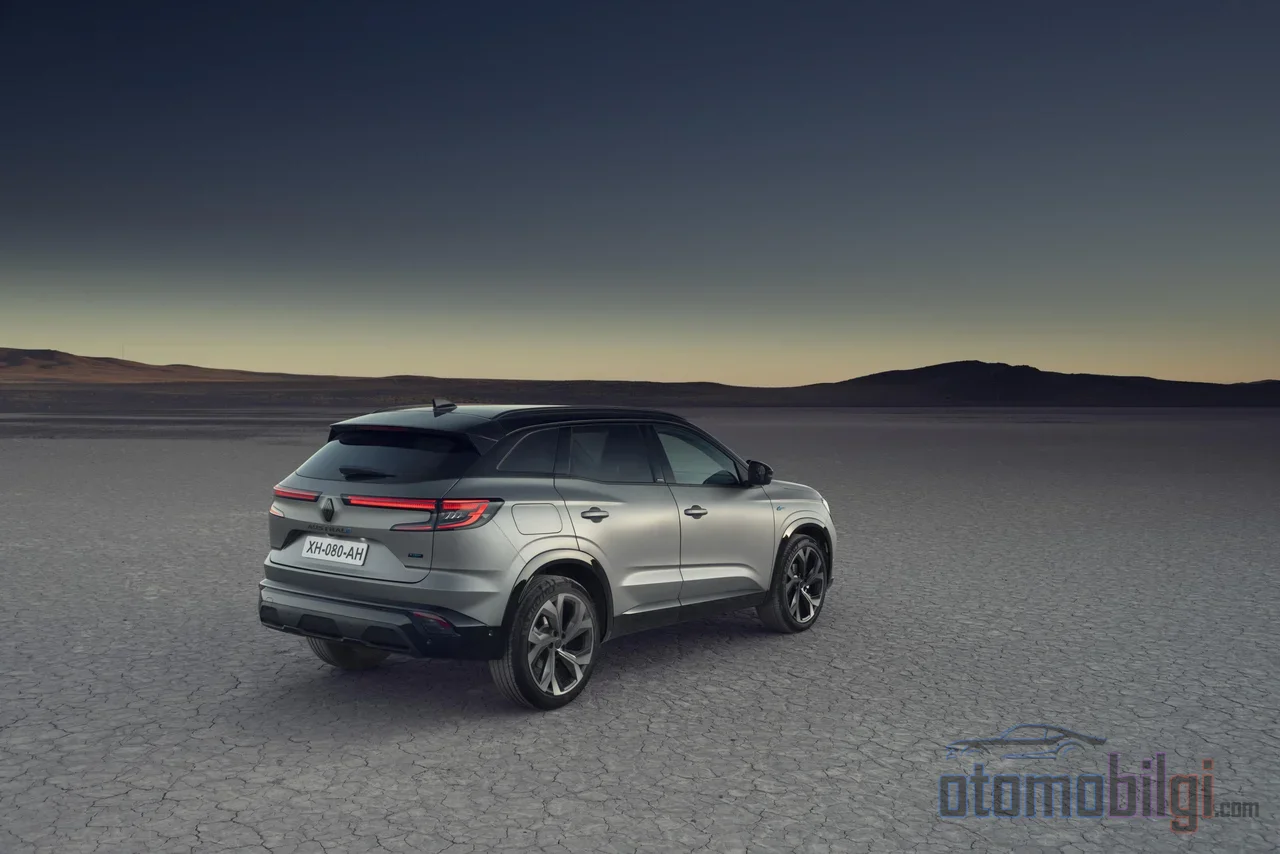
To make the architecture concrete through a current model, the Austral is the right address: this compact crossover, sold in the world's main markets, carries the upgraded 200 hp E-Tech version. According to brand data, the vehicle offers a range of up to 1,100 km, and long-term fleet tests recorded average consumption of 47.3 mpg (approximately 5.0 L/100 km), fully electric mode of up to 80% in the city, and a consumption reduction of up to 40%. The 160 hp version of the same powertrain serves in the Captur and Symbioz; the Symbioz's WLTP consumption has dropped to 4.3 L/100 km, with CO2 emissions down to 98 g/km. The 0-100 km/h times are also quite ambitious: 8.9 seconds for the Captur, 9.1 seconds for the Symbioz. Towing capacity rising from 750 kg to 1,000 kg shows that the system's torque reserve is not reserved solely for acceleration.
In the 200 hp version, the transmission software was updated to eliminate the lag problem, especially during acceleration between 40 and 80 km/h. The Symbioz, meanwhile, gained a new gear ratio better suited to highways and an electronic gear selector in the D/B position. Renault holding first place in hybrid sales in France and full hybrid E-Tech production approaching one million units indicate that this architecture is not merely a technical curiosity, but a commercially established solution.
Renault's Engineering Choice in the Face of Toyota HSD and Honda e:HEV
The two established players of the full hybrid market are the natural references against which the E-Tech is compared: Toyota's HSD system and Honda's e:HEV architecture. All three systems use two electric machines and an internal combustion engine for the same goal, but their approach to gearing differs: While Toyota's and Honda's systems rely largely on a continuously variable ratio (e-CVT) for electric propulsion, Renault has chosen specific, real gear ratios. The result of this choice is twofold: on the driving side, a more pronounced stepped feel instead of the CVT's typical rev-holding; on the engineering side, more complex mode management in exchange for the mechanical simplicity that the dog clutch brings. It must be honestly stated: a direct, independent technical comparison of the three systems carried out with the same criteria is not yet an easily accessible source; existing user assessments point to Toyota's robustness and Honda's smoothness, but these are not official data, they are driver experience.
The E-Tech's distinguishing features, on the other hand, are measurable. The 130 km/h electric driving threshold becomes possible by connecting multiple real gears to electric propulsion, and this is a wide window compared to the typical calibration of series-heavy rival systems. On the long-distance side, a range of up to 1,100 km and an electric usage rate of up to 80% in the city are the practical equivalent of benefiting from both worlds at once.
Conclusion: A Brief Summary of the Division of Labor
The division of labor between the two electric motors and the internal combustion engine in the Renault E-Tech is a natural result of the series-parallel architecture: the e-motor drives the wheel from standstill and becomes a generator during braking; the second motor manages the revs during gear shifts and provides charging support when needed; the internal combustion engine either joins the drive directly or, in e-drive mode, forms a generator chain that feeds the battery. Depending on speed and load conditions, the system silently redistributes these roles across five modes selected from 15 possible combinations. The clutchless dog clutch transmission opens an electric driving window of up to 130 km/h thanks to its two electric gears; up to 80% of city driving can pass as fully electric, and in models like the Austral the range reaches 1,100 km. Where Toyota's and Honda's established systems differ, the point is the use of real gears instead of a continuously variable ratio - it brings a stepped feel to driving and a modular efficiency to the engineering.
Sources
- Hybrid family cars: test Renault's new full-hybrid engines
- Renault ups hybrid ante with E-Tech 160 powertrain
- Dogbox: an iconic gearbox for Renault hybrid powertrains
- Hybrid car: Renault innovates with its E-TECH range
- Hybrid and a plug-in hybrid car: what difference
- Renault Austral E-Tech full hybrid
- All-new Renault Austral: less CO2, more pleasure
- 5 things you need to know about Renault Austral E-Tech full hybrid
- Renault Austral E-Tech Hybrid - Long-term test review
- How Renault's Lego gearbox changed the hybrid game