2026 Renault Austral E-Tech: Is It Really Electric in the City?
Share This Page
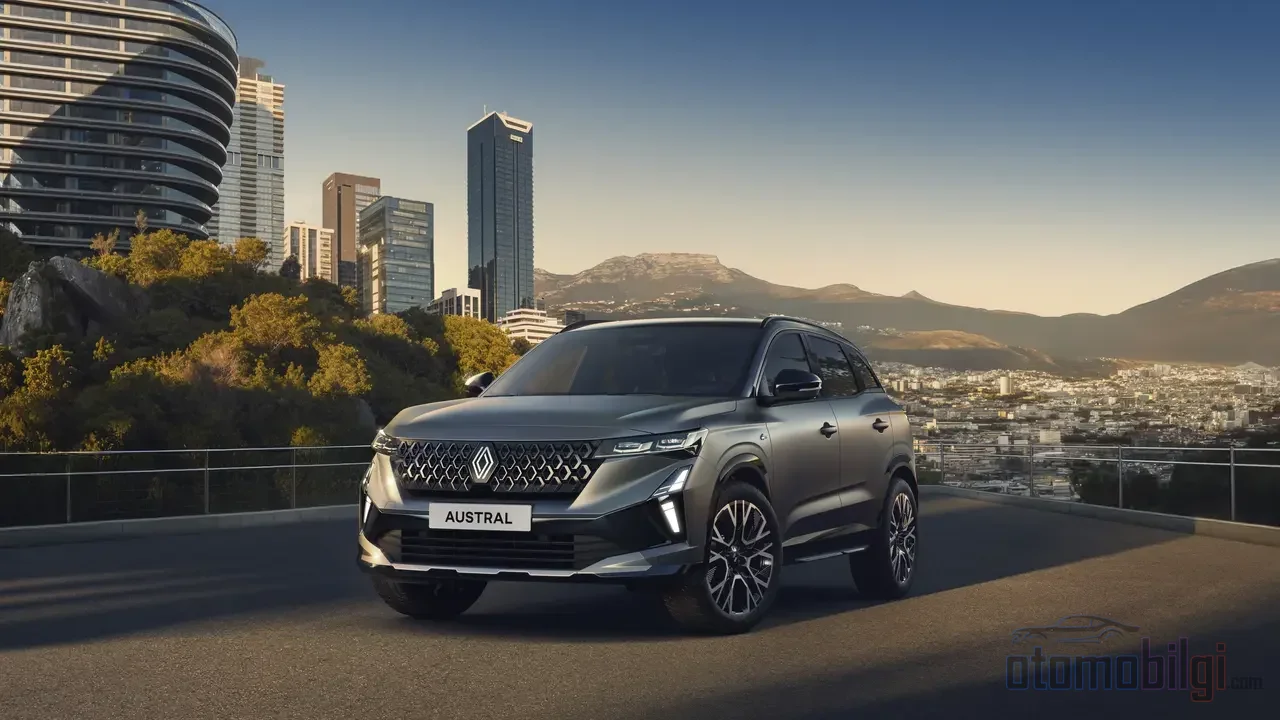
The Renault Austral E-Tech full hybrid is a series-parallel hybrid crossover that can run solely on its electric motor for up to 80 percent of city driving and recharges itself without being plugged in. It produces 200 hp of total system output through the coordinated work of a 1.2-liter three-cylinder turbo petrol engine and two electric motors; this architecture is technically close to Toyota's well-established hybrid approach, but built as Renault's own solution.
Highlights
- 200 hp total system output, series-parallel full hybrid architecture
- Up to 80 percent of city driving in electric mode
- Up to 1,100 km of range (WLTP, full tank) and up to 40 percent claimed fuel savings
- No plugging in required: charges via regenerative braking and deceleration
- With 4Control four-wheel steering, a 10.1 meter turning circle
Is the Austral E-Tech Really Electric in the City?
The short answer: yes for most city conditions, no on long journeys - and the system is designed exactly for that. The Austral E-Tech's 1.7 kWh, 400-volt lithium-ion battery stays small compared to the internal combustion engine; because the goal is not to deliver long range on its own, but to hand over the ranges where the internal combustion engine is least efficient in stop-and-go traffic to the electric motor. Renault says up to 80 percent of city driving time in this mode is electric. In other words, a driver going from traffic light to tram stop, light to light, inevitably runs the car on electricity for most of the time.
The upper limit is also remarkable: electric mode can be used at speeds up to 130 km/h. However, this does not mean the battery will last long at that speed; 1.7 kWh is not the right scale for steady-speed intercity driving. The natural home of electric driving is low speeds and repeated stop-and-go. The user manual also contains a clear warning: fully electric driving is not recommended when the fuel tank is empty; when the battery drops to a low level, the system automatically switches to hybrid mode.
Series-Parallel Architecture: How Do Two Electric Motors and the Smart Gearbox Work?
At the heart of the Austral E-Tech is a series-parallel architecture that combines multiple hybrid philosophies in a single package. The system connects three power sources through an intelligent multi-mode gearbox: a 1.2-liter three-cylinder turbo petrol engine (96 kW, 205 Nm), a 50 kW / 205 Nm electric motor that handles propulsion, and a high-voltage starter generator responsible for running the engine, shifting gears, and charging the battery.
The gearbox consists of seven gears: two are reserved for pure electric mode and five for hybrid mode. In series mode, the internal combustion engine does not drive the wheels directly; it spins the generator and the electricity produced goes to the traction motor; in parallel mode, the petrol engine mechanically joins the wheels. The system selects between these modes itself according to driving style, traffic conditions, and Multi-Sense mode. From an engineering standpoint, this means the most efficient power source can be used across every rev range - you are not confined to the limitations of a single mode.
Total system output 146 kW, in other words 200 hp. To put this into concrete terms: 0-80-120 km/h acceleration takes 5.9 seconds. For overtaking maneuvers, it is not lacking in numbers for the C-SUV segment; however, user feedback frequently emphasizes that there is a short response delay when the accelerator is pressed, and that the pace picks up once acceleration has begun. It is also noted that the engine produces a characteristic whining sound when the battery is low and simultaneous power is demanded - this is a familiar phenomenon arising from the way series hybrid systems work.
How Does Charging Without Plugging In Work?
The Austral E-Tech has no plug, and the system's sustainability relies on regenerative braking. When you lift off the accelerator or press the brake, the kinetic energy of deceleration is converted into electricity and transferred to the traction battery. In stop-and-go traffic, this cycle repeats every few seconds, so the battery almost never runs down; the internal combustion engine can also use regenerative energy instead of burning extra fuel to charge the battery.
Renault's claims based on this architecture are measurable: in the WLTP cycle, with a full tank a range of up to 1,100 km, compared to a non-hybrid equivalent fuel savings of up to 40% and consumption starting from 4.8 L/100 km. The CO2 value starts at 107 g/km. It is possible to approach these figures in city traffic; highway pace is another story - we will get to that shortly as well.
City and Highway: Why Does Consumption Character Differ?
The consumption graph of full hybrid systems is the mirror image of classic gasoline vehicles: it drops in the city and rises at sustained high speed. The mechanical explanation for this in the Austral E-Tech is simple - in the city, regenerative braking feeds the battery and electric mode takes over long stretches. On the highway, a sustained 130 km/h pace demands constant power, the battery is small, and the internal combustion engine works under load for long periods.
The official value starts at 4.8 L/100 km. User experiences spread across a wider spectrum: while reports of around 8-9 L in urban stop-and-go traffic have been shared, values of 5.5-6 L at an average speed of 130-135 km/h are reported for highway use of the Istanbul-Ankara type. This picture matters in two respects. First, driving style and speed preference significantly change consumption; approaching the official value in eco mode with anticipatory throttle use can double under aggressive use. Second, the consumption character of full hybrid and mild hybrid versions is not the same: the 1.3 mild hybrid version's urban consumption is noticeably higher than the full hybrid, because the mild hybrid system cannot take over propulsion on electricity alone. A reader considering buying an Austral not confusing these two versions is the most critical distinction when it comes to the numbers.
Driving Dynamics: How Much Difference Do 4Control and Multi-Sense Make?
The Austral is the first model to use Renault's new-generation CMF-CD platform, and the platform's most visible fruit is the third-generation 4Control four-wheel steering system. At low speeds, the rear wheels turn up to 5 degrees in the opposite direction of the front wheels; the result, striking for an SUV of this size, is 10.1 meter turning radius. Above 50 km/h (depending on the Multi-Sense setting), the rear wheels turn up to 1 degree in the same direction as the front wheels in corners, contributing to stability. It would be no exaggeration to say that parking and making U-turns on narrow streets become significantly easier in city maneuvers.
Along with Eco, Comfort, and Sport modes, the Multi-Sense system offers 13 levels of customization (Perso); the system also makes proactive eco recommendations when needed. The general impression among user communities is that the car's driving dynamics are among the best in its class and that its body is spacious and comfortable. The delay in throttle response is the only note against it - a compromise inherent to the hybrid system's nature.
Interior, Cargo, and openR link: What Does It Offer for Daily Use?
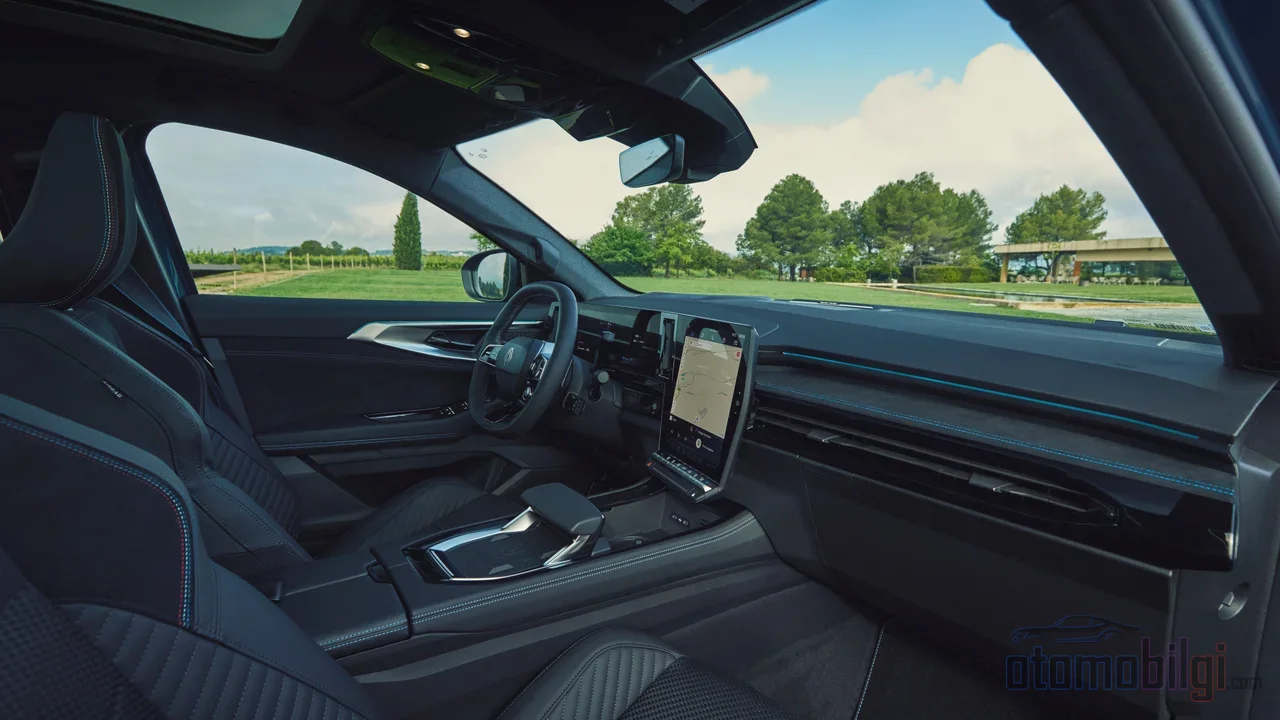
In terms of dimensions, the Austral is defined with a length of 4,533 mm, a width of 1,825 mm, and a height of 1,645 mm; the wheelbase is 2,667 mm and the cabin seats five. Giving a single figure for cargo capacity is misleading, because the value varies by version and seat configuration: the full hybrid E-Tech 200 hp version offers a wide range from 527 liters to 1,736 liters; some sources also mention figures of up to 673 liters depending on the seat arrangement. The practical conclusion is this: with the seats upright, there is enough volume for family shopping and weekend luggage; however, compared to rivals like the Qashqai, it remains smaller without folding the rear row, a point that has been criticized especially by families carrying strollers. For this criticism to be applied fairly, one also needs to look at the hybrid type of the version being compared - battery placement is a parameter that affects the cargo floor.
On the multimedia side, the openR link system comes with integrated Google services, real-time navigation, voice commands, and more than 100 apps; the system is now offered with Gemini artificial intelligence. On the instrumentation side, the 12.3-inch digital display and the total openR screen area of 774 cm² stand out. The fact that the multimedia screen remains 9 inches in the Türkiye version (12.5 inches abroad) is a point that has drawn criticism among users. On the reliability side, Android Auto connection issues and electrical component failure reports, along with the absence of adaptive cruise control in the Türkiye version, are also on the complaint list.
Human First: How Much Does the Safety Equipment Stand Out from Its Rivals?
The Austral has returned from Euro NCAP with a five-star rating and carries Renault's Human First safety program. The program is grouped under three headings: accident prevention, occupant protection, and emergency response. The concrete equipment list is extensive: a center console airbag placed between the driver and front passenger, an active emergency braking system with pedestrian and cyclist detection, advanced lane keeping, and adaptive LED Pure Vision headlights. Brochures list the number of driver assistance systems as varying between 20 and 36 depending on configuration - this difference is not a contradiction but a packaging variation, since it differs according to equipment level. An interesting detail not included in the catalog is a system that analyzes driving style and generates a safety score.
The Austral E-Tech's Position Against Toyota, Honda, and MG
In the C-segment full hybrid SUV market, the Austral's most direct rival is the Toyota Corolla Cross; in user discussions the two models are practically mentioned side by side. The Corolla Cross's hybrid system leans on years of maturity and a perception of trouble-free operation; in the first half-year sales figures, the Corolla Cross remained ahead of the Austral with 5,920 units versus 4,283 units. The critical point to note in comparisons is this: most market comparisons are made with the Austral's mild hybrid version, and in that pairing the consumption gap opens in Toyota's favor. The correct engineering comparison should be made between the Austral E-Tech full hybrid and the Corolla Cross full hybrid.
The Honda HR-V e:HEV is also a close technical rival; Honda's e:HEV system also works on a series-parallel logic and, with its three-mode approach (electric, hybrid, engine drive), is similar to the Austral E-Tech at the intersection. The MG HS Hybrid+ is in a different position: it comes with the claim of a larger battery and a more powerful electric motor, and it does not fully overlap with the Austral even in segment classification - in a way, the Austral sits on the border between C-SUV and D-SUV. The summary table is as follows:
| Model | Hybrid type | Standout feature |
|---|---|---|
| Renault Austral E-Tech | Full hybrid, series-parallel | 200 hp, up to 80% electric city driving, 4Control |
| Toyota Corolla Cross Hybrid | Full hybrid | Mature system, perception of trouble-free operation and economy, high sales |
| Honda HR-V e:HEV | Full hybrid, series-parallel | Electric-focused driving character |
| MG HS Hybrid+ | Full hybrid, larger battery | Powerful electric motor claim, upper-segment size |
The concluding sentence is clear with its reasoning: for a driver who wants mostly electric urban use without plugging in, but doesn't want to take on the burden of the plug-in hybrid's cable and charging infrastructure, the Austral E-Tech is a consistent answer. Against Toyota's advantage in maturity and persuasiveness, Renault's cards are the driving dynamics offered by 4Control, the up-to-date software ecosystem of openR link, and the extensive Human First safety package. The most accurate move before buying is to clarify, based on your own usage profile, the consumption difference between the mild hybrid and full hybrid versions - because the identity of this model lies precisely in that difference.
Sources
- Renault Austral - official product page
- Powertrains - Renault Austral full hybrid E-Tech
- Renault New Austral E-Tech Full Hybrid in Türkiye
- openR link multimedia system - Renault Connect
- Operation | E-Tech full hybrid user manual
- Renault's most advanced hybrid technology, the new Austral E-Tech full hybrid
- 1,100 KM Range with the Renault Austral Full Hybrid
- Renault Austral E-Tech user discussions
- Renault Austral Fuel Consumption Complaints
- Renault Austral User Reviews
- Toyota Corolla Cross vs Renault Austral comparison