Renault Symbioz E-Tech: The Hybrid Sibling of the Clio
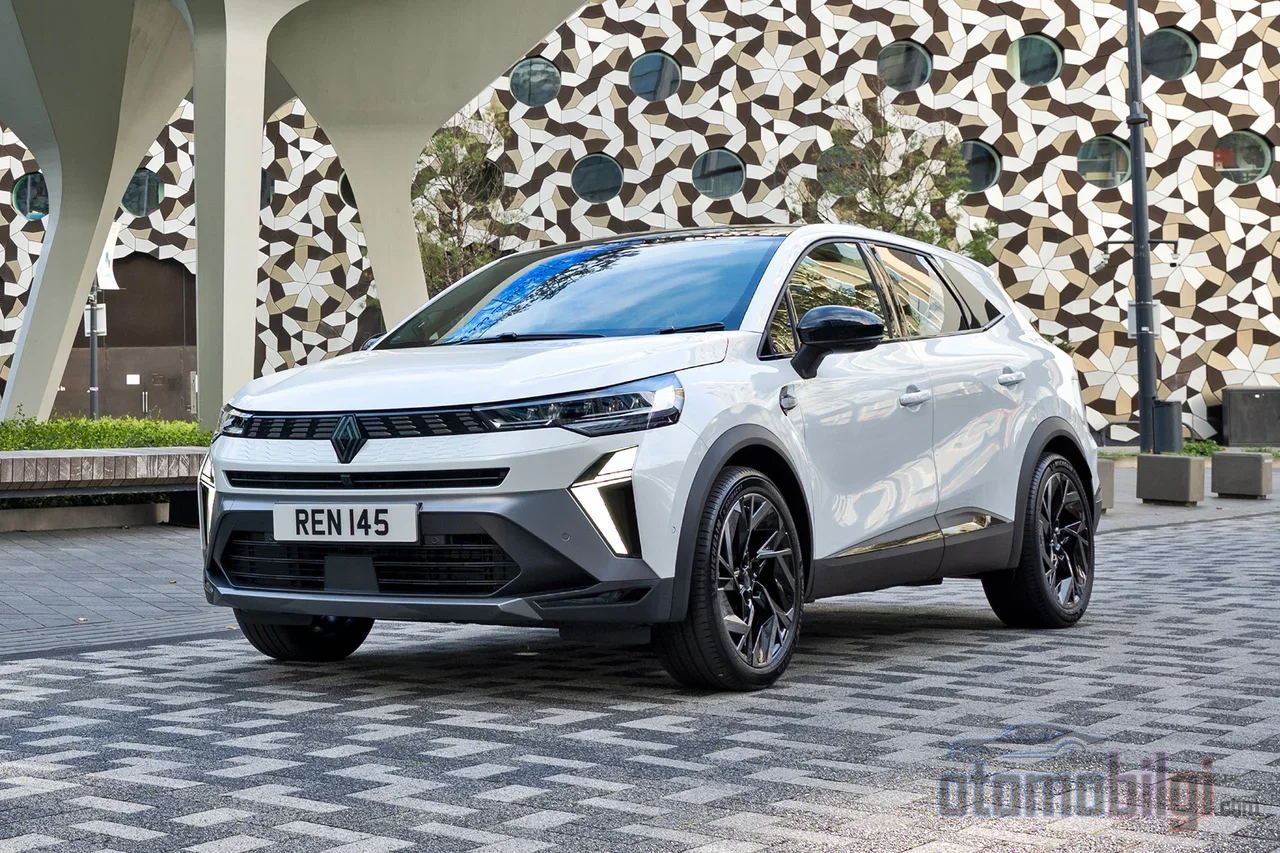
If two siblings from the same kitchen share the same recipe, the difference on the plate comes from the body. The Renault Symbioz E-Tech stands precisely at this point: its powertrain is largely shared with the Clio E-Tech, but the 4,410 mm long SUV body moves it into a completely different territory. So how can the same hybrid architecture serve both a compact hatchback and a family-oriented SUV at the same time? The answer lies hidden in the operating logic of the series-parallel system and in the Symbioz's interior solutions.
The Symbioz is a compact hybrid SUV positioned in the A-SUV segment, sitting between the Captur and Arkana in Renault's lineup. Its first generation was introduced in 2024 with the 1.6-liter E-Tech unit; with the 2026 model year update, it moved to the E-Tech Full Hybrid 160 powertrain with a 1.8-liter naturally aspirated engine. In this article, we examine the architecture of that new unit, its character in the city and on the highway, the practicality gained compared to the Clio, and its position against rivals in the segment.
How Does the Series-Parallel E-Tech System Work?
Renault's E-Tech full hybrid architecture is protected by more than 150 patents and combines the advantages of series and parallel hybridization in a single package. The logic is simple but the execution is refined: the system comprises a 1.8-liter (1,798 cc) naturally aspirated four-cylinder gasoline engine, a main electric motor with 48 hp, and a second electric motor serving as a starter-generator with 20 hp. Total system output is 158 hp (116 kW), torque 265 Nm. The energy storage is a lithium-ion battery with 1.4 kWh capacity.
The system's most distinctive feature is its series-parallel operating logic: the gasoline engine and electric motors engage separately or together as needed. The moment you start the vehicle, the system moves in electric mode by default; during deceleration and braking, regenerative braking recharges the battery automatically. No plug needed - the system is a fully self-charging setup. The multi-mode 6-speed automatic transmission runs on software that prioritizes electric driving.
Highlights
- E-Tech Full Hybrid 160: 158 hp / 116 kW, 265 Nm torque, 1.8-liter naturally aspirated engine
- WLTP claimed consumption 4.3 L/100 km, 80% of city driving in electric mode
- Thanks to sliding rear seats, luggage capacity varies between 492-624 L (UK measurement)
- 0-100 km/h acceleration in 9.1 seconds
- openR link 10.4-inch display, Google integration, and the Solarbay dimmable glass roof
From 1.6 to 1.8: What Did the New Unit Change?
When the first Symbioz was introduced with the 145 hp 1.6-liter E-Tech unit, its performance was considered calm. The 1.8-liter unit arriving in 2026 improved this picture noticeably: 0-100 km/h acceleration dropped to 9.1 seconds. The same 1.8-liter system is also offered in the Captur; the family's larger member, the Espace, uses a 200 hp version of this architecture. In other words, the Symbioz sits right in the middle of the E-Tech family, on the displacement and power ladder. The update also brought a new e-shifter gear selector and a new drive mode aimed at quieter motorway use in the transmission.
Electric Feel in the City, Diesel Figures on the Motorway
The identity card of full hybrid systems is written in the city. According to Renault's official data, the Symbioz E-Tech can spend 80% of city driving time in electric mode, achieving up to 40% fuel savings compared to petrol equivalents. WLTP declared consumption is 4.3 L/100 km; an improvement of 0.4 L/100 km over the previous unit, with a CO2 value of 98 g/km. The official figure for the Australian market is announced as 4.7 L/100 km - measurement cycles and market regulations can produce different figures.
The motorway side is the classic exam for full hybrids, and the Symbioz defends itself here as well. Long-term user reports show that an average of 54.7 mpg (approximately 5.2 L/100 km) was measured over months, and recently this value has improved to as much as 63 mpg (approximately 4.5 L/100 km). After a full tank, the range indicator can reach around 700 miles (approximately 1,125 km). Real-world usage data hovers around 5.5 L/100 km in the city; so there is a reasonable gap between the declared figure and the real world, but it is not embarrassing for the class. In summary: electric silence in the city, consumption on the motorway that rivals a small diesel.
From Clio to Symbioz: What Does the SUV Body Add?
The difference between the Symbioz and the Clio lies more in the architecture than the drivetrain. The numerical comparison is clear:
| Feature | Clio E-Tech | Symbioz E-Tech |
|---|---|---|
| Body type | B hatchback | A-SUV |
| Length | B-segment dimensions | 4,410 mm |
| Boot capacity | 326-422 dm³ | 434-613 dm³ |
| Power unit | E-Tech full hybrid, 145 hp / 205 Nm | E-Tech Full Hybrid 160, 158 hp (116 kW) / 265 Nm |
| 0-100 km/h | 9.3-9.9 s | 9.1 s |
The Symbioz's real trump card is boot flexibility. The sliding rear seat row can move back and forth by up to 16 cm; according to UK measurements, the standard boot is 492 L, rising to 624 L when the seats are slid forward. Australian market figures are even more generous: a capacity of 563-695 L, and 1,668 L with the rear row fully folded. Although measurement methods vary from market to market, the picture is the same: compared to the Clio's 326-422 dm³ boot, the Symbioz offers a significantly more spacious solution for a four-person family weekend getaway.
Interior and Equipment Level
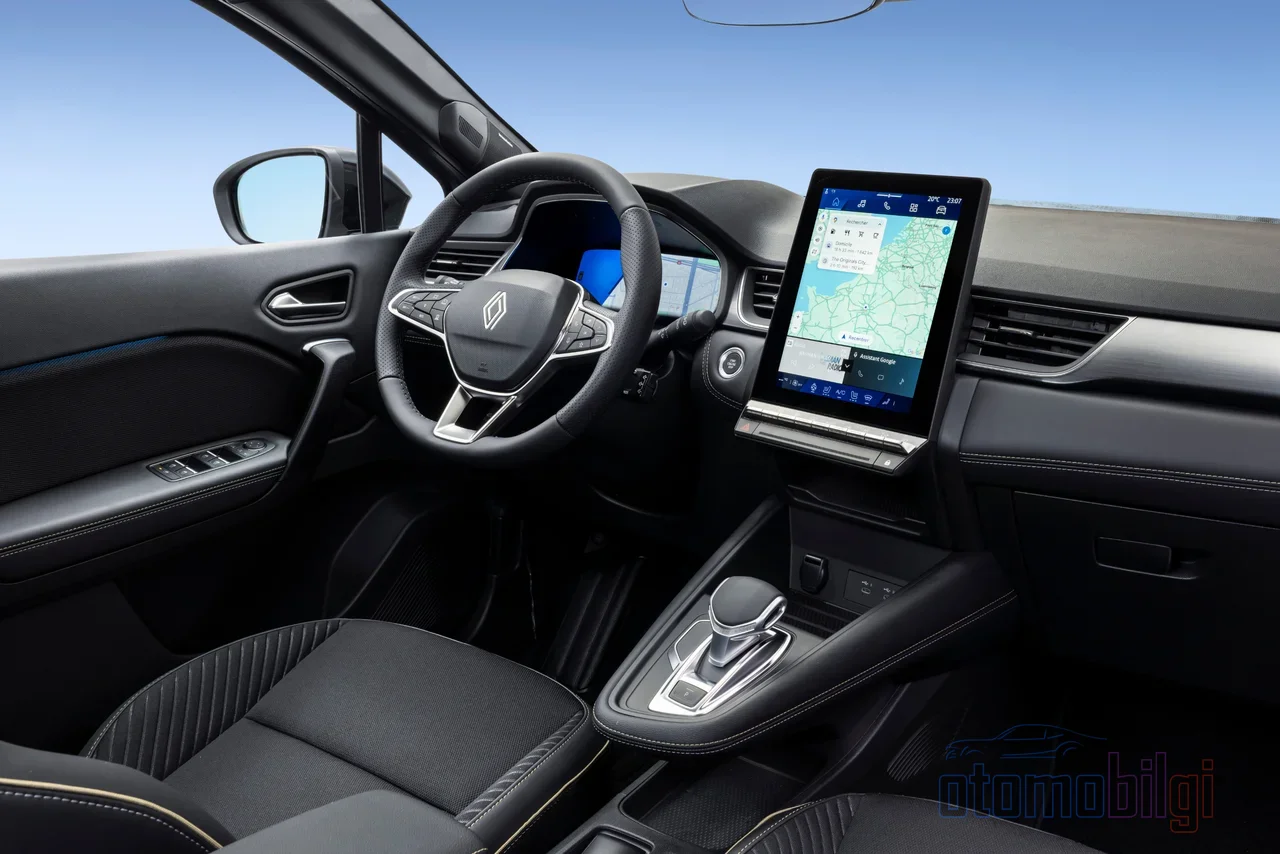
The Symbioz's cabin technology carries Renault's current digital infrastructure: the 10.4-inch openR link touchscreen comes with Google integration, wireless CarPlay and Android Auto; the 10.25-inch digital display and wireless software updates (FOTA) are part of the standard package. The top trim offers a Harman Kardon 9-speaker sound system and the Solarbay dimmable panoramic glass roof developed with Saint-Gobain. Solarbay offers four different opacity modes with PDLC film technology and contributes 30 mm of headroom. Electric tailgate, heated and electric front seats, Comfort/Eco/Sport/Perso driving modes and 19-inch esprit Alpine wheels complete the equipment list.
On the driver assistance side, one can count Active Driver Assist combined with Adaptive Cruise Control, a 360-degree 3D camera, automatic rear emergency braking, blind spot warning, traffic sign recognition and lane keeping assist. As a safety reference, the first-generation Symbioz received four stars in the Euro NCAP 2024 test - chest protection scores were borderline and shortcomings in side impact protection were noted. In the Australian market, the vehicle is offered with a 5-year unlimited-kilometre warranty, while the hybrid battery comes with an 8-year / 160,000 km warranty (with a 70% capacity commitment).
Where Does the Symbioz Stand in the A-SUV Segment?
The Symbioz's natural rivals are the Toyota Corolla Cross Hybrid, Hyundai Kona Hybrid, Nissan Qashqai e-Power and Kia Niro; In the European context, the Seat Ateca and Skoda Karoq are also part of the same price-per-cubic-metre battle. The parameter where competition is fiercest is price: In Australia, the Symbioz is listed at roughly 5,000 Australian dollars more than the Hyundai Kona and Toyota Corolla Cross. In the UK, however, assessments are largely positive; it is found attractively priced relative to its equipment content. The dual large screens of the top trim, the Google infrastructure, the Harman Kardon system and the Solarbay roof stand out as arguments to compensate for the price difference.
As for the identity debate: long-term user experiences describe the Symbioz as a competent, economical and comfortable family crossover, but do not see it as a car claiming class leadership. Some commentators describe the car in effect as a longer-bodied derivative of the Captur. This criticism is partly true - the Symbioz is not an exciting car. But it is precisely at this point that the question becomes clear: who was this car designed for?
Conclusion: Who Is the Symbioz For?
The short answer: for families with a high share of city use, who do not want to deal with plugging in but do not want to give up the feeling of electric driving, who occasionally hit the motorway and genuinely use the boot space. The Symbioz E-Tech achieves a consistent balance by enlarging the Clio's hybrid unit to 1.8 litres and carrying it into a larger and more flexible body: silent electric driving in 80% of city conditions, consumption on long journeys approaching that of its diesel rivals, loading flexibility extending to 1,668 L with the sliding seat, and above-class digital technology in the equipment list.
Its weak points are also fixed by data: the four-star Euro NCAP result, rear headroom that remains borderline for tall passengers, and a price tag above its rivals in some markets. The Symbioz is not the car for those seeking a character car; it is a family SUV that gets the engineering maths right and delivers measurable value. That is exactly why it makes sense that it spends wisely, in a larger body, the hybrid heritage it inherits from its sister, the Clio.
Sources
- Renault Symbioz | Hybrid SUV | Price & Specs
- Renault Symbioz E-Tech Full Hybrid 160 Iconic - Green NCAP
- Long-term review 2026: Renault Symbioz E-Tech hybrid 160
- Renault Symbioz Review 2026: Price, specs, mpg & boot space
- 2026 Renault Symbioz price and specs
- 2026 Renault Symbioz Full Hybrid E-Tech 160 Specs
- Renault Symbioz SUV 1.6 E-Tech Hybrid (2024) Specs