Why the Gasoline Engine Isn't Connected to the Wheels in the 2026 Nissan Qashqai e-POWER
Share This Page
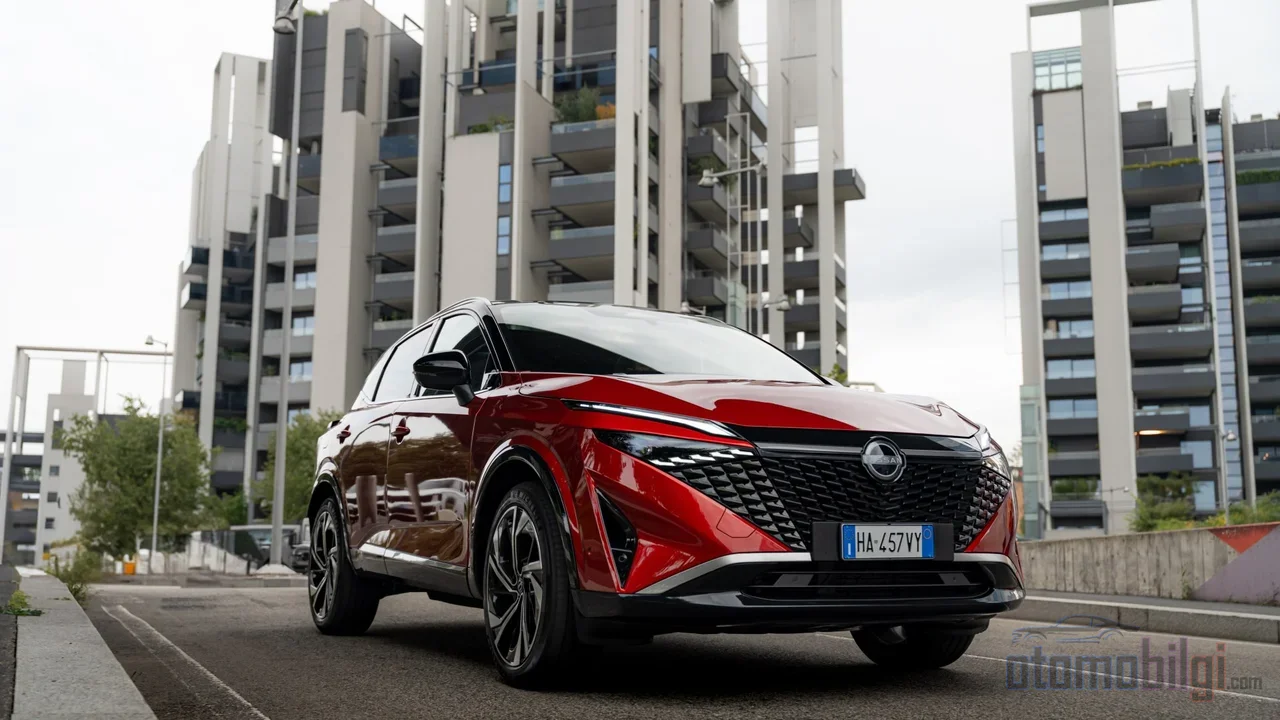
The reason the petrol engine in the Nissan Qashqai e-POWER is not connected to the wheels is simple: in this vehicle, the engine never turns the wheels directly. The 1,497 cc three-cylinder petrol unit works solely as a generator, and the electricity it produces both powers the motor and charges the 1.9 kWh battery; the wheels are turned by the electric motor under all conditions. In other words, the Qashqai e-POWER is a car that runs on petrol but drives entirely on electricity.
Highlights
- Series hybrid architecture: the petrol engine is the generator, the wheels turn 100% with the electric motor
- System power 140 kW (190 PS), torque 330 Nm, 0-100 km/h 7.9 seconds
- Front-wheel drive only (4x2); no 4x4 option offered in Türkiye
- WLTP average consumption 5.4 lt/100 km; factory range claim up to 1,250 km
- Boot 504 lt, rising to 1,447 lt with the seats folded
Series Hybrid Architecture: Why Isn't the Engine Connected to the Wheels?
In a conventional internal combustion vehicle, the energy of the fuel is converted into mechanical power in the cylinders and transmitted to the wheels through the transmission. In e-POWER, this chain is eliminated. The petrol engine turns a generator; the electricity produced either directly powers the electric motor or charges the battery. There is no gearbox and no clutch between the motor and the wheels. Nissan's own definition points in this direction: e-POWER is a unique hybrid powertrain "propelled 100% by an electric motor".
The battery capacity has been deliberately kept small: approximately 1.9 kWh. This is sufficient for a system that does not require plug-in charging; the battery is continuously replenished through regenerative braking, which recovers kinetic energy during deceleration in city driving. The vehicle is never plugged in, no charging cable is carried, and there is no range anxiety as with electric vehicles.
The technical summary is as follows: system power 140 kW (190 PS), maximum torque 330 Nm, 0-100 km/h 7.9 seconds, top speed in the 170-180 km/h range (two different values appear on official pages), front-wheel drive only, and a reduction gear is used instead of a transmission. On the emissions side, it is at Euro 6e Full level.
How Does It Differ from Toyota's and Honda's Parallel Systems?
Toyota's HSD system and Honda's e:HEV system are the two references that come to mind when hybrid is mentioned, but both are structurally distinct from e-POWER. The Toyota system has two electric machines (generator MG1 and motor MG2 connected to the wheels), and the petrol engine can transmit part of its power directly, mechanically, to the wheels when needed. In other words, it flexibly switches between series and parallel operation.
The Honda e:HEV is positioned with similar logic: it mostly operates in series mode, but when driving conditions allow, it connects the engine directly to the wheels via a clutch. Honda describes it as a solution that combines the advantages of series and parallel hybrids; the electric motor produces 131 PS and 253 Nm.
With e-POWER, this direct connection does not exist at all. The internal combustion engine never meets the wheel mechanically at any point. The reflection of this in driving is tangible: instant torque and throttle response are close to fully electric vehicles. There is no sudden rev rise felt in conventional hybrids; torque comes instantly and seamlessly with the character of the electric motor. The absence of gears and a clutch in the drivetrain also eliminates the maintenance costs of these parts in the long run.
Full hybrid or electric?
The classification debate is a legitimate question. By technical definition, e-POWER is a series hybrid: it contains a gasoline engine and does not accept external charging, so it does not count as a plug-in hybrid or fully electric. The "electric" impression comes from the wheels being completely disconnected from the gasoline engine; however, the electric mode range is far too short to compare with the tens of kilometers offered by plug-in hybrids. Another dimension is the tax side: the 1.5-liter engine displacement may, according to some calculations, be advantageous in terms of annual motor vehicle tax compared to Toyota's 1.8 hybrids; however, this is user assessment and carries no official confirmation.
A fair note: Toyota's system's flexibility of series and parallel operation can provide lower consumption in some scenarios. The efficiency loss of the series architecture is inevitable due to the double conversion in electricity (from mechanical power to electricity, then from electricity back to mechanical power); what is gained in return is the seamless electric driving character. Which one is "more advanced" is a matter of preference depending on the usage profile.
City and Long-Distance Consumption Character
The catalog figure is clear: WLTP average consumption 5.4 lt/100 km (in Platinum Premium trim). Nissan claims up to 40% less fuel consumption compared to the mild hybrid version, and the manufacturer's range goes up to 1,250 km. Real-world figures vary depending on the driving profile.
Stop-and-go city traffic is the environment where regenerative braking works most efficiently, and e-POWER exhibits a fluid, quiet character in this mode. In user reports, city consumption runs in the 6.5-8.5 lt/100 km band; in real-world city-weighted usage measurements, e-POWER stays around 7.0 lt while the mild hybrid version approaches 9.5 lt. The difference in between is where the system truly pays off.
The weak point is high-speed highway travel. Here, the electric motor becomes inefficient at high rpm and consumption can rise to 8-9 lt or even above 10 lt for some users. In short, e-POWER's natural habitat is the city and mixed use; at constant speeds of 140-150 km/h, the conversion losses of the series architecture show up in the bill. For those who want to maximize the system's advantage, there is also a practical suggestion: using B mode instead of e-Pedal in the city reduces the excessive braking behavior and makes driving more natural.
e-POWER or 1.3 Mild Hybrid?
Within the Qashqai range, two different electrification approaches are sold side by side, and the difference is not just a technical detail but a matter of driving experience. The mild hybrid 1.3's engine is directly connected to the wheels; the electric system assists it, but the main load is on the engine. The comparison table summarizes the situation:
| Feature | e-POWER | 1.3 Mild Hybrid |
|---|---|---|
| Engine | 1,497 cc, 3 cylinders (generator) | 1,332 cc, 4 cylinders (connected to wheels) |
| Power | 190 PS | 158 PS |
| Torque | 330 Nm | 270 Nm |
| 0-100 km/h | 7.9 s | 9.2-9.9 s |
| Transmission | Reduction gear | X-Tronic CVT |
| Drivetrain | 4x2 | 4x2 / 4x4 |
The clear conclusion the table points to: e-POWER is both more powerful and quicker to accelerate; in return, the 4x4 option remains on the mild hybrid side. Also, how many years it takes for the e-POWER's price difference to be recouped through fuel savings is a calculation buyers frequently ask; this calculation varies from person to person depending on daily mileage and fuel prices, so giving a general rule would be misleading.
Practicality, Cargo Space and Equipment Levels
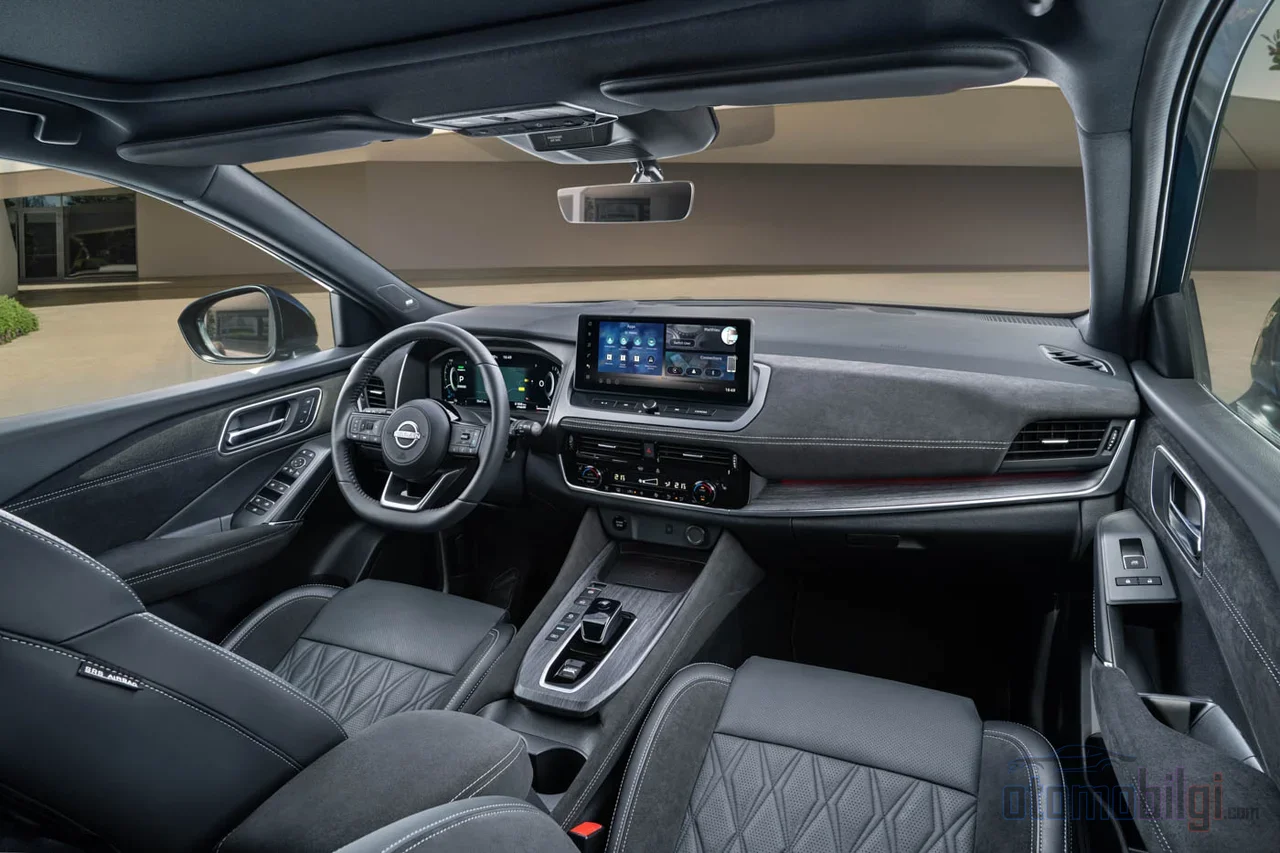
In a family SUV, practicality is not negotiable, and the Qashqai is strong on this front. Cargo volume is 504 liters; with the rear seats folded, it expands to 1,447 liters. One point of caution: the Bose amplifier in the top trim reduces cargo volume to 436 liters. The cargo organizer offers 16 different configurations, and the 85-degree opening rear doors make installing child seats significantly easier. Two USB ports and an air vent in the rear seats can be considered standard fare.
The equipment side is one of the Qashqai's strongest assets. Among driving technologies, the e-Pedal, which combines acceleration and braking on a single pedal, and regenerative braking, which recovers kinetic energy, stand out.
- 12.3-inch digital instrument cluster and 12.3-inch touchscreen multimedia display, Apple CarPlay / Android Auto
- A total of four USB-C ports front and rear, plus 12V sockets
- 360° Intelligent Around View Monitor and Intelligent Adaptive Long-Beam Assist (a first for Nissan in Europe)
- With the Design Pack, 18-inch wheels and LED headlights; with the Sky Pack, panoramic glass roof and 19-inch wheels
- Upper trims feature Nappa leather upholstery and seat massage; equipment levels are N-Connecta, Tekna and Platinum Premium
Looking at the competition, while the Qashqai e-POWER delivers a fuller feel in throttle response, the Toyota C-HR offers a lighter and more agile character. Since both vehicles are positioned with comfort and spaciousness in focus, the choice will come down to driving character.
Risks to Know About and the 2026 Agenda
No system is flawless. On complaint platforms, there are reports of noise from the engine without a warning light illuminating in 2023 model examples, along with general fuel consumption complaints; some users report the system having problems. Whether these are isolated cases or a patterned weakness needs to be evaluated one by one for now. A careful buyer should not make a decision without questioning the warranty coverage.
The news side is lively: the facelifted Qashqai e-POWER has taken its place in the current lineup with its refreshed front design, new colors, and added equipment. Word is that the Nissan Kicks will go on sale in Europe with the e-POWER architecture; the market entry of "generator-equipped" systems like the BYD Seal U DM-i also keeps the series hybrid approach in the spotlight. On the US side, prototype test drives of the 2027 Rogue e-POWER are circulating. In short, Nissan is not positioning this architecture as a limited experiment confined to a single model.
Conclusion: Who Is This System the Right Choice For?
The Qashqai e-POWER offers a consistent package for buyers who mostly drive in the city, do not want to set up a plug-in routine, but want to experience the driving feel of an electric vehicle: 330 Nm of torque, 0-100 km/h in 7.9 seconds, and seamless electric response. It is known to maintain efficiency on long journeys, with ranges above 1,200 km on a single tank recorded under factory supervision; on the other hand, high highway speeds and the need for 4x4 are the system's limit lines. In the debate of series hybrid versus full hybrid, the technical answer is clear: e-POWER is a series hybrid, and this should be read as an architectural choice that defines its identity rather than a weakness.
Sources
- Nissan e-POWER Vehicles - Nissan Türkiye
- New Qashqai Safety Technologies
- nissan qashqai e-power
- New Nissan QASHQAI e-POWER - Main Topic
- Nissan Qashqai e-POWER Review 2026
- Nissan Qashqai e-Power Complaints and User Reviews
- Nissan ePower technology to be used in the Qashqai
- Toyota C-HR Hybrid vs Nissan Qashqai e-Power Comparison
- Head to Head: Nissan Qashqai and Toyota Corolla Cross