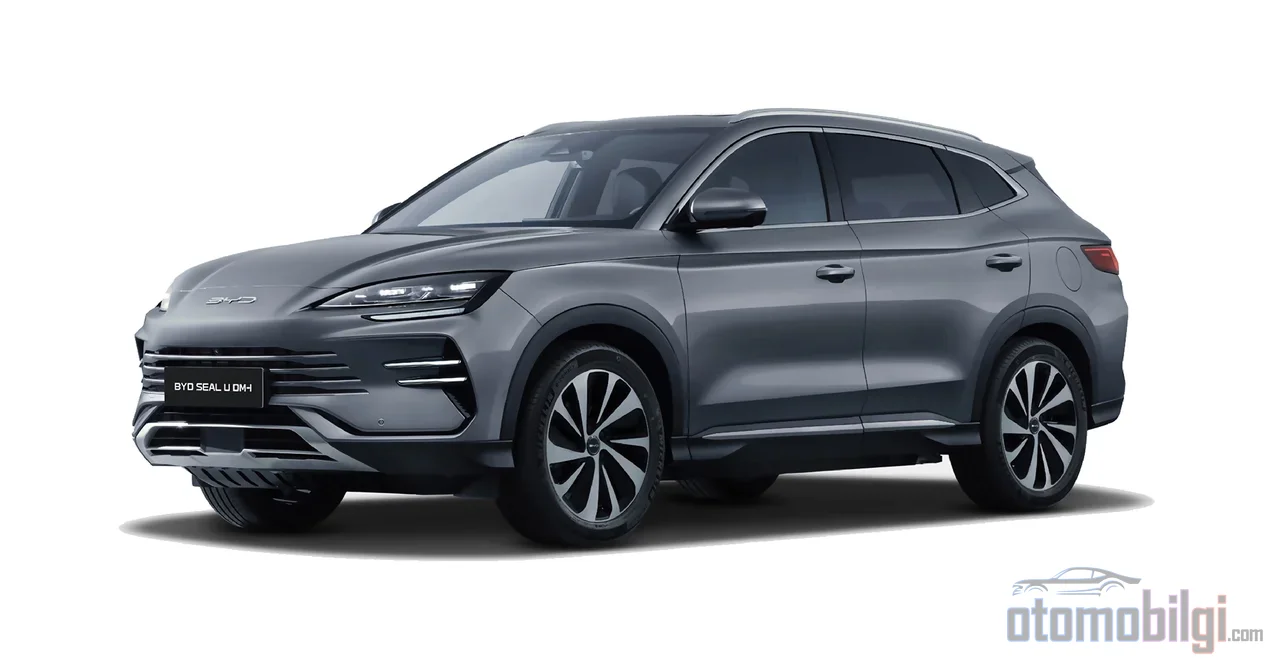
2026 BYD Seal U DM-i: Plug In, Drive Like an Electric
Share This Page
In the BYD Seal U DM-i, plug-in charging, when used regularly, effectively turns the car into an electric vehicle for city driving: With an 80 km combined, 113 km city electric range, it covers most of daily driving without gasoline. If not plugged in, the vehicle still runs, but the gasoline engine kicks in like a generator and the main economic advantage of plug-in hybridity disappears. In other words, in this car, charging habit is the single most important variable determining consumption.
Highlights
- 18.3 kWh (Boost) or 26.6 kWh (Comfort) battery, with a WLTP 1,080 km combined total range.
- With 11 kW AC charging, from 15% to 100% in 120 minutes; with DC fast charging, from 30% to 80% in 35 minutes.
- WLTP combined fuel consumption of 0.7 lt/100 km; in real-world use, depending on charging habits, a range of 0.9-1.4 lt/100 km .
- In about 90% of driving conditions power goes to the wheels from the electric motor.
- 5 stars from Euro NCAP, and a trunk reaching 1,940-2,350 liters with the seats folded down. Why Does the Gasoline Engine Work Like a Generator in the DM-i Architecture?
To understand BYD's DM-i (Super DM) system, it is enough to look at the single point that sets it apart from classic hybrids: here, the internal combustion engine usually does not turn the wheels.
The 1,498 cc gasoline engine coded Xiaoyun generates electricity as a generator in about 90% of driving conditions; the wheels are turned by the electric motor that produces 160 kW (218 HP) of power and 300 Nm of torque. The system aims to keep the internal combustion engine always operating in the narrow rev range where it is most efficient - much like a power plant running at a constant speed.
The system automatically switches between three modes. In EV mode, the wheels run 100% from the electric motor, the gasoline engine waits, and energy is recovered during braking. In series (sequential) hybrid mode, when the battery level drops below a set threshold, the gasoline engine kicks in to charge the battery; the wheels still turn electrically. Parallel hybrid mode uses both power sources together in moments requiring high power, such as highway overtaking. There is also a case at low battery level where the wheels are turned 100% by the gasoline engine at high-speed cruising - this is the efficient scenario on long journeys.
The practical result of this architecture for the driver is this: how the vehicle behaves depends largely on how much energy is in the battery. The Save function in the system allows you to preserve the charge level before a long trip; the vehicle tries not to drop it below 70%. If you are entering the city after a highway trip, you will have saved the electric range for that city.
How Much Does Plug-in Charging Really Affect Consumption?
The factory figure for combined fuel consumption is 0.7 lt/100 km. This value is based on the WLTP cycle in which the battery is charged regularly and a significant portion of the journey is covered electrically. In real-world use, the figure moves upward: user reports range from averages around 1.4 lt/100 km for city-heavy use to figures close to the factory data approach of 0.9 lt/100 km a range stretching up to values. The discrepancy is not a contradiction; it's the direct result of how much each person charges. A user who drives 60-80 km a day and plugs in every evening may not visit a gas station for months. A user without charging habits, on the other hand, uses the same car like a series hybrid with the engine constantly running as a generator, and consumption increases noticeably.
Charging Times and Practical Charging Habits
The charging infrastructure for PHEVs in this class is unusually broad. Maximum AC charging power is 11 kW; with this power, charging time from 15% to 100% is 120 minutes. DC fast charging support (a rare feature in a PHEV) provides 35 minutes from 30% to 80%. Charging up to 7.4 kW is possible with a 220V single-phase charger; with a standard socket adapter, the time from 0 to 100 extends to about 10 hours, or about 5 hours at 3.5 kW power. A small note: AC charging power can be more limited than the manufacturer states at low battery charge levels.
So the practical answer to the plug-in question is simple: if you have the option to charge overnight at home or at work, this car is designed for your scenario. For someone who parks on the street and has no access to charging infrastructure, a series hybrid or an efficient diesel for the same money may be a more sensible equation.
Electric in the City, Gasoline on Long Trips: A Comparison of Two Scenarios
The urban scenario is this car's strong suit. According to WLTP figures, the electric range in the city is 113 km, and in combined use 80 km. Urban electricity consumption is 13.8 kWh/100 km - a healthy figure for a large B-SUV. This range is enough to cover most users' weekly urban needs with a single charge; in pure electric mode, exhaust emissions are also zero.
The long-distance scenario is built on a different balance. WLTP total range is 1,080 km combined, 1,115 km in the urban cycle. At highway speeds, the system shifts into parallel hybrid mode, and as the battery charges, the gasoline engine works in its efficient range in a generator role. Here, the electric range doesn't mean much on its own; the goal is to ensure the gasoline engine never operates in its inefficient zone. The result: on long trips, consumption follows a classic combustion-based curve that rises gradually as speed increases, unlike a fully electric vehicle.
Interior, Cargo and Equipment: Family-Sized Practicality
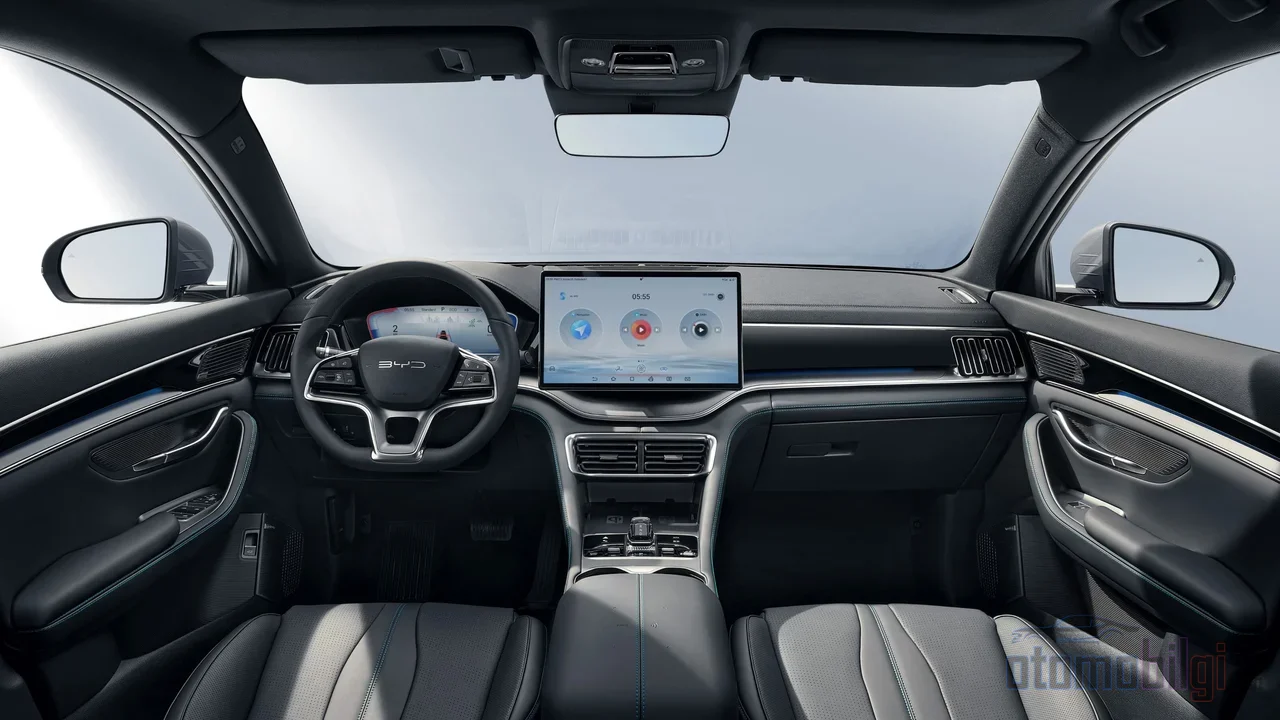
Dimensions and equipment level are among the aspects that make the Seal U DM-i feel like more than its price. Standard equipment includes LED headlights, 19-inch aluminum wheels, a panoramic glass roof, an Infinity sound system with 10 speakers , head-up display and a 360-degree camera. In the middle sits a 15.6-inch rotating electric touchscreen. The front seats are electrically adjustable, ventilated and heated. Rear seat knee room is generous; the double-tiered storage compartment in the console and the crystal gear shifter keep the space organized.
In the trunk, with the rear seats upright, 425 liters - reasonable for its class, a volume that could be considered the price of the PHEV battery. With the seats folded, it extends up to the roof at 1,940 liters (Standard), in the Design version 2,350 liters opens. A subtle detail: the tailgate is electric with struts but there's no foot sensor; if your hands are full, you have to open the door with a button. On the safety side, Euro NCAP 5 stars, lane keeping (ELK), pedestrian collision warning, automatic emergency braking (AEB) and 7 airbags standard.
There is also a remarkable engineering detail on the battery side. The Blade Battery uses lithium iron phosphate chemistry; it passed nail penetration tests without fire or smoke, and during testing the surface temperature was measured in the 30-60 °C range. Thanks to the cell layout, space utilization has been increased by more than 50% compared to conventional packs, and the battery is designed for more than 5,000 charge-discharge cycles. This cycle life matters for daily charging discipline: a driver who uses full-to-empty every day can keep plugging in for years without seeing battery fatigue.
Against the MG HS Plug-in Hybrid: Where Do They Diverge?
The most natural rival in the Türkiye market is the MG HS Plug-in Hybrid. The philosophy of the two vehicles is different: while the Seal U DM-i offers a technology-focused package with its motor-generator-heavy series hybrid structure, large battery and DC fast charging support; the MG HS has a more classic PHEV setup centered on its 162 hp gasoline engine. On the power side, the Seal U's 218 HP system sits between the MG's 162 hp base version and the 258 PS Comfort trim figures. In the consumption comparison, care is needed when evaluating: in both vehicles, official cycle values change significantly in real use depending on the driver's charging habits. The Seal U's 1,080 km total range and charging infrastructure flexibility are a tangible advantage for long-distance users.
| Feature | BYD Seal U DM-i | MG HS PHEV |
|---|---|---|
| Engine displacement | 1,498 cc | 1.5-class turbo |
| System power | 218 HP (160 kW) | 162 hp / 258 PS (Comfort) |
| Top speed | - | 190 km/h |
| 0-100 km/h | - | 8.9 s |
| Total range | 1,080 km (WLTP combined) | - |
| DC fast charging | Yes (30%→80%, 35 min) | - |
On the user experience side, some voices question the engine philosophy: some say they would prefer the combination of a shorter electric range joined to a powerful turbo gasoline engine instead of the series hybrid structure. Behind this preference lies driving feel - there is a driver profile that always wants a mechanical connection to the wheels. But objective data shows this: the motor-generator architecture combined with a chargeable battery produces a measurable advantage, especially in city consumption.
Market Position and Conclusion: Who Is It Worth It For?
The Seal U DM-i keeps its place in the 2026 Türkiye plug-in hybrid lists. After the SVT (Special Consumption Tax) regulation, the vehicle dropped from the 80% bracket to the 30% bracket; in addition, BYD's Manisa investment makes the model's position in Türkiye strategic. The listed prices of the 2025 model Design version on the second-hand market also serve as a reference point for those who want to track the model's depreciation profile.
From an engineering standpoint, the overall assessment is this: This vehicle is a system designed for users who have the habit of plugging in. Covering the full 60-80 km of daily urban driving entirely on electricity and doing the weekend trip on gasoline with a range exceeding 1,000 km - this is exactly the concept of the Seal U DM-i. If there is no charging opportunity, it is hard to fully recoup the extra cost and weight the system adds. The equipment level, the Euro NCAP 5-star safety package, DC fast charging, and the cycle life of the Blade Battery make the equation compelling for those with charging infrastructure.
Sources
- BYD SEAL U DM-i Features
- BYD Super DM Technology
- BYD SEAL U DM-i Technical Specifications and Equipment Table
- How Do I Charge My BYD Vehicle?
- BYD SEAL U DM-i Technical Specifications
- BYD SEAL U EV Features
- BYD Seal U DM-i versions and range
- SEAL U DM-i Design dual motor information
- BYD Seal U DM-i Review 2026
- BYD Seal U DM-i vs MG HS PHEV comparison
- BYD Seal U DM-i vs MG HS comparison
- MG E-HS PHEV and 2025 Seal U DM-i comparison
- BYD Seal U DM-i user reviews
- About the BYD SEAL U DM-i hybrid vehicle
- BYD Seal U DM-i user experience