2026 Renault Clio E-Tech: Why Does It Drive Like an Electric Vehicle in the Small Car Class?
Share This Page
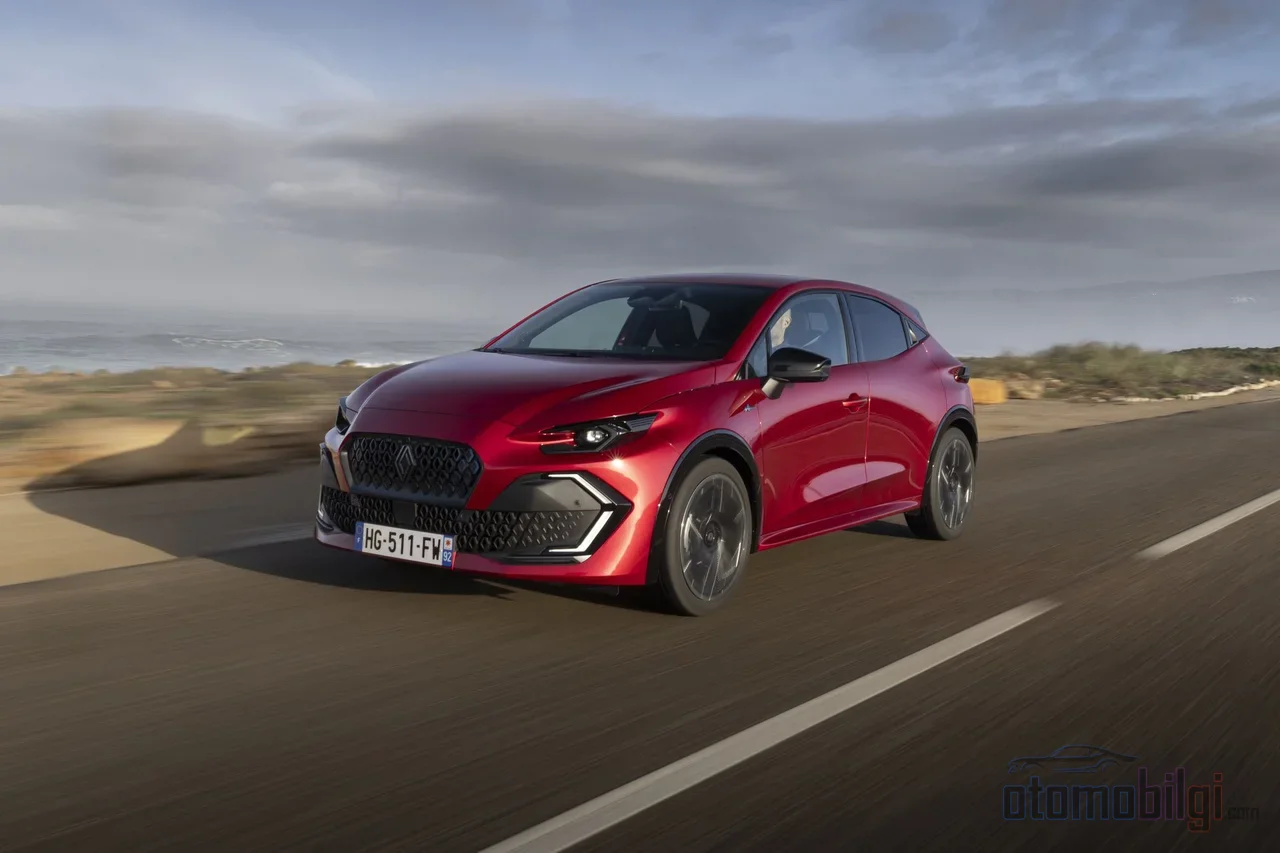
The Renault Clio E-Tech drives like an electric vehicle because it uses a series-parallel full hybrid architecture in a B-segment city car: thanks to two electric motors, a battery of around 1.2 kWh and an intelligent gearbox, it glides through a large portion of city traffic fully electrically, with the internal combustion engine deactivated. In this article, we explain the technical basis of this character in plain language.
Highlights
- In city driving at a rate of up to 80% electric driving, at speeds of up to 105 km/h, is possible
- Next-generation full hybrid E-Tech engine produces 160 hp; the previous-generation 1.6 E-Tech was 145 hp
- On a single tank, a range of up to 900-1,000 km, with a 39-liter fuel tank
- In the hybrid version, luggage capacity is 309-1,094 liters
- No need to plug in; the battery charges itself through regenerative braking energy recovery
Series-Parallel Architecture: How Do the Two Electric Motors and the Intelligent Gearbox Work?
Not all hybrid solutions on the market are built on the same idea. Mild hybrid systems use the electric motor only for support; plug-in hybrids are plugged in. The E-Tech full hybrid used by the Clio E-Tech, however, is an architecture called series-parallel hybrid: alongside the internal combustion engine, there are two separate electric motors, a battery of around 1.2 kWh and a multi-mode intelligent gearbox connecting them.
What distinguishes this architecture is that the two electric motors divide their duties. One drives the wheels directly, while the other works as a generator, converting the internal combustion engine's power into electrical energy. The intelligent gearbox, in turn, runs the internal combustion engine and electric motor in up to 14 different combinations to optimize energy efficiency. At low speeds it is the electric motor, at medium speeds both sources work together, and at constant speed only the petrol engine: the system continuously reconfigures itself without the driver feeling these transitions.
The result is a driving character different from a conventional automatic transmission. In everyday traffic, demand on the gas pedal is mostly met instantly and silently, because the initial thrust comes from electricity. The fact that Renault describes the new-generation model as "sharp and instant acceleration in electric mode" is simply that same technical reality translated into marketing language.
Under What Conditions Is 100% Electric Driving Possible in the City?
The concrete meaning of the Clio E-Tech's claim of "driving like an electric vehicle" is this: according to official figures, the car can travel fully electrically in up to 80% of usage and at speeds of up to 105 km/h. The stop-start-stop cycle of city traffic in the 50 km/h range is exactly where the system operates most efficiently.
There's no need to plug it in; by the nature of the full hybrid concept, the battery charges itself on the move. Energy comes from two paths: kinetic energy recovered during braking and, when needed, running the internal combustion engine as a generator. The only thing the driver needs to do is not overload the pedal at start-up; aggressive throttle makes the system switch to the gasoline engine immediately and the electric driving share drops.
There is one limit to keep in mind: the electric driving ratio depends on the battery charge level and driving style. On long, continuously throttled climbs or full-load acceleration, the gasoline engine kicks in. In other words, this is a city car's imitation of an electric vehicle; its range is limited by battery capacity, but the smallness of that capacity is compensated by the frequent operation of braking-based regeneration.
Braking Energy Recovery: Every Slowdown Turns into Battery Charge
The critical link in the full hybrid system's efficiency cycle is regenerative braking. As the vehicle slows down, the electric motor turns into a generator, converting the wheels' kinetic energy into electricity and sending it to the battery. The user manual also states that the system uses the internal combustion engine and/or the electric motor according to driving style, and that the "energy recovery" flow engages when slowing down.
In city use, the math of this cycle is simple: the more you slow down and speed up, the more free energy you feed into the system. That's why the classic "urban advantage" perception of hybrids is backed by architecture in the Clio E-Tech; stop-and-go traffic is not a penalty for this car, but a fuel source.
Consumption Character: What Do the Numbers Say in the City and on the Highway?
The manufacturer's declared average consumption 4.2 lt/100 km, while the fuel tank is 39 liters. For the new-generation full hybrid E-Tech engine, a value of 3.9 lt/100 km and approximately 89 g/km CO₂ is given for mixed use. On the range side, the official claim is reaching up to 900-1,000 km on a single tank.
To summarize how these figures break down in a comparable form on the same page:
| Scenario | Value | Note |
|---|---|---|
| Mixed consumption (previous-generation 1.6 E-Tech) | 4.2 lt/100 km | 39 lt tank |
| Mixed consumption (new-generation E-Tech 160) | 3.9 lt/100 km | ~89 g/km CO₂ |
| Urban consumption range | 3.8-4.4 lt/100 km | The hybrid's most efficient zone |
| Highway consumption range | 4.2-4.8 lt/100 km | Gasoline engine dominant at constant speed |
| Single-tank range | up to 900-1,000 km | Depends on driving style |
| TCe 115 gasoline (for comparison) | 5.0-5.1 lt/100 km WLTP | 114-116 g/km CO₂ |
The picture from the table is clear: the E-Tech's consumption advantage becomes pronounced in urban use, while on the highway it levels out close to the gasoline engine. On the motorway at a steady 110 km/h , real-world examples hovering slightly above 5 liters are consistent with this picture. Covering 900 kilometers on one tank of fuel for the same money, without a diesel, is still a strong argument in the B segment.
Interior and Trunk: Does Being a Hybrid Reduce Practicality?
The classic criticism of hybrid systems is the battery's placement: it is usually located under the trunk and takes up volume. In the Clio's hybrid E-Tech version, trunk volume 309-1094 liters; while in the gasoline TCe version, 391-1176 liters values are seen. The difference is 82 liters, so it exists but is not a disaster; moreover, the 391-liter base value is at a level that will leave many rivals behind in the B segment.
In terms of dimensions, the car sits at typical B segment limits: 4116 mm length, 1768 mm width, 1451 mm height and 2591 mm wheelbase. The 10.4-meter turning radius is a concrete convenience in city maneuvers. The manufacturer emphasizes that in the E-Tech full hybrid version, a balance has been struck between passenger comfort and trunk volume, and that the cabin layout can be configured; the battery's placement does not eliminate the functionality of the seats or cargo area in daily use.
Equipment: openR Link Multimedia and Safety Package
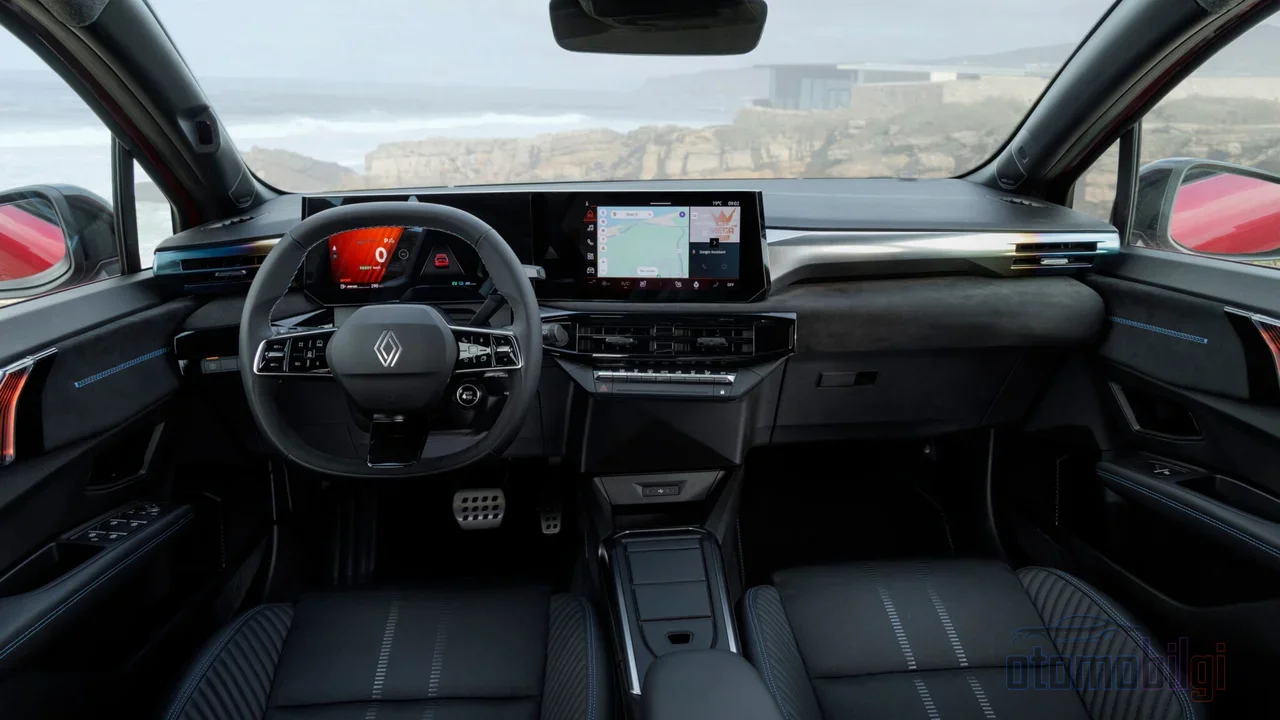
In the new-generation Clio's cabin, the 2x10-inch openR Link dual screen and integrated Google services stand out. The Google Gemini AI assistant has also begun to be integrated into the system; Gemini can now control some of the car's functions by voice. This is a relatively high standard on the multimedia front in the B segment. In the facelifted previous generation, features such as 10.1-inch multimedia, 7-inch digital instrument cluster, wireless smartphone mirroring, 2 USB-C ports, electric parking brake and keyless entry are listed.
On the safety side, the new-generation model is introduced with up to 25 advanced driver assistance systems. Even in the previous generation's equipment list, driver fatigue detection, forward collision warning, active emergency braking assistance, lane keeping assist, adaptive cruise control, traffic sign recognition, 6 airbags and the e-Call emergency call system are offered as standard. The manufacturer's safety program called Human First also summarizes the approach behind this equipment.
Comparison with the Corolla Hybrid: Same Idea, Different Segment
When hybrid is mentioned, the first rival that comes to mind is Toyota's e-CVT approach. There is no conventional gearbox in the Corolla either; a system that splits power through a planetary gearset is at work. The Clio E-Tech, however, achieves the same goal with a multi-mode smart gearbox, that is, a different engineering solution. Both architectures operate close to series-parallel logic; as a result, both cars progress in the city with an emphasis on electric driving.
The real difference is the segment. The Corolla is positioned in the C segment, the Clio in the B segment; therefore direct consumption comparisons should be read carefully. The class difference also brings a price difference: with the same budget, do you buy a C segment hybrid or a better-equipped B segment hybrid - the debate revolves precisely around this balance. Describing the Clio's identity as "the hybrid that drives the most like an electric car in the small class" is the sentence that best summarizes this positioning.
Summary: The Pragmatic Form of Electric Driving in the B Segment
The difference of the Clio E-Tech is not in a single number, but in the character created by its architecture: it moves silently and electrically in the city, turns into a simple gasoline car on long journeys, has no charging hassle, and exceeds 900 kilometers on a single tank. A small compromise in the trunk, in return for a driving experience rarely found in its segment. For someone who drives mostly in the city, E-Tech represents where hybrid has reached today in the B segment.
Sources
- Technical Specifications - New Renault Clio
- Renault Hybrid powertrain
- Frequently asked questions about hybrid vehicles
- New Renault Clio Full Hybrid E-Tech (official brochure)
- Operation | user manual (E-Tech full hybrid)
- Clio VI (Phase I) - 1.8 (158 hp) E-Tech Full Hybrid Multimode
- openR Link multimedia system - Renault Connect
- 2024 Renault Clio 1.6 E-Tech Full Hybrid 145 HP
- Renault Clio 5 Fuel Consumption
- Google Gemini now also controls Renault cars