2026 Kia Niro Hybrid: Economical Outside the City Too
Share This Page
The main reason the Kia Niro hybrid stays economical outside the city, too, is the parallel hybrid architecture's ability to split power between the right motor at the right time, keeping both motors in their efficiency band: in stop-and-go traffic the electric motor kicks in, while at constant speeds the gasoline engine stays close to its most efficient operating point. In other words, long-distance economy is no coincidence; it is the system's design goal. Below, we examine the technical mechanism behind this claim, real-world consumption data, and the points that set the Niro apart from its rivals, with numbers.
Highlights
- 141 PS combined power: 1.6-liter GDI gasoline engine plus 32 kW (43.5 HP / 170 Nm) electric motor
- 1.32 kWh lithium-ion polymer battery, power delivered to the front wheels through a 6-speed DCT
- Official average consumption for the new generation: 4.4 lt/100 km; combined CO2 100 g/km
- Trunk volume in the hybrid version: 451 lt, or with the seats folded 1,445 lt
- Euro NCAP five stars: 91%
How Does the Niro's Hybrid System Work?
Beneath the Niro lies a classic full hybrid layout: a 1.6-liter direct-injection (GDI) gasoline engine, a permanent-magnet synchronous electric motor, and a lithium-ion polymer battery. The electric motor produces 43.5 HP of power and 170 Nm of torque; when the two sources work together, the system total reaches 141 PS. Power goes to the front wheels via a six-speed dual-clutch transmission.
The key word here is "parallel". Unlike Toyota's planetary gear-based system, in the Niro the two motors are connected to the same driveline through the transmission; the vehicle itself decides at any given moment whether to use the gasoline engine, the electric motor, or both. The battery capacity is only 1.32 kWh - meaning the Niro is not a plug-in; it operates with a system that generates and recovers its own electricity. The small battery is not a drawback: it carries little weight, there is no charging expectation, and the entire system remains active under all conditions.
Not an E-CVT but a 6-Speed DCT: The Distinct Technical Identity
What most clearly sets the Niro apart in the crowd of compact hybrid SUVs is its drivetrain. While most of its rivals use an e-CVT, the Niro carries a conventional 6-speed dual-clutch transmission . This has a tangible effect on the driving side: the DCT's gear-changing logic responds to throttle inputs more directly than a stepless e-CVT, and it can keep the engine in the upper rev band in situations demanding effort - and thus in a region that is genuinely useful. From an engineering standpoint, these are two different paths to the same efficiency goal: one relies on a continuous but single-gear ratio, the other on six dual-clutch ratios.
Electric in the City, Efficient on the Road: Where Is the Economy Won?
The classic advantage of a hybrid emerges in stop-and-go traffic, and that doesn't change with the Niro. At low speeds and in urban use, predominantly electric motor operation, regenerative braking energy recovered to the battery, and engine stop-start management are the main factors determining city consumption. That's why the area where the Niro delivers its best performance is precisely the 60-80 km/h speed band: urban and suburban conditions where the drivetrain stays in its most efficient state.
On long journeys the equation changes, but not to its detriment. At highway speeds the electric motor's share of continuous propulsion decreases; economy is now determined by where the petrol engine operates. Here the advantages of the parallel architecture and the DCT come into play: at a constant speed, the transmission keeps the engine in the highest gear suited to the torque demand, positioning it within its efficiency band. Additionally, the smart regenerative braking system automatically adjusts the energy recovery level based on the traffic ahead and driving style, writing the kinetic energy captured in deteriorating traffic back to the battery. Part of the urban gain is thus carried over to the urbanized sections of a long journey. To summarize in one sentence: The Niro wins in the city with electricity and protects that gain on the road by keeping the engine in its efficiency band.
Recognition of the system's efficiency approach is tangible: the Niro entered the Guinness Book of Records by crossing the United States end to end with the lowest fuel consumption, and was at one time named the Greenest Car of the Year. These are not marketing slogans, but the independently verified form of the vehicle's measurable efficiency character.
What Is the Real Consumption? Official Figures and Field Data
On paper, the official average consumption for the new generation Niro is 4.4 l/100 km, with a combined CO2 value of 100 g/km. The official combined figure for the first generation was even more ambitious: 3.8 l/100 km and 88 g/km CO2. According to the EPA cycle, the US version corresponds to a combined 50 MPG figure, which is roughly 4.7 l/100 km .
In real-world use the picture is a bit more modest but still among the best in its class. In an independent test drive, real combined consumption that could be compared with the official 3.8-liter figure was measured at 5.5 liters. Long-term user experiences show values that can drop below 4 liters in city and intercity use, but can exceed 5 liters in short-distance daily use (for example a 4-5 km home-work commute) because the engine cannot fully warm up. This is technically expected behavior: a cold engine and short distances are the weakest combination for any hybrid. With an 11.1-gallon (approximately 42-liter) tank, these consumption figures open the door to very long ranges on a single tank.
Interior, Cargo and Equipment: Is It Enough for Family Use?
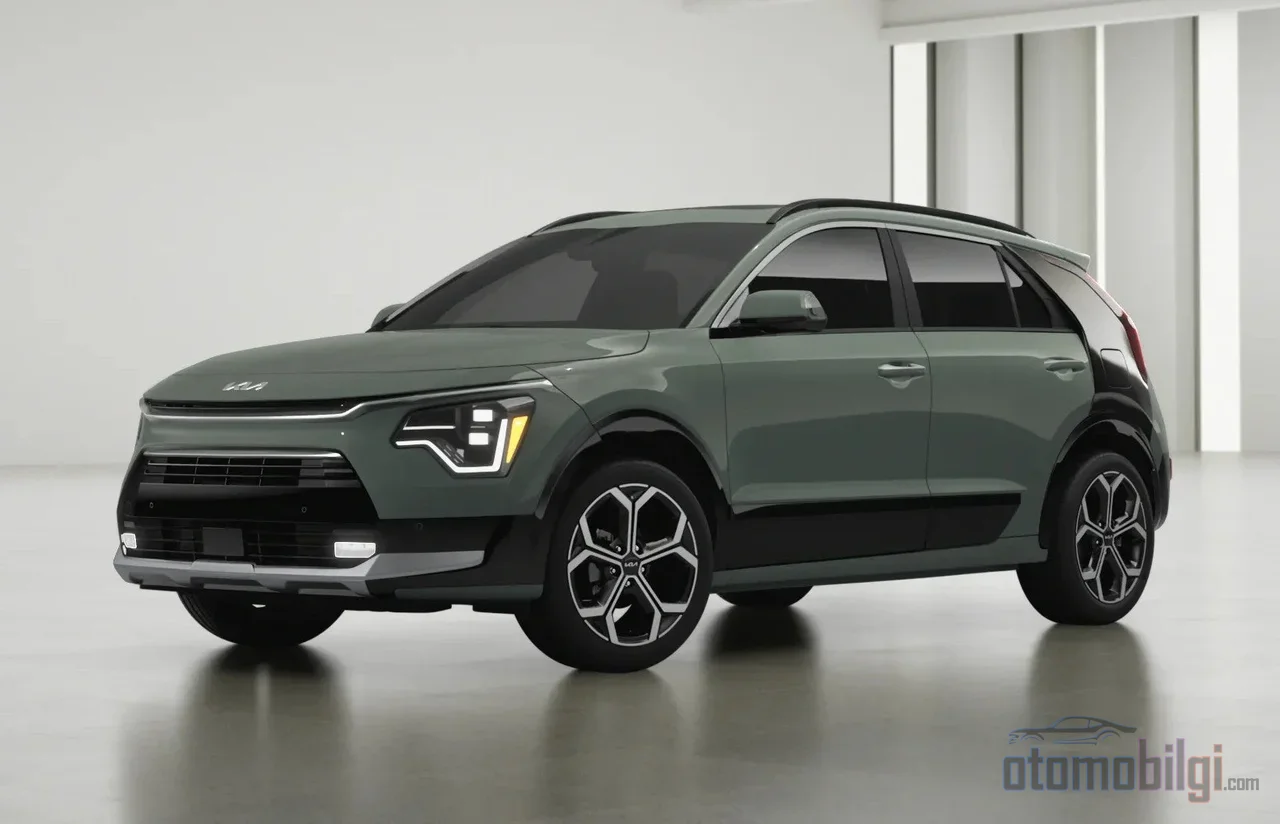
Efficiency alone is not a reason to buy; the Niro's job is to fit hybrid hardware into a practical family body. The wheelbase is 2,720 mm; front seat legroom is 1,053 mm, and in the rear 1,011 mm. In the hybrid version, cargo capacity is 451 liters; with the 60/40 folding rear seats laid down this figure rises to 1,445 liters. For five-person family use and comfortably carrying four adults, these dimensions are easily sufficient in the compact SUV class. Body dimensions - 4,430 mm length, 1,825 mm width, 1,545 mm height - are within a reasonable range for its class, a proportioning that produces interior volume without sacrificing parkability.
Equipment level is the side that positions the Niro above its price tag. The list of items offered in the top trims is as follows:
- Keyless entry and start, electronic gear selector panel
- Heated and ventilated front and rear seats, memory driver's seat, Relaxation front seats
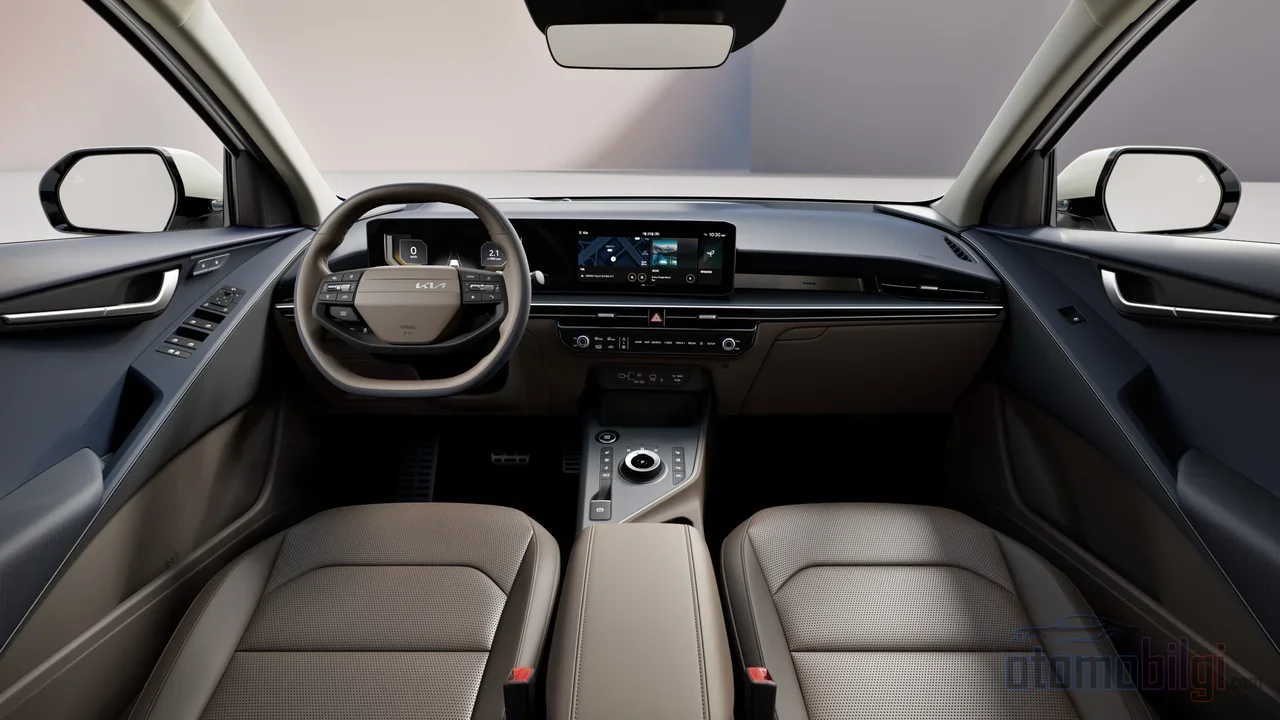
- 10.25-inch instrument display and 10.25-inch touchscreen multimedia, Apple CarPlay / Android Auto, wireless charging
- 220V outlet with vehicle-to-device power (V2D); vehicle-to-vehicle charging (V2V) via ICCB cable
- Power tailgate with memory, 64-color ambient lighting, sunroof, 18-inch wheel option
On the software side, two features are part of the efficiency story: Green Zone mode uses navigation data to automatically switch to electric driving in green zones; the smart regenerative braking adjusts the energy recuperation we mentioned above according to traffic. On the safety front there are five Euro NCAP stars: 91% for adult occupants, 84% for child occupants, 76% for pedestrians and 79% for safety assists. The SCC smart cruise control, with its Stop & Go function, remains active in heavy traffic as well.
Niro vs C-HR and ZS Hybrid+: Which Badge Does It Stand Under?
In Türkiye it is easy to remain in the shadow of the Toyota C-HR hybrid; but the technical identities of the two cars sit in different places. The C-HR is based on 1798 cc gasoline engine with fifth-generation Toyota hybrid technology and e-CVT. The Niro relies on a smaller-displacement gasoline engine, a more distinctly powerful electric motor, and a six-speed dual-clutch gearbox. In user discussions, the view stands out that the C-HR's fuel economy is somewhat better, while the Niro may have an advantage on the insurance side; in design flair the C-HR, in practicality and usability it is the Niro's field.
The MG ZS Hybrid+, on the other hand, is the rival in equipment/price ratio. 197 PS of system output and a WLTP 5.1 liters/100 km combined consumption, the ZS Hybrid+ adds a 100 kW (250 Nm) electric motor to its 1.5-liter gasoline engine and uses a 1.83 kWh battery - a larger pack than the Niro's 1.32 kWh. In return, the Niro offers a different driving identity with its conventional transmission approach and more mature, well-settled chassis calibration. The simplified table of the comparison is as follows:
| Criterion | Kia Niro Hybrid | Toyota C-HR Hybrid | MG ZS Hybrid+ |
|---|---|---|---|
| System output | 141 PS | 140 HP | 197 PS |
| Transmission | 6-speed DCT | e-CVT | Hybrid drivetrain |
| Battery | 1.32 kWh | Varies by generation | 1.83 kWh |
| Combined consumption | 4.4 liters/100 km (official) | Class-leading fuel economy | 5.1 liters/100 km (WLTP) |
| Distinguishing aspect | Direct response with DCT, at the hardware level | Mature hybrid architecture, design | Power and equipment/price ratio |
On the performance side, the Niro sits at the expected values for its class: top speed 162 km/h, 0-100 km/h in 10.8 seconds, 80-120 km/h intermediate acceleration in 8.4 seconds. It is not a performance vehicle; it is the natural result of efficiency-focused calibration. At this point, the ZS Hybrid+ is stronger on paper, while the Niro advances on the side of sustainable efficiency and driving consistency.
Full Focus on Hybrid in the Renewed Generation
The updated generation of the Niro came with a decision that clarified the model's identity: the electric version was dropped, and the lineup became fully focused on the hybrid. With the facelift, the body dimensions evolved slightly (4,430 / 1,825 / 1,545 mm), while the 2,720 mm wheelbase and the interior spaciousness it provides were preserved. There are update reports mentioning a dual 12.3-inch screen layout on the cockpit side; how the equipment level will take shape on a market-by-market basis needs to be tracked with official data. In Türkiye, the Niro hybrid is on sale as the brand-new representative of this long-term strategy.
Conclusion: On Long Journeys, Efficiency Is an Architectural Decision
The Kia Niro staying efficient outside the city as well is not an automatic consequence of the hybrid badge; it is the result produced together by the parallel architecture with a small battery, the six-speed DCT, and the calibration that keeps the engine in its efficiency band. While the electric motor's share pulls consumption down in the city, the petrol engine operating in its efficiency zone at constant speeds carries the same gain onto the highway. Against the C-HR's mature hybrid and the ZS Hybrid+'s abundance of power/equipment, the Niro's thesis is clear: measurable efficiency is also possible with conventional transmission logic - and in a fully equipped family body at that.
Sources
- Get to Know Kia's New Hybrid and Fully Electric Niro Models Up Close – Kia Türkiye
- Record-Breaking Hybrid Kia Niro – Kia Türkiye
- Kia Niro Named "The Most Environmentally Friendly Car of the Year" – Kia Türkiye
- Kia Niro Renewed: Farewell to the Electric Version, the Era of Pure Hybrid – hwp.com.tr
- Toyota C-HR – Toyota Türkiye
- MG ZS Hybrid+ – MG Türkiye
- 2021 Kia Niro Hybrid review – CarExpert (translation)
- 2017 Kia Niro Hybrid 1.6 DCT Detailed Review – Arabam.com