2026 Kia Sorento Hybrid: 227 hp and 870 km Range
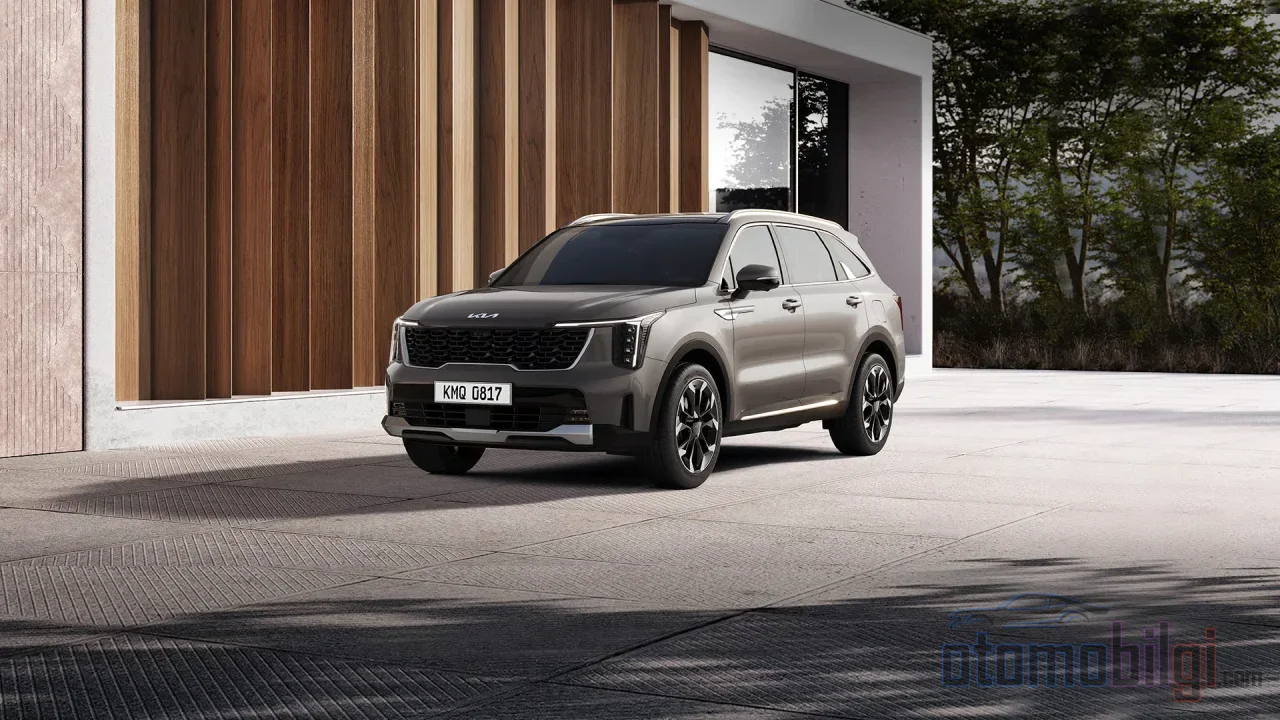
Finding a full hybrid system in a three-row SUV is still a harder job than expected. The segment's big bodies either settle for two rows or the hybrid system is squeezed into plug-in versions only, at the top trim levels. The Kia Sorento Hybrid offers a rare combination at exactly this point: a body of approximately 4.8 meters, six or seven seats, and a full hybrid powertrain that requires no charging cable. But does this combination really work in city traffic and on long roads, or does the practicality of the third-row seats come at a price?
Full Hybrid System: The Harmony of the 1.6 Turbo and Electric Motor
The Sorento Hybrid's powertrain is built with an engineering choice that goes against the segment norm. Unlike Toyota's Atkinson-cycle naturally aspirated engine + e-CVT formula, Kia has paired a turbocharged 1.6-liter four-cylinder supercharged gasoline engine with an electric motor. While the gasoline unit alone produces 177 hp and 264 Nm of torque, the electric motor in the hybrid variant adds 59 hp and again 264 Nm of torque. The system's total output is 227 hp and 350 Nm; power is sent to the front wheels through a 6-speed automatic transmission, with all-wheel drive offered as an option.
Electrical energy is stored in a small lithium-ion battery with a capacity of 1.49 kWh. Although this capacity seems small at first glance, in a full hybrid architecture the battery's job is not long-distance electric driving, but assisting the engine at start-up and low speeds, and recovering energy during braking. The electric motor is a permanent magnet synchronous type; three operating modes are defined for the system: EV Mode, which runs on electricity alone, Hybrid Mode, which uses both sources in coordination, and Engine Mode, in which the internal combustion engine dominates.
Highlights
- Total power 227 hp, torque 350 Nm (1.6 turbo + electric motor)
- City consumption at 6.4 L/100 km level according to EPA data (front-wheel drive)
- 357 L behind the third row, ~2,137 L of cargo volume with all seats folded
- A three-row hybrid that fits in the garage with a length of approximately 4,811 mm
- 0-60 mph acceleration in 7.2 seconds (hybrid variant)
A note must also be made on the model year distinction: The 2026 Sorento Hybrid is on sale with 227 hp and 350 Nm figures; for the manufacturer's announced 2027 model year, the system output has been stated as 232 hp and 366 Nm. These two model years should not be confused when evaluating the figures. Additionally, the plug-in hybrid version has a total output of 261 hp with its 90 hp electric motor and 11.8 kWh battery; but the subject of this page is the full hybrid version that does not need a charging socket.
City and Long-Distance Consumption Character
In the City: The Hybrid System's Home Ground
The most obvious advantage of the full hybrid system emerges in stop-and-go traffic. The EPA figures for the front-wheel-drive hybrid variant are 37 mpg in the city (approximately 6.4 L/100 km), 36 mpg on the highway (approximately 6.5 L/100 km), and 37 mpg combined. In the all-wheel-drive version these figures drop to around 32 mpg (7.4 L/100 km) in the city and 34 mpg (6.9 L/100 km) combined. Since the gasoline version of the same Sorento runs around 27 mpg (8.7 L/100 km) combined, choosing the hybrid means a real-world consumption advantage of roughly 25 percent.
Long Distance: Comfortable on Range
Does the hybrid system lose its advantage when cruise control is set? The measurements say no: In a real-world road test at a constant 75 mph, 31 mpg (7.6 L/100 km) was measured; while in the top-spec all-wheel-drive trim, 33.2 mpg combined was observed. Even more striking is the range: In a highway test at 75 mph, a range of 870 km was measured with a full tank, and values of up to 887 km can be seen on the cockpit displays. This range from a family SUV with three rows of seats means you can plan stops based on the passengers' needs rather than the vehicle's.
When we place this consumption character within its segment, the picture is as follows: Slightly more efficient than the Toyota Highlander Hybrid, it draws an equal profile with its mechanical sibling, the Hyundai Santa Fe Hybrid, in highway and combined figures. The Sorento Hybrid accelerates from 0 to 60 mph in 7.2 seconds; its top speed is 122 mph. These figures say it is no speed demon but more than sufficient for a three-row family vehicle. One notable limitation is towing capacity: the hybrid version pulls 907 kg, while the gasoline Sorento can go up to 1,588 kg. Those planning a holiday with a trailer need to know this difference.
Three Rows of Seats and Cargo Practicality
The Sorento's strongest card is its balance of size. At roughly 4,811 mm in length, it is about 25 cm shorter than giant three-rowers like the Telluride, Palisade, or Grand Highlander; which makes it a livable three-row hybrid in narrow neighborhoods and in the garage. In the second row, a standard three-person bench or optional captain's chairs allow a 6- or 7-seat configuration.
On the cargo side, there is a volume of 357 L with the third row upright; with the third row folded it expands to 45 cu-ft (about 1,274 L), and with all seats laid flat up to 75.5 cu-ft (about 2,137 L). A practical measurement explains these numbers better: with the third row open, 2 carry-on suitcases fit; closed, 12; and with everything laid flat, 26. Moving from the second row to the third is made easy with a single button.
To be honest, the third row carries exactly the problem that hardly any rival in this class has fully solved: the seats are close to the floor and headroom is limited. Comfortable for children, a cramped space for adults on long journeys. The Sorento Hybrid's identity should be defined as a family vehicle that reserves the third row for children in daily use while offering roominess in the first two rows. The spaciousness of the first and second rows earns unanimous praise from reviewers.
Equipment and Technology Features
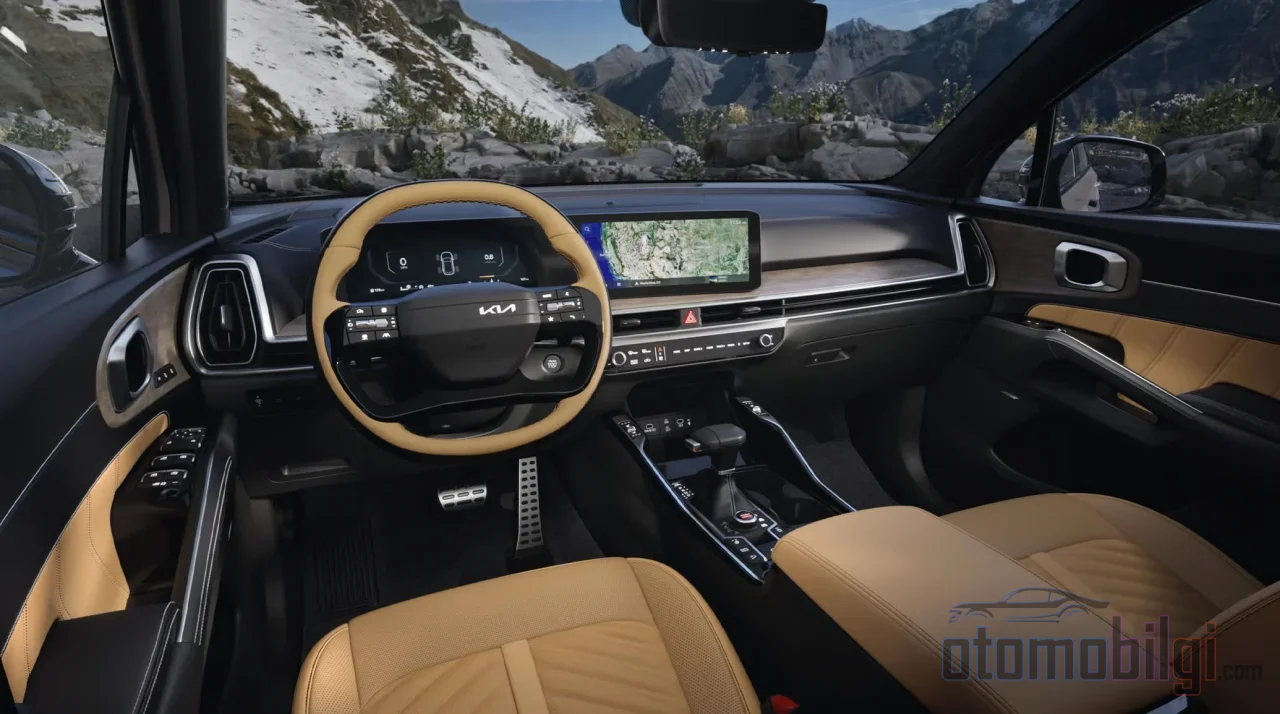
Interior technology is one of the Sorento Hybrid's strong points. Standard equipment includes a 12.3-inch touchscreen, wireless Apple CarPlay and Android Auto, built-in navigation and a 6-speaker audio system. At the higher trim level, a 12.3-inch digital instrument cluster and a 12-speaker Bose audio system come into play. In comparison tests, the Sorento measured a high cabin technology score of 9.7 out of 10, putting it clearly ahead of its rivals in this area.
The charging infrastructure, which is critical for a three-row family vehicle, has also been thought through: two USB-C ports up front, USB-C ports on the back of the second row, a 115-volt 150-watt outlet, two USB-C ports in the third row and a 12-volt outlet in the trunk. On the driver assistance side, automatic emergency braking, lane tracking and lane keeping, Adaptive Cruise Control and blind spot monitoring are standard; the top trim offers Highway Driving Assist, a blind spot camera monitor and an Adaptive Cruise Control with machine learning that learns your driving style. For the 2026 model year, Terrain Mode for snow, mud and sand has been added to AWD versions; the X-Line package features 19-inch black wheels and dark exterior trim details.
On the safety and reassurance front, the 2026 Sorento Hybrid has received the highest overall vehicle safety rating from the NHTSA and has made it onto the recommended SUV lists of independent consumer organizations. In the US market, a 5-year/100,000 km general warranty is offered along with a 10-year/160,000 km powertrain and hybrid component warranty; this coverage granted to long-life components such as the hybrid battery is an important signal in terms of the system's total cost of ownership.
How It Differs from the RAV4 Hybrid: What Sets It Apart from Its Rivals
The comparison with the Toyota RAV4 Hybrid mentioned in this review is essentially a case of two different vehicles being placed side by side. The fundamental architectural difference is clear: while the 2026 Sorento Hybrid has three rows and up to seven seats, the 2026 RAV4 Hybrid is a two-row compact SUV. The RAV4 is numerically ahead in the hybrid efficiency category; the Sorento positions itself with the argument of space and seat count. In comparison tests, the Sorento Hybrid scored 7.9 points while the RAV4 Hybrid stayed at 7.0; the difference comes especially from the cabin technology and comfort categories.
| Feature | Kia Sorento Hybrid | Toyota RAV4 Hybrid |
|---|---|---|
| Seating layout | Three rows, 6-7 seats | Two rows, 5 seats |
| Total power | 227 hp | A more efficiency-focused approach within the hybrid class average |
| Comparison score | 7.9/10 | 7.0/10 |
| Cabin technology | 9.7/10, 12.3-inch screen | Simpler equipment |
| Efficiency | 36-37 mpg (FWD) | Ahead in this category |
Its natural rivals are actually elsewhere: while the Toyota Highlander Hybrid has a larger and more expensive body, the Hyundai Santa Fe Hybrid, as the boxy-designed sibling on the same platform, offers more trim levels. The Sorento Hybrid's point of differentiation is specific: a small footprint, three rows of seats and a full hybrid system coming together in one package. Although Toyota hybrids have a deeply rooted reputation for long-term mechanical reliability, the Sorento tries to close this perception gap with its warranty coverage and rich equipment.
Who Is the Sorento Hybrid the Right Choice For?
To summarize the picture up to this point: The Kia Sorento Hybrid is a rare alternative designed for families who will genuinely use three rows of seats but do not want the bulkiness that large three-rowers bring to daily life, and who expect low consumption in city traffic and a range exceeding 800 km on long journeys. With its 227 hp full hybrid system, city consumption at around 6.4 L/100 km, and a 4.8-meter body that fits in the garage, it fills the gap between two-row hybrids and three-row family SUVs. In return, it is necessary to accept that the third row remains limited for adults and the 907 kg towing capacity.
If you need a plug-in hybrid, electric driving on short daily distances, and a stronger 261 hp system, the single fully equipped plug-in version also stands among the options. But for the family that does not want to live plugged in and prefers the simplicity of a full hybrid, the Sorento Hybrid still represents a balance that few manufacturers in its segment even offer.
Sources
- 2027 Sorento Hybrid - Kia Official
- 2027 Kia Sorento Hybrid Review, Pricing, and Specs - Car and Driver
- 2026 Kia Sorento Hybrid Review: Small Footprint, Three Rows - GreenCars
- 2026 Kia Sorento Hybrid Prices, Reviews, and Pictures - Edmunds
- 2026 Sorento Plug-in Hybrid - Kia Official
- 2026 Kia Sorento Hybrid MPG & Towing Capacity - Kia of Riverdale