2026 Leapmotor C10 Hybrid: A New Rival in the Family SUV Segment
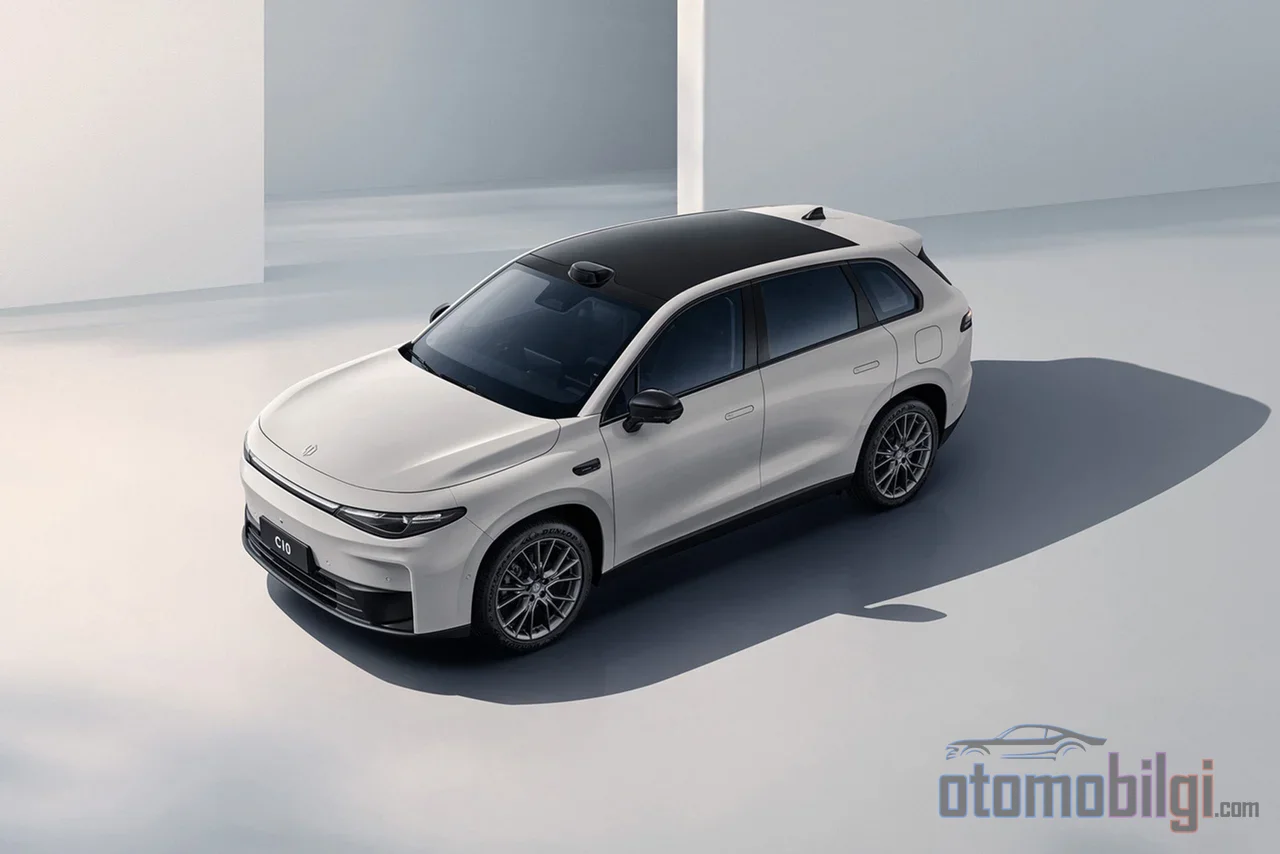
Every brand in the D-segment family SUV market has a hybrid solution; but in most of them, the wheels turn through the combined effort of two motors. The Leapmotor C10 Hybrid takes a different path: an architecture where the petrol engine is never connected to the wheels and driving is done entirely on electricity. This means the same car sometimes behaves like an EV, sometimes like a long-distance machine. So how does this duality work in practice, and where does the C10 stand against the Toyota RAV4 Hybrid or the BYD Seal U DM-i?
Series Hybrid: Why Isn't the Petrol Engine Connected to the Gearbox?
The C10 Hybrid's official name is extended-range electric vehicle, or REEV. The logic of the system is simple, and this simplicity defines the entire driving character: In the Leapmotor C10, only the rear electric motor turns the wheels. This motor is a permanent magnet synchronous unit producing 158 kW (215 hp) of power and 320 Nm of torque. The 1.5-liter four-cylinder petrol engine, meanwhile, connects its crankshaft not to a gearbox but to a generator; its only job is to charge the battery. So no matter the road, there is always the same single gear in the drivetrain: electricity.
Classified as a plug-in hybrid, this setup differs fundamentally from full hybrid systems. In models like the RAV4 Hybrid, the internal combustion engine contributes directly to the wheels at certain speed and load ranges; there is no such path in the C10. The electric driving feel never fades, because it never can - the engine sound is only heard in the background when the generator load increases.
There are also clever decisions in the engineering detail. Thanks to the design where the generator is directly connected to the motor, the flywheel and torsional damper are completely eliminated; this provides an 8 kg weight saving compared to rival range-extender solutions. The generator, which uses eight-layer flat wire hairpin windings, operates at 96.5% efficiency and offers a production value of 0.3 kWh per liter. Though they may look like small figures, the efficiency of a system that converts fuel into electricity determines the entire consumption character of the vehicle.
Highlights
- 151 km WLTP electric range, 969 km total range
- 215 hp electric motor on the rear axle, 0-100 km/h in 8.5 seconds
- The petrol engine serves only as a generator - not connected to the wheels
- 30-80% DC charging in just 18 minutes; full charge at home in 4.5 hours
- Single trim level: all equipment comes as standard
Powertrain in Numbers: Range, Charging and Dimensions
On the battery side, there is LFP chemistry with a 28.4 kWh capacity. The known advantages of LFP apply here as well: long cycle life, predictable thermal behavior. The battery cells are integrated directly into the chassis with a cell-to-chassis approach; this also contributes to structural rigidity. The body's torsional rigidity is at the level of 42,500 Nm/degree and the floor is completely flat - meaning the battery is not buried in any protrusion and does not eat into packaging space.
WLTP electric range is 151 km; when the petrol generator kicks in, the total range extends to 969 km. The generator has a production capacity of 50 kW and runs on a 50-liter fuel tank. On the performance side, 0-100 km/h takes 8.5 seconds and top speed is 171 km/h - modest figures that perfectly suit a family SUV. On the charging side, with 65 kW DC fast charging, the 30-80% range takes 18 minutes; with the 6.6 kW onboard charger, a full charge at home takes around 4.5 hours. For a user who charges at home on weekdays and goes away at weekends, this scenario means barely ever seeing a gas station.
| Feature | Value |
|---|---|
| Length / Width / Height | 4,739 / 1,900 / 1,680 mm |
| Wheelbase | 2,825 mm |
| Electric motor | 158 kW (215 hp), 320 Nm, rear-wheel drive |
| Battery | 28.4 kWh LFP |
| WLTP electric range | 151 km |
| Total range | 969 km (WLTP) |
| 0-100 km/h | 8.5 s |
| Curb weight | 1,950 kg |
Electric in the City, Generator Mode on the Highway
The ability to manually choose how the system behaves is a significant plus. There are four energy modes: In EV+ mode, the range extender kicks in when the battery level drops below 9%; in EV mode, it engages intelligently below 25%; in Power+ mode, the extender stays on at all times; while in Fuel mode, the battery is kept above 80% to prioritize fully electric use. In other words, running the car like an EV in city use, charging the battery before a long trip, or keeping the generator active on the highway is left to the driver's decision.
So what is the real consumption when the battery runs out? User measurements paint a striking picture: on a highway trip, as the battery dropped from 50% to 18%, the measured value was 5.6 L/100 km of gasoline and 20 kWh/100 km of electricity. Another user reports averaging 6.1 L/100 km with 91-octane fuel, dropping to as low as 4.2 L/100 km with 98 octane. These figures are respectable for a 1,950 kg D-segment vehicle in highway mode; because in the REEV architecture, the internal combustion engine can always run at a generator load close to its most efficient rev band, without having to hunt for gears.
The range issue, however, requires nuance. According to the spec sheet, the total range is close to 1,000 km; but this is a figure measured under ideal conditions. In real-world use, speed, temperature, air conditioning load, and wind can pull this figure down. On the other hand, no full-hybrid rival comes close to this total range on a WLTP basis. The source of this gap is the combination of the 50-liter tank and the large battery working together.
Interior and Cargo: Where Is the Price of REEV Paid?
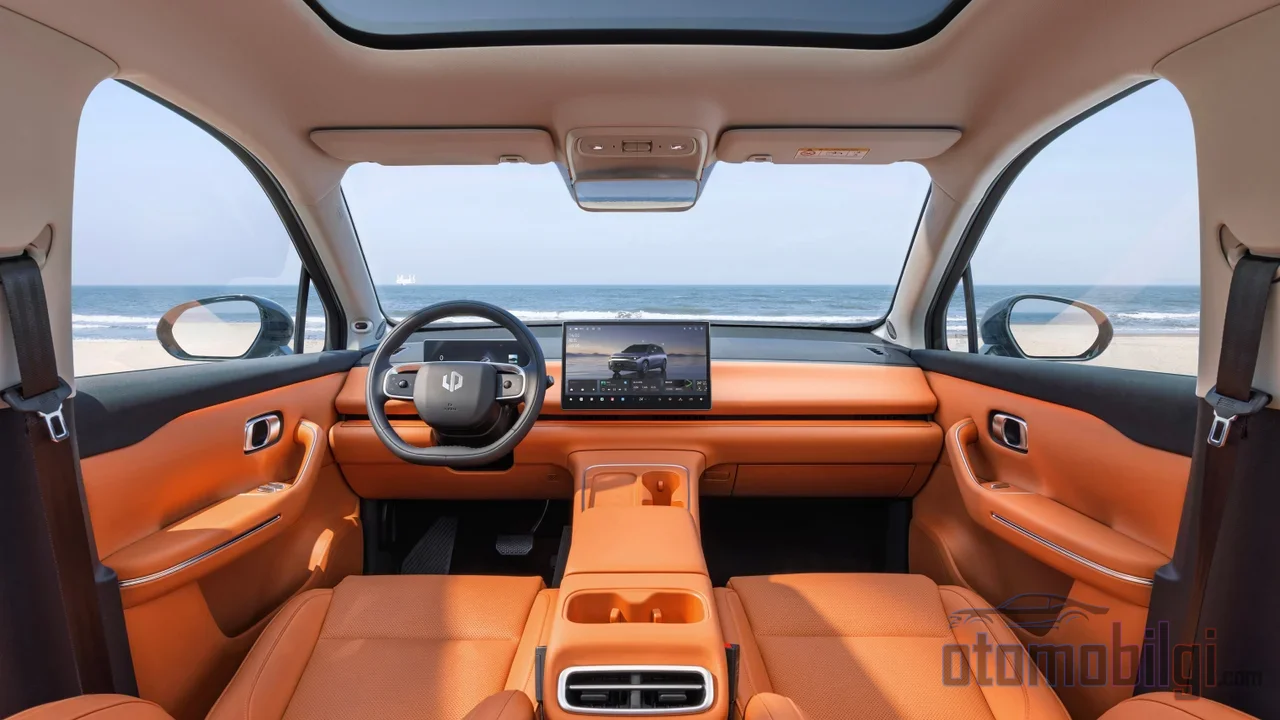
The 4,739 mm length and 2,825 mm wheelbase make the D-segment cabin genuinely spacious. The technology load is high: a 14.6-inch central touchscreen, a 10.25-inch digital instrument cluster, an 840W sound system with 12 speakers, a 2.1 m2 panoramic sunroof, heated and ventilated seats, a heat pump, driver recognition and facial recognition technology. The voice command system understands natural spoken language, and the system runs on the company's own Android-based LeapmotorOS. Connectivity features such as digital key via smartphone app, NFC card access, remote climate control, charging scheduling and sending navigation to the vehicle are offered.
The cabin has 26 different storage areas, and Leapmotor notes that when the rear seats are folded, a flat surface compatible with a double bed measuring 1.8 x 1.2 meters is formed - a detail thought out for camping families. On the safety side, 5 stars from Euro NCAP, 17 ADAS functions and Level 2 semi-autonomous driving assistance are standard. Four-stage regenerative braking and one-pedal mode bring EV habits to hybrid users.
However, the other side of the coin is the trunk. In the REEV version, the volume is 400 liters with the rear seats in place; with the seats folded, it rises to 1,375 liters. In the electric version, these figures are slightly higher thanks to the battery's more compact packaging. The source of the difference is understandable: the gasoline generator unit, exhaust line and cooling equipment occupy space in the rear area. Still, 400 liters is the same as the Alfa Romeo Junior - so it is not the largest arena in its class, but it cannot be called insufficient either.
C10 Against Its Rivals: What Is the Difference?
The comparison with the Toyota RAV4 Hybrid and Hyundai Tucson Hybrid starts with its architectural difference. Those two models use a series-parallel hybrid approach, directly engaging the internal combustion engine to the wheels under suitable conditions; the C10, on the other hand, offers fully electric driving in every condition. In terms of electric range, the difference is even clearer: While the RAV4 and Tucson hybrids are largely non-chargeable full hybrids, the C10's 151 km WLTP electric range can cover daily driving entirely on electricity. The sought-after feature is not only efficiency; for those who want the EV driving experience, the C10 remains in a category of its own.
A closer rival is the BYD Seal U DM-i. Both vehicles are plug-in hybrids and their performance figures are close to each other: The Seal U DM-i's 0-100 km/h time is 8.9 seconds. The comparison becomes clear along two axes. First, the warranty: The Seal U DM-i offers two more years of vehicle warranty and a significantly longer battery warranty. Second, the equipment philosophy: The C10 comes with a single equipment level; everything from heated-ventilated seats to the panoramic sunroof, from the advanced sound system to driver monitoring is standard. To reach this equipment level on the Seal U DM-i, the top equipment version must be chosen. In other words, the buyer is choosing between warranty duration and equipment richness. In the UK, the difference between starting prices reaches around 1,500 pounds, and the hybrid C10 is sold at the same price as the EV version - an approach where plug-in technology is not priced in, easy to say but rarely seen in practice.
The C10's Place in Leapmotor's Hybrid Strategy
Introduced as Leapmotor's first model designed for global markets at the 2023 Munich Motor Show, the C10 went on sale in China in March 2024, and that September in nine European markets. Sales in Europe are handled through Leapmotor International, in which Stellantis holds a majority stake; More than 800 sales-service points in Europe, and globally more than 40 markets with approximately 1,700 points have been deployed. In 2025, more than 35,000 registrations were made in Europe, while globally sales exceeded 600,000, an increase of 103 percent compared to the previous year; the brand's total deliveries surpassed 1 million.
The second step in the hybrid strategy is the smaller-bodied B10. The European launch of the B10 Hybrid EV, a C-segment SUV that comes with a range-extender architecture like the C10, was confirmed at the 2026 Brussels Motor Show; the brand also clarified its Europe-first growth line here. On the production side, too, the next move is clear: Stellantis and Leapmotor are evaluating production in Zaragoza, Spain for the B10, and the opening of a production facility in Europe is planned by the end of the year. This is a step that will change the cost structure of models produced in Europe in the future, unlike the C10, which carries an import tax burden. In addition, the information that with the 2026 facelift the C10's REEV battery has been upgraded to a 38.7 kWh LFP unit shows that the model has moved even further ahead on the range side.
Conclusion: Who Is the C10 Hybrid For?
The Leapmotor C10 Hybrid brings a clear answer to the debate of whether it is a classic hybrid or a plug-in: an EV every day, and a plug-in REEV that is a long-range traveler on the road. This series hybrid architecture, in which the gasoline engine is never connected to the wheels, offers a fully electric experience in daily use, consumption of around a measured 5.6 L/100 km on the highway, and a total range of up to 969 km on the WLTP basis. The trunk volume is not the class peak and the real range can fall below the catalog value; on the other hand, the standard equipment load, guaranteed safety performance, and equal pricing with the EV version balance the equation. For the family buyer who wants the EV feel as well from the efficiency-focused world of Toyota and Tucson hybrids, the C10 is securing a solid place for itself in the market as one of the most tangible examples of Chinese brands' global hybrid breakthrough.
Sources
- LEAPMOTOR C10 HYBRID EV - UK PRESS INFORMATION
- Leapmotor C10
- Leapmotor C10 Ultra Hybrid | Range extending
- Leapmotor C10 review - Auto Express
- Leapmotor C10 Review 2026 | Performance & Pricing - Carwow
- 2025 Leapmotor C10 REEV review - CarExpert
- C10 REEV fuel consumption on empty battery - Reddit
- BYD Seal U DM-i vs Leapmotor C10 REEV (UK): Which to Buy?
- Leapmotor Showcases Global Expansion Plans At 2026 Brussels Motor Show
- Leapmotor Accelerates European Expansion with 800+ Dealers - ElectricCarsReport